
Practical, Gentle, Effective Discipline
[Portions reprinted from The Gentle Parent: Positive, Practical, Effective Discipline by L.R.Knost. Two Thousand Kisses a Day: Gentle Parenting Through the Ages and Stages; Whispers Through Time: Communication Through the Ages and Stages of Childhood; and Jesus, the Gentle Parent: Gentle Christian Parenting also available on Amazon and through other major retailers.]
 Many people believe that gentle parenting is a form of unparenting, but nothing could be further from the truth. Gentle parenting is involved parenting ~interactive, engaged, active parenting. It takes focused attention, planning, participation, research, and so much more to be an empathetic, responsive parent who is in tune with their child’s needs and who is prepared to make whatever sacrifices are necessary to meet those needs. That said, in any home, like in any civilized society, boundaries are necessary for everyone’s safety and comfort. It is in the choosing and maintaining of those boundaries that gentle parenting distinguishes itself. In a gently parented home, boundaries are focused on guiding rather than controlling children and are maintained through empathetic and creative resolutions rather than harsh punitive consequences. If you’d like to transition to a more gentle mode of parenting, but don’t know where to start, below are links to alternatives to punishment, and here is a guide to help you set yourself up for success in your journey to gentle parenting…12 Steps to Gentle Parenting.

When Things Get Physical: Hitting, Throwing, Kicking, and Biting
The concept of using consequences, physical or otherwise, as a deterrent for hitting is based on the misconception that small children have the capacity for forethought (i.e. If I hit, I will get in trouble. Therefore I will not hit.) and that they are choosing to disobey. The fact is that the prefrontal cortex, where reasoning, logic, and forethought take place, is highly immature in toddlers and preschoolers and actually doesn’t develop fully until the mid-twenties! Small children act instinctively and impulsively even when not stressed simply because that is what they are developmentally capable of, but when they are stressed even the small amount of self-control they may have attained flies right out the window, and before they know it (literally!) they’ve reacted physically to their stress. Read more
 Testing the Boundaries~What’s a Parent to Do?
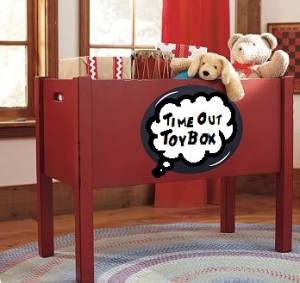
Typically, I advise parents to use Time-Ins instead of Time-Outs in order to connect-to-correct, but there is one area that I advise the use of Time-Outs…the ‘Time-Out Toy Box!’ When a toy is misused (i.e. thrown, used to hit, drawn on, fought over, etc) and a gentle redirection has been given, the next step for the toy is to be put in the ‘Time-Out Toy Box.’ Little ones generally find the concept of a toy being put in Time-Out rather humorous and go along with the removal without a fuss (the toy can be returned after an exaggeratedly stern warning to the toy letting it know what is expected of it and that it must listen to ‘the boss’ ~the child, lol. They love that!), but remember to communicate, listen, and be flexible. If the removal of a toy brings about a strong negative response, it may be that the inappropriate behavior was more than just…Read more

Few things ignite a parent’s temper like defiance. It feels like a slap in the face, a direct challenge to our authority. Power card…played. Gauntlet…thrown. Challenge…accepted?
Time out! No, not time-out as in punish your child, but time out as in hit the parental pause button, take a step back, assess the situation, and get some adult perspective.
There are three things to consider…Read more
 Toddlers, Tantrums, and Time-In’s, Oh My!
Punishing them, yelling at them, sending them to their room, or putting them in time-out disconnects them even further from their source of security and not only delays a resolution of the issue, but misses an opportunity to equip them with the tools they need to handle future problems.
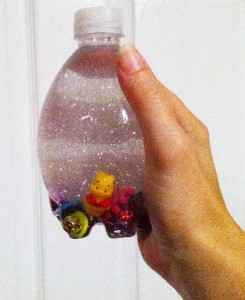
One effective tool for use in helping little ones cope with big emotions is a Calm-Me-Jar…Read more

Parenting a Strong-Willed Child
There are some children who are born into the world with the incredible life-gift of a strong will and an indomitable spirit. These children are often deeply misunderstood, and there are rows of books lining bookstore shelves with instructions about how to break their will, how to subdue their spirit, how to force their obedience. What an incredible loss of leadership, passion, and insight this world suffers when parents follow these punitive parenting practices. Not only can we parent these gifted children with gentleness and respect, but the gifts we get in return are priceless! Read more

Backtalk is Communication…LISTEN
When a child backtalks, sometimes also referred to as mouthing-off or sassing, they are in the throes of a huge, internal maelstrom of emotion. Whatever they are reacting to in the moment, whether it’s being told ‘no’ about something or being asked to do or not do something, it is rarely those issues that are at the root of the problem. The moment at hand is just the tipping point causing a fissure in the child’s heart that lets out a bit of the steam inside. The real concern should be that there is, metaphorically, steam in the child’s heart to begin with.
It is at this point that parents have the opportunity to model self-control and self-regulation by controlling their own knee-jerk reaction to their child’s backtalk. Instead of meeting fire with fire, childish outburst with childish parental outburst, child’s tantrum with adult tantrum, parents can slow down, breathe through their own emotions, and then listen through the fiery storm of their child’s words to the hurt, fear, and anger behind the words. Read more

Want to know a dirty, little secret about punishment?
It doesn’t work.
Punishment may be able to control a child’s behavior temporarily while they’re small or when they are in their parents’ presence, but it cannot control the person. As with all humans, outward behavior is merely a reflection of our inner selves: our needs, our hurts, our emotional states.
While the temporary ‘payoff’ of punishment may be compliance, the need behind the behavior is never addressed and those needs merely get driven underground and often emerge later in more potentially damaging behaviors such as lying, sneaking, anger, outright rebellion, depression, aggression, addictions, etc. Read more

The life of a small child is comprised of a daily onslaught of tempting surfaces begging for the artistry of a crayon, tall places crying out to be scaled, lovely little objects in need of a mouth or nose to visit, and dozens of other alluring glass and liquid and sharp things to be explored through the physics of gravity, the kinetics of concoctions, and the application of Newton’s Laws of Motion. There is only one force powerful enough to defeat this nearly irresistible call of adventure, imagination, and discovery…the No! Read more
 Spare the Rod: The Heart of the Matter
The Bible does NOT command spanking. Dissecting the original Hebrew texts of the ‘rod’ verses. Read more
 Easy Peasy DIY Parenting Tools
I-spy Water Jars, Quiet Bags, Calm-Me-Jars, Cozy Corners, Punch Bags, and more…Read more
 To a Toddler Sharing is a 4 Letter Word~MINE!
Almost from the moment a baby is born, parents teach them not to share. “No, no, sweetie. That’s mommy’s” and “That’s daddy’s, not yours” accompanied by the removal of whatever the forbidden item is are daily realities for little ones. This is unavoidable, of course, since bacteria-ridden keys don’t belong in little mouths and iphones don’t work well when soaked in drool.
But the challenge comes when our little ‘reflectors’ are expected to share their toys with anyone and everyone who takes a liking to them…Read more
 Your Baby isn’t Trying to Annoy You; He’s Trying to Communicate! From the moment a child enters the world, they are trying to communicate. Crying, grunting, making eye contact, mirroring expressions, all of these things are the instinctive tools built into infants to reach out into a brand new world and make contact. They can do no more. It is entirely up to the parent to make the connection, to respond, to build those all-important ‘lines of communication’ that will be so vitally important to parents in later childhood. Communication is not something that just happens. It is not something that begins when a child becomes verbal, and it’s not a product of a child’s advancing maturity. Communication is a process, a relational building block, a result of intentional and responsive parenting. Read more
 Babes and Boundaries~A Gentle Parenting Perspective Gentle parenting doesn’t mean parenting without boundaries! Believe it or not, the foundation for discipline (guiding, leading, teaching…NOT punishment ) begins in the newborn and infancy stages. When parents respond quickly, consistently, and gently to their baby’s cries, the trust relationship that the parent is establishing becomes the cornerstone for later discipline. Boundaries need to be established for a child’s safety and growth into a successful citizen of our world. A child who is secure in the knowledge that he doesn’t have to fight to be heard or to have his needs met is more open and adaptable to limits. And when the ‘limit-setter’ is a person the child trusts, the enforcement of those boundaries becomes a matter of connection and communication instead of conflict and struggle. So, what might setting and enforcing boundaries using gentle parenting look like in real life? Read more
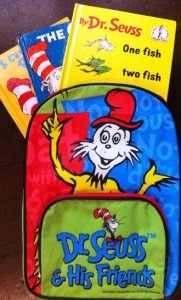 Parenting in Public~What’s in Your Quiet Bag? More and more public places are becoming child un-friendly with snarky signs saying they’ll give your child an espresso and a pony if you don’t control him or charge you extra if you dare to enter their establishment and support their business with your hard-earned money or even flat out ban you altogether if you bring ‘the beast’ out in public with you! So what’s a parent to do? Read more
 Discipline & Behavior via Dr. Sears
You probably never thought of attachment tools, such as breastfeeding and babywearing, as being acts of discipline, but they are. Attachment parenting is like immunizing your child against emotional diseases later on. Your knowledge of your child becomes like a sixth sense enabling you to anticipate and control situations to keep your kids out of trouble. Discipline is based on building the right relationship with a child more than using the right techniques.
 Parenting toddlers made simple. via T.E.A.C.H. Through Love
Toddlers can be loud, boisterous, erratic, funny, messy, witty and smart all at the same time. They soak up everything they see and hear and that includes our reactions to their actions.
What Children Need Most When They Deserve It The Least via Happy Families
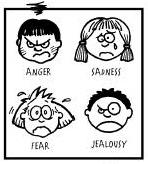
Parents prefer not to have their authority questioned. So rather than considering why a child may be resisting, they up the ante, doing their best puffer-fish impersonation, and make threats.
 Positive Parenting in Action: Exploration/Danger via Positive Parenting
Don’t mistake independence for defiance. Some toddlers are more strong-willed and independent than others. My first son was very mellow and content under my wing, while my second wanted independence early. He doesn’t want to hold my hand in parking lots (we’ll address that one!) because he says “I can walk by myself!”
 Gentle Discipline: So what DO you do? via The Path Less Taken
Some people, for any number of reasons, do not know about alternatives. They don’t know that there’s another way. Some people want to do things differently, and want to break their cycle, but they honestly do not know where to start.
 Proactive Discipline and Well-behaved Children via Gentle Christian Mothers
Most people seem to think that physical punishment is the only way to elicit good behavior and assume that children who aren’t given prompt and regular spankings will be out of control “monsters”. Well, my kids are not perfect little robots. They have to be reminded to do things and they fight with each other. But my focus is not so much on obedience (do what I say right now!) as you might have expected. Instead my focus is on raising kids who are generally polite and content and care about how those around them feel. And that’s what I’ve got, kids who are noticeably considerate to adults and other children alike.
 6 Steps to Stop Yelling Dr. Laura Markham/Aha Parenting.com
We all know that our kids respond better if we don’t yell. Instead of escalating a difficult situation, if we can stay calm, it settles everyone else down. Our relationship with our child strengthens. They cooperate more. They start to control their own emotions more. Bottom line: How can you expect your child to control his own emotions if you don’t control yours?
 The One Thing You Can Do That Will Drastically Improve Your Interactions with Children via Real Child Development
If there was one thing you could do differently that would drastically improve your interactions with children would you want to know? Would you like to know the key that would increase cooperation, reduce tantrums, fighting and negative behavior?
 Gems via Mothering by Grace
This is a FAST way of making your child feel loved, valued and secure. GEMs help your kids feel affirmed and noticed, so their need to get your attention in negative ways decreases. Your energy levels will rise as you enjoy your child and remember what it’s all about. By focusing on your child and meeting their emotional needs for connection you are actually taking care of yourself at the same time. It takes only a few minutes to have a GEM, yet the positive effects last for ages.
 Why Spanking is Never Okay via Peaceful Parenting
Scientific research shows that physical punishment does not work in the long run, is associated with an increased risk for many behavioral and psychological problems, and is simply unnecessary given that we have non-violent discipline techniques that are very effective.
 Gentle Discipline Toolbox via Dulce de Leche
Gentle, effect tools for your parenting toolbox!
Related links:
 Award-winnning author, L.R.Knost, is the founder and director of the children's rights advocacy and family consulting group, Little Hearts/Gentle Parenting Resources, and Editor-in-Chief of Holistic Parenting Magazine. Books by L.R.Knost include Whispers Through Time: Communication Through the Ages and Stages of Childhood ; Two Thousand Kisses a Day: Gentle Parenting Through the Ages and Stages ; The Gentle Parent: Positive, Practical, Effective Discipline ; and Jesus, the Gentle Parent: Gentle Christian Parenting the first four books in the Little Hearts Handbook gentle parenting series, and children’s picture books Petey’s Listening Ears and the soon-to-be-released Grumpykins series.





Pingback: » You’re Not the Boss of Me! Little Hearts/Gentle Parenting Resources
Pingback: » Two Thousand Kisses a Day Little Hearts/Gentle Parenting Resources
Pingback: » Changing the World, One Little Heart at a Time Little Hearts/Gentle Parenting Resources
Pingback: » A Few of my Favorite Things Little Hearts/Gentle Parenting Resources
Pingback: » The Taming of the Tantrum: A Toddler’s Perspective Little Hearts/Gentle Parenting Resources
Pingback: » Toddler Fighting Sleep? Here’s Help! Little Hearts/Gentle Parenting Resources
Pingback: » Our Children, Our World, Our Responsibility Little Hearts/Gentle Parenting Resources
Pingback: » Testing the Boundaries~What’s A Parent To Do? Little Hearts/Gentle Parenting Resources
Pingback: » 12 Steps to Gentle Parenting~Resolutions for the New Year Little Hearts/Gentle Parenting Resources
Pingback: » Spare the Rod: The Heart of the Matter Little Hearts/Gentle Parenting Resources
Pingback: » 5 Tips for Parent Rejects Little Hearts/Gentle Parenting Resources
Pingback: » The Trouble With Kids Today Little Hearts/Gentle Parenting Resources
Pingback: » Be an American Hero~Stop Spanking Little Hearts/Gentle Parenting Resources
Pingback: » The Color of Change Little Hearts/Gentle Parenting Resources
Pingback: 12 Steps to Gentle Parenting | The Natural Parent Opinion
Pingback: When Children Act Out ~ Reflecting Our Emotions | Little Hearts/Gentle Parenting Resources
Pingback: When Children Act Out ~ Reflecting Our Emotions | The Natural Parent Opinion
Pingback: Jesus, The Gentle Parent | Little Hearts/Gentle Parenting Resources
Pingback: 200 Ways to Bless your Children with a Happy Childhood | Little Hearts/Gentle Parenting Resources
Pingback: Domestic Violence ~ Being the Voice for Voiceless Victims | Little Hearts/Gentle Parenting Resources
Pingback: A Very Toddler Christmas~24 Tips for a Safe, Stress-Free & Jolly Holiday | Little Hearts/Gentle Parenting Resources
Pingback: I Spy…A Bad Mom | Little Hearts/Gentle Parenting Resources
Pingback: Helping Unique Learners Find Their Genius ♥ | Little Hearts/Gentle Parenting Resources
Pingback: Stealing God’s Gift: Free Will is a Gift to be Nurtured, Not a Curse to be Broken | Little Hearts/Gentle Parenting Resources
Pingback: Am I a Radical Extremist? | One Voluntaryist's Perspective
Pingback: 10 Steps to Surviving the First Three Months with a Newborn | Little Hearts/Gentle Parenting Resources
Pingback: Jamie Oliver and I Are Not on the Same Parenting Page - Sacraparental