
Hurting People Hurt People: Does Bullying Begin at Home?
[Excerpt from Whispers Through Time: Communication Through the Ages and Stages of Childhood by L.R.Knost. Two Thousand Kisses a Day: Gentle Parenting Through the Ages and Stages, The Gentle Parent: Positive, Practical, Effective Discipline, and Jesus, the Gentle Parent: Gentle Christian Parenting also available on Amazon and through other major retailers.]
~~~~~~~~~~~~~~~~~~~~~
“By words we learn thoughts, and by thoughts we learn life.”
Jean Baptiste Girard
I love words. I love language. I love playing with old, staid quotes and classic literature titles, stories and 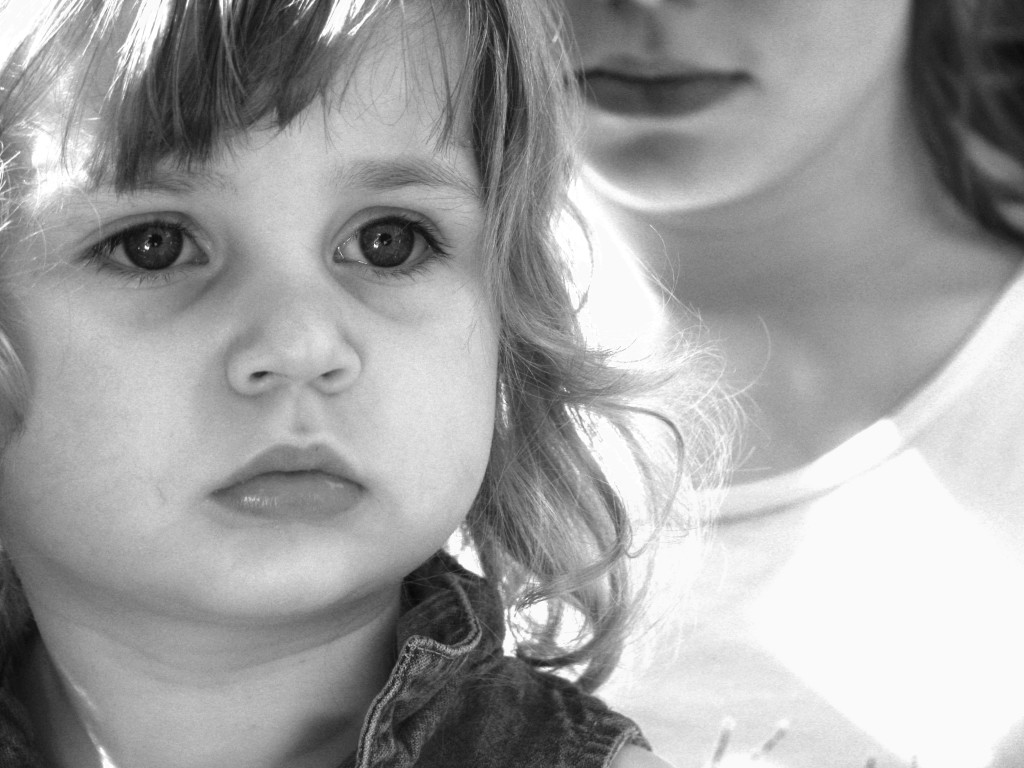 legends, clichés and adages, and weaving them into unique or humorous settings.
But along with loving word play, I’m very aware of the power of language. Words can bring life, “It’s a boy!” and love, “I do!” and words can bring death, “I’m sorry. There’s nothing more we can do.”
When it comes to raising children, the power of words cannot be overestimated. From how the labels we use influence our own perceptions of our children and their perceptions of themselves to how children’s immature grasp of language limits their understanding and responses, words exercise immense power over the life of a child.
Just as important as being careful of the labels we use and having an understanding of language development in young children, though, or even more so, is being aware of the propensity for stressed and angry adults to ‘power-up’ on children and use language as a weapon. The lash of the tongue on the heart of a child can have devastating and lasting consequences.
“You stupid little idiot!”
“Can’t you do anything right?”
“Why did I ever have you?”
“I hate my life!”
“You are totally useless!”
Words live and breathe and grow in our hearts until they either bear life-giving fruit ~ comfort, security, confidence…or fester into infectious, oozing wounds ~ despondency, anxiety, rage.
There is great truth to the belief that bullying begins at home. Children learn what they live. Just as violence begets violence, so angry parents tend to result in angry children, and parents who ridicule tend to produce sarcastic children, and critical parents tend to generate negative children, and on and on.
Whether the children end up the bully or the bullied, aggressive with their peers or with themselves, cutting down others or cutting themselves, the fact is that hurting people hurt people, and children raised with violence or condemnation in whatever form they take are hurting people.
Words matter. They matter desperately…as desperate as a five-year-old is to hear she’s good, as desperate as a ten-year-old is to hear he’s smart, as desperate as a fifteen-year-old is to hear she’s valuable.
The truth is that we all make mistakes. We all say the wrong thing sometimes. We get angry and frustrated and overwhelmed and verbally lash out at these tiny, impetuous, energetic, often incomprehensible, but always vulnerable little people we’ve been entrusted with the care and raising of. And often we don’t apologize because we don’t want to appear weak or to admit we’ve made a mistake or we’d rather just let it be or it doesn’t even occur to us that we should apologize to a child. But words can heal, too, and an apology is a necessary step in the healing process.
But when verbal blows go untended, souls become scarred. When lashing out becomes the norm, damages begin to mount. And when children with battered souls grow into adults, the vicious cycle often continues in the form of domestic violence, substance abuse, or other destructive behaviors.
Parents, choose your words wisely, carefully, thoughtfully. In the same way that violence begets violence and anger begets anger, kindness begets kindness and peace begets peace. Sow words of peace, words that build, words that show respect and belief and support. Those are the seeds of a future filled with goodness and hope and compassion, and aren’t those the things we really want for our children, after all? [end excerpt]
Related posts:
Backtalk is Communication…LISTEN
The Gift of a Strong-Willed Child
Bridge Over Troubled Waters~Parenting a ‘Problem’ Child
Fear Doesn’t Lead to Faith: Becoming Your Child’s Safe Place
Spare the Rod: The Heart of the Matter
 Award-winnning author, L.R.Knost, is the founder and director of the children's rights advocacy and family consulting group, Little Hearts/Gentle Parenting Resources, and Editor-in-Chief of Holistic Parenting Magazine. Books by L.R.Knost include Whispers Through Time: Communication Through the Ages and Stages of Childhood ; Two Thousand Kisses a Day: Gentle Parenting Through the Ages and Stages ; The Gentle Parent: Positive, Practical, Effective Discipline ; and Jesus, the Gentle Parent: Gentle Christian Parenting the first four books in the Little Hearts Handbook gentle parenting series, and children’s picture books Petey’s Listening Ears and the soon-to-be-released Grumpykins series.

Sexting: Irresponsible at Seventeen Magazine
[By L.R.Knost, author of Two Thousand Kisses a Day: Gentle Parenting Through the Ages and Stages, Whispers Through Time: Communication Through the Ages and Stages of Childhood, and The Gentle Parent: Positive, Practical, Effective Discipline available on Amazon and through other major retailers.]
~~~~~~~~~~~~~~~~~~~~~
 In this digital era not only is the world available literally at our fingertips, but a whole new world has opened for predators, pedophiles, perverts, and porn purveyors to assault our children. From predators posing as children to draw children into online relationships and then lure them into real-life danger to pedophiles using the power and anonymity of the internet to traffic in child pornography, our children are at risk in ways that are increasingly difficult to monitor, filter, and protect them from. We are advised to supervise their online activities, but how are we to know that little twelve-year-old Patsy from piano class is actually fifty-year-old Patrick from prison or that fourteen-year-old Joey from the local gym is actually forty-eight-year-old Jimmy from the local jail?
Talking with our children about the dangers, staying in-tune with them so we recognize when they are stressed or feeling pressured or guilty, working on intentional connection and two-way communication so that our children feel safe and comfortable with us, and maintaining an open, non-judgmental relationship throughout their childhood so that they know they can come to us for help with anything, anytime, anywhere are all vital elements in keeping our children safe from adults who would do them harm.
But what about when it’s other children who are the danger? What about when they are violated by an in-real-life friend? Most of us have had the conversations about stranger-danger and friend-danger and good-touches and bad-touches and our children know what constitutes a personal violation in the physical sense, but do they know what constitutes a violation online and via text and Instagram and other digital media?
Children are increasingly becoming victims of virtual and visual sexual harassment by their own peers and are being bullied either into reciprocating and/or into silence. One such sexual victimization is called ‘sexting’ and has become a huge problem across cultural, ethnic, and gender boundaries. Sexting involves one party taking a graphically nude picture of themselves or of just specific body parts, and texting them to another party. These pictures sometimes get shared from one young person to the next, resulting in ruined reputations and often intense bullying. Children like thirteen-year-old Hope Witsell have been so viciously bullied and horribly humiliated that they have taken their young lives to escape the torture.
Released into this environment by Seventeen Magazine, whose target market is from tweens to teens (ages 12 to 19), is a recent article entitled “What’s with the Pics, Dude?” This incredibly irresponsible article about sexting portrays young males as hapless victims of their own sexual and approval needs and young females as those responsible for redirecting the young men into more appropriate behaviors. The young males are characterized as “needing reassurance that they are desirable” and “fishing for a compliment” and as “figuring you’ll be excited” and “hoping to start a game.” While the young females victimized by the sexting are warned that they may be in danger of “trouble from the law” and that in order to “protect” themselves they should conceal the incident from their parents and from school officials. The damage done to a vulnerable girl who may be humiliated and frightened and looking for guidance as to how to handle the situation, but is told to hide it and to respond with a flirty response and a “cute selfie” instead of cutting off communications with the young man and seeking adult support is incalculable. And the danger the young lady is placed in, whether she may be intimidated into silence or pressured into reciprocation which may then put her in the situation faced by the young victims who committed suicide after their sexting pictures were shared, is very real.
I can only hope that parents are paying attention not only to their children’s online activities and digital interactions, but also to what they are reading so that they can filter the dangers and counteract the misinformation that abounds. Parents, your children have access to the internet, at home or the library or at school or at a friend’s house. And they have access to iPhones and other devices that can take, send, and receive pictures. Be aware. Be in-tune. Be intentional. Focus on maintaining your connection and keeping the lines of communication open. And don’t wait until your child brings these dangers to your attention. Bring them to theirs and let them know you are watching, and you’re available, and you are their safe place.
Related posts:
Backtalk is Communication…LISTEN
Parenting a Strong-Willed Child
Practical, Gentle, Effective Discipline
Award-winnning author, L.R.Knost, is the founder and director of the children's rights advocacy and family consulting group, Little Hearts/Gentle Parenting Resources, and Editor-in-Chief of Holistic Parenting Magazine. Books by L.R.Knost include Whispers Through Time: Communication Through the Ages and Stages of Childhood ; Two Thousand Kisses a Day: Gentle Parenting Through the Ages and Stages ; The Gentle Parent: Positive, Practical, Effective Discipline ; and Jesus, the Gentle Parent: Gentle Christian Parenting the first four books in the Little Hearts Handbook gentle parenting series, and children’s picture books Petey’s Listening Ears and the soon-to-be-released Grumpykins series.
Letter from a Teenage Son Who Was Spanked as a Small Child
[L.R.Knost, best-selling author of The Gentle Parent: Positive, Practical, Effective Discipline, Whispers Through Time: Communication Through the Ages and Stages of Childhood and Two Thousand Kisses a Day: Gentle Parenting Through the Ages and Stages available on Amazon and through other major retailers.]
~~~~~~~~~~~~~~~~~~~~~
 A gentle mama overseas gave me permission to share parts of our email exchange that spanned several months and ended with a deeply touching letter from her son:
Hi, I spanked my three elder sons when they were younger. I am a very gentle person so it was never in anger ( I struggled to do it but read how I had to gain control). My teenage sons love me very much and seem to have no hassles at all with listening and respecting me. I have raised my younger two daughters, aged 8 years and 19 months without hidings. As I read up on gentle parenting only after their births, I am struggling with both of them to respect and listen. Ok the baby is still so little! But my oldest daughter is really loving and kind, but does not listen! My sons spoke to me the other day and said I have no authority with them and why don’t I just spank them already. I am at a cross roads. My older daughter of 8 is too old to spank! Have I made a mistake? My baby girl is so sweet and I don’t want to smack her on her bottom but I feel like when she throws tantrums it takes me ages to negotiate and in the end she gets her way, whereas when my boys were little they threw a tantrum and all I said in a calm voice was “stop or you will get a smack on the bottom” and they stopped shortly. I want to be a good parent, but above all I want my babies to be safe and know to listen. Please encourage me with facts as to why I must stick to no spanking for defiance, because I am very confused now.
I shared You’re Not the Boss of Me! and Practical, Gentle, Effective Discipline with this gentle mama and discussed how changing parenting styles is hard on parents, but sometimes we forget how hard it can be for children, too. Her older sons were upset with their mother for not spanking their little sisters as they were spanked. They felt like spanking was good enough for them and remembered being forced to obey and didn’t understand why their mother was letting their sisters get away with not listening. In our discussion, I asked her to look at it another way–she would never allow her older sons to hit their little sisters, but her boys wanted the little girls to be hit like they were. Thinking of it that way understandably upset her…
My boys are very gentle boys and have never hurt their sisters and would never HIT their sisters and they don’t wish for them to be HURT. They are incredibly protective. And a lot more polite and caring than almost all of their friends. I have a lot of children over to play and I really don’t see a mean bone in my boys’ bodies. They just feel that their sister is disrespectful towards me and at times her not listening makes it unpleasant for everyone. They feel there should be consequences to her actions.
Here is the rest of our email conversation: I hear you, mama. Replacing euphemisms like spanking, smacking, hidings, etc. by their definition, hitting, is very uncomfortable. The thing is, even domestic violence used to have euphemisms such as “reasonable smacking of wives” and “necessary chastisement” in order to make them more palatable. It wasn’t until society began to call it what it was, hitting, abuse, beating, violence, that society’s views changed. The same is true for parenting. If we want to change, we have to face the reality of what we are trying to change from. If we whitewash it with euphemisms, our motivation to change will be diminished and our chances of success limited. Your sons sound like wonderful boys, and I’m sure they love their sisters in the same way you loved your boys even while you were spanking them. But now you want something better for your little ones, and it’s not too late for you to want that same better thing for your boys, either. Yes, they got hit when they were little and misbehaved. And now they think hitting is the way to control small children, which is why they want you to hit their little sisters. But if you talk with them honestly about regretting having hit them and ask for their support as you try to move away from using threats and hitting to control their sisters and trying to work toward a communication-based, peaceful parenting style, then your sons will begin to learn that maybe hitting children isn’t they best way to raise them. And, since you will be communicating with your sons respectfully and honestly, you will actually be modeling the exact kind of parenting you are wanting to use with their little sisters…connection, communication, respect–an invitation to cooperate. It’s not easy, mama, but your boys will end up more peaceful parents themselves if you take the time to involve them in your transition to gentle parenting with not only them, but their little sisters, too.
I am trying to wrap my head around it all. We were raised with abuse and my older four children’s dad, who is no longer around, abused us too. But I am remarried to a very gentle man who does not agree with spanking, so he supports me now in trying. I will persevere. Thank you.
I know you are, mama. And it is so, so hard. The Little Hearts community of parents are all here for one reason, to support and encourage and share with each other on our gentle parenting journeys. None of us are perfect, and all of us have things to learn and struggles to overcome. Working together will help all of us do better, though, and that’s why we’re here. ♥
(A few days later): I have been reading your work and thinking about my parenting ways so much! I considered myself a gentle parent all these years, simply because I never smacked in anger but out of a duty almost to stick to the “rules” I had been taught in Christian Parenting books on disciplining etc. I am a loving Mommy and meant well, but something always bothered me about smacking my boys. I was told it bothered me because I had not been properly raised. Anyhow I was praying as I was washing the dishes today and felt my heart swell and a rush of emotions. I am so positive that the Lord spoke to me. I felt completely determined to follow your advice and believe now in my heart that this gentle parenting is the right way to love and care for children. I sat my sons down and read a few of your quotes etc. to them. I then apologized for smacking their little bottoms when they were younger when they were defiant instead of talking it through with them better. My sons all hugged me tight and my 16 year old son said, “Mom, we’re sorry we didn’t listen to you because we don’t care that you smacked us but we care that you had to be someone you aren’t to feel you had control of us. It’s not in your nature to smack, Mom, that’s why you were always so upset after you smacked us, because it changed how you felt about YOU. Now you can be the parent you will be proud of.” Ah it broke my heart. I am so grateful I found your wisdom. I will never meet you to thank you, but I am sending you gratitude across the oceans!!
Oh, mama, that’s so beautiful. Your boys sound like amazing young men!
(Weeks later): Things are working well. Thank you for your wise kind heart. I am loving raising my children this way!! I am truly happy for the first time. I have always loved being a mother, but hated the confusion and regret after hidings, never sat well with me. Always had to psych myself up to go get the wooden spoon, take them to smack bottom…ahhhhhhggggg the knot I get in my tummy just thinking if it! Really pleased I saw the light and had the strength of my convictions at last TO CHANGE. I found your site two years after I decided no more hidings! So I had been doing the gentle parenting thing already, but I almost gave up. I am so grateful to you for encouraging us all to wait for the greater long term reward.
Thank you, mama. You don’t know how much that means to me to hear that! ♥
(Months later): My son wrote a letter to me. I thought it may help other parents. I cried so much I felt sick. I regret the past. I used to think I was such a great mom. I thought I was fair and set good boundaries and tried to protect them from their biological dad’s temper by ‘keeping them in line.’ I am working daily to heal my older sons. This letter was confirmation and also the realization that we cannot escape consequences. My son is loving and affectionate towards me, but is this letter ok? I mean in your opinion is he ok?
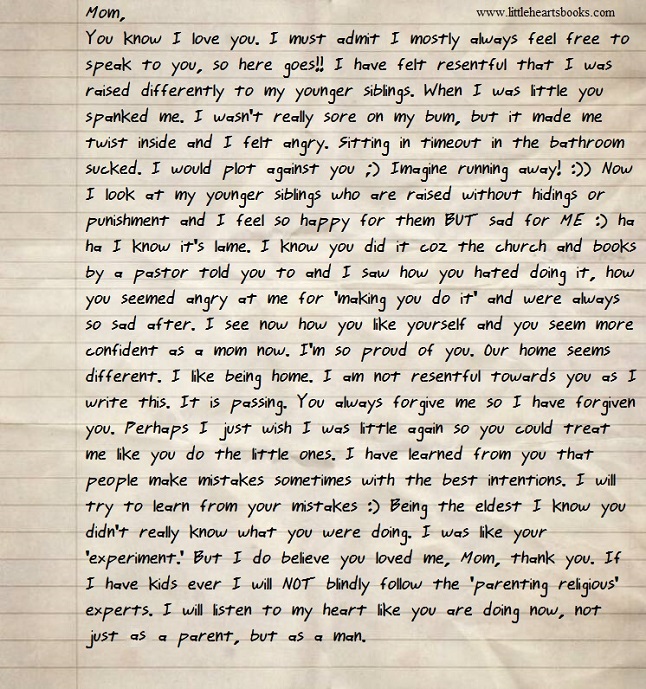 Oh, mama, that made me tear up. Your guy is more than okay. He’s brilliantly more than okay! He’s thoughtfully working through his feelings and sharing them with you honestly because he trusts you with his big emotions. And he’s extrapolating from his experiences and yours and coming up with a life plan based on a strength of character that is very, very evident in his writing. ♥
~~~~~~~~~~~~~~
♥ Changing the World, One Little Heart at a Time ♥
Related posts: When Children Act Out ~ Reflecting Our Emotions The Problem with Punishment Backtalk is Communication…LISTEN Changing the World, One Little Heart at a Time 12 Steps to Gentle Parenting Practical, Gentle, Effective Discipline The Color of Change Children of Violence
Award-winnning author, L.R.Knost, is the founder and director of the children's rights advocacy and family consulting group, Little Hearts/Gentle Parenting Resources, and Editor-in-Chief of Holistic Parenting Magazine. Books by L.R.Knost include Whispers Through Time: Communication Through the Ages and Stages of Childhood ; Two Thousand Kisses a Day: Gentle Parenting Through the Ages and Stages ; The Gentle Parent: Positive, Practical, Effective Discipline ; and Jesus, the Gentle Parent: Gentle Christian Parenting the first four books in the Little Hearts Handbook gentle parenting series, and children’s picture books Petey’s Listening Ears and the soon-to-be-released Grumpykins series.
Two Thousand Kisses a Day: Gentle Parenting Through the Ages and Stages
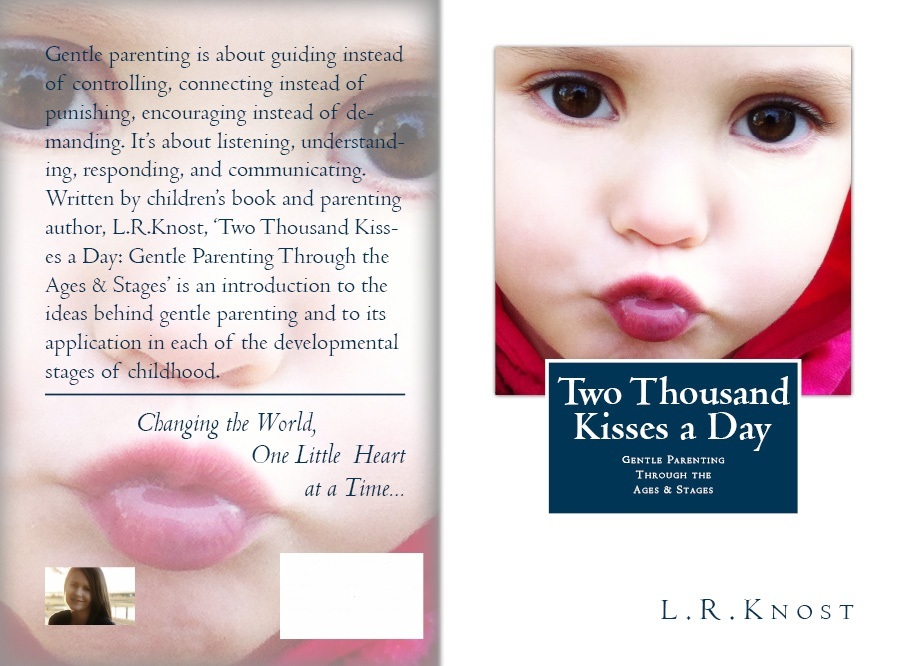 Two Thousand Kisses a Day: Gentle Parenting Through the Ages and Stages now available on Amazon:
~The birth story of a book~
A mother is born…
Many years ago (26 to be exact!), a small, scared, pregnant, teenage girl walked down the aisle to her tall, scared, clueless, young man and they said their “I do’s.”
But what were they going to do? No earthly idea! They didn’t have the internet to surf for blogs about parenting and marriage, couldn’t afford the few paltry magazines available on those subjects at the time, and weren’t convinced that the way their parents had raised them was exactly how they wanted to raise their unexpected little blessing. So, they simply joined hands and hearts and figured it out the old-fashioned way…through trial and error.
The young girl gave birth prematurely and, after a terrifying NICU stay, brought home her barely 5 lb baby boy. Since the young couple were living on one income and were barely able to feed themselves, it made sense to them to breastfeed their little one. Neither one had ever even seen a mother breastfeeding her baby or even heard of a lactation consultant and no one at the hospital had mentioned breastfeeding at all, so the two young people just kept working through the cracked, bleeding nipples, engorgement, over-supply, and other issues until they got it figured out…and then they were breastfeeders!
Neither one of the young couple had ever read a parenting book or had ever even heard the words ‘cry-it-out,’ and the young girl discovered their first night home how much easier it was to clear away all of the pillows and blankets to keep her baby safe and then simply take her little guy into bed with her and breastfeed him when he was hungry…and then they were co-sleepers!
‘Self-soothing’ was another term the two young people had never heard, so the two of them just did what came naturally and picked up their baby when he fussed or grunted or just looked cute and finally found it easier to just snuggle their little preemie into a baby carrier and tote him around with them wherever they went…and then they were babywearers!
As their precious little guy got bigger and began to explore his new world, the young couple delighted in everything he did and simply moved him or distracted him with songs and toys if he got into things. They couldn’t bear the thought of hurting their son, so punitive parenting just wasn’t an option. They decided to treat their little guy like a person instead of a possession and communicate with him instead of punishing him…and then they were gentle discipliners!
Now, this journey might sound like an easy one when summed up this way, but I can assure you it wasn’t. The young couple, my amazing husband and I, encountered strong criticism of our parenting choices through the years:
- We were warned that our marriage would suffer at the very least, and our babies would suffocate at the worst, if we slept with them in our bed instead of putting them in isolation to sleep.
- We were informed that my breasts would look like deflated balloons and reach my knees by my thirties if I breastfed more than a few weeks.
- We were admonished that our children would grow into spoiled brats if we responded to their needs instead of teaching them to ‘deal with it’ and ‘self-soothe’ their own, and would end up as social outcasts or criminals if we encouraged and guided them instead of spanking them.
These challenges to our parenting style were difficult at the time, and they sometimes even resulted in people choosing to de-friend us (not Facebook de-friending, in real life!), but that had the powerful positive effect of making us really examine what our beliefs were and, as a result, strengthening and solidifying our values, our marriage, and our family.
As for the dire warnings listed above:
- Our beautiful, strong, loving marriage is in its 27th year.
- Our children all survived and thrived on co-sleeping (our littlest is still safely and contentedly sleeping in our bed) and have, in their own time, moved happily to their own rooms.
- Except for being a couple of cup sizes larger at the moment since I’m breastfeeding a toddler, lol, my breasts are normal despite the fact that I’ve breastfed little ones for a cumulative 10+ years of my adult life!
- Our children are, in order, a 25-year-old Pastor (our firstborn son mentioned in the story above who is now a husband and father of two!), a 23-year-old Family Therapist, an 18-year-old pre-med university student on scholarship, 13- and 7-year-old beautiful and well-behaved homeschooled girls with lots of friends (soooo not social outcasts!), and a sweet and happy 2-year-old baby girl. Not a spoiled brat or criminal in the bunch!
Our journey to gentle parenting has had another, somewhat unexpected, effect. While we may not agree with others’ parenting choices, we have been on the receiving end of criticism far too long not to have learned this lesson: Gentle parenting is for parents, too! We have learned to respond gently to our friends who don’t agree with us, even when they don’t respond gently to us. Responding with harshness and criticism doesn’t work with adults any better than it does with children! Responding gently to those who disagree with us may or may not affect their parenting choices, but what it does do is model respectful behavior and conflict resolution to our children and, most of the time, preserve dear friendships.
A gentle parenting advocate is born…
This journey also resulted in a passion for children and family harmony that launched me many years ago into the world of parent coaching and child advocacy and later initiated the creation of Little Hearts/Gentle Parenting Resources as a consulting and educational resource for parents, caregivers, and educators. The culmination of this work led to the development of a series of gentle parenting handbooks designed to equip parents with the information and tools they need to gently guide their children from infancy through toddlerhood and the preschool years and on through middle childhood, the teen years, and beyond.
A book is born…
Two Thousand Kisses a Day: Gentle Parenting Through the Ages and Stages is the first in the series. It is an introduction to the ideas behind gentle parenting and provides practical examples of its application in each of the developmental stages of childhood such as the transition from diapers to potty, problems with sharing, coping with picky eaters, guiding children gently through behavioral issues, and more!
*also published in The Natural Parent Magazine
Award-winnning author, L.R.Knost, is the founder and director of the children's rights advocacy and family consulting group, Little Hearts/Gentle Parenting Resources, and Editor-in-Chief of Holistic Parenting Magazine. Books by L.R.Knost include Whispers Through Time: Communication Through the Ages and Stages of Childhood ; Two Thousand Kisses a Day: Gentle Parenting Through the Ages and Stages ; The Gentle Parent: Positive, Practical, Effective Discipline ; and Jesus, the Gentle Parent: Gentle Christian Parenting the first four books in the Little Hearts Handbook gentle parenting series, and children’s picture books Petey’s Listening Ears and the soon-to-be-released Grumpykins series.
A Mile In Their Shoes
Before you judge someone, walk a mile in their shoes. ~Unknown
My mother always taught me to think about things from other people’s perspective before reacting to them, a life lesson that has translated into the empathetic, gentle style of parenting I teach, write about, and follow with my own children. Discerning what other people feel isn’t always easy, of course, and our own experiences, attitudes, and emotions can get in the way. But seeking to not just understand, but to really feel what another person feels is vital to true communication and connection. To that end, I try to always ask myself, whether interacting with my children, my husband, or any other person who crosses my path, “How would I feel if…”
So come, take a walk with me~
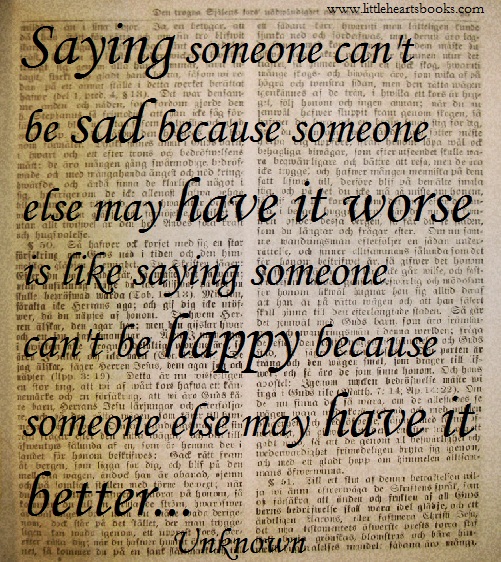
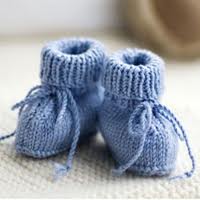 How would I feel if I was suddenly thrust from my safe, familiar world into a startlingly new and uncomfortable world where I couldn’t function on my own, where my very survival depended entirely on beings who I didn’t know, didn’t understand, and who didn’t understand me? Would I learn to feel safe in this new world if they left me for hours on end in dark places with no way to communicate, no way to meet my own needs? Or would I learn to trust these new beings if my needs were met day and night, if they were always available, always responsive, always gentle?
 How would I feel if I was a small person in a big world, a world where large beings were constantly jabbering at me in a language I barely understood, a world where everything was a challenge, from climbing out of a chair to learning to control my bodily functions, a world where every day, all day long, I was confronted with new things to taste, new things to explore, new things to discover. If I tried to communicate and no one slowed down to listen, would I learn to listen? If I got overwhelmed by all the new challenges and was punished, would I learn how to cope with my emotions? If I was snatched away from my explorations with no warning, no explanation, would I learn to respect other people’s spaces and paces? Or would I learn to listen if I was heard, cope if I was helped, and respect if I was respected?
 How would I feel if I was an adult-sized person, my body flooded with a consistently inconsistent rush of mind-altering hormones, in a world of adults who demanded adult maturity from me, but treated me like a child? Would I learn to cope with the huge life changes taking place if my awkwardness incited conflict instead of compassion? Would I be willing to share my struggles if my still-growing communication skills were taken at face value instead of my heart being heard? Would I desire to make good choices if the most important people in my life didn’t trust me enough to let me make them? Or would I learn confidence by being understood, trust by being truly heard, responsibility by being trusted to be responsible?
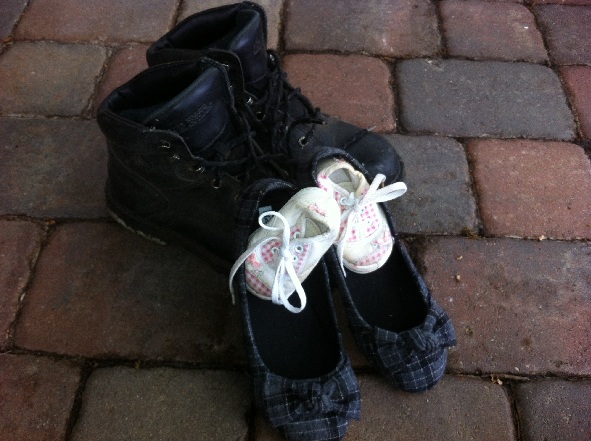 How would I feel if I was a new parent, struggling with exhaustion, overwhelmed by newness, desperate to make the right decisions for my precious new baby, but was surrounded by conflicting advice and head-shakers and nay-sayers? Would I learn to trust my instincts if every choice I made was the subject of commentary and unsolicited advice? Would I grow into my new role if I was pushed and shamed and coerced into following other people’s parenting choices? Would I learn to share my fears and concerns if they were met with negativity, ridicule, and debate? Or would I find my own path in the world of parenting if I was allowed to listen to my heart? Would I discover my parenting niche if I was trusted to make my own choices? Would I be open to new ideas and find support if my struggles were met with reassurance and compassion and acceptance?
 How would I feel if I was a strong, wise, gifted person in a body that was beginning to fail me with age? Would I feel valued if others only saw my frailty and not my strength? Would I offer wisdom if my life experiences were ridiculed? Would I share my gifts if no one bothered to slow down and recognize them? Or would I still feel I had life to live, something to give if my stories were heard, if my wisdom was received, if someone, anyone, took the time to sit with me and talk for awhile.
 Related posts:
The Seven Wonders of the World of Childhood
Playground Confessions~Look Who’s Talking!
The Measure of Success~Chinese Parents and French Parents Can’t BOTH Be Superior!
Award-winnning author, L.R.Knost, is the founder and director of the children's rights advocacy and family consulting group, Little Hearts/Gentle Parenting Resources, and Editor-in-Chief of Holistic Parenting Magazine. Books by L.R.Knost include Whispers Through Time: Communication Through the Ages and Stages of Childhood ; Two Thousand Kisses a Day: Gentle Parenting Through the Ages and Stages ; The Gentle Parent: Positive, Practical, Effective Discipline ; and Jesus, the Gentle Parent: Gentle Christian Parenting the first four books in the Little Hearts Handbook gentle parenting series, and children’s picture books Petey’s Listening Ears and the soon-to-be-released Grumpykins series.
Raising Super Readers~The MARVELous Power of Comic Books!
 Captain America made his comic book debut on this day in 1941. He embodied the American Dream, a nobody who became a somebody, an everyday, struggling, working class American who became a hero.
For Captain America, the dream became a reality because of a diabolical villain trying to take over the world and a risky scientific experiment to create a hero who could stop him. (Seriously, though, who would really let strangers stick them in a radiation chamber and inject green slime into their body?!?)
For children who feel like nobodies, though, who struggle everyday, who have to work harder in class than their peers, Captain America might just be the key to unlocking the power to read.
Children like My Renaissance Girl who struggle with severe dyslexia and/or other learning disabilities as well as children who don’t have learning disabilities but are reluctant readers [ImaginationSoup.net] often rely heavily upon illustrations to help them keep track of the storyline. This provides them with the motivation to continue to read, which in turn increases their ability to read, thus increasing their motivation to read…success leading to success…a virtuous circle!
However a problem arises because, while high quality, beautifully illustrated children’s picture books abound, books appropriate for and of interest to older children often are either sparsely illustrated or not illustrated at all.
Enter the comic book!
Comic books, now generally known as graphic novels, have increasingly been finding their way into classrooms and school libraries as teachers search for tools to not only help their students learn how to read, but to tap into the vivid imagination that is the hallmark of childhood and turn their students onto a lifelong love of reading.
The Graphic Classroom founder, Chris Wilson, has made it his mission to seek out excellent graphic novels covering a wide range of subjects and styles and get them into the public education system here in the U.S.
From Da Vinci: The Renaissance Man to The Action Bible, the graphic novel industry has come a long way from the days of Archie and Jughead. The venerable Stan Lee, himself a rags to riches story on the order of his Marvel character, Captain America, is credited with a large portion of the popularity of the ever more sophisticated world of the graphic novel. His relatable characters, real-world storylines, conversational style, and stunning graphic art have contributed immeasurably to the emergence of graphic novels from the dark ages of the dime store shelves to a powerhouse industry with much to offer the literary world.
When it comes to literacy, Stan Lee brought his own superpowers into play with the formation of the Stan Lee Foundation “to do whatever I could to fight illiteracy in children. Any child who grows up illiterate, unable to read and write — or even semi-literate — can be considered handicapped. Competition throughout the world has grown so keen that every young person needs every possible advantage to even the competitive playing field. The ability to read well, to study, comprehend, and process information is absolutely vital for success as an adult.”
Utilizing graphics in teaching reading is certainly not a foreign concept. Picture books for younger children have been used for centuries to interest children in the written word. (Check out this incredibly cool Superhero ABC graphic art novel for early childhood education!) But incorporating art in the form of illustrations and graphics into curriculum for older students seems to be a relatively new and somewhat controversial concept as evidenced by the Common Core State Standards [Education Week] being adopted in all but three states so far which states “the text should be central, and surrounding materials should be included only when necessary, so as not to distract from the text itself.”
Clearly, the object of the Common Core State Standards is to focus on the mechanics of reading, in effect producing students able to read manuals and textbooks, but with no engagement of the heart, no delighting of the soul, no enrichment of the imagination. In short, the purpose seems to be to produce a generation of automatons who can pass a test on Da Vinci, but can’t think or create or imagine or invent like Da Vinci.
When you consider that “Reading correlates with almost every measurement of positive personal and social behavior surveyed, from scholarship and job success to voting and playing sports.” [BookReporter.com], it makes more sense to raise bookworms than to program robots.
Successful reading means far more than possessing the ability to read. Engaging the hearts of students moves reading success beyond a life skill and turns it into a life style. Children who love to read…READ. Adults who love to read…READ. And graphic novels are too powerful of a tool in our arsenal to be disregarded because of pride or prejudice.
~Excelsior
Related posts:
Children who love to read…READ! Engaging children’s hearts in the wonder of reading instead of just training their minds in its mechanics. Raising Bookworms
8 Reasons to Let Your Kids Read Comics. Imagination Soup
It’s time for a return to childhood, to simplicity, to running and climbing and laughing in the sunshine, to experiencing happiness instead of being trained for a lifetime of pursuing happiness…it’s time to let children be children again. A Return to Childhood
Think homeschooled children are unsocialized, over-controlled, locked-away-from-the-world misfits? Think again! My Renaissance Girl
Playground Confessions~Look Who’s Talking!
Alphabet Fun~Imagination From A to Z!
Live to Play~Play to Learn~Learn to Live!
Award-winnning author, L.R.Knost, is the founder and director of the children's rights advocacy and family consulting group, Little Hearts/Gentle Parenting Resources, and Editor-in-Chief of Holistic Parenting Magazine. Books by L.R.Knost include Whispers Through Time: Communication Through the Ages and Stages of Childhood ; Two Thousand Kisses a Day: Gentle Parenting Through the Ages and Stages ; The Gentle Parent: Positive, Practical, Effective Discipline ; and Jesus, the Gentle Parent: Gentle Christian Parenting the first four books in the Little Hearts Handbook gentle parenting series, and children’s picture books Petey’s Listening Ears and the soon-to-be-released Grumpykins series.
My Renaissance Girl
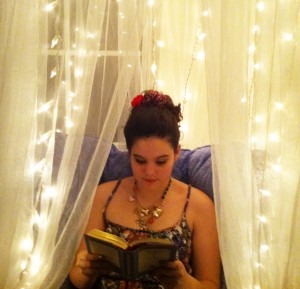 There’s another teenager in our house! My Renaissance Girl turned thirteen this week. It’s hard to believe my little preemie who started her days in the NICU, came home at 3 lbs 13 oz on an apnea/heart monitor, has struggled with severe dyslexia, sensory and auditory processing disorders, vestibular issues, attention deficit disorder, and more, is now a poised and confident young lady who is frequently absorbed in classic literature, enthralled with the art of Masters such as Van Gogh and Degas, and who’s musical tastes run from Mozart to The Beatles.
My children are homeschooled and are quite used to interacting in a mutually respectful manner with adults in banks, doctor’s offices, libraries, etc, so it’s always a bit of a culture shock when we run into society’s negative view of adolescents as we did on Renaissance Girl’s birthday. Literally, every time we mentioned that it was her thirteenth birthday as we shopped for gifts and took her for a birthday lunch, the reaction was rolled eyes and either expressions of condolences or warnings to my husband and I. Well, except for the one waiter who leered at her until my hubs caught his eye and shut him down!
What a world we live in, seriously. Is it any wonder that teenagers seem to have anti-social tendencies when, based on chronology alone, they’re either pigeon-holed as miscreants without anyone taking the time to actually talk to them (or, more importantly, listen to them!) or immediately become the object of sexual attention?

My Renaissance Girl
For those of you willing to look beyond the number of years a person has lived on this earth and see the person themselves, let me introduce you to a young lady who has some amazing gifts to offer this world…my Renaissance Girl!
Renaissance Girl has a heart for the elderly, the poor, the hurting, for anyone who is suffering. From her earliest years she would toddle up to an elderly person sitting alone at church or the park and climb up beside them to ‘chat’ or sing them a song or show them a flower she’d picked. Her heart breaks when she hears of children being abused or neglected, and she plans to adopt as many as her future husband will agree to (and with her sweet, strong spirit, I imagine she’ll follow through on that!)
 The paintings of The Masters ignite Renaissance Girl’s imagination. For her birthday we ordered a Van Gogh’s ‘Starry Night’ inspired ice cream cake from our little town’s best kept secret…Donna C, the decorator at our local Dairy Queen!
As part of our interest-led homeschooling, we’ll be working our way through unit studies on Michelangelo, Renoir, Van Gogh, Picasso, and more with materials from here.

Source: artmuralsforkids.blogspot.com via Linda on Pinterest
Renaissance Girl has decorated her room like a small artist’s loft with a drafting desk, a custom mural of a Parisian street scene (by your’s truly!), a romantic little reading nook with twinkle lights, and a stainless steel cable (Ikea!) stretched across the wall for her to hang her art, along with an art wall waiting to be filled.




Renaissance Girl studies with Mozart filling the silence (an SPD and ADD coping technique), and then rocks out to the Beatles on her brother’s Xbox Rock Band. She picks out tunes on the piano, trying to teach herself to play by ear, and is working on teaching herself to play the guitar.
Her beautiful mind sees the world through a unique lens similar to those of historical icons such as Thomas Edison, Leonardo Da Vinci, Benjamin Franklin, and Albert Einstein. While academics have been a huge challenge for her, the artistic and musical gifts she’s been given are incredible, and her gentle, sensitive soul is a rare and precious treasure. Many years of therapy have yielded the ability to read, and she’s like a butterfly newly emerged from her cocoon. Jane Eyre, Little Women, Anne of Green Gables, all have sent her beautiful mind soaring to different times and places, and all have become intimate, lifelong friends with my sweet Renaissance Girl. (From Beautiful Minds)
From her own artistic ability to her fascination with The Masters, her beautiful voice to her eclectic taste in music, and her humorous storytelling to her love of literature, my Renaissance Girl is much, much more than ‘just’ a teenager or ‘just’ a girl or ‘just’ anything. She is an incredible gift to the world, and our family is blessed beyond measure to have her!
Think homeschooled children are unsocialized, over-controlled, locked-away-from-the-world misfits? Think again!
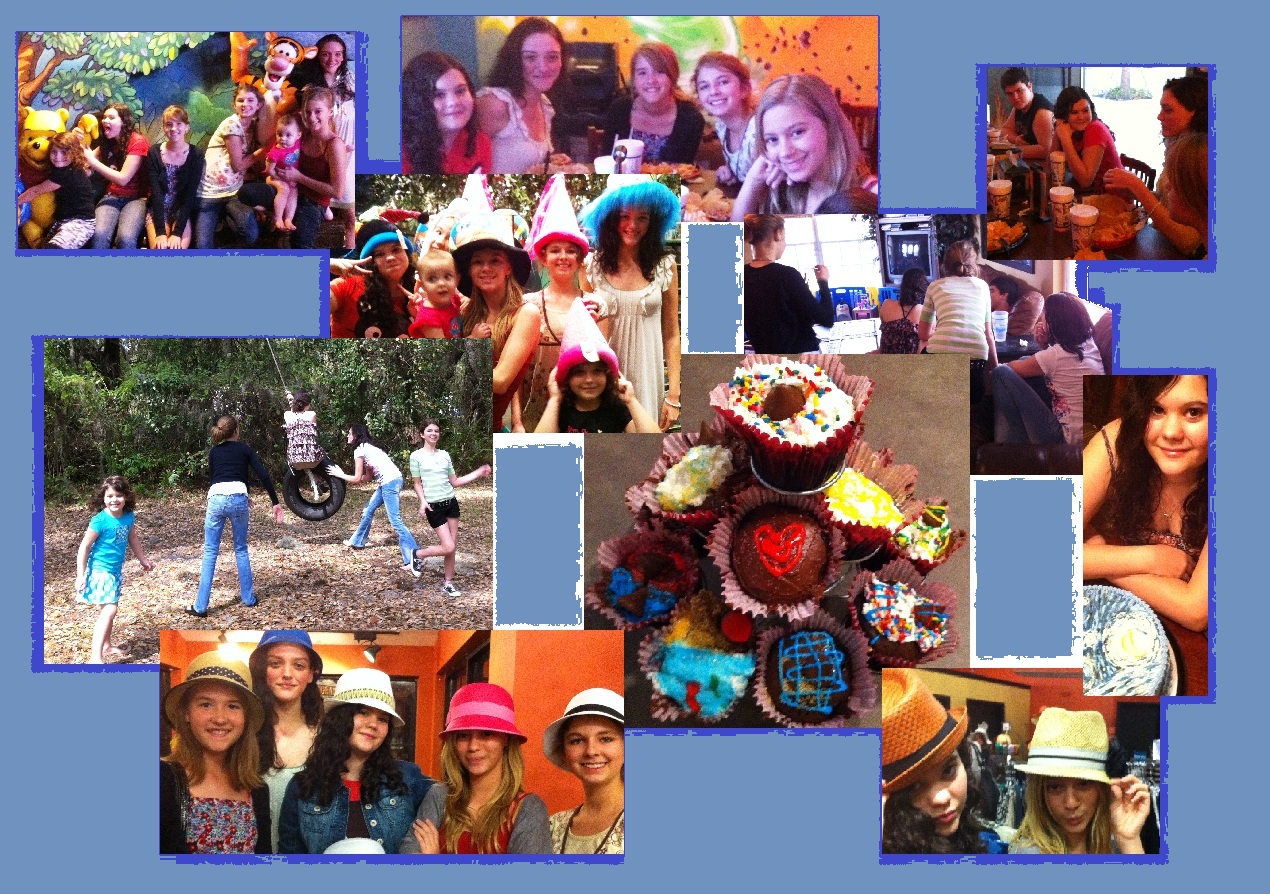
From goofing around in Goofy hats at Downtown Disney to playing Just Dance 3 on the Xbox Kinect, from gales of giggles pushing each other on the tire swing to gathering around to check out the awesome cello mastery of ThePianoGuys, from chowing down on mexican food at Tijuana Flats to burning waffles for breakfast, and from trying on jewelry to decorating cupcakes, these homeschooled girls are as All-American as apple pie!
Check out Renaissance Girl’s favorite YouTube version of ThePianoGuy’s dueling cellos!
Happy 13th Birthday, My Renaissance Girl!
Related posts:
Helping Unique Learners Find Their Genius
200 Ways to Bless your Children with a Happy Childhood
Playground Confessions~Look Who’s Talking!
Into the Looking Glass~Teens and Self-Esteem
Tots to Teens~Communication Through the Ages and Stages
Gentle Parenting~The Teen Years…Tips for Talking to Teens
Award-winnning author, L.R.Knost, is the founder and director of the children's rights advocacy and family consulting group, Little Hearts/Gentle Parenting Resources, and Editor-in-Chief of Holistic Parenting Magazine. Books by L.R.Knost include Whispers Through Time: Communication Through the Ages and Stages of Childhood ; Two Thousand Kisses a Day: Gentle Parenting Through the Ages and Stages ; The Gentle Parent: Positive, Practical, Effective Discipline ; and Jesus, the Gentle Parent: Gentle Christian Parenting the first four books in the Little Hearts Handbook gentle parenting series, and children’s picture books Petey’s Listening Ears and the soon-to-be-released Grumpykins series.