
Sandbox Soapbox: Toddler Insights
[Excerpt from The Gentle Parent: Positive, Practical, Effective Discipline by L.R.Knost. Whispers Through Time: Communication Through the Ages and Stages of Childhood, Two Thousand Kisses a Day: Gentle Parenting Through the Ages and Stages, and Jesus, the Gentle Parent: Gentle Christian Parenting also available on Amazon and through other major retailers.]
~~~~~~~~~~~~~~~~~~~~~
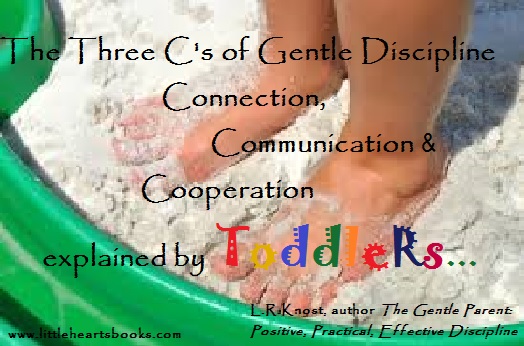 As we step into the toddler zone, let’s start where we should always start…with observing and understanding so that we can not only grow happy, well-rounded children, but also grow as parents and as humans ourselves. So to begin to implement the Three C’s of gentle discipline – Connection, Communication, and Cooperation – let’s take a peek inside the mind of the toddler by listening in on a sandbox conversation at the park:
 Toddler 1: You look a little frazzled, Dude. Hard day?
 Toddler 2: Hard doesn’t even begin to describe my day! I love my mommy to pieces, but seriously, she does NOT know how to share. I took one little thing out of her purse, and she freaked! Snatching and saying, “Mine!” and everything. And right in the middle of the store, too! So embarrassing. Everybody was looking at me, rolling their eyes. I felt like a total failure.
Toddler 1: I hear you! I have the same problem. And mine has been getting into EVERYTHING, too! Like, I stashed my cracker under the couch so I could have a little snack later, and she totally threw it in the trash! Who does that?
Toddler 2: You think that’s bad? Check this. I’m minding my own business, just chillin’ with my toys, and she just snatches me up and carts me off and straps me in the highchair, no warning at all. And I’m not even hungry! Then she gets all upset when I do a little physics with my food. Btw, so cool how sometimes it falls straight down and sometimes it splats against the wall. I think it has something to do with the consistency of the food and the angle of my trajectory. Just a working theory atm, though.
Toddler 1: Cool! Let me know what you figure out. How about this. I can’t get anything done! No joke! I spent all morning building this stellar block tower. Dude, you should have seen this thing. It was epic! So, I walk away for like one second, and she dumps the whole thing in the toy box! An entire morning’s work, gone. I don’t know why I bother sometimes.
Toddler 2: Same! And what’s with this new ‘time-out’ thing mine’s into all of a sudden? I get the slightest bit upset about something, and, just when I need a cuddle, she sticks me in this chair and won’t let me get up! Like a chair is a good hugger? Really?
Toddler 1: That is just wrong. Hey, how about this whole potty training dealio? She wants me to do my business in a little plastic bowl. We eat out of those things! Seriously, you gotta wonder what goes on in their brains sometimes.
Toddler 2: You’re lucky. Mine keeps propping me up on that big white contraption with water in it. I could drown! And you should see what happens when she pushes down that handle in the back. Can you say vortex of DOOM?!?
Toddler 1: Not cool, Dude, not cool at all! Are you dealing with tantrums yet? Mine has got a temper like you wouldn’t believe! Anytime she doesn’t get her way, watch out for the fireworks! She yells and flaps her arms and stomps around, and, I hate to say it, but she’s starting to hit. Like that’s going to solve anything. I have no idea how to handle these aggression issues! Why can’t they just be reasonable like us?
Toddler 2: I think it’s a communication issue, myself. I mean, they’re just barely starting to understand us when we talk to them, so I try to cut mine a little slack when she starts getting frustrated. I just stay close, maybe pat her arm or offer her a toy. Sometimes she settles down a bit and starts smiling again, but sometimes she just needs a little time to calm down. I stay present, though, so she knows I’m always there for her.
Toddler 1: I think you’re messing up there, Dude. You need to walk away, just walk away and let her deal. If you comfort her, she’ll expect you to help her process her emotions, and that’ll lead to dependency issues, mark my words! When she freaks, you’ve got to force her to control herself! When she’s ready to be reasonable and listen, then you can be friends again.
Toddler 2: I don’t know. Mine flat out won’t listen. I can’t tell you how many times I have to ask her to play with me before she finally looks up from her toy. What is it with parents and electronics, anyway? And then all she does is say, “Just a minute, hon.” What exactly is a minute, btw?
Toddler 1: ‘Just a minute’ means ‘This is more important than you,’ Dude. Come on, get with the program. You have to make them pay attention! Yell. Throw something. Bite the cat. Whatever it takes! Don’t let them get away with disrespecting you like that or they’ll never pay attention.
Toddler 2: Word. Talk about getting with the program, how do you handle the sleep issues? I just cannot take another sleepless night! She keeps me up for hours every. single. night. It starts out great, bath-time, a book and cuddles, but then she just clocks out like I’m some kind of a toy she can switch off when it gets dark! And, man, is it dark. I don’t know what’s living in my closet, but it is ginormous!
Toddler 1: Sleep training, Dude! It’s the only way. They turn that light out and shut the door, you follow them! Every. Time. Or, if you’re too scared (totally get that, btw) then just start hollering and don’t stop. If you can’t sleep, make sure they can’t, either! And don’t give in. Not even once. You let them get away with that stuff one time, and you’ll never get any sleep, ever! They have to learn that it’s their job to take care of you day and night, even if all you need is a hug!
Toddler 2: Got it. Oh, man, here she comes. Seriously, do you have this problem, too? We’re at the park. Everybody’s having a good time. And she just up and decides to leave. I think she’s got some anti-social tendencies. I’m thinking of having her tested.
Toddler 1: Same here! But I’m working on it. They’ve got to learn it’s not all about them, and it’s our job to teach them. Look, here comes mine, too. Watch and learn, Dude. I’m using the arched-back, flail and wail today. Deep breath and, “No! No! Noooooo…”
Seeing our own actions from another perspective is uncomfortable, no doubt, but the understanding we can achieve is well worth the discomfort if we can learn and grow from it as parents. As Maya Angelou, American author, poet, and self-described Renaissance Woman, wrote, “Do the best you can until you know better. Then when you know better, do better.”
Related posts:
Toddlers, Tantrums, and Time-in’s, Oh my!
The Gift of a Strong-Willed Child
Backtalk is Communication…LISTEN
When Children Act Out ~ Reflecting Our Emotions
Bridge Over Troubled Waters~Parenting a ‘Problem’ Child
The Taming of the Tantrum: A Toddler’s Perspective
Practical, Gentle, Effective Discipline
200 Ways to Bless Your Children with a Happy Childhood
When Things Get Physical: Hitting, Throwing, Kicking, and Biting
 Award-winnning author, L.R.Knost, is the founder and director of the children's rights advocacy and family consulting group, Little Hearts/Gentle Parenting Resources, and Editor-in-Chief of Holistic Parenting Magazine. Books by L.R.Knost include Whispers Through Time: Communication Through the Ages and Stages of Childhood ; Two Thousand Kisses a Day: Gentle Parenting Through the Ages and Stages ; The Gentle Parent: Positive, Practical, Effective Discipline ; and Jesus, the Gentle Parent: Gentle Christian Parenting the first four books in the Little Hearts Handbook gentle parenting series, and children’s picture books Petey’s Listening Ears and the soon-to-be-released Grumpykins series.

Parenting in Public: Toddler Time!
[Reprinted from The Gentle Parent: Positive, Practical, Effective Discipline by L.R.Knost. Whispers Through Time: Communication Through the Ages and Stages of Childhood and Two Thousand Kisses a Day: Gentle Parenting Through the Ages and Stages also available on Amazon and through other major retailers.]
 You’re sitting in a restaurant waiting the prerequisite ten to fifteen minutes for your food to be served, chatting quietly with your spouse and two-year-old, when it happens, that dreaded moment that every parent fears…the sudden switch from table companion to meltdown mayhem when life as you and every patron, staff member, and passerby know it is turned inside out and upside down.
That moment is known as ‘Toddler Time’ which is aptly named because it is, in fact, all about time from the perspective of a toddler. That insignificant ten to fifteen minute waiting period for food to arrive is actually eons in toddler time, eons of hunger, eons of boredom, eons of stillness, eons of being expected to act like the adult that they are years and years (eons!) away from becoming. But you really don’t want to be housebound for all of those eons, right? And yet more and more public places are becoming child un-friendly with snarky signs saying they’ll give your child an espresso and a pony if you don’t control them, or charge you extra if you dare to enter their establishment and support their business with your hard-earned money, or even flat out ban you altogether if you bring ‘the beast’ out in public with you!
And what about those hazy, lazy summer days at the park with the laughter of children floating in the air, mommies wearing sleeping babies in their carriers while chatting and keeping eagle eyes on their precious little monkeys dangling from brightly colored jungle-gyms, when the dreaded moment suddenly hits, and all goes quiet as every eye turns toward the poor soul who called out those awful, awful words, “It’s time to go!” The words echo against the lowering sky, which has conveniently decided to threaten rain just to add to the sheer madness of the moment, and then the shrieking begins. In toddler time, an hour at the park is gone in the blink of an eye, and fun things like being strapped into car seats and baths and naps awaiting at home just add insult to injury.
So what’s a parent to do?
Here are a few preemptive tools for your gentle parenting toolbox:
- Gather a few special ‘quiet’ toys and keep them in a Quiet Bag in the car. To keep their novelty value, only get them out when you go into a store or restaurant and let your little one play with one toy at a time until it’s time to go, saving one last special toy for the car ride home. Some ideas for stocking your Quiet Bag are
- felt busy books
- playdoh
- picture books
- white-erase boards
- coloring books
- small, unlined notebooks
- crayons or washable markers
- mini stuffed animals
- small play figures such as superheroes, dollhouse dolls, cars, trucks, etc.
- chunky, age-appropriate puzzles
- Calm-Me-Jar
- Making a habit out of wearing your little one or letting them ride in a cart or stroller while in stores and keeping them happily occupied while secured in a highchair or on your lap when in restaurants are proactive steps that will help prevent issues with running around and getting into things.
- Keeping your little person occupied is always a good place to start, but if yelling or screaming still become an issue, try responding with a whispered question or two. It’s pretty much irresistible for little ones to quiet down to hear what you’re saying, and even better if what you’re saying is super silly…”I think my nose went outside for a walk.” (with a conspiratorial ‘shared secret’ look) “Could you check for me to see if it’s back yet?” (crossing your eyes to see for yourself)
- With the dreaded leaving-the-park issue, try bringing snacks your small one loves, and instead of saying “Time to go!” try saying “Snack time!” and describe the yumminess waiting for them, all the while gently guiding them to the car. Or brainstorm with your little one ahead of time to come up with a fun activity to do after the park like playing a favorite game together or stopping by the library to pick up a new book to read together. The idea is to involve your toddler in the planning so they feel like they have some control over their lives and also to have something fun to look forward to that will help them through transitions (which are always hard for little ones).
- Don’t forget to pack your ‘funnybone’ for a back-up plan! Humor is a powerful parenting tool, and car seats presented as rocket ships to the moon, shared naptimes (parents can always use the extra sleep!) on marshmallow planets, highchair-bound movie directors with mommy and daddy as the actors, and shopping carts cars that continually stall and need to be fixed by their little riders are all inventive ways of keeping little people too busy and happy to meltdown. (Not to mention that these are great ways to reconnect with your little one and remember just how adorable they really are!)
Actively work at avoiding confrontations and meltdowns by giving choices, staying engaged, listening to your child, and paying attention to triggers such as hunger, tiredness, sickness, etc. When our parenting goals shift from meeting needs and guiding actions to controlling our children, they invariably rebel and the battle is on, not a happy circumstance at any time, but especially difficult to handle in public! (And, in the long run, that makes for an ‘us against them’ relationship that sets the stage for an unhappy home, particularly when the teen years arrive.)
Related posts:
Toddlers, Tantrums, and Time-in’s, Oh my!
The Gift of a Strong-Willed Child
Backtalk is Communication…LISTEN
When Children Act Out ~ Reflecting Our Emotions
Bridge Over Troubled Waters~Parenting a ‘Problem’ Child
The Taming of the Tantrum: A Toddler’s Perspective
Practical, Gentle, Effective Discipline
200 Ways to Bless Your Children with a Happy Childhood
When Children Hit~10 Tips for Parents
Award-winnning author, L.R.Knost, is the founder and director of the children's rights advocacy and family consulting group, Little Hearts/Gentle Parenting Resources, and Editor-in-Chief of Holistic Parenting Magazine. Books by L.R.Knost include Whispers Through Time: Communication Through the Ages and Stages of Childhood ; Two Thousand Kisses a Day: Gentle Parenting Through the Ages and Stages ; The Gentle Parent: Positive, Practical, Effective Discipline ; and Jesus, the Gentle Parent: Gentle Christian Parenting the first four books in the Little Hearts Handbook gentle parenting series, and children’s picture books Petey’s Listening Ears and the soon-to-be-released Grumpykins series.
Reading Challenge 2014!
[Portions reprinted from Raising Bookworms: Life, Learning, and Literacy by L.R.Knost available 2014; Two Thousand Kisses a Day: Gentle Parenting Through the Ages and Stages, Whispers Through Time: Communication Through the Ages and Stages of Childhood, and The Gentle Parent: Positive, Practical, Effective Discipline now available on Amazon]
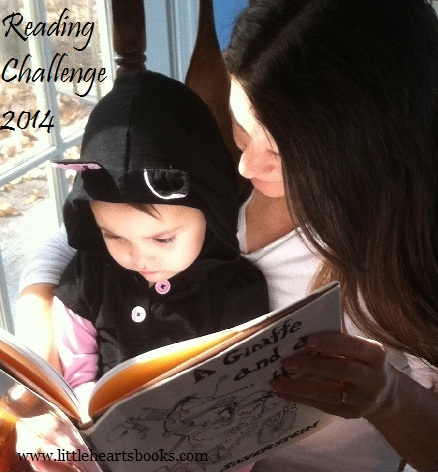 Experts agree that the single best way to turn children on to a life-long love of reading is to simply read to them. Not only is reading to our little ones wonderful for their education, though, but it is also a fun and easy way to build and maintain a strong parent/child connection. Let’s join together this year and commit to reading to our children (or with them if they’re older!) every day of 2014.
Old books, new books, read books, glued books (a nod to my favorite children’s author, Dr. Seuss!), it doesn’t matter what you read. Just read! Read old familiar books your children ask for over and over and over. Read new books you check out from the library or buy from your local independent bookstore. Read books from your own childhood that are passed down through your family. Read books you write together with your children and glue into construction paper pages tied together with yarn. Just read, read, read! (And stop back by and leave a comment with an update now and then to share how you’re doing and which books are your children’s favorites!)
Here are a few links to some book lists to get you started:
Bookworm weighs in on must-have books for your children in Little Hearts’ How to Build a Home Library for Bookworms from Tots to Teens series. Check out…
25 Must-Have Books for Baby Bookworms
25 Must-Have Books for Toddler Bookworms
25 Must-Have Books for Preschool Bookworms
For more ideas about sharing a love of learning with your children, here is my virtual reading room, its bookshelves filled with literacy tips, book recommendations, literary quotes, learning through play ideas, and more. Pour yourself a cup of coffee, grab a cozy chair, and join me on the journey of a lifetime…
- When it comes to reading, do you want your children to become readers or just learn the mechanics of reading? Do you want them to love to read or just to know how? If a love of reading is your goal for your children, here are some ideas to get you started… 8 Tips for Raising Bookworms
- Fairy tales in childhood are stepping-stones throughout life, leading the way through trouble and trial. The value of fairy tales lies not in a brief literary escape from reality, but in the gift of hope that goodness truly is more powerful than evil and that even the darkest reality can lead to a Happily Ever After. Do not take that gift of hope lightly. It has the power to conquer despair in the midst of sorrow, to light the darkness in the valleys of life, to whisper “One more time” in the face of failure. Hope is what gives life to dreams, making the fairy tale the reality. Fairy Tales~The Lost Value of ‘Once upon a time…’
- Imagination is the language of childhood, so speaking their language when introducing our language only makes sense. Let’s ditch the flashcards, turn off the educational dvd’s, and throw out the worksheets…because learning is child’s play! Alphabet Fun~Imagination From A to Z!
- Successful reading means far more than possessing the ability to read. Engaging the hearts of students moves reading success beyond a life skill and turns it into a life style. And graphic novels are too powerful of a tool in our arsenal to be disregarded because of pride or prejudice… Raising Super Readers~The MARVELous Power of Comic Books!
- There is such a rush these days to get children sleeping through the night, weaned off the breast, eating solid foods, potty trained, reading independently, and on and on, that we seem to have lost the ability to simply enjoy life as it happens and let our children do the same. A Return to Childhood
- In the world of a child wonders are as simple as sticks and sheets, leaves and books, boxes and giggles, and the promise in a rainy day. The Seven Wonders of the World of Childhood
- Albert Einstein said, “Everybody is a genius. But if you judge a fish on its ability to climb a tree, it will live its whole life believing that it is stupid.” Unique learners have beautiful minds just waiting to find their genius. We just need to look outside of the box to help them find it. Helping Unique Learners Find Their Genius
- Think homeschooled children are unsocialized, over-controlled, locked-away-from-the-world misfits? Think again! My Renaissance Girl
- My SPD/SLD/ADD (Sensory Processing Disorder, Specific Learning Disability-Dyslexia, Visual and Auditory Processing Disorders, Attention Deficit Disorder, etc) sweetie, aka Renaissance Girl, has raised the bar on my homeschooling skills more times than I can count. Her beautiful mind sees the world through a unique lens similar to those of historical icons such as Thomas Edison, Leonardo Da Vinci, Benjamin Franklin, and Albert Einstein…Beautiful Minds
- Books + Time + Imagination = Endless possibilities! 25 Reasons NOT to Keep Your Children Busy
- I’ve been scouring the web, the bookshelves, and my scattered brain for all the Seussical fun I could find for my little people and yours. Here are a few of my finds… Seuss-ified~Craft-astic~Snack-errific~Education-cool~Fun!
- Parenting choices strongly impact the level and type of attachment a child develops and, by extension, the development of a love of learning. A love of learning grows when it isn’t stifled by fear or stress or regimented by over-structuring or a focus on achievement or competition. Parents fostering a healthy attachment are thus also fostering a life-long love of learning in their children. Love, Play, Learn!
- Truly, what is our goal for our children? Knowledge memorized in lists and tables and regurgitated on bubble-in tests? Or knowledge coupled with experience that leads to understanding and, ultimately, wisdom? Benjamin Franklin said it best when he said, “Tell me and I forget. Teach me and I remember. Involve me and I learn.” The Many Adventures of My Little Pooh Bear
- If you give a toddler a book | He’ll climb into your lap | While he’s in your lap | He might lay his head on your chest | When he lays his head on your chest | He’ll hear your heartbeat | When he hears your heartbeat | He’ll probably ask if you can hear his… If You Give A Toddler A Book…
Award-winnning author, L.R.Knost, is the founder and director of the children's rights advocacy and family consulting group, Little Hearts/Gentle Parenting Resources, and Editor-in-Chief of Holistic Parenting Magazine. Books by L.R.Knost include Whispers Through Time: Communication Through the Ages and Stages of Childhood ; Two Thousand Kisses a Day: Gentle Parenting Through the Ages and Stages ; The Gentle Parent: Positive, Practical, Effective Discipline ; and Jesus, the Gentle Parent: Gentle Christian Parenting the first four books in the Little Hearts Handbook gentle parenting series, and children’s picture books Petey’s Listening Ears and the soon-to-be-released Grumpykins series.
When Things Get Physical: Hitting, Throwing, Kicking, and Biting
[Reprinted from The Gentle Parent: Positive, Practical, Effective Discipline by L.R.Knost. Whispers Through Time: Communication Through the Ages and Stages of Childhood and Two Thousand Kisses a Day: Gentle Parenting Through the Ages and Stages also available on Amazon and through other major retailers.]
~~~~~~~~~~~~~~~~~~~~~
 Toddlers and preschoolers are still in the early stages of learning to communicate verbally. Add to that the fact that they have little-to-no impulse control and very immature social skills, and you’ve got a recipe for an instinctive physical response (i.e. hitting, kicking, biting, hair pulling, throwing things, etc.) to situations when they are frustrated, angry, excited, scared, or just tired and out-of-sorts.
Many parents who practice gentle discipline wonder where their little one picked up the behavior, not realizing that it is a normal and age-appropriate reaction, albeit an undesirable one. Very often parents are advised to spank their child to train them not to hit others, especially those who are smaller and weaker than they are.
The concept of using consequences, physical or otherwise, as a deterrent for hitting is based on the misconception that small children have the capacity for forethought (i.e. “If I hit, I will get in trouble. Therefore I will not hit.”) and that they are choosing to disobey. As mentioned in the last chapter, though, the prefrontal cortex, where reasoning, logic, and forethought take place, is highly immature in toddlers and preschoolers and actually doesn’t develop fully until the mid-twenties. Small children act instinctively and impulsively even when not stressed simply because that is what they are developmentally capable of, but when they are stressed, even the small amount of self-control they may have attained flies right out the window, and before they know it they’ve reacted physically to their stress.
The plain truth is, though, that even if punishment was effective as a deterrent, a gentle response to physical aggression is literally the only response that a parent can make that won’t actually reinforce the aggression. Responding with counter-aggression by powering-up on a child, whether physically or verbally, merely reinforces the idea that ‘might makes right’ and that whoever is the dominant figure at any given moment has the right to force others to bend to their will.
Obviously, parents who practice gentle discipline don’t believe that hitting a child to teach them not to hit others is an appropriate or even logical option. But knowing that they don’t want to resort to physical punishment and knowing what to do instead are two different things entirely.
So, what other options does a gentle parent have when confronted with a little one who has started lashing out physically whether from anger, frustration, or excitement?
- Supervision! Supervision! Supervision! When you have a child who is acting out physically, it’s vital to remain in visual contact with them whenever they are with other children. Easier said than done, I know, but it’s important not to leave small children alone with a child who is struggling with physical aggression. Some steps you can take are to either take the child with you when you have to leave the room, take the other child/children with you, or use baby gates to section off areas where you can separate the children to play (in a non-punitive manner) when you have to be out of visual range momentarily.
- Intervention. Consistent intervention by an observant parent, preferably before the situation escalates to physical aggression, is essential in order to protect the other children. When you see your child heading toward a physical response to a situation, reminding them to use their words or offering a solution to the problem will often help avert a lash out. If your child has already started to become physical, but hasn’t fully escalated, reminding them to “Use your gentle hands” will give them a little head’s up that they are headed in the wrong direction and give them an opportunity to redirect themselves. Suggesting alternative options will equip your child with the tools they need to handle their feelings in acceptable ways.
- Prevention. If scratching or biting are issues be sure to keep your little one’s nails trimmed and try to stay on top of teething pain. When it comes to teething, small children are frequently either dealing with swollen gums from a tooth starting to come in or one that has just come in, so being aware of that and using amber necklaces, keeping a supply of damp, frozen washcloths available, and giving a bit of ibuprofen when needed are good preventatives to biting.
- Remind and redirect. If hitting, biting, scratching, etc. are the result of over-exuberance, consistently reminding a little one to “Use your gentle hands. Can you show me your gentle hands?” or that “Teeth are for smiling, not biting. Can you show me your smile?” and offering specific alternatives such as clapping their hands to show their excitement will help to redirect them to more appropriate expressions of their big emotions.
- Respect. Respecting a child’s possessions helps them to share by offering them the chance to choose. Feeling more in control of what does or does not need to be shared is a proactive step toward a child feeling more in control of their body and impulses. You might allow their room to be off-limits to their siblings or possibly have a ‘special’ toy box where they can keep a select few toys that they don’t have to share, but can only play with in their room or when the other children are sleeping or otherwise occupied. If a situation arises where they aren’t willing to share something, they can have the option to choose to put that toy in the ‘special’ toy box, but will need to decide which toy to take out of the box to share in its place.
- Outlets. Children who feel out-of-control need outlets for their big feelings. If they’re angry, they can go to their room and punch a bop bag or go outside and throw or kick a ball around. But if they’re headed toward a meltdown, they may need help processing their feelings, and a Calm-Me-Jar and time-in (see Chapter Eight) may be the best option.
- Practice. Role playing can be helpful with a child who repeatedly lapses into physical aggression. You can take turns being the ‘hit-ee’ and ‘hitter’ (avoid using labels such as ‘victim’ and ‘aggressor’ with your child) and show them different ways of handling situations that you know have caused them difficulties in the past.
- Silliness. One of my favorite tools when dealing with toddler’s and preschooler’s aggression is playing the ‘I’m the boss of you, hands!’ game (can also be used for teeth, feet, etc.) in which I remind them that they are the ‘boss’ of their hands and ask them to tell their hands what they can or cannot do. (i.e. Me: “What are you going to tell your hands if they try to snatch a toy?” Child: “I’ll tell them, ‘No way, hands! I’m the boss of you!”) Little ones love the idea of being the boss and generally respond well to this type of play.
- More silliness. For younger, non-verbal children who may not be ready for the “I’m the boss of you, hands!” game yet, if they’ve hit, pinched, snatched, etc. try ‘checking’ to see if they have gentle hands by exaggeratedly examining their hands and then kissing each palm and declaring, “Yep, that’s a gentle hand, all right!” The positive, declarative statement will help them to develop a positive self-image and set the foundation for self-control as they grow up believing that, yes, they are good and gentle little people!
- Modeling. If your child has already hit someone, you will need to first address the injured child’s needs. If you’re angry with your child for hitting, and you very well may be, it’s okay to share that with them in a calm voice and let them know that you need a moment to console the injured child and to calm down before you will be ready to talk with them. What you are actually doing is modeling self-control and coping mechanisms, important components for your child to learn in order to master their impulse to lash out.
- Teaching empathy. Reflect what the other person might be feeling, “It hurts your sister when you scratch her. Why don’t we go ask her if she’s okay? If she has an owie, we might need to get a bandage for her.” It’s very intriguing for little ones to feel like they can ‘fix’ something, and often the idea that they have that kind of power makes them more likely to feel they have the power to use their gentle hands, too. The positive impact of learning to think and care about the feelings of others, though, is the real power that will enable them to begin to control the impulse to lash out.
- Verbalize. Offering words to express your child’s feelings of anger or frustration when they have lashed out (i.e. “I see that you don’t want to share the ball. That makes you angry. I’m sorry you’re angry, but I can’t let you hit. What can you do instead of hitting when you’re angry?”) will help your child learn how to verbalize their feelings over time instead of simply acting on them as well as reminding them of the options you’ve provided for them to redirect their big feelings into acceptable outlets.
- A place for time-outs. When a toy is misused (i.e. thrown, used to hit, etc.) and a gentle redirection has already been given, another option is to try the Time-Out Toy Box. Little ones generally find the concept of a toy being put in time-out rather humorous and go along with the removal without a fuss. When your child decides that the toy is ready to behave, you can have your little one tell the toy it has to listen to them because they are the boss. Again, humor is a great communicator! Remember, though to listen and be flexible. If the removal of a toy brings about a strong negative response, a time-in with your little one might be needed. Remaining in-tune with your child will help you to read the situation and respond appropriately.
- Expectations. It’s important in all aspects of parenting to frequently take a step back and examine your expectations to make sure that they are reasonable in regard to your child’s age, developmental stage, temperament, etc. Unrealistic expectations can put significant pressure on a child and cause a great deal of frustration and stress which can lead to aggressive behaviors as well as conflict in your parent/child relationship.
- Honesty. If physical punishment has been a part of your parenting, removing that entirely from your parenting toolbox is a great start toward easing some of the anger, stress, and frustration that is fueling your child’s aggression. Being honest with your child about your own struggles with handling things physically as well as apologizing for using threats, intimidation, and physical pain to control them in the past will begin the healing process in your relationship.
Always try to keep in mind that behaviors are communication. Listening ‘between the lines’ to your child’s aggression will help you to discern whether your child’s behavior is communicating an unmet need such as hunger, a nap, or attention (Yes, attention is a valid need!) or if they are communicating a big emotion that they’re having trouble processing or if they are simply out of their depth and need an adult to help them handle a situation. Children are actually great communicators, just not necessarily verbally. It’s up to us adults to ‘listen’ carefully, empathetically, and calmly to our children’s behavior and then offer them our gentle guidance, wisdom, and support.
Related posts:
Toddlers, Tantrums, and Time-in’s, Oh My!
The Gift of a Strong-Willed Child
Backtalk is Communication…LISTEN
When Children Act Out ~ Reflecting Our Emotions
Bridge Over Troubled Waters~Parenting a ‘Problem’ Child
The Taming of the Tantrum: A Toddler’s Perspective
Practical, Gentle, Effective Discipline
200 Ways to Bless Your Children with a Happy Childhood
Award-winnning author, L.R.Knost, is the founder and director of the children's rights advocacy and family consulting group, Little Hearts/Gentle Parenting Resources, and Editor-in-Chief of Holistic Parenting Magazine. Books by L.R.Knost include Whispers Through Time: Communication Through the Ages and Stages of Childhood ; Two Thousand Kisses a Day: Gentle Parenting Through the Ages and Stages ; The Gentle Parent: Positive, Practical, Effective Discipline ; and Jesus, the Gentle Parent: Gentle Christian Parenting the first four books in the Little Hearts Handbook gentle parenting series, and children’s picture books Petey’s Listening Ears and the soon-to-be-released Grumpykins series.
The Gift of a Strong-Willed Child
[Reprinted from The Gentle Parent: Positive, Practical, Effective Discipline by L.R.Knost. Whispers Through Time: Communication Through the Ages and Stages of Childhood and Two Thousand Kisses a Day: Gentle Parenting Through the Ages and Stages also available on Amazon and through other major retailers.]
 There are some children who are born into the world with the incredible life-gift of a strong will and an indomitable spirit. These children are often deeply misunderstood, and there are rows of books lining bookstore shelves with instructions about how to break their will, how to subdue their spirit, how to force their obedience. What an incredible loss of leadership, passion, and insight this world suffers when parents follow these punitive parenting practices. Not only can we parent these gifted children with gentleness and respect, but the gifts we get in return are priceless!
Take a look at some of the common descriptions used when referring to the characteristics of a strong-willed child:
Demanding, Insistent, Stubborn, Bossy, Cocky, Difficult, Challenging, Fixated, Contrary, Rebellious, Defiant
Now look at some of the common characteristics of adults who are world leaders, CEO’s, entrepreneurs, innovators, world-class athletes, and the like:
Decisive, Determined, Persistent, Authoritative, Confident, Valiant, Gutsy, Committed, Resourceful, Nonconforming, Bold
Note that the characteristics are the same, but the characterizations are negative when applied to a child and positive when applied to an adult.
Other characteristics of strong-willed children that coincide with the characteristics of adult leaders in their fields are:
- They are typically highly creative and intelligent.
- They are usually passionate and intense in their interests and beliefs.
- They often have an insatiable need to know ‘why.’
- They typically learn by doing.
- They tend to have an intense need to test the status quo.
- They are typically highly perfection-oriented, but often that is focused on their expectations of themselves instead of others.
- They tend to need high levels of validation.
- They usually have an intense need to be heard.
- They often have a strong need for emotional safety.
- They tend to be resistant to change unless they feel like they have some control over the change.
- They are often highly sensitive.
- They are typically intensely focused on their latest project or interest.
- They tend to be conscientious and highly committed.
- They are usually intensely independent.
While there’s no doubt that it’s a challenge having a child who seems to challenge everything, there are ways to work with them rather than against them to preserve and nurture their unique gifts. Maintaining a healthy parent/child relationship is vital as you work to find a balance between setting limits with your richly spirited child while not limiting their freedom to stretch and grow and develop into the person they were created to be.
The key to preserving your trust relationship with your child is remaining calm and present and supportive, even while setting and maintaining reasonable boundaries. It is helpful to remember that the most strong-willed children tend to be the ones who identify the most strongly with their parents. So instead of viewing their seemingly constant challenges as defiance or attempts to thwart authority, work to parent from a place of understanding that your strong-willed child is actually on a discovery mission and is doing endless ‘research’ on you by testing and retesting and digging and chiseling to discover all of your quirks and foibles and ups and downs and strengths and weaknesses. This kind of testing isn’t negative unless you make it into a battle of wills instead of responding with gentle, respectful guidance. Taking this stance will help you to keep from seeing the challenges as personal insults and, instead, see the challenges as attempts to learn and grow and understand.
There is no doubt, though, that parenting a child with the gift of a strong will is a constant exercise in patience and self-regulation. The personal growth you will experience is invaluable as you seek to parent with empathy and wisdom and compassion, but it can be draining and will often stretch you far, far out of your comfort zone. Knowing that and being prepared for it will help you cope with the inevitable stresses, and being ready ahead of time with some specific strategies for handling the challenges will help you to respond calmly and effectively.
This is a good place to revisit the Three C’s of gentle discipline—Connection, Communication, and Cooperation.
Connection ~ Maintaining a secure connection with your spirited child is vital. It is the springboard from which all of your interactions with your child will originate, and it is the touchstone to which you will both return, again and again and again, when your relationship gets strained and stained and stretched.
- Play word games, board games, rough-and-tumble outdoor games, silly face in the mirror games. Play is the language of childhood, so make sure to speak your child’s language every day.
- Laugh together. Humor is an undervalued parenting tool. But it lowers defenses, inspires smiles, brings people together, and reconnects hearts.
- Read storybooks, chapter books, travel brochures, encyclopedias, anything that will inspire you to dream together, talk, plan, get excited, share interests.
- Focus more on who your child is than on what your child does. Remember, you’re growing a person, not fixing a problem. So make sure to spend time getting to know the person, not just the child. It doesn’t have to cost anything. Just walk together, talk together, share ice cream cones, spot shapes in the clouds, and enjoy each other.
Communication ~ Children have their own ‘inner world’ of thoughts and plans and problems and worries and hopes and dreams that are occupying their time and attention, so a lack of cooperation is often simply the result of having a different agenda than we do. Getting some insight into that ‘inner world’ is key in guiding and growing them respectfully.
- Listen with your heart. Listen ‘between the lines’ to what your child is communicating through their behavior. Listen and listen and listen some more. That is always, always the first step in communicating with your child.
- Reflect, connect, and redirect. Reflect what you hear, whether it’s communicated by your child’s behavior or their words. This not only validates their emotions and lets them know that you hear and understand them, but it also helps them to understand their own emotions. For instance, if your child is upset that he can’t have a cookie after brushing his teeth for bedtime, try saying, “I hear you. You’re upset because you want a cookie.” Then reestablish your connection, “I like cookies, too!” and offer a solution, “How about we go pick out the two best cookies and put them in a special container that we can take to the park in the morning?”
- Don’t take non-compliance as a personal insult. A strong-willed child is very much their own person with their own agenda. Focus on inviting cooperation instead of demanding obedience. Whether it’s staying in bed or cleaning up or whatever the issue, make it a team effort and come up with a game plan ahead of time. For example, you could say, “You seem to be having trouble staying in bed at night. What do you think would help you to be more ready to go to sleep when it’s time for bed?” or “It’s important to pick up our things so they don’t get broken, let’s put on the timer and work together for ten minutes and see who gets the most picked up.”
- Make a firm commitment not to resort to punishments to control behavior. The resentment that comes from being punished absolves children in their own minds of responsibility. It doesn’t teach them responsibility, and resentment can actually cause a lot of the behaviors you are trying to avoid.
- Communicate daily, outwardly to your child and inwardly to yourself, the positive aspects of your child’s personality. When the focus is on ‘fixing’ a child, they get the message that they are somehow broken, and that is not a healthy self-image to take into adulthood.
- ‘No’ is not a complete thought. It is an imperative, a command. It doesn’t teach. It tells. If you want your child to learn to think like an adult, take the time to explain your adult thinking.
- Remember that children, especially when they are upset, open ‘conversations’ through their behavior, and it’s up to us, the only adults in the relationship, to gently guide them toward continuing those conversations verbally as well as equipping them with the resources to be able to do so.
- Also keep in mind that the social mores of rudeness simply aren’t inborn and don’t apply to early interactions with our children. They are learned by imitating how we as parents behave. Politeness is a heart issue that cannot be imposed by the will of another unless we want it to only be an external façade instead of a heartfelt courtesy. Helping your strong-willed child learn to speak kindly means speaking kindly to your child as well as offering guidance when they’ve been rude such as saying, “That is not a nice tone of voice” or “That isn’t a kind thing to say” and then offering a do-over “Can you try saying that to me again more nicely? I’ll always try my best to be nice to you, and I would like you to try to do the same for me.” (see Appendix B in The Gentle Parent: Positive, Practical, Effective Discipline for more ideas)
Cooperation ~ Always keep at the forefront of your parenting goals that you are seeking thoughtful cooperation, not mindless compliance. That way you will remember to treat your child as a thoughtful individual with ideas and needs and feelings of their own instead of a mindless drone there to do your bidding.
- Set clear limits and explain them in age-appropriate terms. Remember, if you want to invite cooperation, you have to actually issue the invitation to cooperate!
- Limit the number of limits. Spirited children are often stressed children simply because of their own intense emotions and reactions to things, so set them up for success by keeping your limits few and clear and by maintaining them consistently.
- Make sure to let your child have a voice in determining the limits so they feel like they have some control over their lives and so they feel some ownership over the limits.
- Brainstorm together ways of helping everyone to work together. Some ideas are to come up with hand signals or words that remain your little secret codes to indicate when it’s time to leave the park or to do homework or to dial the activity level or noise volume down a few notches.
- Invite cooperation by creating daily routines together. Don’t be surprised if your child ends up being the one who is a stickler for following the routine, even to the point of nagging you to follow it. These gifted children tend to be all-in, fully focused and committed, and they’ll expect you to be the same!
- Cooperate with your child’s needs and personality by working with them rather than against them. For instance, if you know that your child has a hard time leaving a project, give them plenty of time to find a good stopping point when you need them to leave it for a while. Or if you know that your child has a hard time following directions at bedtime, try writing or drawing the tasks that need to be done (i.e. toothbrushing, pajamas, etc.) on ping-pong balls and put them in a small ‘bedtime jar’ so your child can feel some control over their routine as they independently pick out the balls one by one for a ‘surprise’ nighttime order of tasks or take them all out and decide what order to do them in themselves.
- If you are already locked in a head-to-head power struggle, put away your boxing gloves so your child will (eventually!) feel safe putting away theirs. When you battle with your child, you may win a skirmish or two, but you will lose the treasure…your trust relationship. Putting away the gloves means slowing down, breathing through your own emotions, and finding a way to work through the issue together. Remember, you’re the adult in the relationship, but that doesn’t give you the right to overpower your child; it gives you the responsibility to empower your child. That involves modeling the tools of diplomacy—communication, cooperation, compromise—that you want your child to stock in their own emotional toolkit.
Remember, the children who come into the world with their ‘boxing gloves on’ so to speak are often the ones who become the biggest world changers. It’s not easy raising these little world-changers, I know (Believe me, I know. Two of my six are world-changers-in-the-making!), but the rewards are phenomenal!
Related posts:
Healing Your Hurts So You Don’t Hurt Your Children
Backtalk is Communication…LISTEN
When Children Act Out ~ Reflecting Our Emotions
Bridge Over Troubled Waters~Parenting a ‘Problem’ Child
The Incredible Power of the Whisper
The Taming of the Tantrum: A Toddler’s Perspective
The Thoughtful Parent’s Guide to Positive Parenting Guides
Award-winnning author, L.R.Knost, is the founder and director of the children's rights advocacy and family consulting group, Little Hearts/Gentle Parenting Resources, and Editor-in-Chief of Holistic Parenting Magazine. Books by L.R.Knost include Whispers Through Time: Communication Through the Ages and Stages of Childhood ; Two Thousand Kisses a Day: Gentle Parenting Through the Ages and Stages ; The Gentle Parent: Positive, Practical, Effective Discipline ; and Jesus, the Gentle Parent: Gentle Christian Parenting the first four books in the Little Hearts Handbook gentle parenting series, and children’s picture books Petey’s Listening Ears and the soon-to-be-released Grumpykins series.
Helping Unique Learners Find Their Genius ♥

[From Raising Bookworms: Life, Learning, and Literacy by L.R.Knost available 2014; Two Thousand Kisses a Day: Gentle Parenting Through the Ages and Stages, Whispers Through Time: Communication Through the Ages and Stages of Childhood, and The Gentle Parent: Positive, Practical, Effective Discipline now available on Amazon]
~~~~~~~~~~~~~~~~~~~~~
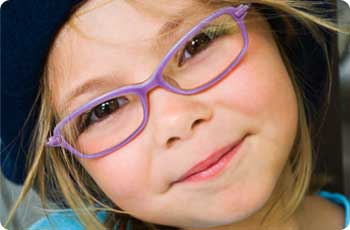 Homeschooling a unique learner can be challenging simply because they don’t get the benefit of access to testing and professional support without a lot of initiative, research, phone calls, and door-knocking on your part. But the trade-off is the freedom to tailor your teaching and learning environment to your child’s needs, and that is of incredible value when educating a unique learner.
Albert Einstein said, “Everybody is a genius. But if you judge a fish on its ability to climb a tree, it will live its whole life believing that it is stupid.” Unique learners have beautiful minds just waiting to find their genius. We just need to look outside of the box to help them find it!
Here are some of the tips, tools, and techniques I’ve learned through years of homeschooling my unique learners to help them work through the challenges they face on a daily basis:
1.) Lighten up…Everything in life is easier if you take it with a grain of salt and learn to laugh. Our unique learners will have more struggles and challenges than the average person throughout life, not just during their school years. That is an unavoidable fact. But who wants to be ‘average’ anyway? Help them to celebrate their uniqueness and embrace the future with grace and humor by sharing your own struggles, modeling coping techniques, and being able to laugh at your own mistakes. Make ‘even missteps are valuable steps on the road to success’ your homeschool motto!
2.) Play…Children learn best through play, and that applies to therapy, as well. Experience is the only true path to learning, so let their imaginations soar as they do the hard work of learning to cope with their unique challenges. (See some play-based, brain-enriching, and eye-tracking activities below)
3.) Jazz it up…Music truly is medicine for the soul. Buy a good set of headphones (not earbuds) and play classic instrumentals softly while your unique learner is trying to concentrate, whether it be on reading or writing or drawing, etc. Filtering out the cacophony of life and soothing their stress levels with the gentle strains of Mozart are only some of the benefits of music. Another benefit is that the rhythms, cadence, and timing of music actually have an organizing effect on the brain!
4.) Exercise…Invest in an exercise bicycle (We got ours for $15 from a yard sale!) that lets your unique learner sit in a comfortable seat while pedaling. The cross-over action of pedaling also has an organizing effect on the brain, and, if used while reading or playing video games (Video games can be great exercises for eye-tracking if you choose the right ones!) can actually increase the speed and effectiveness of learning.
5.) Get crunchy…Believe it or not, another ‘brain organizing’ activity is chewing, particularly crunchy foods, while reading, etc. Some good choices are pretzels, carrot sticks, celery, granola, and nuts. (If you’ve got a sensory sweetie like I do, be careful to let them choose something that won’t send their senses into overdrive.) Sugarless chewing gum can be substituted when you go places where foods aren’t appropriate, but still would like to offer your child a calming, organizing aid.
6.) Listen, listen, listen…Your unique learner will have more than their share of stress and possibly a harder time articulating it than others might. Slow down and really focus on what they are communicating. Listen ‘between the lines’ to their heart, their hurts, their fears, their needs. Be their safe place, their source of comfort and renewal.
7.) Hug it out…Physical closeness is healing, and so make sure that along with the extra struggles and challenges your unique learner faces, they get lots of extra cuddles, snuggles, and hugs. When they get older, a gentle touch on their shoulder or a light hand on their arm will be instantly calming and comforting because it will tap into those feelings of comfort and closeness from earlier childhood.
8.) Watch and learn…Just as every child is different, every child with challenges is unique in how they manifest those challenges and how they handle them. Paying careful attention to your own unique learner’s personality, struggles, aversions, triggers, etc. will give you clues as to how to help them learn to cope. With SPD (Sensory Processing Disorder), for example, avoiding unpleasant stimulus and providing needed stimulus is the name of the game. Typically, you’ll want to provide a quiet learning area at home, lots of freedom to move, permission to step away and de-stress when they feel overwhelmed, etc. and, when going out, avoid buffet-style restaurants and loud, crowded shopping and entertainment venues.
9.) Guide them gently…Discipline (guiding, modeling, teaching, etc.) invites communication and strengthens your parent/child connection. Punishment stifles communication and strains parent/child connections. Keep those vital lines of communication open and your parent/child connection healthy by providing consistent boundaries and gentle guidance, being open to discussion, and modeling the desired behavior.
10.) Read, read, read…Successful readers are not simply those who understand the mechanics of reading any more than successful biking is understanding the mechanics of a bicycle. Readers are born when a love for reading is fostered. Let them see you reading often. Cuddle up and read to them when they are young. Co-read (you read a sentence, they read a sentence, etc) when they are new readers or when they are tired or struggling. Let them read comics (The relation of pictures to words is a huge aid in reading comprehension.). For more reading tips, see Raising Bookworms.
Here are some exercises and activities that have helped my Renaissance Girl with her challenges with SPD, dyslexia, ADD, visual/auditory processing disorders, dyscalculia, etc:
Gross motor and fine motor cross-over exercises to get the two sides of the brain communicating more efficiently…
~Bouncing a brightly colored ball back and forth between us using alternate hands (left, right, left, right, etc.)
~Skipping, marching, swinging while singing 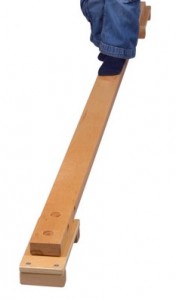
~Climbing
~Balance beam
~Bicycling
~Piano
~Sorting 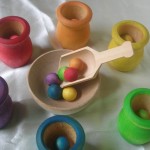
Brain-organizing activities…
~Memory matching
~Tonal music
~Free-style building with blocks, Tinker Toys, Legos, etc.
~Design-matching building
~Sensory bins
Eye-tracking activities…
~Laser pointer games-following a laser pointer light in a darkened room, pointing to moving targets (i.e. bubbles), etc.
~Ceiling tracing-following the seam of the wall and ceiling from corner to corner moving only the eyes
~Video games-Flash Focus and Brain Age are good choices for the Gameboy. Wii Fit, Carnival Games, and Sports Games are good for the Wii. There are also great games for improving eye-tracking for the X-box, Playstation, and online. If you do the research to find what best fits your child’s interests, you’ll have much better participation!
Visual-motor learning…
~Clay letters-tactile learning by forming letters and words on a template with clay or dough 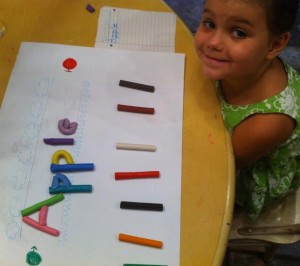
~Contextual learning-Children with dyslexia tend to learn better in context than by breaking things down to their parts, so phonics-based learning is often mind-boggling for them. Flashcards are a no-go because speed and movement impede their attempts to focus rather than help them. Writing-based learning such as copying and illustrating short poems, copying a short sentence from a wall-mounted chalkboard or large paper taped to the wall and illustrating it, writing and illustrating their own stories, and writing stories on the computer are great ways to help them learn to read.
~Once they are beginning to read, graphic novels, large-print chapter books on topics that interest them, and continued creative writing are excellent practice.
~Online reading games can be helpful, but only if they are untimed (Timed anything is a huge stressor and sets them up for frustration and failure.) and your child feels comfortable with the level of activity and brightness on the screen as otherwise these can cause headaches and their eyes to tire quickly.
These tips are not, of course, exhaustive or a replacement for professional therapies. But as you work your way through what can often be a labyrinth of paperwork, meetings, appointments, etc. on your way to finding the services your child needs, these may help to ease the wait a bit. 🙂
Related posts:
Children who love to read…READ! Engaging children’s hearts in the wonder of reading instead of just training their minds in its mechanics. Raising Bookworms
It’s time for a return to childhood, to simplicity, to running and climbing and laughing in the sunshine, to experiencing happiness instead of being trained for a lifetime of pursuing happiness…it’s time to let children be children again. A Return to Childhood
Think homeschooled children are unsocialized, over-controlled, locked-away-from-the-world misfits? Think again! My Renaissance Girl
Successful reading means far more than possessing the ability to read. Engaging the hearts of students moves reading success beyond a life skill and turns it into a life style. And graphic novels are too powerful of a tool in our arsenal to be disregarded because of pride or prejudice. Raising Super Readers~The MARVELous Power of Comic Books!
In the world of a child wonders are as simple as sticks and sheets, leaves and books, boxes and giggles, and the promise in a rainy day. The Seven Wonders of the World of Childhood
Parenting choices strongly impact the level and type of attachment a child develops and, by extension, the development of a love of learning. A love of learning grows when it isn’t stifled by fear or stress or regimented by over-structuring or a focus on achievement or competition. Parents fostering a healthy attachment are thus also fostering a life-long love of learning in their children. Live to Play~Play to Learn~Learn to Live!
If you give a toddler a book
He’ll climb into your lap
While he’s in your lap
He might lay his head on your chest
When he lays his head on your chest
He’ll hear your heartbeat
When he hears your heartbeat
He’ll probably ask if you can hear… If You Give A Toddler A Book…
Einstein recognized his unique lens and often commented about it and about how organized education systems didn’t accommodate individuality and creativity. Here is a look into this ‘unique learner’s’ mind in his own words…Beautiful Minds
Award-winnning author, L.R.Knost, is the founder and director of the children's rights advocacy and family consulting group, Little Hearts/Gentle Parenting Resources, and Editor-in-Chief of Holistic Parenting Magazine. Books by L.R.Knost include Whispers Through Time: Communication Through the Ages and Stages of Childhood ; Two Thousand Kisses a Day: Gentle Parenting Through the Ages and Stages ; The Gentle Parent: Positive, Practical, Effective Discipline ; and Jesus, the Gentle Parent: Gentle Christian Parenting the first four books in the Little Hearts Handbook gentle parenting series, and children’s picture books Petey’s Listening Ears and the soon-to-be-released Grumpykins series.
Five Gentle Tools for Handling Lying
 [Reprinted from Whispers Through Time: Communication Through the Ages and Stages of Childhood by L.R.Knost. Two Thousand Kisses a Day: Gentle Parenting Through the Ages and Stages and The Gentle Parent: Positive, Practical, Effective Discipline also available through Amazon and other major retailers.]
The line between fantasy and reality is very blurry for small children. They still believe in Santa Claus and the Tooth Fairy. They are convinced that they can talk to animals and can fly if they wear a cape and are faster runners if they wear their ‘fast shoes.’ They think the moon follows them home and that if they stretch as tall as they can, they can touch the stars. It’s one of the most beautiful and celebrated facets of the innocence of childhood, but also one of the most misunderstood.
When a little boy puts a bowl on his head and makes up a fantastic story about rocketing to the moon in a cardboard spaceship, adults smile nostalgically and applaud his imagination. When that same little boy finds himself stuck in the uncomfortable position of being caught sneaking cookies from the pantry and makes up a story about the cookies accidentally falling off of the shelf into his mouth, those same adults often shame the child.
When a little girl perches on the arm of the sofa and tells a tall tale about pirates and stormy seas and walking the plank, her parents will laugh and join in the fun, but then she will often be punished if she spins a tale to cover her tracks after she stuffs a towel down the toilet to see if it will flush and finds out that stuffed up toilets overflow instead.
Communication is a complex skill, full of hidden nuances and subtle connotations and social mores that are far, far beyond the capacity of young children to understand. And yet they are often held to an impossible standard of perfection by the adults in their life. Interestingly, those adults holding them to such a high standard rarely hold themselves to the same standard, though. What adult, when faced with a traffic fine for speeding, hasn’t protested that they didn’t know they were going over the speed limit? How often do adults say “I love your new haircut” or “You haven’t aged a day” when the opposite is true? How many adults call out of work sick when they aren’t actually sick or return something to the store after using it and say it’s unused or tell their spouse to say they aren’t home when a phone call comes in they don’t want to answer?
How, then, when adults are the ones modeling how communication should be used, can they expect children to somehow know instinctively when it is and isn’t acceptable to lie? How can parents expect children to have the fortitude and maturity to simply accept the discomfort of telling the truth when they, themselves, so easily and often lie to avoid their own discomfort?
And yet parents are often horrified and embarrassed when their child lies. So much so, in fact, that they react to their own emotions instead of responding appropriately to the child and the situation, and they end up shaming and/or punishing their child.
Think about it realistically for a moment, though. If children lie because they’ve seen the adults in their life lie, is shaming or punishing them fair? If they lie because they are uncomfortable and fearful, will making them more uncomfortable and fearful solve the problem? If they lie because it’s normal for their developmental stage, does it seem reasonable to hold them accountable for it?
Having a few tools ready and available in your parenting ‘toolbox’ helps to avoid these ineffective and rather hypocritical adult reactions to children lying:
First, be aware that the safer your children feel with you, the less likely they will be to lie. Removing the motivation of fear and discomfort will go a long way toward making your children trust you with the truth, no matter what it is.
Second, even when children feel safe they may lie simply because small children often say how they wish things were and really believe they can make it happen just by saying it! Bearing this in mind can help you to see that innocent imagination at work that you enjoy so much in other settings and help you to exercise more patience and understanding.
Third, when confronted with a lie, the best response is to calmly state the truth yourself, assure the child that they can always tell you the truth, and then move on without punishing the lie or giving the lie any more power or attention.
Fourth, all behavior, including lying, is communication. Focusing on the need behind the behavior instead of the behavior itself (or the lie it prompted) will actually solve the problem rather than simply address the symptom of the problem.
Fifth, keeping in mind that, over time, your children will mature enough to verbalize their needs instead of acting them out if their needs are met consistently and with understanding and respect while they are younger will help you to stay calm and focused. The end result will be healthy communication and trust with no need to lie.
Imagination truly is the language of childhood. It only makes sense to try to understand their language instead of insisting they perfect ours. We are, after all, the only adults in the relationship!
Related posts:
Practical, Gentle, Effective Discipline
200 Ways to Bless Your Children with a Happy Childhood
10 Ways to Play with your Children when Play is the Last Thing on your Mind
12 Tips for Gently Parenting Your Adult Children (Hint: It starts when they’re newborns!)
Tots to Teens~Communication Through the Ages and Stages
Award-winnning author, L.R.Knost, is the founder and director of the children's rights advocacy and family consulting group, Little Hearts/Gentle Parenting Resources, and Editor-in-Chief of Holistic Parenting Magazine. Books by L.R.Knost include Whispers Through Time: Communication Through the Ages and Stages of Childhood ; Two Thousand Kisses a Day: Gentle Parenting Through the Ages and Stages ; The Gentle Parent: Positive, Practical, Effective Discipline ; and Jesus, the Gentle Parent: Gentle Christian Parenting the first four books in the Little Hearts Handbook gentle parenting series, and children’s picture books Petey’s Listening Ears and the soon-to-be-released Grumpykins series.
10 Ways to Play with Your Children when Play is the Last Thing on Your Mind
[Portions reprinted from Whispers Through Time: Communication Through the Ages and Stages of Childhood by L.R.Knost. Two Thousand Kisses a Day: Gentle Parenting Through the Ages and Stages and The Gentle Parent: Positive, Practical, Effective Discipline also available on Amazon and through other major retailers.]
 Let’s be honest. Parents are adults, and not every adult is comfortable sitting on the floor playing with stuffed animals for hours at a time. We don’t always eagerly jump in puddles or make mudpies. We often have heavy things weighing on us…health issues, financial strains, layoffs threatening, marital conflict…and playing is simply the very last thing on our minds.
But the reality that play is the language of childhood and that our children need us to connect with them on their terms is on our minds. The truth that childhood is such a brief season of life and if we blink too long we’ll miss this precious time with our children just adds to the weight we carry, making playing with them seem like just another burden, another demand on our already stretched-too-thin time, attention, and patience.
The thing is, though, that our children do need us to connect with them in play. It’s in the simplicity of play that children sort through the complexity of life and, like puzzle pieces, put it all together to make sense of the world. Play is how they process the overwhelming task of acclimating to a big, strange, sometimes scary world, and they need to feel securely connected to us and in close communication with us as they find their way. Play provides that connection and builds those oh-so-important channels of communication that are essential in a healthy parent/child relationship.
That, of course, leaves us in the dichotomous position of our needs versus our children’s needs which in and of itself is not conducive to a healthy relationship. So what’s a busy, overburdened, stressed parent to do?
Enter, the playful parent who weaves humor into the humdrum, tummy tickling into the routine, dancing into the dreary, and silly songs into the mundane. Here are ten ways to weave playful parenting into the ordinary moments of everyday life:
- When your baby is an infant, babywearing is the secret to playful connection and communication building. Wearing your baby close to your heart, singing and swaying and placing soft kisses on a tiny head while doing dishes and sweeping the floors and taking the dog for walks is a lovely, low-stress way to weave playfulness into your day.
- When your baby is a bit older, continue wearing him as long as you both are comfortable with it because riding high on your hip or back lets him see the world from your vantage point and offers everyday moments to play with bubbles in the sink as you wash dishes, to dance through the house as you put away laundry, and to giggle together as you grocery shop.
- Daily routines offer awesome opportunities to play as you ‘tickle’ your little one’s teeth instead of brush them, ‘capture’ wild shoes that try to escape when you’re leaving the house, and ‘wrestle’ with your little pajama monster before bed.
- Wrangling a reluctant child into the carseat is often a dreaded daily task. Try making a game out of it by tickling a little tummy while you buckle up straps or blowing some bubbles to distract your little one or making up a silly buckle-up song to ease the transition.
- While driving, turn off the radio and make up silly stories or songs or simply talk about where you’re going or what you see as you drive.
- Reading to your little one from birth onward is the single best way to raise a reader. Try making it more interactive by acting out the story or using different voices to read or letting your child guess what’s going to happen on each page before you read it.
- Getting out the door in the morning can be a challenge. Turn it into a real challenge by having hopping contests to the car. Let your little one win and give tickle-kisses as their prize!
- Bathtime is a great time for fun. Set sail to distant shores with your little pirate and search for hidden treasure or go on a safari and find jungle animals floating in piles of bubbles or go spelunking and make cave drawings on the sides of the tub with bath crayons.
- As your children get older their need for playful connection and communication is still strong. Play word games in the car. Turn math homework into playtime by using manipulatives to help them work things out. Cook together while singing pop tunes. Arm wrestle at the dinner table. Have a quick pillow fight in the morning to put everyone’s grumpies to sleep.
- Chores are a real chore. Try turning them into a game, instead! Get out a board game with dice and every time someone rolls they not only move their game piece, but pick up the same number of toys and put them away and then race back in time for their next turn.
The central idea here is to intentionally weave fun and play and connectedness and communication into your everyday moments to turn ordinary days into extraordinary memories that will last a lifetime!
Related posts:
Practical, Gentle, Effective Discipline
200 Ways to Bless Your Children with a Happy Childhood
11 Tips to Beat the Weary Dreary Mama Blues
12 Tips for Gently Parenting Your Adult Children (Hint: It starts when they’re newborns!)
Tots to Teens~Communication Through the Ages and Stages
The Bookshelf: To Read or Not To Read
Award-winnning author, L.R.Knost, is the founder and director of the children's rights advocacy and family consulting group, Little Hearts/Gentle Parenting Resources, and Editor-in-Chief of Holistic Parenting Magazine. Books by L.R.Knost include Whispers Through Time: Communication Through the Ages and Stages of Childhood ; Two Thousand Kisses a Day: Gentle Parenting Through the Ages and Stages ; The Gentle Parent: Positive, Practical, Effective Discipline ; and Jesus, the Gentle Parent: Gentle Christian Parenting the first four books in the Little Hearts Handbook gentle parenting series, and children’s picture books Petey’s Listening Ears and the soon-to-be-released Grumpykins series.
Helping Unique Learners Find Their Genius
[From Raising Bookworms: Life, Learning, and Literacy by L.R.Knost available 2014; Two Thousand Kisses a Day: Gentle Parenting Through the Ages and Stages, Whispers Through Time: Communication Through the Ages and Stages of Childhood, and The Gentle Parent: Positive, Practical, Effective Discipline now available on Amazon and through other major retailers.]
Homeschooling a unique learner can be challenging simply because they don’t get the benefit of access to testing and professional support without a lot of initiative, research, phone calls, and door-knocking on your part. But the trade-off is the freedom to tailor your teaching and learning environment to your child’s needs, and that is of incredible value when educating a unique learner.
Albert Einstein said, “Everybody is a genius. But if you judge a fish on its ability to climb a tree, it will live its whole life believing that it is stupid.” Unique learners have beautiful minds just waiting to find their genius. We just need to look outside of the box to help them find it!
Here are some of the tips, tools, and techniques I’ve learned through years of homeschooling my unique learners to help them work through the challenges they face on a daily basis:
1.) Lighten up…Everything in life is easier if you take it with a grain of salt and learn to laugh. Our unique learners will have more struggles and challenges than the average person throughout life, not just during their school years. That is an unavoidable fact. But who wants to be ‘average’ anyway? Help them to celebrate their uniqueness and embrace the future with grace and humor by sharing your own struggles, modeling coping techniques, and being able to laugh at your own mistakes. Make ‘even missteps are valuable steps on the road to success’ your homeschool motto!
2.) Play…Children learn best through play, and that applies to therapy, as well. Experience is the only true path to learning, so let their imaginations soar as they do the hard work of learning to cope with their unique challenges. (See some play-based, brain-enriching, and eye-tracking activities below)
3.) Jazz it up…Music truly is medicine for the soul. Buy a good set of headphones (not earbuds) and play classic instrumentals softly while your unique learner is trying to concentrate, whether it be on reading or writing or drawing, etc. Filtering out the cacophony of life and soothing their stress levels with the gentle strains of Mozart are only some of the benefits of music. Another benefit is that the rhythms, cadence, and timing of music actually have an organizing effect on the brain!
4.) Exercise…Invest in an exercise bicycle (We got ours for $15 from a yard sale!) that lets your unique learner sit in a comfortable seat while pedaling. The cross-over action of pedaling also has an organizing effect on the brain, and, if used while reading or playing video games (Video games can be great exercises for eye-tracking if you choose the right ones!) can actually increase the speed and effectiveness of learning.
5.) Get crunchy…Believe it or not, another ‘brain organizing’ activity is chewing, particularly crunchy foods, while reading, etc. Some good choices are pretzels, carrot sticks, celery, granola, and nuts. (If you’ve got a sensory sweetie like I do, be careful to let them choose something that won’t send their senses into overdrive.) Sugarless chewing gum can be substituted when you go places where foods aren’t appropriate, but still would like to offer your child a calming, organizing aid.
6.) Listen, listen, listen…Your unique learner will have more than their share of stress and possibly a harder time articulating it than others might. Slow down and really focus on what they are communicating. Listen ‘between the lines’ to their heart, their hurts, their fears, their needs. Be their safe place, their source of comfort and renewal.
7.) Hug it out…Physical closeness is healing, and so make sure that along with the extra struggles and challenges your unique learner faces, they get lots of extra cuddles, snuggles, and hugs. When they get older, a gentle touch on their shoulder or a light hand on their arm will be instantly calming and comforting because it will tap into those feelings of comfort and closeness from earlier childhood.
8.) Watch and learn…Just as every child is different, every child with challenges is unique in how they manifest those challenges and how they handle them. Paying careful attention to your own unique learner’s personality, struggles, aversions, triggers, etc. will give you clues as to how to help them learn to cope. With SPD (Sensory Processing Disorder), for example, avoiding unpleasant stimulus and providing needed stimulus is the name of the game. Typically, you’ll want to provide a quiet learning area at home, lots of freedom to move, permission to step away and de-stress when they feel overwhelmed, etc. and, when going out, avoid buffet-style restaurants and loud, crowded shopping and entertainment venues.
9.) Guide them gently…Discipline (guiding, modeling, teaching, etc.) invites communication and strengthens your parent/child connection. Punishment stifles communication and strains parent/child connections. Keep those vital lines of communication open and your parent/child connection healthy by providing consistent boundaries and gentle guidance, being open to discussion, and modeling the desired behavior.
10.) Read, read, read…Successful readers are not simply those who understand the mechanics of reading any more than successful biking is understanding the mechanics of a bicycle. Readers are born when a love for reading is fostered. Let them see you reading often. Cuddle up and read to them when they are young. Co-read (you read a sentence, they read a sentence, etc) when they are new readers or when they are tired or struggling. Let them read comics (The relation of pictures to words is a huge aid in reading comprehension.). For more reading tips, see Raising Bookworms.
Here are some exercises and activities that have helped my Renaissance Girl with her challenges with SPD, dyslexia, ADD, visual/auditory processing disorders, dyscalculia, etc:
Gross motor and fine motor cross-over exercises to get the two sides of the brain communicating more efficiently…
~Bouncing a brightly colored ball back and forth between us using alternate hands (left, right, left, right, etc.)
~Skipping, marching, swinging while singing
~Climbing
~Balance beam
~Bicycling
~Piano
~Sorting
Brain-organizing activities…
~Memory matching
~Tonal music
~Free-style building with blocks, tinkertoys, legos, etc.
~Design-matching building
~Sensory bins
Eye-tracking activities…
~Laser pointer games-following a laser pointer light in a darkened room, pointing to moving targets (i.e. bubbles), etc.
~Ceiling tracing-following the seam of the wall and ceiling from corner to corner moving only the eyes
~Video games-Flash Focus and Brain Age are good choices for the Gameboy. Wii Fit, Carnival Games, and Sports Games are good for the Wii. There are also great games for improving eye-tracking for the X-box, Playstation, and online. If you do the research to find what best fits your child’s interests, you’ll have much better participation!
Visual-motor learning…
~Clay letters-tactile learning by forming letters and words on a template with clay or dough
~Contextual learning-Children with dyslexia tend to learn better in context than by breaking things down to their parts, so phonics-based learning is often mind-boggling for them. Flashcards are a no-go because speed and movement impede their attempts to focus rather than help them. Writing-based learning such as copying and illustrating short poems, copying a short sentence from a wall-mounted chalkboard or large paper taped to the wall and illustrating it, writing and illustrating their own stories, and writing stories on the computer are great ways to help them learn to read.
~Once they are beginning to read, graphic novels, large-print chapter books on topics that interest them, and continued creative writing are excellent practice.
~Online reading games can be helpful, but only if they are untimed (Timed anything is a huge stressor and sets them up for frustration and failure.) and your child feels comfortable with the level of activity and brightness on the screen as otherwise these can cause headaches and their eyes to tire quickly.
These tips are not, of course, exhaustive or a replacement for professional therapies. But as you work your way through what can often be a labyrinth of paperwork, meetings, appointments, etc. on your way to finding the services your child needs, these may help to ease the wait a bit. 🙂
Related posts:
Children who love to read…READ! Engaging children’s hearts in the wonder of reading instead of just training their minds in its mechanics. Raising Bookworms
It’s time for a return to childhood, to simplicity, to running and climbing and laughing in the sunshine, to experiencing happiness instead of being trained for a lifetime of pursuing happiness…it’s time to let children be children again. A Return to Childhood
Think homeschooled children are unsocialized, over-controlled, locked-away-from-the-world misfits? Think again! My Renaissance Girl
Successful reading means far more than possessing the ability to read. Engaging the hearts of students moves reading success beyond a life skill and turns it into a life style. And graphic novels are too powerful of a tool in our arsenal to be disregarded because of pride or prejudice. Raising Super Readers~The MARVELous Power of Comic Books!
In the world of a child wonders are as simple as sticks and sheets, leaves and books, boxes and giggles, and the promise in a rainy day. The Seven Wonders of the World of Childhood
Parenting choices strongly impact the level and type of attachment a child develops and, by extension, the development of a love of learning. A love of learning grows when it isn’t stifled by fear or stress or regimented by over-structuring or a focus on achievement or competition. Parents fostering a healthy attachment are thus also fostering a life-long love of learning in their children. Live to Play~Play to Learn~Learn to Live!
If you give a toddler a book
He’ll climb into your lap
While he’s in your lap
He might lay his head on your chest
When he lays his head on your chest
He’ll hear your heartbeat
When he hears your heartbeat
He’ll probably ask if you can hear… If You Give A Toddler A Book…
Einstein recognized his unique lens and often commented about it and about how organized education systems didn’t accommodate individuality and creativity. Here is a look into this ‘unique learner’s’ mind in his own words…Beautiful Minds
Award-winnning author, L.R.Knost, is the founder and director of the children's rights advocacy and family consulting group, Little Hearts/Gentle Parenting Resources, and Editor-in-Chief of Holistic Parenting Magazine. Books by L.R.Knost include Whispers Through Time: Communication Through the Ages and Stages of Childhood ; Two Thousand Kisses a Day: Gentle Parenting Through the Ages and Stages ; The Gentle Parent: Positive, Practical, Effective Discipline ; and Jesus, the Gentle Parent: Gentle Christian Parenting the first four books in the Little Hearts Handbook gentle parenting series, and children’s picture books Petey’s Listening Ears and the soon-to-be-released Grumpykins series.
25 Reasons NOT to Keep Your Children Busy
1.) Books + Time + Imagination = Endless possibilities!

Want to raise a bookworm? Try interest-inspired summer reading instead of summer reading lists. Books come to life when read with our hearts, not just our minds!
2.) There are forts to be built, people!

It is in the nooks and niches we carve out for ourselves (even as adults!) that the world seems a little smaller, a little friendlier, a little less overwhelming.
3.) Boredom is the workshop of innovation!
This nine-year-old boy spent the summer kicking around in his father’s parts store, and this is the amazing result!
4.) Trees need friends, too!
5.) Busyness left us in the dark (a.k.a. the struggle for survival kept us in the Dark Ages!), but the dawn of leisure led to the Age of Enlightenment!

Chill time is prime time for a Renaissance Girl 🙂
6.) Children don’t need to learn how to learn. They need to be allowed to learn.

The most beautiful thing we can experience is the mysterious. It is the source of all true art and science. Albert Einstein
7.) Who has time to cuddle when you’re always on the run?
He’ll climb into your lap
While he’s in your lap
He might lay his head on your chest
When he lays his head on your chest
He’ll hear your heartbeat
When he hears your heartbeat…
8.) Downtime is uplifting when imaginations take flight!
 Let’s pack happiness into our children so the baggage they take into adulthood is goodness, confidence, and kindness instead of packing bags of hurt, struggle, and loneliness that will weigh them down for life. ~L.R.Knost
200 Ways to Bless Your Children with a Happy Childhood
9.) Board games get bored when they’re ignored!
10.) Wonders of the world don’t discover (or invent!) themselves!
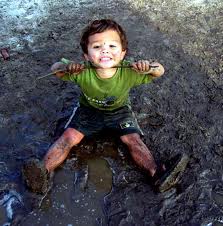
In the world of a child wonders are as simple as sticks and sheets, leaves and books, boxes and giggles, and the promise in a rainy day. The Seven Wonders of the World of Childhood
11.) Superheroes need time to practice their superpowers!

Successful reading means far more than possessing the ability to read. Engaging the hearts of students moves reading success beyond a life skill and turns it into a life style. And graphic novels are too powerful of a tool in our arsenal to be disregarded because of pride or prejudice. Raising Super Readers~The MARVELous Power of Comic Books!
12.) Playgrounds aren’t just for childsplay. Sandboxes can be soapboxes!
Children need to process, too!
Playground Confessions~Look Who’s Talking!
13.) Children discovering how fossils are made is great, but children discovering who they were created to be really rocks!
“Who am I? What inspires me? What will I be?”
Chatterboxes and Dreamers~Middle Childhood
14.) Someone has to take care of the zombie infestation!

While video game playing certainly needs to be monitored and in moderation, there is measurable value in it. “Early studies on psychomotor skills have demonstrated that videogame players have superior eye–hand coordination, visualization skills, and faster reaction times” which may result in advancements in micro-surgery, remote intelligence operation capabilities, etc. In addition, ‘zoning out’ so-to-speak, has inherent stress-reduction benefits that are harder to measure, but of value, nonetheless.
15.) Mad scientists and inventors need time and materials, not busyness and schedules!
My inventor girl with her first creations, a calm-me-jar ‘shaker’ (don’t know how calming that will be, but that’s beside the point, lol!) and a super dooper telescope that can see anything no matter how far away it is!
16.) “Never underestimate the value of doing nothing” ~A.A.Milne
On a Winnie the Pooh style ‘long explore’ my little Pooh Bear discovered the world in The Many Adventures of My Little Pooh Bear
“What I like doing best is Nothing.”
“How do you do Nothing,” asked Pooh after he had wondered for a long time.
“Well, it’s when people call out at you just as you’re going off to do it, ‘What are you going to do, Christopher Robin?’ and you say, ‘Oh, Nothing,’ and then you go and do it.”
17.) Summertime is Muller Time!

The human brain needs time to process, categorize, prioritize, analyze, and otherwise make sense of all of the trillions of bits of information that it receives each day. Non-structured playtime for children functions much like sleep does for adults, giving their brains the time and space they need to move short-term memory to long term learning.
18.) There are dragons to be slain!
“Fairy tales do not tell children that dragons exist. Children already know that dragons exist. Fairy tales tell children the dragons can be beaten.” ~ G. K. Chesterton
Fairy Tales~The Lost Treasure of “Once Upon a Time…”
19.) When would they have time to come up with all of their amazing questions?

“Why don’t monkeys wear clothes?”
“Why don’t we live on the moon?”
“Why does ice have to be cold?”
“Why can’t my frog sleep in my bed?”
“Why do we have hair?”
“Why don’t clouds come in my window?”
Why, oh why do children always ask WHY?
20.) Creators need their rest, too!

Children are creating a whole new life for themselves in this great, big, beautiful world.
21.) Children live to play, play to learn, and learn to live!
“Play is often talked about as if it were a relief from serious learning. But for children play is serious learning. Play is really the work of childhood.”~Fred Rogers
22.) Children are happiness experts.

Perhaps it is time for a return to childhood, to simplicity, to running and climbing and laughing in the sunshine, to experiencing happiness instead of being trained for a lifetime of pursuing happiness…perhaps it is time to let children be children again. A Return to Childhood
23.) The impossible is possible in the carefree moments of childhood!
“Sometimes I’ve believed as many as six impossible things before breakfast.” ~Lewis Carroll
24.) Little Things think the bestest thoughts when Big People let them out of the box!
“Oh the thinks you can think, if only you try!” ~Dr. Seuss
Seussical Fun for Little Ones!
25.) Children need time to simply be…

Award-winnning author, L.R.Knost, is the founder and director of the children's rights advocacy and family consulting group, Little Hearts/Gentle Parenting Resources, and Editor-in-Chief of Holistic Parenting Magazine. Books by L.R.Knost include Whispers Through Time: Communication Through the Ages and Stages of Childhood ; Two Thousand Kisses a Day: Gentle Parenting Through the Ages and Stages ; The Gentle Parent: Positive, Practical, Effective Discipline ; and Jesus, the Gentle Parent: Gentle Christian Parenting the first four books in the Little Hearts Handbook gentle parenting series, and children’s picture books Petey’s Listening Ears and the soon-to-be-released Grumpykins series.
Bubble-Wrapped Kids? You bet!
[By L.R.Knost, author of Two Thousand Kisses a Day: Gentle Parenting Through the Ages and Stages now available on Amazon and through other major retailers.]
There is a lot of debate in the blogosphere about Helicopter Parenting and Bubble-Wrapped or Cotton-Wool Kids. I make no apologies for protecting my children. They say crime is down. Maybe per capita it is overall down. Maybe there are less arrests or convictions or whatever. Or maybe there is less shoplifting and littering and other non-violent crimes. Or maybe ‘they’ are wrong. I don’t know, and I don’t care.
Walk into a Wal-Mart and look at the wall of missing children, and you’ll see new faces nearly every day. Turn on the news, and you’re almost guaranteed to hear about a new heinous crime against a child. Misspell something on Google, and the sites that will appear in your search results will sicken you.
But if none of that were true, I’d still be the protective parent that I am. I’d still be that parent because of one sweet little local girl who was lost forever to a fiend. When I hear the name Jessica Lunsford, my heart shivers to a blood-curdling stop for a brief moment, and I have to catch my breath.
I remember the days after she went missing. I remember praying for her safety, praying for her family, praying for the rescuers and volunteers who were searching day and night for her. I remember checking for news updates multiple times a day, a silent prayer in my heart, begging, “Please, God, please.”
And the whole time I was praying, the whole time rescuers, family, friends, volunteers were searching, she was mere yards from her home being kept in a closet by a depraved monster who abused her and then buried her alive.
So, yes, I do guard my children closely. Outside play is free, muddy, messy, regular…and supervised. Bike riding is a family activity. Public bathroom trips are on the buddy-system. Sleepovers are almost exclusively at our house.
My children are homeschooled, but the oldest two started out in public school. For those few years, I drove them to and from school. I chaperoned field trips. I volunteered as a teacher’s aid.
There is more history to my journey, of course. There are happenings in my childhood I won’t share. There are people in my past who did what they should not.
 And there are other things that led me here, to this place of mama lioness guarding her young fiercely, to this 5’1” person who could and would take on the most ferocious of threats to protect her children, to this gentle mother who will face the vileness of the world fearlessly and boldly to guard her little ones’ hearts, minds, and bodies. There is more, so much more I have seen and heard and experienced, but that will remain unsaid.
I will not apologize for protecting my children, no matter what the newest label or theory or study shows. My children are free to climb trees, hang from monkey bars, and play king-of-the-mountain on huge dirt mounds. But they aren’t free to hang out at the mall alone. They can scavenge their daddy’s workshop for scrap wood and other ‘treasures’ and use his tools to build…well, whatever their incredible imaginations come up with! But they can’t walk to the store by themselves. They can troll the beach for shells and explore the rocky inlet for sand dollars and sea urchin. But they aren’t allowed to surf the internet without supervision.
Freedom to explore. Freedom to grow. Freedom to discover. Freedom to become who they are meant to be. All within the boundaries of parental guidance and protection. That is how it is in our home. And our home is truly a happy and safe place to be.
Related posts:
The Measure of Success~Chinese Parents and French Parents Can’t BOTH Be Superior!
Tots to Teens~Communication Through the Ages and Stages
Babes and Boundaries~A Gentle Parenting Perspective
Into the Looking Glass~Teens and Self-Esteem
Award-winnning author, L.R.Knost, is the founder and director of the children's rights advocacy and family consulting group, Little Hearts/Gentle Parenting Resources, and Editor-in-Chief of Holistic Parenting Magazine. Books by L.R.Knost include Whispers Through Time: Communication Through the Ages and Stages of Childhood ; Two Thousand Kisses a Day: Gentle Parenting Through the Ages and Stages ; The Gentle Parent: Positive, Practical, Effective Discipline ; and Jesus, the Gentle Parent: Gentle Christian Parenting the first four books in the Little Hearts Handbook gentle parenting series, and children’s picture books Petey’s Listening Ears and the soon-to-be-released Grumpykins series.
To a Toddler Sharing is a 4 Letter Word~MINE!
[Reprinted from Two Thousand Kisses a Day: Gentle Parenting Through the Ages and Stages by L.R.Knost. Whispers Through Time: Communication Through the Ages and Stages of Childhood and The Gentle Parent: Positive, Practical, Effective Discipline also now available on Amazon and through other major retailers.]
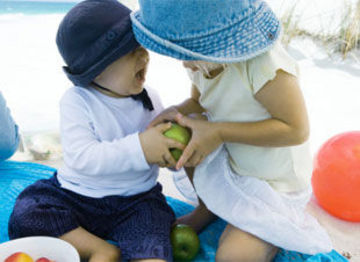 Almost from the moment a baby is born, parents teach them not to share. “No, no, sweetie. That’s mommy’s” and “That’s daddy’s, not yours” accompanied by the removal of whatever the forbidden item is are daily realities for little ones. This is unavoidable, of course, since bacteria-ridden keys don’t belong in little mouths and iphones don’t work well when soaked in drool.
But the challenge comes when our little ‘reflectors’ are expected to share their toys with anyone and everyone who takes a liking to them. (Keep in mind that “their toys” as defined by a toddler are anything they own, are playing with, want to play with, don’t want to play with but want to remain available, etc.) It’s fully acceptable for us adults to not share our ‘toys’ with others, though. How often do we invite friends over and hand them the keys to our car? And yet we get to choose our own friends, do the inviting, and we have adult reasoning skills and judgment in place…things small children don’t have control over or access to!
The primary learning mode for little ones is imitation, but still we expect them to somehow have the cognitive maturity to learn to share despite their parents not sharing their ‘toys’ with them and despite seeing their parents not sharing their ‘toys’ with their own friends.
On top of that, we’re expecting them to grasp some pretty intricate and tricky relational nuances. What does ‘being a good friend’ entail? Why is someone taking something I want an acceptable part of friendship? If they can take what I want, why can’t I take what they want?
And, to round off the difficulty, ownership is an advanced, abstract concept and sharing is even more so. The difference between sharing and giving away forever or between someone borrowing your things and someone stealing from you is rather nebulous in the mind of a child. Now add in a complete inability to grasp time concepts (They get my toy for a minute? How long is a minute? When mommy tells me ‘just a minute’ when she’s on the phone it seems like forever before she’s done!) and to understand other abstract concepts such as permanence, and you can see the murky waters tiny people are expected to navigate when it comes to understanding sharing!
Obviously, little ones need help overcoming all of these obstacles. Punishing them, calling them selfish brats, forcing them to share, etc. are all counterproductive, not to mention damaging to the very relationship that is pivotal to eventual understanding of the concept of sharing. Going back to that primary learning mode of imitation, the key to teaching a child to share lies in the trust relationship being built by gentle, responsive parenting:
1.) When a child is secure in their relationship with their parents, when they know they will be heard, when they trust that their needs will be met quickly and consistently, much of the impetus behind the refusal to share is removed simply because the child isn’t living in a constant state of ‘fight or flight’ response. (This is not to say they will share freely, no matter how gentle the parenting. The afore mentioned obstacles are still in play, and your little ones are still human. What it does mean is that some of the impediments to sharing are removed and the stage is set for learning.)
2.) Within the context of the parent/child relationship, be mindful of how often you say ‘no’ or ‘mine’ and try to offer alternatives in the moment to model sharing.
3.) Be aware of the fact that your child isn’t choosing their own friends at this point and neither they nor their little playmates are skilled socially yet. Stay nearby and in tune with your little one so you can step in and help them deal with any sharing difficulties such as snatching or tug-o-war with a toy before they escalate.
4.) Use concrete words to guide your little one in social situations. For example, try “Use your gentle hands” instead of “Don’t snatch/hit/push.”
5.) Resist the embarrassed-adult-knee-jerk-reaction of scolding your child, snatching toys from them to give to another child, and punishing your child for a normal developmental stage. That kind of reaction not only doesn’t model self-control, but it also doesn’t model acceptable social behavior, which is exactly what you’re upset about your child not displaying!
6.) Prepare for playdates by putting away any treasured toys such as special lovies or new toys that you know your little one will have trouble sharing. Honoring their feelings about these few special things will help them to feel more comfortable sharing their other toys because you are showing them in a concrete manner that you will help them to protect and preserve the things that matter to them.
7.) Play sharing games with your child daily to practice this advanced skill. When she says “Mine!” respond by smiling, picking up something of yours you don’t mind her playing with, and saying, “This is mine. I’ll share!” and hand it to her. Often little ones will start running around picking up their toys and bringing them to you to ‘share’ and wait for it to be reciprocated, resulting in a back and forth, back and forth sharing game that taps into another excellent learning mode for children…play!
Above all, keep in mind that sharing is a learned skill and it will take time for your  small one to grow into a socially skilled little butterfly. Creating an atmosphere of trust, modeling sharing, and honoring their feelings will surround them with a safe environment in which they can develop the skills needed to become the most treasured of friends!
Related posts:
Toddlers, Tantrums, and Time-Ins, Oh My!
Testing the Boundaries~What’s A Parent To Do?
Babes and Boundaries~A Gentle Parenting Perspective
Your Baby isn’t Trying to Annoy You; He’s Trying to Communicate!
Award-winnning author, L.R.Knost, is the founder and director of the children's rights advocacy and family consulting group, Little Hearts/Gentle Parenting Resources, and Editor-in-Chief of Holistic Parenting Magazine. Books by L.R.Knost include Whispers Through Time: Communication Through the Ages and Stages of Childhood ; Two Thousand Kisses a Day: Gentle Parenting Through the Ages and Stages ; The Gentle Parent: Positive, Practical, Effective Discipline ; and Jesus, the Gentle Parent: Gentle Christian Parenting the first four books in the Little Hearts Handbook gentle parenting series, and children’s picture books Petey’s Listening Ears and the soon-to-be-released Grumpykins series.
Avenging Childhood~The Change Makers
As I drove out of my driveway this afternoon, I glanced up and saw The Avengers racing around my neighbor’s yard, intent on fighting crime (or each other or the dog or some dragonflies, lol). It made my heart so happy to see childhood…just real, everyday, the-way-children-through-the-ages-have-played kind of childhood at its most honest and robust and carefree. I jumped out of my van and proceeded to confirm my neighbor’s suspicions that I’m a little off my rocker by wildly waving my camera in the air and pointing at her adorable boys roughhousing, silently asking for permission to play paparazzi. She nodded, and the boys hammed it up for me for a few minutes, posing and posturing in their wonderful world of make-believe.
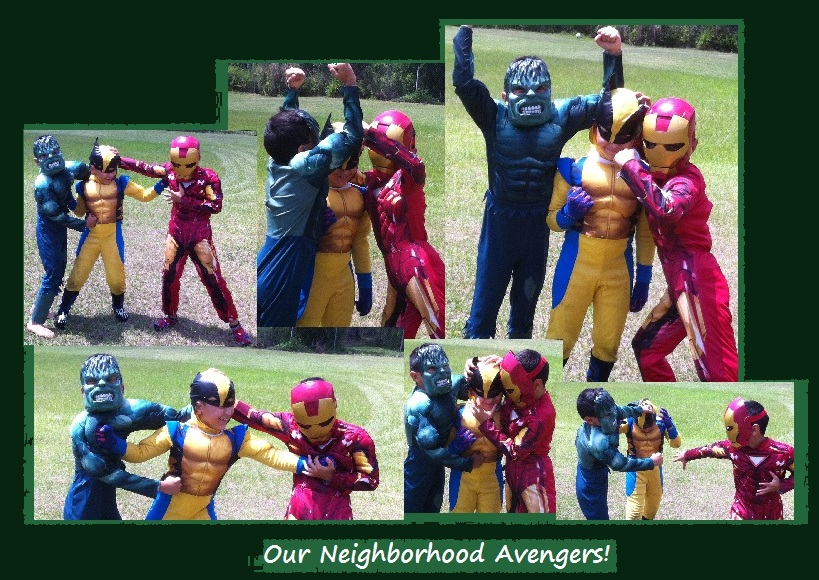
I climbed back into my van amidst my little girls’ giggles (pretty sure they were laughing more at me for taking pictures of the neighbors rather than laughing at the boys’ antics). As we headed off on our afternoon errands, I thought about how the world has changed, but children haven’t. Yes, over time the world will do its share of influencing or corrupting, as the case may be, but children are born children just like they have been since the beginning of time.
Every child is born a fresh, new, open book with pages and pages waiting to be filled.  Everything is new. Every day is an adventure. Every experience is an opportunity for discovery. Whether they’re boys or girls, whether they have average or advanced or impaired cognitive or motor abilities, whether they’re Asian or Caucasian, Black or Middle Eastern, Hispanic or (as a growing number are worldwide) a unique blend of races and ethnicities, they all start out the same…brand-new, innocent, precious beyond compare.
I am passionate about helping parents fill the first pages of their children’s lives with messages of gentle welcome, of needs met, of trust. I’m equally passionate about helping parents transition into later stages where they are simply there to offer guidance, support, and encouragement as their children begin filling the pages of their lives with their own choices, interests, and gifts.
I’ve heard it said that only those crazy enough to think they can change the world actually do change it. I honestly believe that changing the world starts at home with how we parent our children. Maybe my neighbor is right about me, after all. 🙂
*Book art via Anagram Bookshop*
Related posts:
Communication vs. Miscommunication
Playground Confessions~Look Who’s Talking!
The Measure of Success~Chinese Parents and French Parents Can’t BOTH Be Superior!
Award-winnning author, L.R.Knost, is the founder and director of the children's rights advocacy and family consulting group, Little Hearts/Gentle Parenting Resources, and Editor-in-Chief of Holistic Parenting Magazine. Books by L.R.Knost include Whispers Through Time: Communication Through the Ages and Stages of Childhood ; Two Thousand Kisses a Day: Gentle Parenting Through the Ages and Stages ; The Gentle Parent: Positive, Practical, Effective Discipline ; and Jesus, the Gentle Parent: Gentle Christian Parenting the first four books in the Little Hearts Handbook gentle parenting series, and children’s picture books Petey’s Listening Ears and the soon-to-be-released Grumpykins series.
Play~Bubbles and Babies and Butterflies
 Sunshiny days fly on butterfly wings
Filled with wading pools, sidewalk chalk, springy-time things
Bubbles and babies and bear-bottomed rompers
Mudpies and magpies and jump-rope trick jumpers
Swinging and sliding and climbing and running
Learning, discovering, growing, becoming
No time to waste they are seizing the day
The work of a child is simply to play
Best. Schoolday. Ever!
Related posts:
On a Winnie the Pooh style ‘long explore’ my little Pooh Bear discovered the world in The Many Adventures of My Little Pooh Bear
Children who love to read…READ! Engaging children’s hearts in the wonder of reading instead of just training their minds in its mechanics. Raising Bookworms
Think homeschooled children are unsocialized, over-controlled, locked-away-from-the-world misfits? Think again! My Renaissance Girl
In the world of a child wonders are as simple as sticks and sheets, leaves and books, boxes and giggles, and the promise in a rainy day. The Seven Wonders of the World of Childhood
There is such a rush these days to get children sleeping through the night, weaned off the breast, eating solid foods, potty trained, reading independently, and on and on, that we seem to have lost the ability to simply enjoy life as it happens and let our children do the same. A Return to Childhood
Parenting choices strongly impact the level and type of attachment a child develops and, by extension, the development of a love of learning. A love of learning grows when it isn’t stifled by fear or stress or regimented by over-structuring or a focus on achievement or competition. Parents fostering a healthy attachment are thus also fostering a life-long love of learning in their children. Live to Play~Play to Learn~Learn to Live!
Successful reading means far more than possessing the ability to read. Engaging the hearts of students moves reading success beyond a life skill and turns it into a life style. And graphic novels are too powerful of a tool in our arsenal to be disregarded because of pride or prejudice. Raising Super Readers~The MARVELous Power of Comic Books!
If you give a toddler a book
He’ll climb into your lap
While he’s in your lap
He might lay his head on your chest
When he lays his head on your chest
He’ll hear your heartbeat
When he hears your heartbeat
He’ll probably ask if you can hear…
Award-winnning author, L.R.Knost, is the founder and director of the children's rights advocacy and family consulting group, Little Hearts/Gentle Parenting Resources, and Editor-in-Chief of Holistic Parenting Magazine. Books by L.R.Knost include Whispers Through Time: Communication Through the Ages and Stages of Childhood ; Two Thousand Kisses a Day: Gentle Parenting Through the Ages and Stages ; The Gentle Parent: Positive, Practical, Effective Discipline ; and Jesus, the Gentle Parent: Gentle Christian Parenting the first four books in the Little Hearts Handbook gentle parenting series, and children’s picture books Petey’s Listening Ears and the soon-to-be-released Grumpykins series.
Shared Journeys~Attachment Parenting

Parenting is far more a journey than a destination. As parents we are always learning, always researching, always growing, always adjusting. Sharing our journeys is one way we can support and encourage each other along the way! Here are some really unique ways mamas are sharing their attachment/natural/gentle parenting experiences you might enjoy:
The first is a video by The Single Crunch. Such a beautiful testimony of the love of a mother!
I am a single mom…I breastfeed and practice child-led weaning, babywear, co-sleep, cloth diaper, homebirth, and do whatever else my natural instincts move me to do, regardless of what others may think. I DO NOT “train” my children (using the cry-it-out method to get babies to sleep). I do not spank. I do not vaccinate. I try not to run to modern medicine for every problem I or my children have, opting instead for natural (homeopathic) solutions when possible…I LISTEN to my children. I try to pause before I react and think about life from their point of view. I HAVE NOT ALWAYS LIVED THIS WAY…I’ve had a hard time with many of the ideals of being crunchy, especially as a single mom. It takes time and patience and time. Lots of time. Sometimes I’m not all that patient. I used to spank…I yell…But mainstream parenting never felt right to me. I wanted to meet moms who didn’t think my attachment (and the level of attachment I desired to have) with my children was weird. I found AP because most of the women in my life felt my ideas were silly, unintelligent, impractical, and unnecessary, especially for a mom with no husband. I didn’t care. I knew my children needed more of me. I’ve always felt a strong connection to my children, and I’ve always wanted to parent the way THEY showed me they needed me to, not a way that was convenient for me. I am now working to apply all that I have learned from my other mom friends and the many groups I subscribe to, to make my girls’ lives as safe, healthy, and happy as possible. I want to raise compassionate, secure, intelligent young women who know, understand, and believe that beauty starts within. (Read more at The Single Crunch)
~~~~~~~~~~~~~~
The next is a lovely and honest post from The Mule about the blessings and challenges of breastfeeding on demand:
While I nurse you to sleep…
I...rest. For the first time today, I am still. I am not lifting, carrying, holding, bending, reaching, stretching, scrubbing, wiping, hauling, or lugging. Here in this dark room I lie beside you and allow my body and mind to come to stillness after the chaos of our day. You suck, and tug, you fiddle, and fuss…and slowly come to stillness too, until we both are still, and both are resting…I wait, momentarily, and then, I slowly slide away and leave you sleeping.
While I nurse you to sleep…
I…take stock. I turn over in my mind, the contents of the fridge, the washing on the floor, the money in the bank. I count up the years I’ve had so far and the years I might have left. I work out how old I will be when you are the age I am now – thirty seven – seventy two. I hope I make it. I count the eggs you already have in your body and those I have in mine and I wonder at the people they may become. I think about the person I was before I met you, the life I led, the things I’ve gained and the things I’ve lost, I count them all. I plan the contents of my other daughter’s lunchbox
(Read the rest of this lovely post at While I Nurse You to Sleep…)
~~~~~~~~~~~~~~
This is an excellent and entertaining look at child-led, interest-led learning from Real Child Development.
Trust the child to direct his own learning. For it seems to me a fact that, in our struggle to make sense out of life, the things we most need to learn are the things we most want to learn. To put this another way, curiosity is hardly ever idle. What we want to know, we want to know for a reason. The reason is that there is a hole, a gap, an empty space in our understanding of things, our mental model of the world. We feel that gap like a hole in a tooth and want to fill it up. It makes us ask How? When? Why? While the gap is there, we are in tension, in suspense. Listen to the anxiety in a person’s voice when he says, “This doesn’t make sense!” When the gap in our understanding is filled, we feel pleasure, satisfaction, relief. Things make sense again – or at any rate, they make more sense than they did. When we learn this way, for these reasons, we learn both rapidly and permanently. The person who really needs to know something does not need to be told many times, drilled, tested. Once is enough. The new piece of knowledge fits into the gap ready for it, like a missing piece in a jigsaw puzzle. Once in place, it is held in, it can’t fall out. We don’t forget things that make the world a more reasonable or interesting place for us. (Read the rest of this informative post at Real Child Development)
~~~~~~~~~~~~~~
The next post is from Dulce De Leche‘s ‘Gentle Discipline Toolbox’ series which has an excellent array of topics, ideas, and links!
Redirection and Mutual Solutions
My 19 month old began to love hitting. He wasn’t even angry most of the time. He just got a kick out of the sensation, the noise and the reactions. We tried softly stroking our cheeks with his hands and telling him “Gentle touches”. He giggled and slapped again. My temper and frustration were building, until I recalled something I had read by Dr. Sears. We began teaching him to give us high fives. His face lit up with delight, and he began to repeat it. He still got what he was craving–the game, noise, sensation and excitement–but now it was in a socially acceptable way that didn’t hurt anyone. I would like to say that at least we got a little advance warning as he gleefully squealed, “High fibe!” before striking, but he usually didn’t say it till he was already mid-strike. Still, it was progress… (Read more of this enlightening post at Dulce De Leche)
~~~~~~~~~~~~~~
This last honest and informative article from Positive Parenting: Toddlers and Beyond is a great introduction to positive parenting:
Skeptical About Positive Parenting?
Positive parenting, at the very core of it, isn’t about what you can and can’t do in terms of disciplining, teaching, and guiding your kids. It isn’t even about having the perfect relationship (as there will always be breaks and repairs; such is life). It’s not about techniques or tools, whether or not to use time outs or time ins, consequences or problem-solving. All of those things stem from the practice of what is at the very core of this philosophy, but they are not THE philosophy itself. What it’s really about is the way we view children, their emotions, their needs, their motives. It’s about seeing them as human beings, worthy of respect and unconditional love, delicate, impressionable, who have as much to teach us as we have to teach them… (Read more from Positive Parenting: Toddlers and Beyond)
~~~~~~~~~~~~~~
Related posts:
And Baby Makes Three~Surviving the First Three Months with a Newborn
Bizarre Anti-Cosleeping Ads in Milwaukee a Red Herring?
A Boy, A Girl, and A Baby~Journey to Gentle Parenting
The Measure of Success~Chinese Parents and French Parents Can’t BOTH Be Superior!
Tots to Teens~Communication Through the Ages and Stages
Award-winnning author, L.R.Knost, is the founder and director of the children's rights advocacy and family consulting group, Little Hearts/Gentle Parenting Resources, and Editor-in-Chief of Holistic Parenting Magazine. Books by L.R.Knost include Whispers Through Time: Communication Through the Ages and Stages of Childhood ; Two Thousand Kisses a Day: Gentle Parenting Through the Ages and Stages ; The Gentle Parent: Positive, Practical, Effective Discipline ; and Jesus, the Gentle Parent: Gentle Christian Parenting the first four books in the Little Hearts Handbook gentle parenting series, and children’s picture books Petey’s Listening Ears and the soon-to-be-released Grumpykins series.
The Many Adventures of My Little Pooh Bear
“There is nothing that human beings do, know, think, hope, and fear that has not been attempted, experienced, practiced, or at least anticipated in children’s play.”~Heidi Britz-Crecelius
“Weeds are flowers, too, once you get to know them.” A.A.Milne
As A.A.Milne wrote in The Many Adventures of Winnie the Pooh, we went on a long ‘explore’ the other day simply because “It was a drowsy summer [well, actually, spring] afternoon, and the Forest was full of gentle sounds…”
My poor little Pooh Bear has been sick for weeks now, and I’ve been taking her out in the sunshine for a daily dose of vitamin D and fresh air to supplement her traditional medicines. On this particular day, which just happened to be the first day of spring, I played the role of adoring paparazzi and just snapped picture after picture as my little explorer wandered here and there at her own toddling pace. Looking over the myriad of pictures later was educational…for me!
My little explorer studied…
Light and Shadow as she danced with her shadow…
Me 'n my shadow
and moved leaves back and forth, back and forth from sun to shade and back again.
Leaf Shadows
Texture as she went from the wooden foot bridge to the concrete and studied the hard and soft, the rough and smooth, the cold and warm.
This feels different than the wooden bridge!
Physics as she threw leaves into the breeze and discovered how the small ones fluttered away and the big ones fell unless she crumpled them into smaller pieces.

Ah Ha! Some leaves float in the wind when I throw them, and some drop to the ground!
Directionality as she put leaves over the railing, through the railing, and under the railing.

Over, Under, Through!
And so much more, all in a supervised, but undirected day of play!

“Sometimes, if you stand on the bottom rail of a bridge and lean over to watch the river slipping slowly away beneath you, you will suddenly know everything there is to be known.”~A.A.Milne
Studies are confirming what early childhood education experts have known for years…Formal instruction can interfere with a preschooler’s creativity and problem-solving skills. A.A.Milne clearly understood that fact long ago when he included this thought-provoking dialogue in his classic children’s picture book,
“Rabbit’s clever,” said Pooh thoughtfully.
“Yes,” said Piglet, “Rabbit’s clever.”
“And he has a Brain.”
“Yes,” said Piglet, “Rabbit has a Brain.”
There was a long silence.
“I suppose,” said Pooh, “that that’s why he never understands anything.”
Gail Connel of Moving Smart puts it this way, “When we say ‘learning’ we actually mean ‘understanding,’ described by Merriam-Webster as ‘to grasp the meaning of.'” She goes on to give an example:
“Point to the top of your head, then point to the top of your toe. You pointed in two completely different directions. So what does ‘top’ mean? And if ‘top’ is in both of those places, then where is the top of the page?
Only after learning ‘top’ in many different ways will they begin to understand that ‘top’ is more than a location, it’s a concept. And to do that, they must experience it – literally and physically — by pointing to the top, touching the top, crawling along the top, running to the top, reaching the top, and on and on. And while they’re doing that, your use of the word ‘top’ helps them associate what they’re doing with what it’s called.
LANGUAGE + EXPERIENCE = UNDERSTANDING”

“Promise me you'll always remember: You're braver than you believe, and stronger than you seem, and smarter than you think.”~A.A.Milne
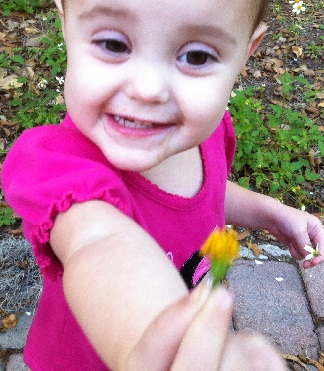
“Yesterday is history, tomorrow is a mystery, but today is a gift. That's why we call it the present." ~Winnie the Pooh
Related posts:
Children who love to read…READ! Engaging children’s hearts in the wonder of reading instead of just training their minds in its mechanics. Raising Bookworms
Think homeschooled children are unsocialized, over-controlled, locked-away-from-the-world misfits? Think again! My Renaissance Girl
In the world of a child wonders are as simple as sticks and sheets, leaves and books, boxes and giggles, and the promise in a rainy day. The Seven Wonders of the World of Childhood
There is such a rush these days to get children sleeping through the night, weaned off the breast, eating solid foods, potty trained, reading independently, and on and on, that we seem to have lost the ability to simply enjoy life as it happens and let our children do the same. A Return to Childhood
Parenting choices strongly impact the level and type of attachment a child develops and, by extension, the development of a love of learning. A love of learning grows when it isn’t stifled by fear or stress or regimented by over-structuring or a focus on achievement or competition. Parents fostering a healthy attachment are thus also fostering a life-long love of learning in their children. Live to Play~Play to Learn~Learn to Live!
Successful reading means far more than possessing the ability to read. Engaging the hearts of students moves reading success beyond a life skill and turns it into a life style. And graphic novels are too powerful of a tool in our arsenal to be disregarded because of pride or prejudice. Raising Super Readers~The MARVELous Power of Comic Books!
If you give a toddler a book
He’ll climb into your lap
While he’s in your lap
He might lay his head on your chest
When he lays his head on your chest
He’ll hear your heartbeat
When he hears your heartbeat
He’ll probably ask if you can hear…
Award-winnning author, L.R.Knost, is the founder and director of the children's rights advocacy and family consulting group, Little Hearts/Gentle Parenting Resources, and Editor-in-Chief of Holistic Parenting Magazine. Books by L.R.Knost include Whispers Through Time: Communication Through the Ages and Stages of Childhood ; Two Thousand Kisses a Day: Gentle Parenting Through the Ages and Stages ; The Gentle Parent: Positive, Practical, Effective Discipline ; and Jesus, the Gentle Parent: Gentle Christian Parenting the first four books in the Little Hearts Handbook gentle parenting series, and children’s picture books Petey’s Listening Ears and the soon-to-be-released Grumpykins series.
A Mile In Their Shoes
Before you judge someone, walk a mile in their shoes. ~Unknown
My mother always taught me to think about things from other people’s perspective before reacting to them, a life lesson that has translated into the empathetic, gentle style of parenting I teach, write about, and follow with my own children. Discerning what other people feel isn’t always easy, of course, and our own experiences, attitudes, and emotions can get in the way. But seeking to not just understand, but to really feel what another person feels is vital to true communication and connection. To that end, I try to always ask myself, whether interacting with my children, my husband, or any other person who crosses my path, “How would I feel if…”
So come, take a walk with me~
 How would I feel if I was suddenly thrust from my safe, familiar world into a startlingly new and uncomfortable world where I couldn’t function on my own, where my very survival depended entirely on beings who I didn’t know, didn’t understand, and who didn’t understand me? Would I learn to feel safe in this new world if they left me for hours on end in dark places with no way to communicate, no way to meet my own needs? Or would I learn to trust these new beings if my needs were met day and night, if they were always available, always responsive, always gentle?
 How would I feel if I was a small person in a big world, a world where large beings were constantly jabbering at me in a language I barely understood, a world where everything was a challenge, from climbing out of a chair to learning to control my bodily functions, a world where every day, all day long, I was confronted with new things to taste, new things to explore, new things to discover. If I tried to communicate and no one slowed down to listen, would I learn to listen? If I got overwhelmed by all the new challenges and was punished, would I learn how to cope with my emotions? If I was snatched away from my explorations with no warning, no explanation, would I learn to respect other people’s spaces and paces? Or would I learn to listen if I was heard, cope if I was helped, and respect if I was respected?
 How would I feel if I was an adult-sized person, my body flooded with a consistently inconsistent rush of mind-altering hormones, in a world of adults who demanded adult maturity from me, but treated me like a child? Would I learn to cope with the huge life changes taking place if my awkwardness incited conflict instead of compassion? Would I be willing to share my struggles if my still-growing communication skills were taken at face value instead of my heart being heard? Would I desire to make good choices if the most important people in my life didn’t trust me enough to let me make them? Or would I learn confidence by being understood, trust by being truly heard, responsibility by being trusted to be responsible?
 How would I feel if I was a new parent, struggling with exhaustion, overwhelmed by newness, desperate to make the right decisions for my precious new baby, but was surrounded by conflicting advice and head-shakers and nay-sayers? Would I learn to trust my instincts if every choice I made was the subject of commentary and unsolicited advice? Would I grow into my new role if I was pushed and shamed and coerced into following other people’s parenting choices? Would I learn to share my fears and concerns if they were met with negativity, ridicule, and debate? Or would I find my own path in the world of parenting if I was allowed to listen to my heart? Would I discover my parenting niche if I was trusted to make my own choices? Would I be open to new ideas and find support if my struggles were met with reassurance and compassion and acceptance?
 How would I feel if I was a strong, wise, gifted person in a body that was beginning to fail me with age? Would I feel valued if others only saw my frailty and not my strength? Would I offer wisdom if my life experiences were ridiculed? Would I share my gifts if no one bothered to slow down and recognize them? Or would I still feel I had life to live, something to give if my stories were heard, if my wisdom was received, if someone, anyone, took the time to sit with me and talk for awhile.
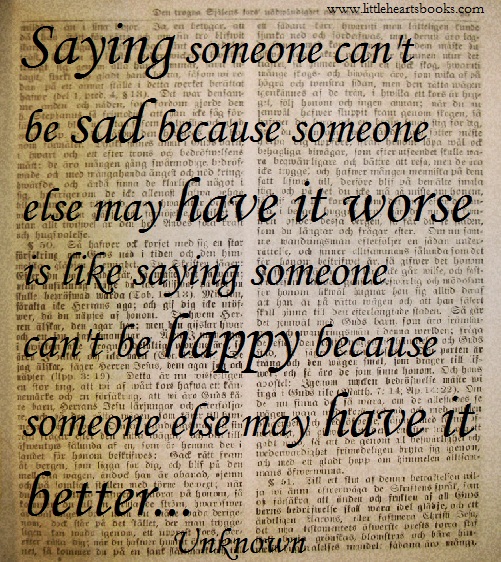 Related posts:
The Seven Wonders of the World of Childhood
Playground Confessions~Look Who’s Talking!
The Measure of Success~Chinese Parents and French Parents Can’t BOTH Be Superior!
Award-winnning author, L.R.Knost, is the founder and director of the children's rights advocacy and family consulting group, Little Hearts/Gentle Parenting Resources, and Editor-in-Chief of Holistic Parenting Magazine. Books by L.R.Knost include Whispers Through Time: Communication Through the Ages and Stages of Childhood ; Two Thousand Kisses a Day: Gentle Parenting Through the Ages and Stages ; The Gentle Parent: Positive, Practical, Effective Discipline ; and Jesus, the Gentle Parent: Gentle Christian Parenting the first four books in the Little Hearts Handbook gentle parenting series, and children’s picture books Petey’s Listening Ears and the soon-to-be-released Grumpykins series.
The Seven Wonders of the World of Childhood
[By L.R.Knost, author of Two Thousand Kisses a Day: Gentle Parenting Through the Ages and Stages, Whispers Through Time: Communication Through the Ages and Stages of Childhood, The Gentle Parent: Positive, Practical, Effective Discipline, and Jesus, the Gentle Parent: Gentle Christian Parenting available on Amazon and through other major retailers.]

According to the man whose name is synonymous with genius, “The true sign of intelligence is not knowledge but imagination.” ~Albert Einstein
And when it came to his genius, he said, “I have no special talent. I am only passionately curious.” ~Albert Einstein
Preserving the passionate curiosity that is a natural part of childhood, then, seems to be the most logical and effective mode of early childhood education. And it is as simple as encouraging the wonder of imagination…
In the world of a child wonders are as simple as sticks and sheets, leaves and books, boxes and giggles, and the promise in a rainy day.
- In the hands of a child a stick is a king’s scepter, an adventurer’s staff, a knight’s sword.
- In the eyes of a child a sheet is a fort waiting to be built, a sea waiting to be sailed, a cape waiting to be worn.
- In the fingers of a child a leaf is a tiny ship to blow across a puddle, a mini parasol for a snail, a triumphant flag atop a mud-castle.
- In the heart of a child a book is a map to a fairy forest, a flight on an alien spaceship, a ride on the back of a dragon.
- In the mind of a child a cardboard box is a boat sailing rough seas for China, a bridge over a raging river, a cave full of lost treasure.
- In the mouth of a child a giggle is an invitation to play, a mini song of happiness, a tiny voice of comfort.
- In the footsteps of a child the rain is a puddle to be splashed in new shoes, mud to be squished between little toes, a rainbow to be chased to the golden end.
In the wonderful, beautiful world of childhood, the morning wakes with trees that need to be climbed, holes that need to be dug, and mudpies that need to be made. The world’s classroom teaches them that problems can be solved and obstacles can be conquered. When imaginations soar, everything becomes possible.
It is in the small moments of discovery that big dreams are born. When little fingers are buried in the earth, an archeologist has made his first dig. When curious eyes peer at stars through a paper-towel roll, an astronaut has made her first spacewalk. When small hands wrap a washcloth cast around a puppy’s paw, a doctor has healed his first patient.
Just as letters of the alphabet on their own have no meaning, but used in concert with each other can create poetry, literature, and song, so learning the mechanics of words and numbers alone has no purpose, but placed in the context of life being lived can create wonders as yet unseen.
‘Let the children play’ has become a clarion call in some parenting circles in recent years, and with good reason. With childhood obesity, illnesses, and depression rates all on the rise, examining the way we raise and educate our children is vital for the health of our children, our nation, and our future.
We need to find a place in our busy lives for children to be children, to enjoy the simple pleasures we enjoyed as children, to dream and imagine and create and become. Life is for living, and children are experts at living life to the fullest. We would do well to learn from them.
~~~~~~~~~~
My little funnyface enjoyed the movie version of The Lorax when we saw it last week, but then forgot all about it. But when we read the book together a few days later, it captured her imagination! She painted her face orange with face paints this morning, drew on a yellow Lorax mustache, and spent the entire day outside building a Lorax forest out of odds and ends she gathered from around the yard.
My sick baby has pneumonia and has been spiking a fever of up to 104 degrees the last few days. She’s been laminated to me, too sick to even hold up her little head, poor thing. But today when she saw a cardboard box she immediately climbed down off my lap and into the box where she played happily for a few minutes for the first time in days. Mommy’s heart was happy to see a little spark of my playful girl again, for sure. The power of a cardboard box knows no bounds!
Don’t believe in the wondrous power of play? Check out the next Steve Jobs in the making! Here’s the story of a nine year old boy, an old parts shop, and a cardboard box arcade:
Related posts:
Children who love to read…READ! Engaging children’s hearts in the wonder of reading instead of just training their minds in its mechanics. Raising Bookworms
Think homeschooled children are unsocialized, over-controlled, locked-away-from-the-world misfits? Think again! My Renaissance Girl
The Many Adventures of My Little Pooh Bear
On a Winnie the Pooh style ‘long explore’ my little Pooh Bear discovered the world in ways only a toddler can do in…
Raising Super Readers~The MARVELous Power of Comic Books!
Playground Confessions~Look Who’s Talking!
Alphabet Fun~Imagination From A to Z!
Live to Play~Play to Learn~Learn to Live!
Award-winnning author, L.R.Knost, is the founder and director of the children's rights advocacy and family consulting group, Little Hearts/Gentle Parenting Resources, and Editor-in-Chief of Holistic Parenting Magazine. Books by L.R.Knost include Whispers Through Time: Communication Through the Ages and Stages of Childhood ; Two Thousand Kisses a Day: Gentle Parenting Through the Ages and Stages ; The Gentle Parent: Positive, Practical, Effective Discipline ; and Jesus, the Gentle Parent: Gentle Christian Parenting the first four books in the Little Hearts Handbook gentle parenting series, and children’s picture books Petey’s Listening Ears and the soon-to-be-released Grumpykins series.
Seuss-ified~Craft-astic~Snack-errific~Education-cool~Fun!
“You’re never too old, too wacky, too wild, to pick up a book and read to a child!”
Seussville~Read Across America
March 1st is World Book Day, and March 2nd is Dr. Seuss’ Birthday Extravaganza which includes the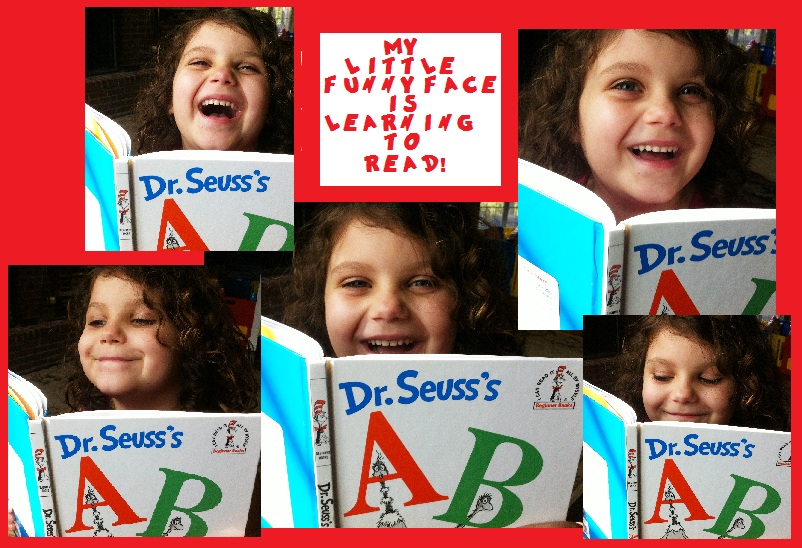 release of the much-anticipated new movie, The Lorax! If you’re a book-obsessed, homeschooling, movie-loving, Seussiac like I am, it’s practically a national holiday! And when you add my excitement over my newest little home-grown reader, it’s definitely time for a Seusserrific Celebration!
In honor of all of this wonderfulness and to help launch my new little reader into the wonderful world of books, I’ve been scouring the web, the bookshelves, and my scattered brain for all the Seussical fun I could find for my little people and yours. Here are a few of my finds!
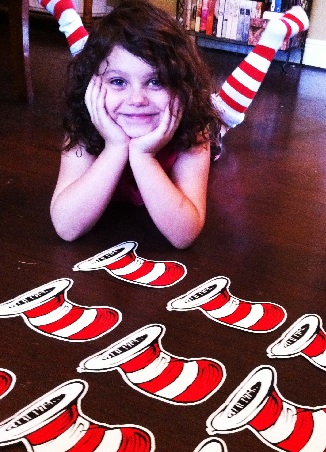 Staples has these awesome Cat in the Hat cutouts intended for use on a bulletin board, but we repurposed them for several games such as BIG LETTER~little letter Match-up and Seusstastic Scavenger Hunt. For BIG LETTER~little letter Match-up I drew capital letters and their counterparts on the backs of the cutouts and laid them out in a 3 x 3 grid. For Seusstastic Scavenger Hunt I wrote clues on the cutouts to help my little people find Dr. Seuss books I’d hidden throughout the house and tucked the clues in each book so that when they found one book and we read it, they’d find the next clue hidden in the pages of the book they’d just found…a two-fer! So fun!

We also made up a Go Fish in the Bowl game matching upper and lower case letters. It’s just your basic Go Fish, but somehow on Cat in the Hat cut-outs it became magical!
 The simple addition of some stripey ‘Seuss Socks’ (Dollar Tree!) was enough to make The Foot Book even more engaging than it already is on its own!
Some leftover pieces of an old game yielded a plastic Green Eggs and Ham to play a Would You~Could You spin on the old Mother May I game. We placed the Green Eggs and Ham game piece at one end of the room and took turns asking questions like ‘Would you, could you let me take three steps forward?’ and giving directions like ‘Could you, would you jump up and down and take one step back?’
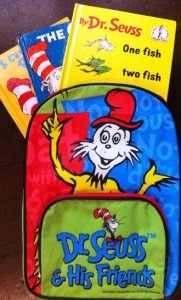
We’re putting together a Seuss Quiet Bag which we’ll be adding to over time, and I’m working on making a Cat in the Hat Calm-Me-Jar for our bag. I’ll post a picture here as soon as it’s done! Right now we’ve got favorite books and our Go Fish in the Bowl cards in this cute, little Seuss backpack I found at a thrift store.

The Cat in the Hat Can Help You with That!
Here it is! Meet the The Cat in the Hat Can Help You with That Calm-Me-Jar!
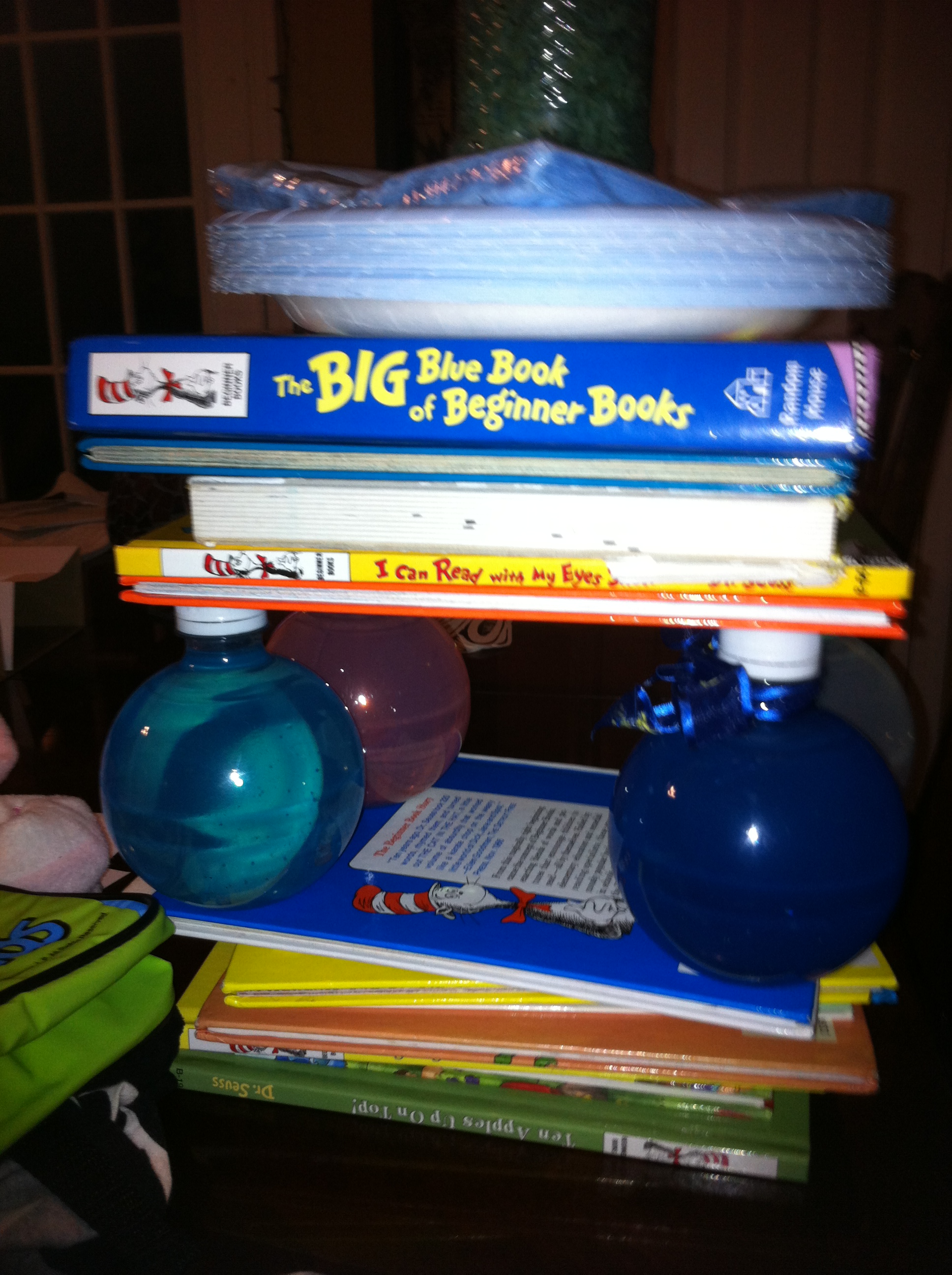
And here is my six year old’s contribution to the Seuss Birthday celebration~Seuss Tower! Watch out Donald, my little funny-face is out to trump you, lol!
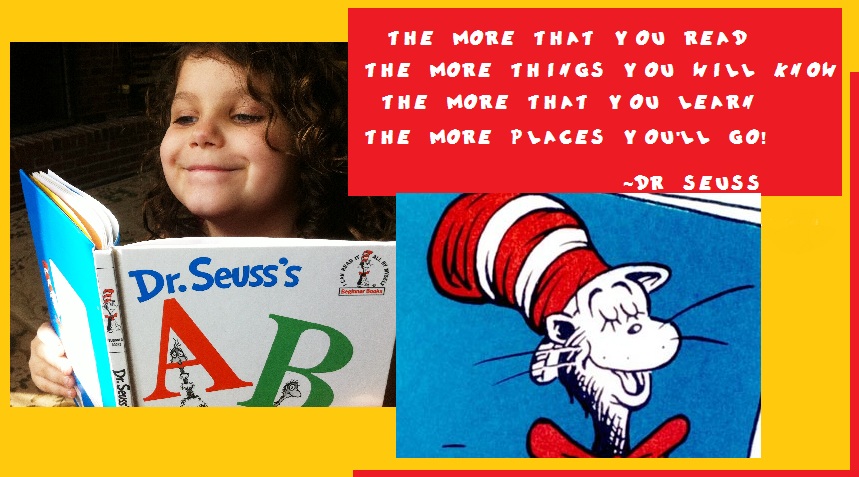
Check out these 7 Tips for Raising Bookworms!
Here are some awesomely Seusstastic links to crafts and games and yummy Seuss treats you and your little ones will love!

Source: zakkalife.blogspot.com via Linda on Pinterest
Make Seusstastic Lorax trees from pencils!

Source: meetthedubiens.com via Linda on Pinterest
Oreos, white and red chocolate, and marshmallows equal Seussalicious Cat in the Hat cookies!

Source: madtownmacs.blogspot.com via Linda on Pinterest
A Seussville craft for little Seusslets to create!

And check out this abSeusslutely ObSeussed site for literally hundreds and hundreds of Seusstastic crafts, books, games, recipies, ideas, and links!
Related posts:
Children who love to read…READ! Engaging children’s hearts in the wonder of reading instead of just training their minds in its mechanics. Raising Bookworms
It’s time for a return to childhood, to simplicity, to running and climbing and laughing in the sunshine, to experiencing happiness instead of being trained for a lifetime of pursuing happiness…it’s time to let children be children again. A Return to Childhood
Think homeschooled children are unsocialized, over-controlled, locked-away-from-the-world misfits? Think again! My Renaissance Girl
A Seussical List of Parenting Tips!
Alphabet Fun~Imagination From A to Z!
Live to Play~Play to Learn~Learn to Live!
Making Money Matters Make Cents
One Slippery Sock & Other Silly Tools for your Parenting Toolbox!

Award-winnning author, L.R.Knost, is the founder and director of the children's rights advocacy and family consulting group, Little Hearts/Gentle Parenting Resources, and Editor-in-Chief of Holistic Parenting Magazine. Books by L.R.Knost include Whispers Through Time: Communication Through the Ages and Stages of Childhood ; Two Thousand Kisses a Day: Gentle Parenting Through the Ages and Stages ; The Gentle Parent: Positive, Practical, Effective Discipline ; and Jesus, the Gentle Parent: Gentle Christian Parenting the first four books in the Little Hearts Handbook gentle parenting series, and children’s picture books Petey’s Listening Ears and the soon-to-be-released Grumpykins series.
A Return to Childhood
[By L.R.Knost, author of Two Thousand Kisses a Day: Gentle Parenting Through the Ages and Stages, Whispers Through Time: Communication Through the Ages and Stages of Childhood, and The Gentle Parent: Positive, Practical, Effective Discipline available on Amazon and through other major retailers.]
 There is such a rush these days to get children sleeping through the night, weaned off the breast, eating solid foods, potty trained, reading independently, and on and on, that we seem to have lost the ability to simply enjoy life as it happens and let our children do the same. Gone are the days of making mud-pies and playing in piles of leaves. They’ve been replaced with flashcards, language immersion (even in the womb!), educational dvd’s, and the like. Preschool has become the new kindergarten, with parents rushing to get on waiting lists for the ‘best of the best’ preschools, often even before their first prenatal appointment!
Therapists in New York have reported an increase in parents seeking psychiatric services for stress related to the intensely “cutthroat” admissions process for top-rated private preschools and kindergartens. “Parenting is a competitive sport,” says Dr. Lisa Spiegel. And that competition is leading parents to ask if their three-year-old should wear suits to preschool interviews, which designer purses are best to carry on school tours, and even if they should be induced into early delivery so their child “could be considered for kindergarten before the Sept. 1 cutoff date.” (New York Post, see link below)
One would assume, with all of this emphasis on independence and education, that we would be moving forward as a society to a more self-sufficient, competent, and well-educated populace which, by extension, might reasonably be assumed to have less need of welfare programs and prisons. One would assume wrong, unfortunately.
By way of comparison, in 1960, welfare spending in the United States was $48.20 per capita with 1.7% of the population receiving federal assistance. (infoplease.com) By 2010 it had increased to $2256.40 per capita (usgovernmentspending.com) with 8.0% of the population receiving assistance. (wiki.answers.com) In 1960, 0.18% of the US population was imprisoned, whereas in 2010 that number had climbed to 0.74% (businessinsider.com) with drug use, rape, and assault rates skyrocketing.
So what happened? Obviously, there are many contributing factors, but one often overlooked, powerful contributor is how we parent our children. Study after study has confirmed that early childhood experiences have a profound impact on adult behavior, achievement, and satisfaction with life. The modern emphasis on ever-earlier independence and academics seems to inadvertently be sacrificing the very things they are designed to accomplish, and the modern view of parenting as a “competition” is setting the stage for stress, conflict, and failure.
Perhaps it is time for parents to reevaluate their priorities and realize their children are blessings to be cherished and nurtured, not pawns in a cut-throat game of strategy and intrigue. Perhaps it is time for a return to childhood, to simplicity, to running and climbing and laughing in the sunshine, to experiencing happiness instead of being trained for a lifetime of pursuing happiness…perhaps it is time to let children be children again:
1) Let babies be babies~in other words, baby them! Babies are completely and totally helpless in every way. Medical experts agree that it isn’t possible to spoil a newborn, so responding promptly to cries will simply help them learn to trust that their needs will be met. Babies left to cry-it-out often do end up sleeping through the night earlier than babies whose needs are responded to because they have learned to give up on their needs being met. But that gain of sleeping through the night is accomplished at the loss of trust, and the resultant stress and long-term consequences simply aren’t worth it. (Surviving the First Three Months with a Newborn) Stress causes our bodies to release a hormone called cortisol which, when present for prolonged periods, can dramatically undermine brain development in babies and permanently impair brain function for life. Some causes of stress in babies are extended illnesses, detached parenting, and separation from their mothers, which has been linked to long-term anxiety and anti-social behavior. (News, Science and Environment)
2) Let human babies drink human milk~in other words, nurse them! Breastfeeding beyond the typical 6-12 month period has been shown to improve not only overall IQ’s in children, but also improve health and social outcomes. Children who are breastfed for 24+ months are less likely to have allergies and more likely to have healthy immune systems. (kellymom.com) Also, according to the World Health Organization, “a modest increase in breastfeeding rates could prevent up to 10% of all deaths of children under five,” due, in part, to tainted water supplies, but also due to the immunity factors. And, socially, studies have shown repeatedly that, “Meeting a child’s dependency needs is the key to helping that child achieve independence.” (Elizabeth N. Baldwin, Esq. ‘Extended Breastfeeding and the Law.’)
3) Let children know they matter~in other words, listen and respond to them! Strong, healthy attachment in parent/child relationships has been linked to increased success rates in future marriage, greater career satisfaction, and overall stability and emotional health in adulthood. Children raised with detached parents tend to be forced into premature independence through sleep training, rigid discipline, and too early and/or prolonged separation from parents, often resulting in long-term dependency, attachment, and satisfaction issues. “Decades of research, including longitudinal studies, have shown that as securely attached babies get older, they form better relationships with others, have higher self-esteem, are more flexible and resilient under stress, and perform better in every aspect of life, from schoolwork to peer interactions.” (Dr. Laura Markham)
4) Let children see you being ‘good’~in other words, model the behavior you desire! Children are born observers and the first people they observe, with an almost scientific intensity, are their parents. Modeling appropriate and desirable behavior to children such as self-control, compassion, helpfulness, listening, respect, etc is a powerful tool in passing along these qualities to the next generation. “Discipline is everything you put into children that influences how they turn out…Whatever your ultimate objectives, they must be rooted in helping your child develop inner controls that last a lifetime. You want the guidance system that keeps the child in check at age four to keep his behavior on track at age forty, and you want this system to be integrated into the child’s whole personality, a part of him or her.” (Dr. William Sears)
5) Let children play~in other words, don’t rush them into growing up! Study after study has shown that children learn more, retain knowledge better, and maintain their natural curiosity and love of learning when they are allowed to learn through a combination of unstructured and guided play. The trend these days is to start children in academic-centered preschools as early as two years old and then move them into academically rigorous kindergarten programs, often while still four years of age. “While many children do fine in kindergarten and first grade, by the time they reach second grade, ‘they can’t hold it together — they fall apart and really struggle.’” (Colvin) “Newspapers and magazines across the country are reporting that kindergarten is the new first grade—full of pressure and short on play.”(What to Expect in Kindergarten) “As the parent of a child entering kindergarten, you’re sure to be shocked and amazed by what’s changed since your days on the story rug. Kindergarten isn’t what it used to be…many of the changes you observe make kindergarten a more challenging and potentially pressuring stage, it’s all in the name of teaching your child more effectively.”(Kindergarten Assessment) However, effective teaching is a subjective subject. Is teaching effective if it results in children who are capable of rote memorization and passing standardized tests, but lack imagination, curiosity, and a love of reading? Or is teaching more effective if it results in children who are innovative, pioneering, and life-long learners?
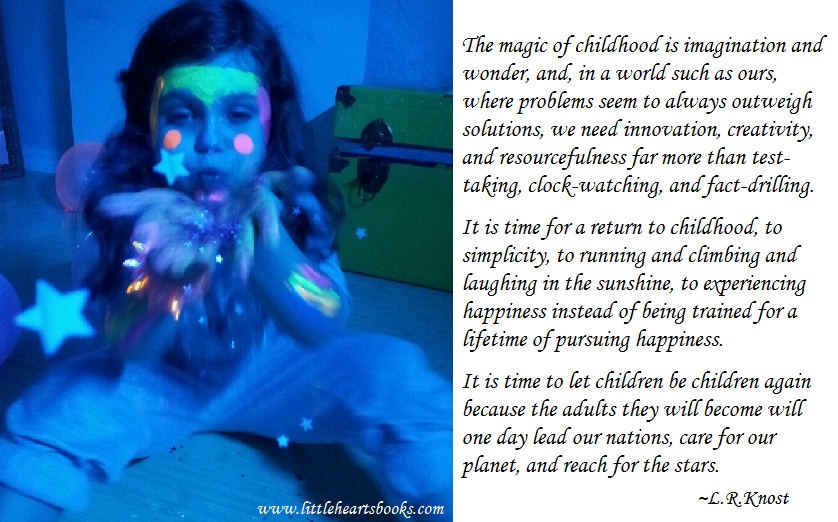
Do you think my little dirt magnet enjoyed her homeschool day?
Related posts:
The Seven Wonders of the World of Childhood
Raising Super Readers~The MARVELous Power of Comic Books!
The Measure of Success~Chinese Parents and French Parents Can’t BOTH Be Superior!
Alphabet Fun~Imagination From A to Z!
Live to Play~Play to Learn~Learn to Live!
One Slippery Sock & Other Silly Tools for your Parenting Toolbox!
Award-winnning author, L.R.Knost, is the founder and director of the children's rights advocacy and family consulting group, Little Hearts/Gentle Parenting Resources, and Editor-in-Chief of Holistic Parenting Magazine. Books by L.R.Knost include Whispers Through Time: Communication Through the Ages and Stages of Childhood ; Two Thousand Kisses a Day: Gentle Parenting Through the Ages and Stages ; The Gentle Parent: Positive, Practical, Effective Discipline ; and Jesus, the Gentle Parent: Gentle Christian Parenting the first four books in the Little Hearts Handbook gentle parenting series, and children’s picture books Petey’s Listening Ears and the soon-to-be-released Grumpykins series.
A Place for Me
[By L.R.Knost, author of Two Thousand Kisses a Day: Gentle Parenting Through the Ages and Stages, Whispers Through Time: Communication Through the Ages and Stages of Childhood, and The Gentle Parent: Positive, Practical, Effective Discipline available on Amazon and through other major retailers.]
 As a child, I loved to find a little ‘hidey-hole’ and tuck myself away from the big, big world for awhile. Somehow, sitting in a closet quietly singing to a much-loved babydoll, hiding in the leafy bower of an old grandfather oak with my nose in a book, or throwing a blanket over an end-table and crawling under it with a flashlight just made the world a little smaller, a little friendlier, a little less overwhelming. I remember feeling safe. I remember listening to the sound of my breathing, just listening. I remember closing my eyes and daydreaming, the cadence of my breath the only sound in the stillness.
It was there in the stillness, in the wanderings of my imagination, that I processed the brokenness of a broken home, adapted to the subsequent juggling of two homes, coped with the eventual abandonment by a father, and, over time, unlocked my guarded heart to a new father. It was in the smallness, in the microcosm of my own creation, that the big world shrunk down and the chaos receded and life’s mountains became surmountable molehills.
With my own children, I’ve fallen in love anew with the ‘hidey-hole.’ Whether it’s a fort of sofa cushions,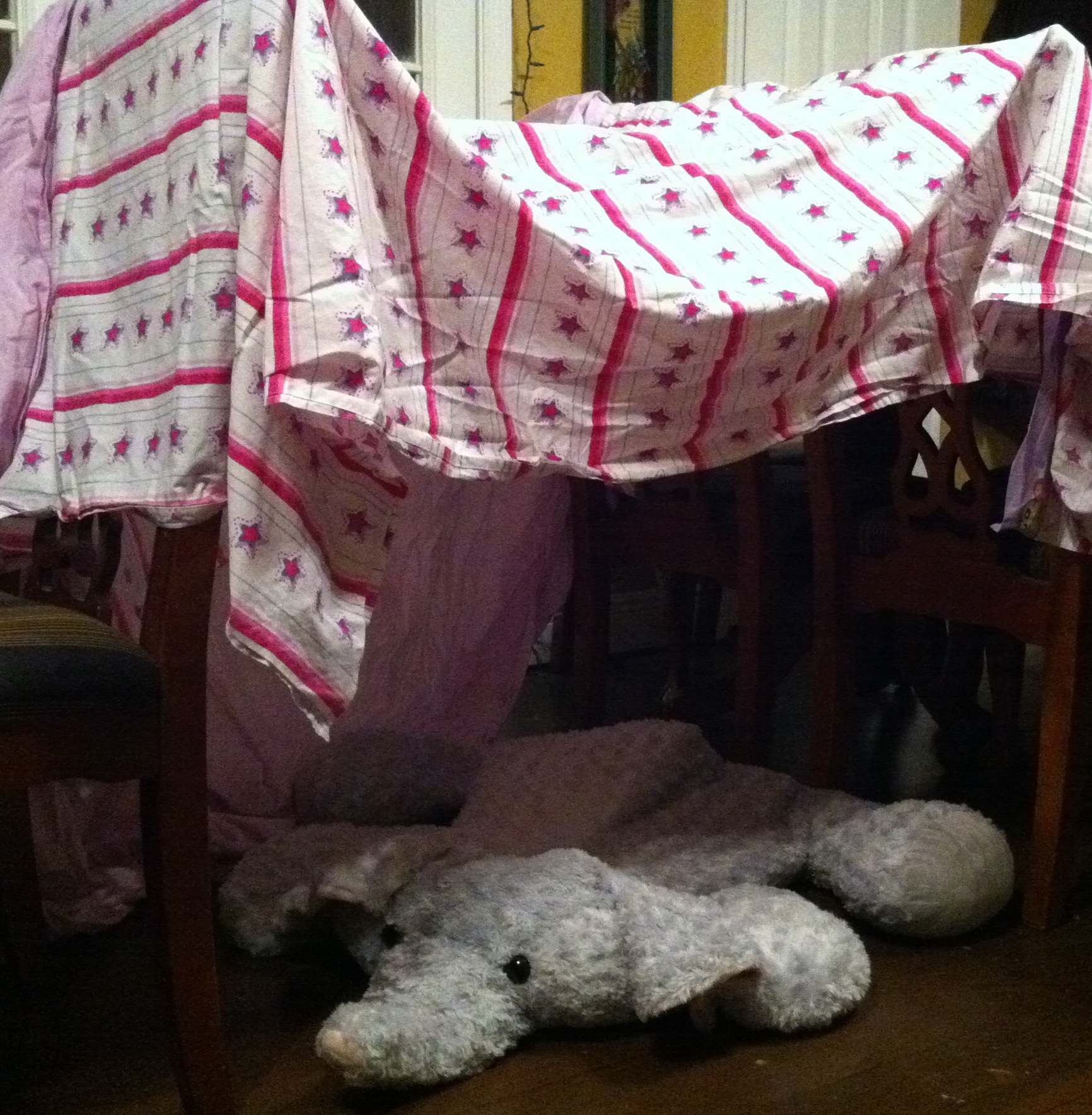 a sheet with the ends tied to dining room chairs, a blanket hung over a coffee table, or the tree house built by my amazing hubby, my children’s imaginations take flight. And, as they make clubhouse signs and set about ‘nesting’ in their little corner of the world, their muffled giggles and busy chatter make my heart sing.
I pray that the big, big world out there is kind to my children, that they never know sadness, never taste bitterness, never experience disillusionment. But I know better. I know life can and will challenge and even hurt them. I know people will disappoint and hearts will be broken and dreams will be shattered.
But I also know that in the quiet places God’s still, small voice can be heard whispering comfort. I know that in the simplicity of play the complexity of life can be sorted like puzzle pieces joined to reveal a picture. And I know that in the nooks and niches we carve out for ourselves even as adults, the world seems a little smaller, a little friendlier, and a little less overwhelming.
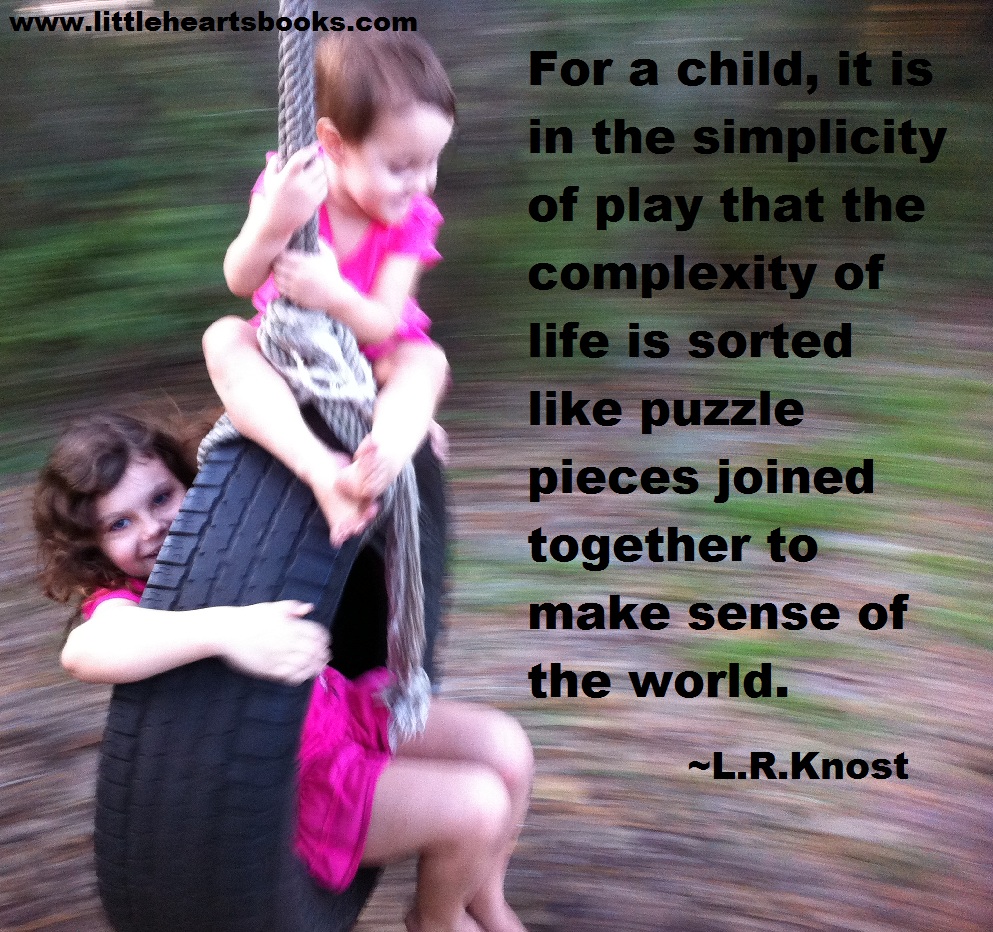 Related posts:
200 Ways to Bless your Children with a Happy Childhood
Playground Confessions~Look Who’s Talking!
Live to Play~Play to Learn~Learn to Live!
One Slippery Sock & Other Silly Tools for your Parenting Toolbox!
Parenting in Public: Toddler Time
Testing the Boundaries~What’s A Parent To Do?
Award-winnning author, L.R.Knost, is the founder and director of the children's rights advocacy and family consulting group, Little Hearts/Gentle Parenting Resources, and Editor-in-Chief of Holistic Parenting Magazine. Books by L.R.Knost include Whispers Through Time: Communication Through the Ages and Stages of Childhood ; Two Thousand Kisses a Day: Gentle Parenting Through the Ages and Stages ; The Gentle Parent: Positive, Practical, Effective Discipline ; and Jesus, the Gentle Parent: Gentle Christian Parenting the first four books in the Little Hearts Handbook gentle parenting series, and children’s picture books Petey’s Listening Ears and the soon-to-be-released Grumpykins series.
Sandbox Soapbox: Toddler Insights
[Portions reprinted from The Gentle Parent: Positive, Practical, Effective Discipline by L.R.Knost. Whispers Through Time: Communication Through the Ages and Stages of Childhood and Two Thousand Kisses a Day: Gentle Parenting Through the Ages and Stages also available on Amazon and through other major retailers.]
~~~~~~~~~~~~~~~~~~~~~
You look a little frazzled, Dude. Hard day?
Man, I love my mommy to pieces, but seriously, she does NOT know how to share. I took one little thing out of her purse, and she freaked! Snatching and saying, “Mine!” and everything. And right in the middle of the store, too! So embarrassing. Everybody was looking at me, rolling their eyes. I felt like a total failure.
I hear you! I have the same problem. And mine has been getting into EVERYTHING, too! Like, I stashed my cracker under the couch so I could have a little snack later, and she totally threw it in the trash! Who does that?
You think that’s bad? Check this. I’m minding my own business, just chillin’ with my toys, and she just snatches me up and carts me off and straps me in the highchair, no warning at all. And I’m not even hungry! Then she gets all upset when I do a little physics with my food. Btw, so cool how sometimes it falls straight down and sometimes it splats against the wall. I think it has something to do with the consistency of the food and the angle of my trajectory. Just a working theory atm, though.
Cool! Let me know what you figure out. How about this. I can’t get anything done! No joke! I spent all morning building this stellar block tower. Dude, you should have seen this thing. It was epic! So, I walk away for like one second, and she dumps the whole thing in the toy box! An entire morning’s work, gone. I don’t know why I bother sometimes.
Same! And what’s with this new ‘time-out’ thing mine’s into all of a sudden? I get the slightest bit upset about something, and, just when I need a cuddle, she sticks me in this chair and won’t let me get up! Like a chair is a good hugger? Really?
That is just wrong. Hey, how about this whole potty training dealio? She wants me to do my business in a little plastic bowl. We eat out of those things! Seriously, you gotta wonder what goes on in their brains sometimes.
You’re lucky. Mine keeps propping me up on that big white contraption with water in it. I could drown! And you should see what happens when she pushes down that handle in the back. Can you say vortex of DOOM?!?
Not cool, Dude, not cool at all! Are you dealing with tantrums yet? Mine has got a temper like you wouldn’t believe! Anytime she doesn’t get her way, watch out for the fireworks! She yells and flaps her arms and stomps around, and, I hate to say it, but she’s starting to hit. Like that’s going to solve anything. I have no idea how to handle these aggression issues! Why can’t they just be reasonable like us?
I think it’s a communication issue, myself. I mean, they’re just barely starting to understand us when we talk to them, so I try to cut mine a little slack when she starts getting frustrated. I just stay close, maybe pat her arm or offer her a toy. Sometimes she settles down a bit and starts smiling again, but sometimes she just needs a little time to calm down. I stay present, though, so she knows I’m always there for her.
I think you’re messing up there, Dude. You need to walk away, just walk away and let her deal. If you comfort her, she’ll expect you to help her process her emotions, and that’ll lead to dependency issues, mark my words! When she freaks, you’ve got to force her to control herself! When she’s ready to be reasonable and listen, then you can be friends again.
I don’t know. Mine flat out won’t listen. I can’t tell you how many times I have to ask her to play with me before she finally looks up from her toy. What is it with parents and electronics, anyway? And then all she does is say, “Just a minute, hon.” What exactly is a minute, btw?
‘Just a minute’ means ‘This is more important than you,’ Dude. Come on, get with the program. You have to make them pay attention! Yell. Throw something. Bite the cat. Whatever it takes! Don’t let them get away with disrespecting you like that or they’ll never pay attention.
Word. Talk about getting with the program, how do you handle the sleep issues? I just cannot take another sleepless night! She keeps me up for hours every. single. night. It starts out great, bath-time, a book and cuddles, but then she just clocks out like I’m some kind of a toy she can switch off when it gets dark! And, man, is it dark. I don’t know what’s living in my closet, but it is ginormous!
Sleep training, Dude! It’s the only way. They turn that light out and shut the door, you follow them! Every time. Or, if you’re too scared (totally get that, btw) then just start hollering and don’t stop. If you can’t sleep, make sure they can’t, either! And don’t give in. Not even once. You let them get away with that stuff one time, and you’ll never get any sleep, ever! They have to learn that it’s their job to take care of you day and night, even if all you need is a hug!
Got it. Oh, man, here she comes. Seriously, do you have this problem, too? We’re at the park. Everybody’s having a good time. And she just up and decides to leave. I think she’s got some anti-social tendencies. I’m thinking of having her tested.
Same here! But I’m working on it. They’ve got to learn it’s not all about them, and it’s our job to teach them. Look, here comes mine, too. Watch and learn, Dude. I’m using the arched-back, flail and wail today. Deep breath and, “No! No! Noooooo…”
Related posts:
Backtalk is Communication…LISTEN
When Children Act Out ~ Reflecting Our Emotions
Bridge Over Troubled Waters~Parenting a ‘Problem’ Child
The Incredible Power of the Whisper
The Taming of the Tantrum: A Toddler’s Perspective
The Thoughtful Parent’s Guide to Positive Parenting Guides
Award-winnning author, L.R.Knost, is the founder and director of the children's rights advocacy and family consulting group, Little Hearts/Gentle Parenting Resources, and Editor-in-Chief of Holistic Parenting Magazine. Books by L.R.Knost include Whispers Through Time: Communication Through the Ages and Stages of Childhood ; Two Thousand Kisses a Day: Gentle Parenting Through the Ages and Stages ; The Gentle Parent: Positive, Practical, Effective Discipline ; and Jesus, the Gentle Parent: Gentle Christian Parenting the first four books in the Little Hearts Handbook gentle parenting series, and children’s picture books Petey’s Listening Ears and the soon-to-be-released Grumpykins series.
8 Tips for Raising Bookworms
A young girl is curled up in an old, over-stuffed armchair, totally absorbed in the pages of a book.  A television sits nearby, silent and black with jealousy. In a corner, a computer gathers dust in concert with an abandoned gaming system. No one would guess that this girl lost in the world of Regency England crafted by literary great, Jane Austen, couldn’t read at all until fifth grade and fights against the headaches and blurred vision brought on by severe dyslexia. No one would believe that this beautiful twelve year old preteen who has devoured Little Women, Jane Eyre, and is nearly finished with the entire Anne of Green Gables series was still unable to recognize all the letters of the alphabet in the third grade.
So, with all the barriers to reading this young girl faced and all the preconceived notions of the demise of the book and the rise of the electronic age, why does this child choose a book, an ink and paper relic to some, over the hypnotic allure of technology?
Simple…
Children who love to read…READ! It’s just a simple fact of human nature that we are more inclined to do the things that interest and excite us rather than the things we are forced or obligated to do. So how do we engage our children’s hearts in the wonder of reading instead of just training their minds in its mechanics?
 Think of learning to ride a bicycle.
Your dad props you up on a shiny red bicycle, gives you a few pointers and an encouraging smile, then runs alongside you with his hand securely on the back of the bike seat, steadying and supporting you as you fly down the sidewalk with the wind in your hair and a thrilled and slightly terrified grin on your face.
Or.
Your dad sits you down with a diagram of a bicycle and drills you on its parts, making you list them over and over and recite them back to him in alphabetical order.
Which teaching style would result in a bicycle rider rather than just a memorization of bicycle parts? Which scenario would encourage a love of bicycle riding?
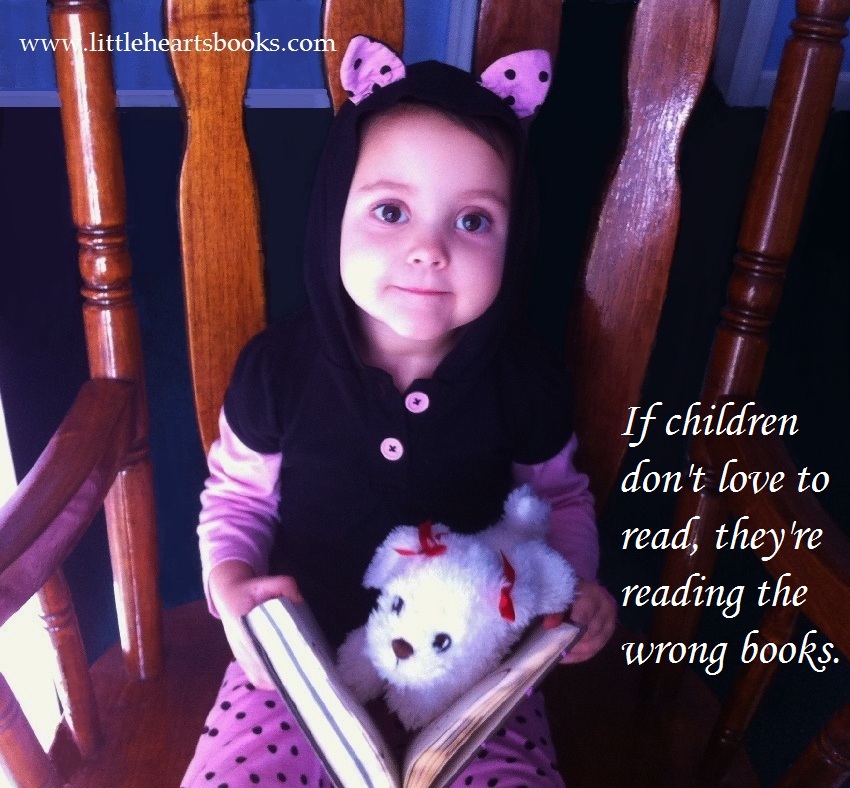 When it comes to reading, do you want your children to become readers or just learn the mechanics of reading? Do you want them to love to read or just know how? If a love of reading is your goal for your children, here are some ideas to get you started:
1.) Let them see you reading! Children learn more by watching what we do than by listening to what we say. Seeing your books laying around the house, trying to get your attention while you’re absorbed in an intense scene, giggling when you ‘sneak’ away to the bathroom with a favorite tome, all of these things will have a huge impact on their perception of reading as a desirable activity.
2.) Read to them from infancy on, and let them in on it! Don’t make reading a one-sided exercise with you doing all the talking. Make reading interactive by letting your little one turn pages (yes, even if they want to go backwards!) and point at the pictures and talk about the binding and maybe even chew on the book a bit (bookworms actually do eat books, after all!)
3.) Play, play, play! Seriously, stop being so serious! Children learn best through play, so grab some sidewalk chalk and head outside to the best classroom ever invented. Make up your own games or check out Pinterest and just have a blast! If your children associate learning to read with mommy playing abc hopscotch with them or daddy hiding abc eggs in the bushes, you’ve turned what could be a battle into a playground!
4.) If a child doesn’t love to read, they’re reading the wrong books! Surround them with books of every kind. Fill your home with paperback thrillers and dime-store novels and comic books (yes, comic books!) and nonfiction books on horses and whales and art and music. Creating an atmosphere ripe with knowledge and adventure at your children’s fingertips will go a long way towards making reading an active part of their lives. (And don’t forget the power of the fort! Creating a cozy nook that invites settling in for a reading adventure is really…well, inviting!)
5.) Oh, the places you’ll go! (A la Dr. Seuss!) Make monthly library ‘dates’ to return books and explore new and exciting genres at no cost to you. While you’re there, check out the library’s calendar of events for author visits and book readings and craft activities and mom’s groups. You’ll be amazed at how much the too often forgotten library system has to offer in most areas!
6.) Indie bookstores are the bomb-diggity, no joke! Most cities have one or more independent bookstores struggling to make it through the downturned economy and the advance of the electronic age. These small stores are little niches of wonder just waiting to be discovered, and by supporting them you will not only help keep a local business afloat, but you will also introduce your children to the warmth and beauty of walls lined with books, shopkeepers who can converse about every title like an old friend, and possibly even some local authors that you never even knew existed!
7.) A lifestyle of reading puts the vast knowledge of the ages into the hands of our children. Exchanging the life-long riches of a love of reading for the temporary value of facts gleaned from required reading lists is a paltry deal, indeed. Encourage reading, yes, but let their hearts, their interests, their imaginations choose their reading material. Whatever momentary facts they need for the next test or quiz can be found just as easily on Google. A passion for reading can only be found in the heart of the child.
8.) Parenting matters! Parenting choices strongly impact a child’s level of trust and security. A love of learning grows when it isn’t stifled by fear or stress. Parents fostering a healthy attachment are also fostering a love of learning in their children which translates directly into a love of reading!
 I love that my older children have already met and fallen in love with my old friends such as Sense & Sensibility, The Great Gatsby, Moby Dick, Of Mice and Men, The Red Badge of Courage, War and Peace, The Hound of the Baskervilles, and so many, many more. And I love that my younger children still have new friends waiting to be discovered between the covers of wonderful, beautiful, ageless books. Happy reading!
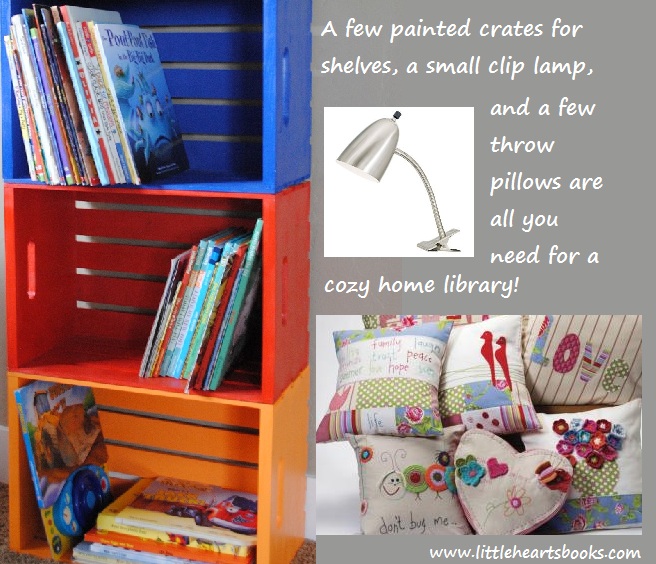
Related posts:
25 Must-Have Books for Baby Bookworms
25 Must-Have Books for Toddler Bookworms
25 Must-Have Books for Preschool Bookworms
There is such a rush these days to get children sleeping through the night, weaned off the breast, eating solid foods, potty trained, reading independently, and on and on, that we seem to have lost the ability to simply enjoy life as it happens and let our children do the same. A Return to Childhood
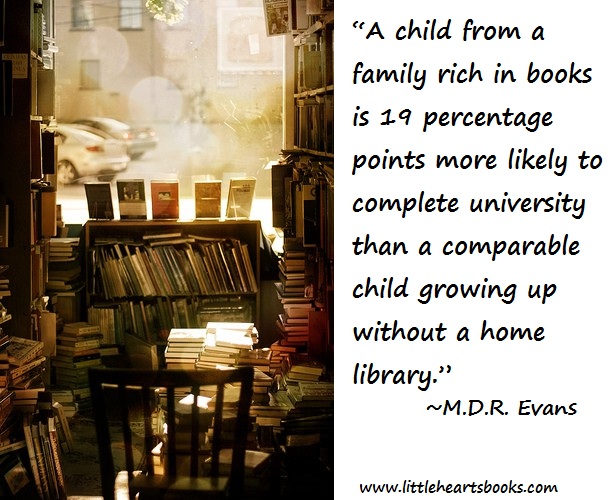
Successful reading means far more than possessing the ability to read. Engaging the hearts of students moves reading success beyond a life skill and turns it into a life style. And graphic novels are too powerful of a tool in our arsenal to be disregarded because of pride or prejudice. Raising Super Readers~The MARVELous Power of Comic Books!
In the world of a child wonders are as simple as sticks and sheets, leaves and books, boxes and giggles, and the promise in a rainy day. The Seven Wonders of the World of Childhood
Think homeschooled children are unsocialized, over-controlled, locked-away-from-the-world misfits? Think again! My Renaissance Girl
Parenting choices strongly impact the level and type of attachment a child develops and, by extension, the development of a love of learning. A love of learning grows when it isn’t stifled by fear or stress or regimented by over-structuring or a focus on achievement or competition. Parents fostering a healthy attachment are thus also fostering a life-long love of learning in their children. Love, Play, Learn!
On a Winnie the Pooh style ‘long explore’ my little Pooh Bear discovered the world in The Many Adventures of My Little Pooh Bear
If you give a toddler a book
It’s never too early!
He’ll climb into your lap
While he’s in your lap
He might lay his head on your chest
When he lays his head on your chest
He’ll hear your heartbeat
When he hears your heartbeat
He’ll probably ask if you can hear… If You Give A Toddler A Book…
My SPD/SLD/ADD (Sensory Processing Disorder, Specific Learning Disability-Dyslexia, Visual and Auditory Processing Disorders, Attention Deficit Disorder, etc) sweetie, aka Renaissance Girl, has raised the bar on my homeschooling skills more times than I can count. Her beautiful mind sees the world through a unique lens similar to those of historical icons such as Thomas Edison, Leonardo Da Vinci, Benjamin Franklin, and Albert Einstein…Beautiful Minds
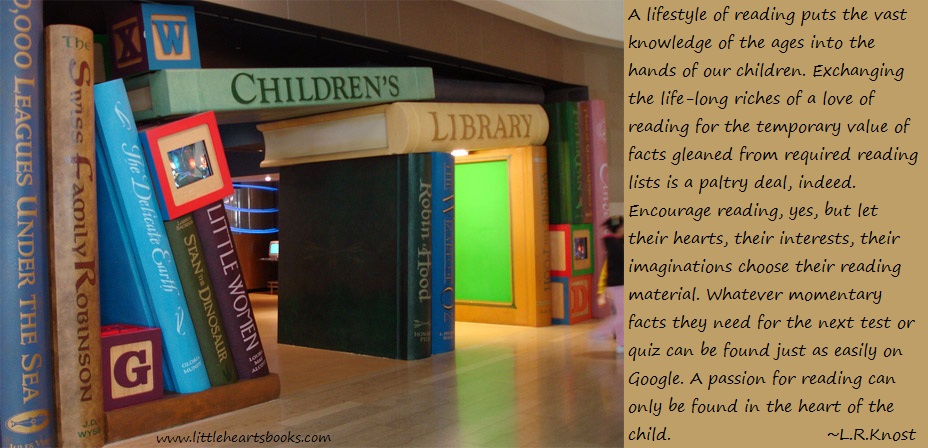
Award-winnning author, L.R.Knost, is the founder and director of the children's rights advocacy and family consulting group, Little Hearts/Gentle Parenting Resources, and Editor-in-Chief of Holistic Parenting Magazine. Books by L.R.Knost include Whispers Through Time: Communication Through the Ages and Stages of Childhood ; Two Thousand Kisses a Day: Gentle Parenting Through the Ages and Stages ; The Gentle Parent: Positive, Practical, Effective Discipline ; and Jesus, the Gentle Parent: Gentle Christian Parenting the first four books in the Little Hearts Handbook gentle parenting series, and children’s picture books Petey’s Listening Ears and the soon-to-be-released Grumpykins series.