
Easter Eggs, an Empty Tomb, and an Exploding Dishwasher

Chocolate? What chocolate?
Life with kids is messy. Just ask God. He’s got a whole planet of them, and the scrapes they get themselves into are the stuff of legends, literally! Luckily for us, He’s the best. parent. ever.
That’s one of the things I like best about Easter, celebrating the Original Gentle Parent, the Author of Intentional Parenting, Unconditional Love in Person, and I love sharing and implementing what I learn from His example.
I had a perfect opportunity to implement some of that gentle, intentional, unconditional parenting last night when I headed into the kitchen to color Easter eggs with a clingy, tired baby on one hip and an over-excited six-year-old dancing around my legs, only to find a tidal wave of sudsy bubbles exploding from every crevice of my dishwasher and covering my newly cleaned floor. My Renaissance Girl had used dishwashING liquid instead of dishwashER liquid…sigh.
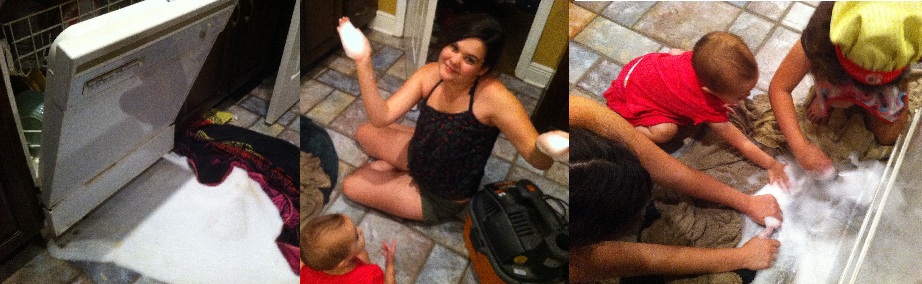
Now, just to set the stage, we have a home church and, in anticipation of the extra family and friends we were expecting for the Easter service, I had spent the entire day cleaning and scrubbing and organizing and still had more cleaning and setting up to do as well as coloring eggs and settling little ones in bed for the night before filling Easter baskets.
So I stood there, staring at the billowing disaster and adding a slew of new tasks to my already too-long list, and winged a quick prayer up to my Role Model. Then I threw down a towel levee, plopped my little people down for a good old bubble romp, and grabbed my camera. Disaster-misaster, what we had was a fun Easter memory in the making!
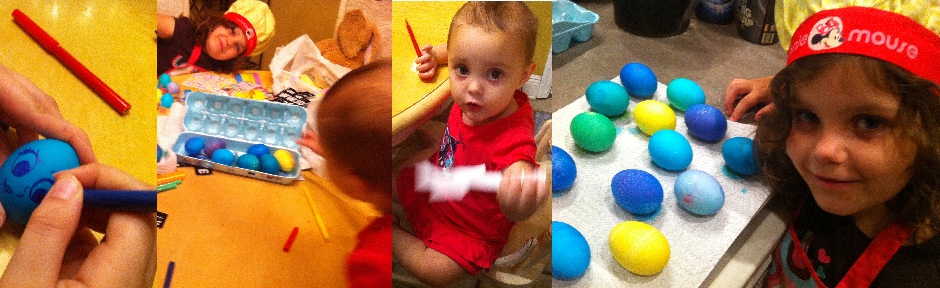
That Old Rugged Cross on a lonely hill is a testimony to triumph…life conquering death, good conquering evil, hope conquering fear…justice served and grace given. And that Empty Tomb we celebrate isn’t about death. It’s about life…messy, muddled, mysterious, mistake-ridden life, the kind we live every day…even Easter!

Happy Easter!
Related posts:
Communication vs. Miscommunication
Playground Confessions~Look Who’s Talking!
The Measure of Success~Chinese Parents and French Parents Can’t BOTH Be Superior!
 Award-winnning author, L.R.Knost, is the founder and director of the children's rights advocacy and family consulting group, Little Hearts/Gentle Parenting Resources, and Editor-in-Chief of Holistic Parenting Magazine. Books by L.R.Knost include Whispers Through Time: Communication Through the Ages and Stages of Childhood ; Two Thousand Kisses a Day: Gentle Parenting Through the Ages and Stages ; The Gentle Parent: Positive, Practical, Effective Discipline ; and Jesus, the Gentle Parent: Gentle Christian Parenting the first four books in the Little Hearts Handbook gentle parenting series, and children’s picture books Petey’s Listening Ears and the soon-to-be-released Grumpykins series.

Shared Journeys~Attachment Parenting

Parenting is far more a journey than a destination. As parents we are always learning, always researching, always growing, always adjusting. Sharing our journeys is one way we can support and encourage each other along the way! Here are some really unique ways mamas are sharing their attachment/natural/gentle parenting experiences you might enjoy:
The first is a video by The Single Crunch. Such a beautiful testimony of the love of a mother!
I am a single mom…I breastfeed and practice child-led weaning, babywear, co-sleep, cloth diaper, homebirth, and do whatever else my natural instincts move me to do, regardless of what others may think. I DO NOT “train” my children (using the cry-it-out method to get babies to sleep). I do not spank. I do not vaccinate. I try not to run to modern medicine for every problem I or my children have, opting instead for natural (homeopathic) solutions when possible…I LISTEN to my children. I try to pause before I react and think about life from their point of view. I HAVE NOT ALWAYS LIVED THIS WAY…I’ve had a hard time with many of the ideals of being crunchy, especially as a single mom. It takes time and patience and time. Lots of time. Sometimes I’m not all that patient. I used to spank…I yell…But mainstream parenting never felt right to me. I wanted to meet moms who didn’t think my attachment (and the level of attachment I desired to have) with my children was weird. I found AP because most of the women in my life felt my ideas were silly, unintelligent, impractical, and unnecessary, especially for a mom with no husband. I didn’t care. I knew my children needed more of me. I’ve always felt a strong connection to my children, and I’ve always wanted to parent the way THEY showed me they needed me to, not a way that was convenient for me. I am now working to apply all that I have learned from my other mom friends and the many groups I subscribe to, to make my girls’ lives as safe, healthy, and happy as possible. I want to raise compassionate, secure, intelligent young women who know, understand, and believe that beauty starts within. (Read more at The Single Crunch)
~~~~~~~~~~~~~~
The next is a lovely and honest post from The Mule about the blessings and challenges of breastfeeding on demand:
While I nurse you to sleep…
I...rest. For the first time today, I am still. I am not lifting, carrying, holding, bending, reaching, stretching, scrubbing, wiping, hauling, or lugging. Here in this dark room I lie beside you and allow my body and mind to come to stillness after the chaos of our day. You suck, and tug, you fiddle, and fuss…and slowly come to stillness too, until we both are still, and both are resting…I wait, momentarily, and then, I slowly slide away and leave you sleeping.
While I nurse you to sleep…
I…take stock. I turn over in my mind, the contents of the fridge, the washing on the floor, the money in the bank. I count up the years I’ve had so far and the years I might have left. I work out how old I will be when you are the age I am now – thirty seven – seventy two. I hope I make it. I count the eggs you already have in your body and those I have in mine and I wonder at the people they may become. I think about the person I was before I met you, the life I led, the things I’ve gained and the things I’ve lost, I count them all. I plan the contents of my other daughter’s lunchbox
(Read the rest of this lovely post at While I Nurse You to Sleep…)
~~~~~~~~~~~~~~
This is an excellent and entertaining look at child-led, interest-led learning from Real Child Development.
Trust the child to direct his own learning. For it seems to me a fact that, in our struggle to make sense out of life, the things we most need to learn are the things we most want to learn. To put this another way, curiosity is hardly ever idle. What we want to know, we want to know for a reason. The reason is that there is a hole, a gap, an empty space in our understanding of things, our mental model of the world. We feel that gap like a hole in a tooth and want to fill it up. It makes us ask How? When? Why? While the gap is there, we are in tension, in suspense. Listen to the anxiety in a person’s voice when he says, “This doesn’t make sense!” When the gap in our understanding is filled, we feel pleasure, satisfaction, relief. Things make sense again – or at any rate, they make more sense than they did. When we learn this way, for these reasons, we learn both rapidly and permanently. The person who really needs to know something does not need to be told many times, drilled, tested. Once is enough. The new piece of knowledge fits into the gap ready for it, like a missing piece in a jigsaw puzzle. Once in place, it is held in, it can’t fall out. We don’t forget things that make the world a more reasonable or interesting place for us. (Read the rest of this informative post at Real Child Development)
~~~~~~~~~~~~~~
The next post is from Dulce De Leche‘s ‘Gentle Discipline Toolbox’ series which has an excellent array of topics, ideas, and links!
Redirection and Mutual Solutions
My 19 month old began to love hitting. He wasn’t even angry most of the time. He just got a kick out of the sensation, the noise and the reactions. We tried softly stroking our cheeks with his hands and telling him “Gentle touches”. He giggled and slapped again. My temper and frustration were building, until I recalled something I had read by Dr. Sears. We began teaching him to give us high fives. His face lit up with delight, and he began to repeat it. He still got what he was craving–the game, noise, sensation and excitement–but now it was in a socially acceptable way that didn’t hurt anyone. I would like to say that at least we got a little advance warning as he gleefully squealed, “High fibe!” before striking, but he usually didn’t say it till he was already mid-strike. Still, it was progress… (Read more of this enlightening post at Dulce De Leche)
~~~~~~~~~~~~~~
This last honest and informative article from Positive Parenting: Toddlers and Beyond is a great introduction to positive parenting:
Skeptical About Positive Parenting?
Positive parenting, at the very core of it, isn’t about what you can and can’t do in terms of disciplining, teaching, and guiding your kids. It isn’t even about having the perfect relationship (as there will always be breaks and repairs; such is life). It’s not about techniques or tools, whether or not to use time outs or time ins, consequences or problem-solving. All of those things stem from the practice of what is at the very core of this philosophy, but they are not THE philosophy itself. What it’s really about is the way we view children, their emotions, their needs, their motives. It’s about seeing them as human beings, worthy of respect and unconditional love, delicate, impressionable, who have as much to teach us as we have to teach them… (Read more from Positive Parenting: Toddlers and Beyond)
~~~~~~~~~~~~~~
Related posts:
And Baby Makes Three~Surviving the First Three Months with a Newborn
Bizarre Anti-Cosleeping Ads in Milwaukee a Red Herring?
A Boy, A Girl, and A Baby~Journey to Gentle Parenting
The Measure of Success~Chinese Parents and French Parents Can’t BOTH Be Superior!
Tots to Teens~Communication Through the Ages and Stages
Award-winnning author, L.R.Knost, is the founder and director of the children's rights advocacy and family consulting group, Little Hearts/Gentle Parenting Resources, and Editor-in-Chief of Holistic Parenting Magazine. Books by L.R.Knost include Whispers Through Time: Communication Through the Ages and Stages of Childhood ; Two Thousand Kisses a Day: Gentle Parenting Through the Ages and Stages ; The Gentle Parent: Positive, Practical, Effective Discipline ; and Jesus, the Gentle Parent: Gentle Christian Parenting the first four books in the Little Hearts Handbook gentle parenting series, and children’s picture books Petey’s Listening Ears and the soon-to-be-released Grumpykins series.
The Elves and the Homemaker
You’ve all heard the story of the industrious, magical little elves who went behind the poor, but good-hearted, shoemaker and finished his work for him, saving his shop and rewarding him for his hard work. This is not that story…
 Once upon a time there was a kind, hard-working homemaker named Elvimama. She had five children, Elvin, Elvira, Elvish, Elvis, and Baby Elvie. Elvimama worked hard every day to feed her five children Elftritious foods, teach them their Elfessons, make sure they practiced on their Elviolins, take them to their Elfootball and Elfallet practices while she grabbed an hour at Elfercize (wearing Baby Elvie, of course!), and then rushed back home to put a healthy, home-cooked Elfalicious meal on the table for dinner. Life was busy, but good…except for one thing.
Their Elfhouse was a mess! No matter how hard Elvimama worked, no matter how carefully she organized her day, or how little sleep she got, her Elfhousekeeping ended up looking rather…well, unkept.
She’d start with the bedrooms each morning, straightening and sweeping and organizing, then move on to the kitchen and work her way through the morning dishes and then sweep and mop and take out the trash, before heading to the Elfamily room to polish and vacuum. But she was plagued by a strange phenomenon every single day…as soon as she was finished with one room and had moved on to another, the first room mysteriously returned to it’s former state of disarray! And when she finished the second room and moved on to the third, the second room was also suddenly back to a disheveled mess!
This pattern when on throughout her day, with each bedroom cleaned, then miraculously uncleaned, the kitchen spotless, then instantly a sticky stack of unwashed dishes appearing when she headed for the Elfamily room. And, even there, when she’d polished and vacuumed and straightened, the second she walked out, piles of toys walked right back in!
Day after day, week after week, month after month, year after year, this phenomenon continued, with Elvimama starting every day with a messy house, spending every day cleaning and cleaning and cleaning, only to end every day with a still-messy house!
It was frustrating and exhausting, and sometimes Elvimama would head to the bathroom for a long soak in the tub and a good cry. But, inevitably, little elf-hands would come knocking on the door and little elf-voices would be calling out for Elvimama’s attention. Her long soak always turned into a quick wash, and she’d mop up her tears and emerge with a smile and arms ready to gather her little elf-loves close.
Time passed, and Elvin and Elvira went off to college. Elvish joined the Elf-Corp, and Elvis made the big-time in Nashville. Baby Elvie grew up and opened a little bookstore called The Elf Shelf.
One morning, Elvimama got up and started with the bedrooms, straightening and sweeping and organizing, then moved on to the kitchen and worked her way through the morning dishes and then swept and mopped and took out the trash, before heading to the Elfamily room to polish and vacuum and straighten. When she was finished, she stopped and stared in shocked silence. Everything was…spotless…pristine.
No jumbled piles of clothes had unfolded themselves in the bedrooms. No sticky stack of dishes had reappeared in the kitchen. No toys had marched back into the Elfamily room.
Her house was finally clean, but her heart longed for jelly fingerprints and funny little dirt-smudged elf-faces, muddy footprints and sticky little giggle-grin kisses. Elvimama sighed and headed to the bathroom for a long soak in the tub. Now, no little elf-hands came knocking on the door and no little elf-voices called out for Elvimama’s attention.
And Elvimama had a good cry.
~~~~~~~~~~
A mother’s love is strong enough to hold her children close when they’re young and she longs for rest, and to let them go when they grow up and she longs for the past.
L.R.Knost
Related posts:
Mommies are Mountain Climbers and Sisyphus was a Sissy
The Story of Us~25 Years and Counting!
Award-winnning author, L.R.Knost, is the founder and director of the children's rights advocacy and family consulting group, Little Hearts/Gentle Parenting Resources, and Editor-in-Chief of Holistic Parenting Magazine. Books by L.R.Knost include Whispers Through Time: Communication Through the Ages and Stages of Childhood ; Two Thousand Kisses a Day: Gentle Parenting Through the Ages and Stages ; The Gentle Parent: Positive, Practical, Effective Discipline ; and Jesus, the Gentle Parent: Gentle Christian Parenting the first four books in the Little Hearts Handbook gentle parenting series, and children’s picture books Petey’s Listening Ears and the soon-to-be-released Grumpykins series.
30 Days of Thankfulness~Day 21~Fruit!
I am thankful for fruit!
~By Their Fruit They Will Be Known~
 “The fruit of the Spirit is love, joy, peace, patience, kindness, goodness, faithfulness, gentleness and self-control” (Galatians 5:22-23)
Love ~ Many parents say they make their parenting choices out of love, and I believe that is so very true, but if God is love as He says He is (and He is!), then our love needs to reflect His in every way, including in our parenting. And how does God show His love? Sacrificially, “For God so loved the world that He gave His only Son, that whoever believes in Him will not perish, but have everlasting life.” (John 3:16). Modeling God’s sacrificial love in our parenting is reflected by making parenting choices based on our children’s needs, not our convenience. Responsive parenting is truly a picture of God’s sacrificial, unconditional love in that, as we respond to our children where they are, (“This is how God showed His great love for us, that Christ died for us while we were still sinners [emphasis added]” Romans 5:8) comforting their cries, guiding their choices, providing for their needs, encouraging their individuality, we are, moment by moment, day by day, sacrificing our lives for them.
Joy ~ Parenting can be a challenge (Ask God. He’s got a lot of children, and they don’t behave all that well!) but taking joy in the journey and in our children makes all the difference. “At that time Jesus, full of joy through the Holy Spirit, said, ‘I praise you, Father, Lord of heaven and earth, because you have hidden these things from the wise and learned, and revealed them to little children.’” (Luke 10:21) Take time out each day to enjoy your children, or, better yet, to tell them what joy they bring to your life and specifically what unique things you enjoy about them!
Peace ~ It’s so, so hard making parenting choices, knowing our actions (or inactions!) will have an incredibly profound effect on a precious little life. God knows and sees and cares about every detail of our lives and our children’s lives.  And, in the same way that we want our little ones to trust us with their needs and concerns and desires, God wants us to trust Him and to have peace in Him. “Do not be anxious about anything, but in every situation, by prayer and petition, with thanksgiving, present your requests to God. And the peace of God, which passes understanding, will guard your hearts and your minds in Christ Jesus.” (Philippians 4:6-7)
Patience ~ “Be completely humble and gentle; be patient, bearing with one another in love.” (Ephesians 4:2) Children come into our lives as small bundles with big needs who don’t speak or understand our language and then proceed to grow into little people with their own temperaments, plans, and desires. Having patience as a parent should qualify as an extreme sport! But having and modeling patience with our children not only helps us to guide and grow them gently, but also encourages them to exercise patience with themselves and others throughout life…a rare, but lovely gift we can give the world through our children.
Kindness ~ My grandmother’s favorite verse was “Love is patient, love is kind. It does not envy, it does not boast, it is not proud. It does not dishonor others, it is not self-seeking, it is not easily angered, it keeps no record of wrongs.”  (1Corinthians 13:4-5) This is a beautiful example of how the Bible encourages us to treat others…including our children! Taking time out on occasion to examine our parenting practices and evaluate them in terms of how loving and patient and kind we are to our little ones is a vital part of effective parenting. It’s also important to make sure we aren’t parenting ‘for the neighbors,’ in other words, we aren’t making parenting choices based on a ‘who has the best kid’ competition (envy, boastful) or out of embarrassment over our children’s behavior (pride). Are we easily angered by our children? Do we dredge up their mistakes time and time again? If so, consciously working to break those bad habits and replace them with love and patience and kindness will have a dramatically positive impact on our parenting.
Goodness ~ “Still other seed fell on good soil. It came up, grew and produced a crop, some multiplying thirty, some sixty, some a hundred times.” (Mark 4:8) Of all things, shouldn’t our very first desire in parenting our children be to till the soil of their little hearts so tenderly, so carefully, so intentionally that their hearts are “good soil,” ready, eager, and willing to receive the Good News of Jesus’ birth, death, and resurrection for their sins? Instead of focusing on punishing our children’s mistakes, their ‘sins,’ thus negating the Gospel and undermining the very purpose for Jesus’ suffering, shouldn’t we model the grace and mercy and forgiveness we ourselves have been given? So what, exactly, is “good soil”?  Agriculturally speaking, which is what the parable Jesus told was based on, “good soil” is well-drained (not bogged down by over-watering, i.e. over-indulgent parenting), fresh (not over-used or over-worked, i.e. over-bearing parenting), fertilized (filled with good nutrients, i.e. needs met), composted (mixed with rubbish, i.e. sinful!), and enriched (earthy minerals intact, i.e. connected to their source~their parents).
Faithfulness ~ “The living, the living—they praise you, as I am doing today; parents tell their children about your faithfulness.” (Isaiah 38:19) God is faithful in His promises, faithful in His love, faithful in His parenting. In all things we need to reflect His character to our children so that when we tell them about ‘His faithfulness’ it isn’t only in words, but also in deeds. And what is faithfulness, exactly? It is defined as constancy, dependability, care, trustworthiness, devotion, honor, attachment, commitment. So let us parents, as reflections of God, be faithful to exhibit constancy, dependability, care, trustworthiness, devotion, honor, attachment, and commitment in our parenting choices!
Gentleness ~ “Let your gentleness be evident to all”…except your children. No, of course the Bible doesn’t say that! God actually instructs us to “Let your gentleness be evident to ALL (emphasis added)” in Philippians 4:5. Tender, compassionate, merciful, warmhearted, sensitive, approachable, good-humored…these are all synonyms for gentleness, and gentle parenting reflects all of these qualities. Let’s take a look at the antonyms (opposites) of the word gentle in the thesaurus~harsh, tough, violent, sharp, rigid, severe, unrelenting, unforgiving, punitive, unpleasant, pitiless, stern. “Let your gentleness be evident to all” including (especially!) our littlest, most defenseless, and truly precious gifts from God~our children!
Self-control ~ “Like a city whose walls are broken through is a person who lacks self-control.” (Proverbs 25:28) City walls being broken through was a tragedy of great proportions in the Bible, whereas a city gladly throwing open its gates to welcome its King was a time of rejoicing. The ‘city walls’ were used metaphorically  in the Bible to refer to a person’s will. Many times the words ‘break a child’s will’ are thrown around and spoken as if directly from the mouth of God. But God, as our heavenly Parent, doesn’t seek to break our wills. Instead, He teaches us to trust Him by His own love, joy, peace, patience, kindness, goodness, faithfulness, gentleness and by His self-control in not stomping us out of existence as we deserve by our sinfulness. And, after building that trust-relationship with us, He gently calls us to joyfully and voluntarily lay down our wills out of trust and gratitude and to open our hearts and minds and lives to Him, welcoming in our King. This is the heart of trust-based obedience!
Related links:
Spare the Rod: The Heart of the Matter
Award-winnning author, L.R.Knost, is the founder and director of the children's rights advocacy and family consulting group, Little Hearts/Gentle Parenting Resources, and Editor-in-Chief of Holistic Parenting Magazine. Books by L.R.Knost include Whispers Through Time: Communication Through the Ages and Stages of Childhood ; Two Thousand Kisses a Day: Gentle Parenting Through the Ages and Stages ; The Gentle Parent: Positive, Practical, Effective Discipline ; and Jesus, the Gentle Parent: Gentle Christian Parenting the first four books in the Little Hearts Handbook gentle parenting series, and children’s picture books Petey’s Listening Ears and the soon-to-be-released Grumpykins series.
Jesus, The Gentle Parent
[Excerpt reprinted from Jesus, the Gentle Parent: Gentle Christian Parenting by L.R.Knost. Two Thousand Kisses a Day: Gentle Parenting Through the Ages and Stages; Whispers Through Time: Communication Through the Ages and Stages of Childhood; and The Gentle Parent: Positive, Practical, Effective Discipline by L.R.Knost also available on Amazon and through other major retailers.]
~~~~~~~~~~~~~~~~~~~~~
Jesus, the Gentle Parent
“…a great and powerful wind tore the mountains apart and shattered the rocks before the Lord,
but the Lord was not in the wind. After the wind there was an earthquake,
but the Lord was not in the earthquake.
After the earthquake came a fire,
but the Lord was not in the fire.
And after the fire came
a gentle whisper…”
1 Kings 19:11-12
God has gone to great lengths, superhuman lengths even, to reach out to his wandering children and call them home, back into the safe shelter of his arms, into the warm welcome of his presence, into the tender delight of his heart.
Throughout the Old Testament, he spoke through prophets, dreams, angels, and even a bush! He revealed his character in his ‘commandments’ (in the original Hebrew text ‘tsawah’ which literally means ‘directions’ or ‘guides’) and in the names he called himself and in his interactions with that lovely, stubborn, chosen nation, Israel.
And, finally, in the New Testament, he just stuck his feet right in the dirt and somehow stuffed his infinite Being  into the skin of a human.
God with us.
GOD. With. Us!
Why in Heaven’s name would he do that? Well, that’s been the subject of dusty tomes and esoteric debates for centuries, but in truth the answer is very simple: God is a father, a daddy who wants to connect with and build a relationship with his children.
In the Old Testament God revealed himself as a father who is Creator, Provider, and Protector. He showed himself to be an involved father, interested in every detail of his children’s lives, from what they ate to how and where and when they worshiped him. And he revealed his purity, his incomprehensible holiness that kept his beloved children hopelessly separated from him and helpless to change that fact. All the rules for cleansing, all the rituals, and all the formulas, only served to highlight the pitiful fallen state of God’s beloved children.
Then, in the New Testament, God stepped in. He stepped out of Heaven, and he stepped into the muck and mire of life among his precious children.
And that ritualistic, external, temporal cleansing? It became relational, internal, and eternal.
Stones once thrown in righteous judgment were laid down in humble mercy. Punishment was replaced with grace as Righteousness Himself stood between sinful man and his dire fate.
And so we have Jesus, God Himself with us in the flesh, God’s heart in a very literal sense laid bare for all the world to see, the perfect Parent to model ourselves after.
We have the Father…not a father, but THE Father…to look to for guidance about how to parent our children.
So, let’s get practical. What does God’s parenting look like, and how can we model ourselves after him?
Well, Jesus raised twelve children, so let’s take a look at how he did it!
Twelve of God’s children, all with different personalities, backgrounds, and talents, became Jesus’ disciples. The word disciple is the root word in discipline, so in a completely literal sense to discipline our children means to disciple them.
So, what characteristics defined Jesus’ discipleship? How did he treat his disciples? Was he harsh? Did he yell? Did he punish them? Clearly, he had the authority to! But since he came to free us from punishment, it really wouldn’t make sense for him to start meting it out, would it?
Was he distant, unresponsive to their needs? Did he make demands, insist on instant obedience, and toss around kingly commands?
No, no, no, and no! Jesus treated his disciples gently, tenderly. He listened. He responded to their needs, answered their questions, spoke their language. Jesus encouraged and guided and taught his disciples.
He drew them close to himself, lived with them, ate with them, travelled with them. Jesus didn’t just say he loved his disciples. He didn’t simply feel love for his disciples. Jesus lived love for his disciples. And he lived that love daily, mercifully, sacrificially.
So, what are the characteristics that defined Jesus’ discipleship?
Gentle. Tender. Responsive. Available.
Listening. Encouraging. Teaching. Guiding.
God, himself, intimately and empathetically connecting with his children.
That is perfect parenting.
 I, however, am NOT a perfect parent. In the time it’s taken me to write this so far, I’ve failed at pretty much every single one of those perfect parenting qualities. I only say that to point out that we aren’t shooting for perfection here.
If perfection were possible, the Cross wouldn’t have been necessary. (Galatians 2:21)
I have failed and will fail again as a parent. But even my failures have great value because they lead me back to the Cross, time and time again.
My failures remind me to turn to my perfect Parent, God, and trust him with my children. And my failures offer me the opportunity to be transparent with my children, to ask for forgiveness, to show them it’s okay to be human and to make mistakes.
In short, my imperfections are perfect for demonstrating God’s unconditional love.
So, what are some ways we can reflect Christ-like qualities in our never-perfect-but-best-effort parenting?
- Build your relationship. Everything, absolutely everything, in raising children is dependent upon a secure parent/child relationship, and the foundation is trust. We talk all the time in Christian circles about needing to trust God more. Why? What’s so important about trust? Trust is the secure knowledge that we will be cared for, that the person we are dependent on is who they say they are and will do what they say they will do. Without trust, there is no relationship. You build trust in your children starting from day one by responding faithfully and quickly to their needs, day or night, even if their ‘need’ is simply reassurance that you’re there.
- Be there in the moment. This isn’t about quality time or quantity time. This is about actually being with your children when you’re with them. I’m talking about muting the television and making sustained eye contact all the way through the story of how they had the piece of string first and how it was taken by a sibling when they only set it down for a minute and…well, you get the picture. Jesus showed he cared by listening and responding to what was important and relevant to his children. Even when he was sound asleep on the boat, when his children cried out to him in fear, Jesus responded to their needs, soothed his children, and calmed the storm.
- Encourage, don’t discourage. Jesus built up his disciples, giving positive directions, allowing time and opportunity for them to try, helping when they needed it, and forgiving them when they failed. Never, not once, did he lash out at his disciples in anger. He taught them gently and encouragingly, often in stories that related to their daily lives, and he was always available to discuss or clarify or answer questions.
- Practice what you preach. This is foundational, right along with trust. If you don’t live out how you want your children to turn out, you can be pretty much guaranteed they’ll go an entirely different way. Listen to your children if you want them to learn to listen. Respect your children if you want them to learn respect. Model compassion, kindness, honesty, forgiveness, and a grateful spirit if you want your children to grow into adults with those character traits. Jesus certainly lived out every one of those qualities for his children.
- Don’t make excuses. If you fail (and you will) apologize. Nothing penetrates hurt more deeply and with more healing power than an honest, open apology.
- Give grace. The unconditional love of God is beyond human comprehension. Even ‘veteran’ Christians resort to trying to earn God’s grace when they’ve already been given it freely. We all fall into that trap, time and time again, because we just can’t wrap our human brains around something as awesomely simple as unconditional love. We think it MUST be more complicated, and we end up complicating it by trying to pay for something that is free! So, help your children while they’re looking to you, their earthly parent, for an example of how their Heavenly Parent operates. Give them grace. Guide them gently. Forgive them when they fall, and get down on their level to help them back up again.
- Enjoy your blessings. Your children are a reward, a blessing, a gift straight from the heart of your Father to you, his precious child. He wants you to feel what he feels, to experience him in a unique way through parenting your children in the way that he parents you. He wants you to delight in your children so you’ll understand how he delights in you. He wants you to feel the depth of concern he feels when you stray into danger, the heights of joy he feels when you run trustingly into his arms, the pangs of compassion he feels when you are hurting or scared. Take the time to enjoy your children, and you will find yourself closer to the heart of your Father than you can possibly imagine.
“Whoever receives one of these little children in My name receives Me;
and whoever receives Me, receives not Me but Him who sent Me.”
Mark 9:37
Related links:
Stealing God’s Gift: Free Will is a Gift to be Nurtured, Not a Curse to be Broken
Spare the Rod: The Heart of the Matter
Did Jesus Have a Temper Tantrum?
Jesus, the Gentle Parent: Gentle Christian Parenting
Tattered Tapestries: Weaving Trust Through the Chaos
Fear Doesn’t Lead to Faith: Becoming Your Child’s Safe Place
Where Did You Learn Love, Child?
Practical, Gentle, Effective Discipline
Award-winnning author, L.R.Knost, is the founder and director of the children's rights advocacy and family consulting group, Little Hearts/Gentle Parenting Resources, and Editor-in-Chief of Holistic Parenting Magazine. Books by L.R.Knost include Whispers Through Time: Communication Through the Ages and Stages of Childhood ; Two Thousand Kisses a Day: Gentle Parenting Through the Ages and Stages ; The Gentle Parent: Positive, Practical, Effective Discipline ; and Jesus, the Gentle Parent: Gentle Christian Parenting the first four books in the Little Hearts Handbook gentle parenting series, and children’s picture books Petey’s Listening Ears and the soon-to-be-released Grumpykins series.
My Little Caboose & the Very Bad, Horrible, No Good…Month :(
[Portions reprinted from Two Thousand Kisses a Day: Gentle Parenting Through the Ages and Stages by L.R.Knost. Whispers Through Time: Communication Through the Ages and Stages of Childhood; The Gentle Parent: Positive, Practical, Effective Discipline; and Jesus, the Gentle Parent: Gentle Christian Parenting also available on Amazon and through other major retailers.]
~~~~~~~~~~~~~~~~~~~~~
The things that challenge us are the very things that refine, strengthen, and grow us. Each of my children has stretched and molded and defined my parenting beliefs in their own unique way through the years. And, as is so often the case in life, it is times when I am not at my best that my children seem to need the most from me. Here is a recent ‘mommy fail’ that has reminded me of my blessings and redefined, once again, my priorities and purpose.
~~A Confession and a Challenge~~
~The Confession~
 This adorable little person has been a royal pain in the ‘caboose’ for the last few weeks. She has whined, cried, ignored direct requests, climbed on me, hung on me, played with her food, snatched things from the baby, been in my face and space incessantly, and on and on. And the more difficult she got, the more I ‘powered up’ on her. Oh, I didn’t yell or punish. No, I pulled out all my gentle parenting techniques, spoke calmly and respectfully to her, offered diversions and alternatives, read her books and provided lots of reasonable and kind council. She occasionally responded with a half-hearted attempt at cooperation or humorously declined to cooperate, but more often than not just dug in her heels and determinedly upset the normally peaceful and happy timbre of our home.
And then it happened. A few nights ago, I stood in the shower listening to the goings-on outside the door (A mama’s ears are the proverbial ‘eyes in the back of her head’ you know!), and it hit me. Over and over, I heard my older children tell my little caboose, “No,” as she made one unfortunate decision after another. Over and over, I heard her whine and argue and cry. Over and over, I heard the older ones correct her, not hatefully or harshly, but repeatedly, gently, and firmly. And, over and over, I realized I was hearing myself as my older children reflected what they were seeing and hearing from me…repeated, gentle, firm correction…but no listening…none. And my heart broke. I realized that I had been parenting from a position of disconnect from my precious little caboose. Between jumping through all the hoops necessary to get a homeschooler into a pre-med university program to working with my publisher on the super slow and cumbersome process of getting my books onto store shelves, to writing an upcoming book, my busy schedule had overtaken my parenting.

How many times had I told my little caboose “Just a minute” when she needed me? How often had that ‘minute’ stretched into an hour? How many times had my eyes strayed back to my computer screen in the middle of one of her stories about how terribly painful the invisible scratch on her pinky toe was or how pretty the light looked as it danced through the dust motes in front of the window? How often had she fallen asleep waiting, waiting, waiting for me to come and read her a bedtime story? (Oh, my mommy’s heart hurts.)
And so I took my own advice…advice I’ve given umpteen times to other mamas who were experiencing a ‘parenting disconnect.’ I took my disgruntled, whiney, clingy, disruptive child (who I felt like sending to her room just so I could get a break and to make her think about her actions and to get her behavior ‘back in line’) and I pulled her closer than close, under my mama’s wing. I took her everywhere with me. I let her sleep on a pallet next to my bed. We cooked dinner together and made a museum out of her paintings and folded towels together. And I listened and listened and listened…intentionally and thoughtfully and responsively. And my little caboose and I reconnected. In just a matter of days, life returned to its normal cadence of what we affectionately call ‘joyful chaos.’ People see the difference and ask me, “What did you do?” And I simply respond, “I listened.”
Here’s a little story to illustrate…
~The Little Caboose Who Almost Came Loose~
 The little caboose chugged along, clickety-clack, clickety-clack, happy as could be as she followed her mama engine and brother and sister cars along the tracks. Up and down hills, around curves and through tunnels they went, all strung together with their secure couplings. And at the end of each day, they headed back to the station to get all fueled up and rested for the next glorious day. One day, the little caboose was startled when mama engine took off extra early without checking to make sure all the couplings were tightened. As they chugged forward, the little caboose could feel her coupling slipping a bit, and she ‘choo-chooed’ loudly to get mama engine’s attention. But mama engine was too busy to notice and kept picking up speed as they began their journey up and down the hills. Alarmed now, little caboose tried to pull backwards and slow the train down, but mama engine chugged on, ‘choo-chooing’ encouragingly. Little caboose felt her coupling getting looser and looser as mama engine sped toward the dangerous curves and tunnels ahead. In a panic, little caboose screeched ‘choo-choo’ over and over and tugged and pulled backward frantically. Mama engine just chugged on, this time ‘choo-chooing’ firmly and giving a gentle extra tug forward. Little caboose spent the rest of the day screeching ‘choo-choo’ and pulling and tugging backward until they finally arrived back at the station, everyone exhausted and cranky from the difficult day. Little caboose was so overwrought from the fear of being disconnected all day that she continued to screech ‘choo-choo’ and pull at her coupling even after they were stopped for the night. Mama engine chugged ominously in her direction, determined to restore order, but suddenly paused, hearing for the first time the fear and exhaustion in little caboose’s ‘choo-choos.’ She looked carefully and noticed the loose coupling. Pulling little caboose closer than close, mama engine tightened the coupling and ‘choo-chooed’ a soft, reassuring lullaby, and little caboose finally stopped her screeching and tugging and relaxed gratefully into her mama engine’s embrace.
~The Challenge~
If you have a parenting issue right now, any parenting issue at all for any age child, take a mental snapshot of what a typical day looks like at the moment. Then take one week, just a single week out of your life, and listen to your child. Listen intentionally. Listen consciously. Create opportunities for your child to talk. Open conversations to get them started, then stop talking and stop planning your response and stop mentally going over your to-do list and just listen. Take your child with you whenever you can, wherever you’re going. Involve them in your day. Invite them into your life. ENJOY them and get to know them, get to really KNOW the unique and remarkable person they are. They are a precious, priceless gift, and their childhood will be over before you know it. And, at the end of that week, take another mental snapshot of what a day with your child looks like. Then you can decide which path to take. Will you go backward or forward? Is connecting with your child worth your time and effort? What will you choose?
Related posts:
Backtalk is Communication…LISTEN
The Gift of a Strong-Willed Child
Bridge Over Troubled Waters~Parenting a ‘Problem’ Child
Fear Doesn’t Lead to Faith: Becoming Your Child’s Safe Place
Spare the Rod: The Heart of the Matter
Award-winnning author, L.R.Knost, is the founder and director of the children's rights advocacy and family consulting group, Little Hearts/Gentle Parenting Resources, and Editor-in-Chief of Holistic Parenting Magazine. Books by L.R.Knost include Whispers Through Time: Communication Through the Ages and Stages of Childhood ; Two Thousand Kisses a Day: Gentle Parenting Through the Ages and Stages ; The Gentle Parent: Positive, Practical, Effective Discipline ; and Jesus, the Gentle Parent: Gentle Christian Parenting the first four books in the Little Hearts Handbook gentle parenting series, and children’s picture books Petey’s Listening Ears and the soon-to-be-released Grumpykins series.
A September to Remember~Journey to Grace-based Discipline
Up next in ~A September to Remember~ is The Peaceful Housewife with a ‘vintage post’ about modeling grace in our parenting. Lovely!
~~~To the Time Out Corner!~~~
 As I’ve blogged about previously, we are on a new journey into grace based discipline in our house. I am learning so much about Christ from my children and about parenting my children from Christ. I am seeking to model my parenting from how my heavenly Father parents me. He is, after all, the ultimate parental figure.
In grace based parenting, your connection with your child is foremost. As a result of that connection and the relationship you build with your child, true loving obedience is born. This seemed strange to me at first, as one of the suggestions you often see is time-in’s, or loving your child during the undesirable behavior rather than sending them away to sit by themselves as punishment for their behavior. Sending them to time out can send the message that you will not love them or be connected to them if their behavior doesn’t please you.
In reflecting on this, I wonder if that’s part of why so many people are codependent. I also think that’s part of why I struggle with understanding how Christ can love me with my character defects. The manner in which I discipline, or disciple, my children teaches them about Christ and His love. I have a very sobering responsibility to ensure that I model Christ’s actual love and correction rather than a skewed version that is overly heavy on punishment or on grace.
So I asked myself how Christ corrects me when I am sinful. He convicts me and speaks to me gently but firmly, and then He waits for me to ask for forgiveness and make amends. He never breaks His fellowship with me or throws a tantrum. He doesn’t lash out at me in anger. He always has the end result in mind – when I am made perfect and whole in Him when my life here is done. He doesn’t demand that I apologize when I don’t yet fully understand why what I’ve done is wrong or try to make me feel guilt and shame in order to force me to behave. The connection is first. The relationship. I am not capable of being fully and constantly sinless for Christ. Praise God, my relationship with Christ isn’t dependent on my actions or character. He loves me and disciples me even when my character defects are rearing their ugly little heads. He is constantly reaching out to me, drawing near to me, guiding me, filling me with His Holy Spirit.
So how does this translate to my parenting? I need to be constantly drawing close to my children, guiding them, filling them with wisdom and grace. I need to remember that my relationship with my children is foremost and should not suffer because of their character defects. I need to disciple my children gently but firmly and help them to understand Godly character and the fruits of the Spirit. I don’t need to demand superficial apologies that aren’t sincere or try to control my children’s’ behaviors by making them feel guilt and shame. I need to ask the Holy Spirit to convict my children and be there to help them understand that conviction. I need not behave in anger and I must keep the end result in mind – I have been entrusted with the very important job of helping to raise up a servant of Christ.
I am constantly reminded of this in the 12-steps of Celebrate Recovery. In step 12, having had a spiritual experience as a result of these steps, we try to carry this message to others and to practice these principles in all our affairs. The verse that goes with this step is Galatians 6:1, “Brothers, if someone is caught in a sin, you who are spiritual should restore him gently, but watch yourself, or you also may be tempted.” My children are children of God. They are my brother and sister in Christ. If they are caught in a sin, I need to restore them gently, using caution to ensure that I am not sinning against God by abusing the responsibility that He has entrusted me. It is a sobering responsibility. One day, I will be called to account for how I raised my children. Will I have neglected that responsibility by being overly permissive and not enforcing boundaries? Will I have abused that responsibility by attempting to control and change my children into what I believe that they should be? Or will I have done the best that I could with Christ’s help to model the love of Christ and give them a healthy understanding of God’s love, grace and conviction?

Award-winnning author, L.R.Knost, is the founder and director of the children's rights advocacy and family consulting group, Little Hearts/Gentle Parenting Resources, and Editor-in-Chief of Holistic Parenting Magazine. Books by L.R.Knost include Whispers Through Time: Communication Through the Ages and Stages of Childhood ; Two Thousand Kisses a Day: Gentle Parenting Through the Ages and Stages ; The Gentle Parent: Positive, Practical, Effective Discipline ; and Jesus, the Gentle Parent: Gentle Christian Parenting the first four books in the Little Hearts Handbook gentle parenting series, and children’s picture books Petey’s Listening Ears and the soon-to-be-released Grumpykins series.
A September to Remember~Unschooling and Unparenting: What’s In a Label
Jen from The Path Less Taken is our next ~September to Remember~ guest!

A few years ago, there was a piece on one of those nightly new programs (20/20, Dateline, or something similar) entitled, “The Dark Side of Homeschooling.” Against my better judgment, I watched it. The story was about a family that claimed to homeschool – because they wanted to keep the authorities away from their house – while they abused and neglected their children. The kids were living in squalor, existing amidst rotting food and feces. It was a horrific, heartbreaking story.
Now, a logical, thinking person would watch something like this and know that despite its gratuitous title, it is not about homeschooling. It has nothing to do with homeschooling, and everything to do with abuse and neglect, things that sadly can (and do) take place among ALL educational paths, ALL different socioeconomic and religious backgrounds. It’s not about homeschooling. The problem arises from the fact that not everyone is a logical, thinking person. There are people who watch things like this, people who may already have a bias or a poor understanding of homeschooling, and unfairly use it as further fuel… justification to continue to mistrust, misunderstand, or hold animosity towards alternative means of education.
This is why I’m never really thrilled by the idea of homeschooling or unschooling being in the media, and why I think it’s so important that we’re mindful of our wording when we talk about them. Words DO matter, especially when a poorly chosen word gives the wrong impression.
Earlier this week, I read a blog post about homeschooling “extremes” that used words that I just couldn’t reconcile in my mind with unschooling. I have since read it over and over, and I believe the author’s intentions were good … but that she ended up missing the mark.
The first thing that caught my attention was the phrase, “hands off.” If you look at a school-at-home style of homeschooling, one in which the mother assigns work, gives tests, and prescribes a set of a “must-do’s” as “hands on”, then I suppose the opposite of that would be hands off. Unschoolers don’t assign work, they don’t give tests, they don’t prescribe a set of “must-do’s” They do not direct their children’s learning at all. The problem with the description of “hands off” though, is that unschoolers are quite the opposite of hands-off! Unschooling parents are there on the floor playing with their kids. They’re in the backyard looking at worms and mud puddles and butterflies. They’re in the kitchen, making cookies. They’re in the library, helping to find books on photosynthesis or engineering or stingrays or whatever the newest passion may be. They’re in the car, driving to scouts or baseball or gymnastics. They’re answering questions, providing supplies, and playing games. They’re fetching scissors, they’re holding tape measures steady, and they’re making life-size chalk drawings in the driveway.
They’re present. They’re involved. They’re hands-on. Regardless of the original intention of the words, hearing a phrase like “hands off” doesn’t help anyone understand unschooling.
But what has really stayed with me – and quite honestly, confused me – was her assertion that “unparenting” was a common term used within unschooling circles. And by all means, my unschooling circle is not very large. I went to my first unschooling conference three years ago, and began reaching out on the internet even more recently. But I’ve talked to hundreds of unschoolers, and not once have I ever heard anyone claim to be an “unparent.” In fact the only time I’ve heard the term referred to by an unschooler has been in the context of:
Unschoolers do NOT unparent.
By its very nature, the word itself is a negative word. The prefix “UN-” means “NOT.” And the word “parent” (per my standby, dictionary.com) means “to be or act as a mother, father, protector, guardian” *English lesson over* So I’m left wondering, why would an unschooler – or anyone for that matter – embrace a label that literally means to NOT act as a protector? As a guardian?
Make no mistake… radical unschoolers do parent differently than the traditional, authoritative model of parenting that many people are used to seeing. They believe in giving their children freedom, and they allow their children to be autonomous when it comes to decisions about things like bedtimes, meals, and media usage (three big ones that are frequently mentioned) But within that framework of freedom there is loving support. There is guidance. There is protection. There is parenting. Yes, it may look different from “because I’m the parent and I said so” parenting, but it is parenting. Based on the word alone, unparenting, or “not parenting” isn’t a style of parenting. It’s neglect.
Take my bedtime example up above….
A) In a more traditional household, a good and loving parent would probably have set a specific bedtime based on their family’s needs. They may follow a schedule when it comes to things like getting ready for bed. They may do a snack. They may do a bath, read books, say prayers, and say goodnight with a hug and a kiss.
B) In an unschooling household, a good and loving parent would probably allow their child the freedom to follow their own internal clock when it comes to sleep (which works for most unschooling families) As the evening winds down, they may watch TV together or play together. Parents and children go to bed when they are individually ready. They may do a bath, read books, say prayers, and say goodnight with a hug and a kiss.
C) In a non-parenting household, the ‘parent’ may ignore the signs of a tired child altogether. There are no goodnights, no hugs and kisses, no winding down together. There is no protection. There is no guidance. There is no parenting.
Parent A and Parent B do things differently, but the end result is the same…. a child who goes to bed feeling loved, safe, and protected.
Parent C, the unparent, is neglecting their child.
Now I have to be honest and share that during the couple of days that I was working on this post, a friend pointed me a website that showed me that there is indeed an entire positive movement calling itself “unparenting.” Some of its tenants are unconditional acceptance, engaged listening, authentic responses, getting to know your child inside and out, lightening up and finding humor, being a friend, and excavating joy…. which are absolutely beautiful and SO MUCH a part of how I parent!
Oh but that label…
I don’t want to parent according to someone else’s set of rules and guidelines. I don’t want to be bound by a label – ANY label – that can only serve to further misconceptions and prejudices, to box me in in someone’s mind, to lump me in a category with anyone else. Unschooling itself is so misunderstood – so misunderstood! – and I can’t believe that there’s any good to be had in using labels that literally mean “not parenting” when talking about it to others. It will not help people understand it, and it will only make it harder for those just trying to live their lives under the watchful eye of skeptical outsiders.
I have many friends who parent differently than I do. Friends who I respect, and friends who I admire. And while I may not always agree with all the decisions that they make – and vice-versa – I do know, without a doubt, that they love their children as fiercely as I do. I know that they would take a bullet for their kids, gladly. I know that they are good parents.
And I would hope that when they talk about me, and my own parental choices, that it’s not within the limits of a confusing and negative-sounding label like “unparenting.” I would hope that they too know, without a doubt, how fiercely I love my children. That I would take a bullet for my kids, gladly. That I am a good parent, with no labels, and no qualifiers.
Don’t forget to check out Jen over at~

And check back all month long for some of the personal favorites from some of your favorite writers!
Award-winnning author, L.R.Knost, is the founder and director of the children's rights advocacy and family consulting group, Little Hearts/Gentle Parenting Resources, and Editor-in-Chief of Holistic Parenting Magazine. Books by L.R.Knost include Whispers Through Time: Communication Through the Ages and Stages of Childhood ; Two Thousand Kisses a Day: Gentle Parenting Through the Ages and Stages ; The Gentle Parent: Positive, Practical, Effective Discipline ; and Jesus, the Gentle Parent: Gentle Christian Parenting the first four books in the Little Hearts Handbook gentle parenting series, and children’s picture books Petey’s Listening Ears and the soon-to-be-released Grumpykins series.
A September to Remember: Making Space
This week’s guest post is from Melissa of The New Mommy Files! Don’t forget to check out her site after you fall in love with her post :0)
 |
| Photo Used by Creative Commons License
Credit: Kevin Harber (Kevin H.) on Flickr. |
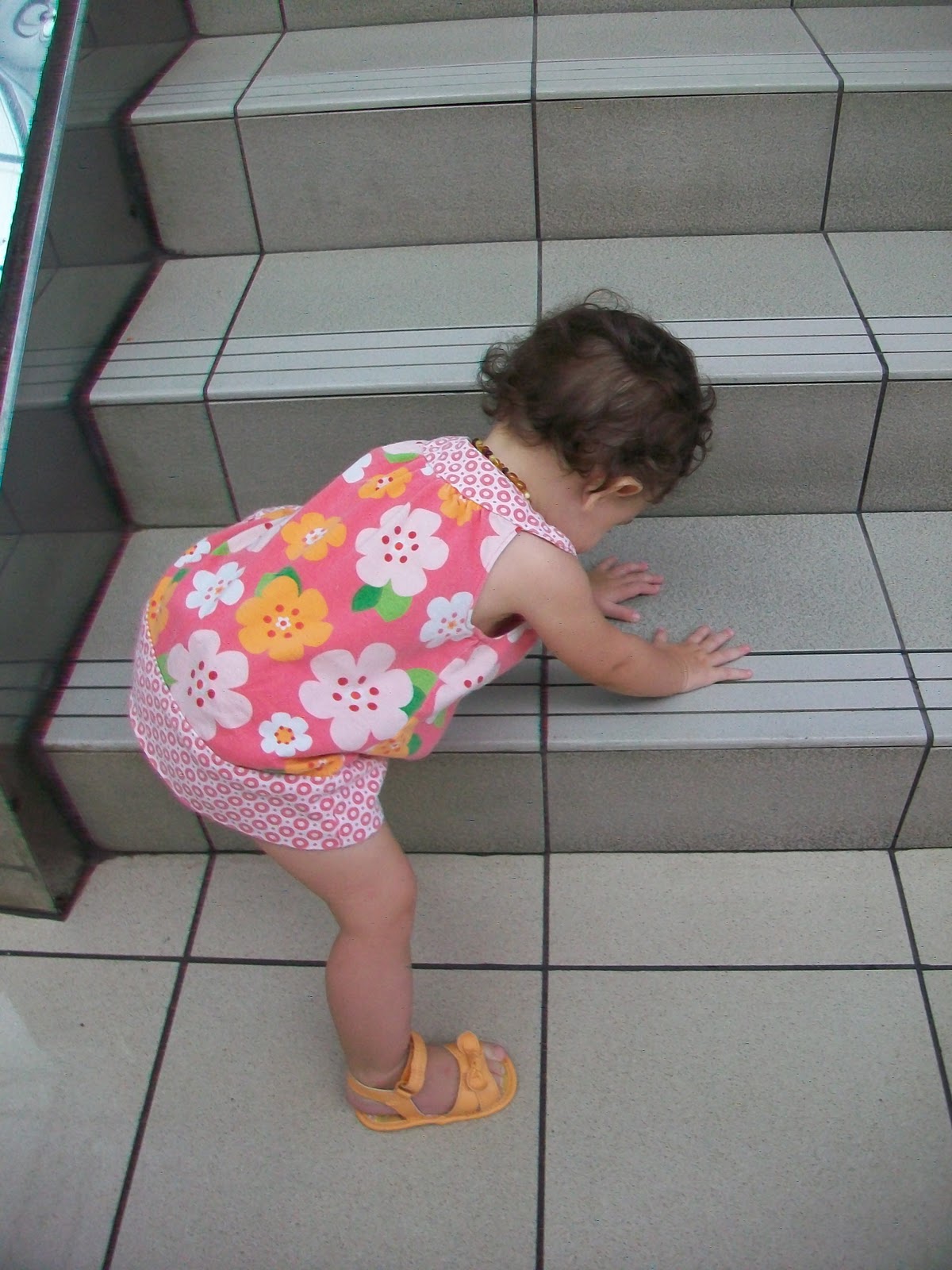 |
| Taking some time to climb the stairs at the mall
before picking up groceries |
- Leave plenty of extra time to get things done, so that it’s easy to move at Annabelle’s pace without becoming stressed or frustrated.
- Allow time before and after going into a place where Annabelle cannot safely walk about (such as a crowded grocery store), to allow her to walk and explore. I let her wander around on the lawn outside the grocery store for awhile before going inside, for example.
- Have more than one plan. When we go out shopping, I bring a sling and our shopping cart cover with a favorite object and a snack tucked inside the pocket. When Annabelle tires of riding in the cart, I place her in the sling instead. This respects her need for a change of scenery, and also gives her two separate places from which she can have a bird’s eye view. We don’t use a stroller, as it keeps her from being able to interact with me and others around us. When we’re in a place where she can safely walk, I allow her to do so.
- Empathize and speak respectfully. Occasionally Annabelle becomes frustrated at points when it’s hard for me to step away and tend to her immediately, such as when my groceries are already half checked and I need to pay for them. When this happens, I simply do my best to acknowledge her needs and let her know that I will meet them just as soon as I can. Her feelings of frustration are valid and she needs to know that she is heard.
 Melissa started blogging at The New Mommy Files when her firstborn was just three months old, but has found that no matter how familiar the mommy label becomes there is always something new to discover. She shares stories, thoughts, ideas, and inspiration from her journey on facebook and twitter as well as on her blog. In addition to mothering, topics that come up often include Montessori philosophy, elimination communication and cloth diapering, veganism, and finding a rhythm and balance in everyday life.
Award-winnning author, L.R.Knost, is the founder and director of the children's rights advocacy and family consulting group, Little Hearts/Gentle Parenting Resources, and Editor-in-Chief of Holistic Parenting Magazine. Books by L.R.Knost include Whispers Through Time: Communication Through the Ages and Stages of Childhood ; Two Thousand Kisses a Day: Gentle Parenting Through the Ages and Stages ; The Gentle Parent: Positive, Practical, Effective Discipline ; and Jesus, the Gentle Parent: Gentle Christian Parenting the first four books in the Little Hearts Handbook gentle parenting series, and children’s picture books Petey’s Listening Ears and the soon-to-be-released Grumpykins series.
A September to Remember: Embracing Respect

Click to read more!
Today’s though-provoking ‘vintage post’ is from Jessica Bowman, author of
To read more awesome insights from Jessica, you can find her over at Bohemian Bowmans!
~Embracing Respect~
 Well, the New Year is around the corner, in case you weren’t aware. And now that the Christmas sugar buzz is wearing off, I suppose most people, like me, are starting to reflect on 2010 and peer curiously towards 2011.
There are some a lot of circumstances in our life that I have no control over. This post is about the other things.
The things I can do.
First of all, I’m not a resolution making person.
I never make New Year’s resolutions. I think the “success” rate of them is abysmal, and I don’t want to be disappointed in myself later for not meeting some silly and entirely too specific goal. Instead, I just enter every new year with the obvious plans of growing wiser that year, becoming a better parent, wife, friend, and follower of Jesus.
However.
This year, I can feel myself funneling my regeneratory New Years powers in a certain direction.
No, it’s not a weight goal. Though it probably should be.
I’m not wanting to climb a mountain.
Or learn to make jewelry.
Or visit Disneyworld.
It’s a Family Mission Statement whittled down to one. single. word.
Respect.
I’ve been thinking a lot about respect the last couple of months. In regards to parenting. In regards to learning.
I began to learn about respect in marriage a few years ago when I read a book about it. I had never thought very much about respect before then. I had never realized the importance of it. The magnitude of it.
But, for some reason, though that book did shift my respect paradigm in relation to my husband, it didn’t leave that little box that I put it in. It never occurred to me that the concept could spill over into seemingly unrelated areas of life, like education.
But in the last quarter of 2010 I began to think a lot more deeply about education. About learning. About parenting.
And the theme I kept coming back to is Respect.
I’ve realized anew this year, that in practice, I don’t respect my children very much. I hold my authority over their head and play my “because I said so” card too often.
I often times feel like I am living out Colossians 3:21.
“Parents, don’t come down too hard on your children or you’ll crush their spirits.”
I’ve been crushing the spirits of my children.
With my impatience. With my harshness. With my disrespect.
So with tears and the simple, unrefined prayer of “help” repeated untold times as I lay in bed at night, I began to grasp a hold of the practice of respect in our day to day.
I’ve increasingly stopped talking to them as if they are children, but instead as if they are grown ups. Or, more accurately, as if they are people.
As if they are people created by God with talents and purpose that I have no right to squash with my annoyance.
So much of what children do that exasperate us are not “sins” at all. They are just people with very little experience at life who need to be led by example.
Our example.
Examples in authority are powerful.
It is ever so hard to step outside of the parenting you were parented with.
Or the marital skills that were modeled for you.
And it is ever so illogical to think that if we are harsh and impatient with our children, they will learn to be respectful and loving of their siblings and friends and future families.
So, I’ve been learning to respect my children. To treat them as people. To listen. To explain things they don’t know yet, as if they were another grown up, instead of as if they are inconveniences and ever disdainful children.
And, lo and behold, the more I’ve treated them with respect, the more they have respected me. And each other.
The more patient I’ve been with them, the more patience they’ve shown each other. The calmer I’ve been with them, the calmer they’ve been with each other. The more attention I’ve shown them, the more attention they’ve shown each other.
I realize this isn’t a complicated concept. And is the second greatest commandment at it’s base.
Treat other people the way you want to be treated.
But sometimes that can feel truly hard to practice and own.
So, that is my purposeful word for my family this year.
And it is already changing us.

Click to read more!
Don’t forget to check Jessica out over at Bohemian Bowmans, and take a look at her ebook!
Award-winnning author, L.R.Knost, is the founder and director of the children's rights advocacy and family consulting group, Little Hearts/Gentle Parenting Resources, and Editor-in-Chief of Holistic Parenting Magazine. Books by L.R.Knost include Whispers Through Time: Communication Through the Ages and Stages of Childhood ; Two Thousand Kisses a Day: Gentle Parenting Through the Ages and Stages ; The Gentle Parent: Positive, Practical, Effective Discipline ; and Jesus, the Gentle Parent: Gentle Christian Parenting the first four books in the Little Hearts Handbook gentle parenting series, and children’s picture books Petey’s Listening Ears and the soon-to-be-released Grumpykins series.
A September to Remember: I am a good mom, and other reasons labels don’t work…



Award-winnning author, L.R.Knost, is the founder and director of the children's rights advocacy and family consulting group, Little Hearts/Gentle Parenting Resources, and Editor-in-Chief of Holistic Parenting Magazine. Books by L.R.Knost include Whispers Through Time: Communication Through the Ages and Stages of Childhood ; Two Thousand Kisses a Day: Gentle Parenting Through the Ages and Stages ; The Gentle Parent: Positive, Practical, Effective Discipline ; and Jesus, the Gentle Parent: Gentle Christian Parenting the first four books in the Little Hearts Handbook gentle parenting series, and children’s picture books Petey’s Listening Ears and the soon-to-be-released Grumpykins series.
A September to Remember: Don’t Miss Out on this Incredible Opportunity!
How many missed opportunities are there in your day? This question has been beating in my chest the last few weeks. Let me back up a little and explain what I mean.
I keep getting a sense that the greatest skill I can develop in my life is the ability to listen. People, including my children, don’t need or want my advice or opinions, they just want to be heard. It is our heart’s cry to be truly heard and understood – and this is a powerful thing. It’s one of the greatest gifts we can give to another human being.
Why is Listening so Powerful?
Life brings all of us different challenges and experiences; some full of heartache and pain. We all have emotions surrounding the different events and scenarios in our life. When someone listens to us, it creates a safe place to share and release those emotions. By listening, you are providing that person an opportunity to process and work through how they’re feeling. Listening helps those difficult feelings to surface and be released. This is healing. The more you feel, the more you heal.
Award-winnning author, L.R.Knost, is the founder and director of the children's rights advocacy and family consulting group, Little Hearts/Gentle Parenting Resources, and Editor-in-Chief of Holistic Parenting Magazine. Books by L.R.Knost include Whispers Through Time: Communication Through the Ages and Stages of Childhood ; Two Thousand Kisses a Day: Gentle Parenting Through the Ages and Stages ; The Gentle Parent: Positive, Practical, Effective Discipline ; and Jesus, the Gentle Parent: Gentle Christian Parenting the first four books in the Little Hearts Handbook gentle parenting series, and children’s picture books Petey’s Listening Ears and the soon-to-be-released Grumpykins series.
A September to Remember: Gentle Discipline~Request or Demand?
Our next awesome guest for ~A September to Remember~ is Zoie from Touchstonez!
Gentle Discipline, Part 1: Request or Demand? A point of distinction
Part 2: Flipping off your kids (included below)
 I’m at the library escaping my love-filled, but very noisy home full of boys. Aside from the noise of fellow library patrons’ laptop startup/shutdown tones, vibrating cell phones (just as loud as a ring tone!), occasional person who actually thinks it’s okay to have a conversation on said cell phone (!) it’s a peaceful break for me to concentrate.[1]
A mom with 2 small boys looks down at them and asks, “Do you want to leave the library now? It’s time to go to soccer practice.” Of course, the answer she gets from both boys is, “No! I don’t wanna go to soccer!” The mom says, “It’s time to go now. I told you it’s time for soccer.” The boys protest further, “I don’t want to go! I don’t like you, mama!” One bolts for the audiobooks and begins knocking them to the floor. From there, the situation further degenerates into the mom making threats to not take them to soccer, the boys loudly melting down, until she angrily scoops them both up and carries them out the door.
It’s a scene that you see all the time. But I do find it remarkable how quickly a question asked from a place of disconnection can escalate into an all-out anger and pain tug-o-war.
Ironically, as I watched this family, I’m at the library to write a post about gentle discipline [2] and how if we do not connect with ourselves as parents first, we can not hope to connect with our children.
I make the claim that connection is what it really is all about.
Hybrid Rasta Mama wrote a great post about how often kids are told, “No!” And, of course, since I’m in the middle of writing this post, my comment is lifted directly from what I was writing:
As my kids get older, one of the things I try to do in addition to many of the insights you [Hybrid Rasta Mama] list is to remember the mantra “connect before you correct.” This refers to 3 connections:
What is my need here? (safety, quiet, peace, etc)
What is my child’s need here? (Exploration, hunger, affection, etc)
How can I honor both our needs here and now? Once I’ve identified these (the hard part), I can find the yes in the no (the easy part)
Point 1 is vitally important and one we, as parents, most often overlook. Once you have connected with your own need, you can decide whether you are asking your child for something or demanding something. To put myself in the place of the library mother, I might find that I would like to get to soccer practice at the appointed time. My need is for punctuality. Point 2, what are my children’s needs here? They need fun. Point 3, How can I meet both of our needs and find the yes in the no?
I am not going to ask them if they “would like” to go because what do I do if they say no? If I am going to ask them something, it will be something that meets my need for punctuality and their need for fun. I may ask something like, “I see you are enjoying the library and want to have fun. I need to ensure we get to soccer practice at xx o’clock. Soccer practice begins in xx minutes. How would you like to run around on the grass out front?” This moves us toward the door, reminds them of soccer, and allows them to play. Hopefully, then I can continue this gentle moving toward the soccer appointment from there.
But, what if I check in with my needs and find that a “No, I don’t want to play on the grass” is not an acceptable answer to me? I need to find out if I am really making a request or if I need to tell them something. If I am making a demand, then I need to state that clearly (nothing wrong with stating what you need, right?) Like that library mom, she was not actually asking a question, she was making a demand but was hedging about it. She was moving from a place of disconnect into further disconnection with her children. [3]
If it’s not acceptable to receive an answer you don’t want, then don’t ask the question.
Gently, tell what you need and explain what will happen. Lather. Rinse. Repeat. As many times as necessary and then some more. The trick to maintaining your patience with this, is that you are moving from connecting with your own needs (you are meeting your needs.) As long as you can continuously check in with your needs as you are making your statements, you can do so from a place of abundance instead of a place of deficiency, and children really do feel this from their parents and they do respond.
If you haven’t been practicing connected parenting in this way, it may take quite a lot of patient repetition on your part to maintain this constant checking and rechecking in for connection, but it will come together eventually.
Part 2 of this series continues with Flipping Off: Another trick to connecting while correcting
[1] Okay, maybe I’m holding a little resentment from the noise. Breathing through it now…
[2] Now, a series. Yikes!
[3] I know I am not taking into account what happened before or after the portion of their interaction that I witnessed. So, this is a simplistic example. There are times when melt downs happen both for parents and for children. Then, maintaining connection, while scooping up a melting down child includes, explaining what you are doing, stating your feelings without referencing the child (i.e.: I am feeling sad that we have an appointment when I see you want to continue playing. Not, I feel annoyed that you don’t come when I say, for example) I’ll explore this topic further in a later post
~~~~~~~~~~~~~~~~~~~~~~~~~~~~~~~~~~~~~~~~~~~~~~~~~~~~~~~~~~~~~~
Gentle Discipline, Part 2: Flipping off your kids~Another trick to connecting while correcting
 One of the biggest gentle discipline challenges for me is parenting during transitions. Going from one task to another or leaving one place for another can try the patience of the most keyed in parent-child pair. Some of the techniques I’ve used with success to ease the transitions are:
- Explicitly stating that we will be going somewhere or moving to a different task, making sure to include sharing that this means stopping what we are currently involved in.
- Getting down on their level, making eye contact and possibly using touch to be certain they understand
- Explaining how long before the transition will happen and either
- Let them set a timer or letting them know I am setting it
- Verbally counting down the time left, along with reminders that this means our current activity will be ending and the new one beginning
- Talking about things to look forward to after the transition
- Keeping It Simple
- Giving them a job to help us get out the door so they feel like they are contributing to our family
- Affirming their power to choose for themselves, whenever possible, anything they may want to wear, bring or do while going
- Always using a calm, reassuring voice (even when annoyed or frustrated)[1]
- If necessary, modeling my feelings of worry about not meeting my needs, etc, using “I” statements.
Some of you may read this list and think I’m going through an awful lot just to get us out the door peacefully. I could simply ignore their needs, bundle them up and get them out the door. But, that will end in tears-usually for all of us. And this is what I would like to avoid by honoring everyone’s needs.
I feel it is my job as a parent to guide and facilitate through things that are difficult for them. They are learning about the world and don’t have the frame of reference that I do (hopefully) as an adult. I try to respect that until they have enough repetition with transitions, this can be challenging for them. Eventually, these tools will no longer necessary and we’ll move more easily from one thing to another.
Most of the time, these techniques allow us to move fairly smoothly from one thing to the next. I rarely need to use all of these techniques at once. But, sometimes I do use them all.
And sometimes I use them all and there’s still a toddlerpreschoolermommy meltdown.
Sometimes there’s a breakdown in our communication. Sometimes a meltdown is inevitable as a pressure valve simply needs release. Sometimes there’s not a reason I can point to.
I have to admit, I do not do well with meltdowns. The noise, that particular pitch of children, goes directly through my bones. I have to use all of my will to contain my feelings of anger. And this is where I gain some understanding of what it must be like to be a child who is so much smaller than an adult;
An adult who can turn the world upside down with one word, look or hand used in anger.
If I’m the (supposed) adult in control here and I’m having trouble not melting down, how must it feel to someone without experience with emotional control? I’ve had PPD and a bit of experience with the fear of having an emotion so large that there’s no guarantee that it will ever stop or that it won’t swallow me whole.
This is what I call “Flipping Off My Kids”
It’s a slightly tongue-in-cheek reminder to lighten up and ask myself:
- How would I feel if I were in the middle of something and had to immediately drop what I was doing?
- How would I feel if I declined the request and the person yelled at me? Would I feel it was a request or a demand couched as a request?
- How would I feel if my needs weren’t listened to and I was made to go somewhere or do something without any say in the matter?
- How would I feel if all my power was subsumed by someone physically and emotionally larger than myself?
I remind myself of how completely absorbing activities can be for children; how hard transitions can be. I flip my own false belief which leads to the reaction “Look what they are doing to me!” into empathetic understanding that this is what they are feeling without the (supposed) adult maturity and frame of reference to handle such overwhelming feelings.
I slow down. I breathe. I calmly state what I’m feeling. It doesn’t matter whether I think they are hearing me. They will respond to my mood, if not my exact words. If I can let go of our appointment or task, I let it go. I’ll take a break if it means not yelling. Even if I don’t have an adult to spell me out. I would rather close the door on my kids, after explaining that I need a moment of quiet time, than yell something I’ll regret later. I pull out all my stops for self-soothing that I need to get us to where we need to be.
Once I can get to a little bit of calm within myself, then I can figure whether they need me to hold the space for them, distract them, talk with them, soothe them… Whatever works to help them come back from that scary tantrumy place and know that, yet again, they were able to control their emotions, that they are not their emotions, and that emotions are neither good nor bad. Emotions just are.
And most importantly, I want them to know that they are always loved and always Good kids. Nothing they could ever do could change that.
I’ll reiterate that this is one of my most challenging parenting times and I do not always succeed the way I wish. Especially when all three are wailing and I just want to wish myself away, I can often feel most affirmed, most loving, and most alive if, if, I can bring myself into the present moment and be with myself and with my kids.
[1] Although, I do think it is valid to show your emotions in your voice, but always with “I” statements. No matter how much the urge is to punish, shame or blame, I stick to the “I” statements.
[2] This will soon link to an upcoming post about identifying needs
How do you handle transitions? Have you tried some of these ideas or do you have any other tools that have been effective for you? Are there some tools that do not work for your family? Do you think you’ll try “Flipping your kids off?” I’d love to hear from you.
This is a series, but I haven’t written the next part, yet. Are there any parenting issues you would like to see here? Please let me know.[2]
Check out more awesome parenting insights from Zoie over at Touchstonez!
Award-winnning author, L.R.Knost, is the founder and director of the children's rights advocacy and family consulting group, Little Hearts/Gentle Parenting Resources, and Editor-in-Chief of Holistic Parenting Magazine. Books by L.R.Knost include Whispers Through Time: Communication Through the Ages and Stages of Childhood ; Two Thousand Kisses a Day: Gentle Parenting Through the Ages and Stages ; The Gentle Parent: Positive, Practical, Effective Discipline ; and Jesus, the Gentle Parent: Gentle Christian Parenting the first four books in the Little Hearts Handbook gentle parenting series, and children’s picture books Petey’s Listening Ears and the soon-to-be-released Grumpykins series.
My Little Caboose and the Very Bad, No Good…Month :(
~The Confession~
This adorable little person has been a royal pain in the ‘caboose’ for the last few weeks. She has whined, cried, ignored direct requests, climbed on me, hung on me, played with her food, snatched things from the baby, been in my face and space incessantly, and on and on. And the more difficult she got, the more I ‘powered up’ on her. Oh, I didn’t yell or punish. No, I pulled out all my gentle parenting techniques, spoke calmly and respectfully to her, offered diversions and alternatives, read her books and provided lots of reasonable and kind council. She occasionally responded with a half-hearted attempt at cooperation or humorously declined to cooperate, but more often than not just dug in her heels and determinedly upset the normally peaceful and happy timbre of our home.
And then it happened. A few nights ago, I stood in the shower listening to the goings-on outside the door (A mama’s ears are the proverbial ‘eyes in the back of her head’ you know!), and it hit me. Over and over, I heard my older children tell my little ‘caboose,’ “No,” as she made one unfortunate decision after another. Over and over, I heard her whine and argue and cry. Over and over, I heard the older ones correct her, not hatefully or harshly, but repeatedly, gently, and firmly. And, over and over, I realized I was hearing myself as my older children reflected what they were seeing and hearing from me…repeated, gentle, firm correction…but no listening…none. And my heart broke. I realized that I had been parenting from a position of disconnect from my precious little ‘caboose.’ Between jumping through all the hoops necessary to get a homeschooler into a pre-med university program to working with my publisher on the super slow and cumbersome process of getting my books onto store shelves in Barnes & Nobles and Family and Lifeway Christian Stores, to writing an upcoming book, my busy schedule had overtaken my parenting.
How many times had I told my little ‘caboose,’ “Just a minute,” when she needed me, and how often had that ‘minute’ stretched into an hour? How many times had my eyes strayed back to my computer screen in the middle of one of her stories about how terribly painful the invisible scratch on her pinky toe was or how pretty the light looked as it danced through the dust motes in front of the window? How often had she fallen asleep waiting, waiting, waiting for me to come and read her a bedtime story? (Oh, my mommy’s heart hurts.)
And so I took my own advice…advice I’ve given umpteen times to other mama’s who were experiencing a ‘parenting disconnect.’ I took my disgruntled, whiney, clingy, disruptive child who I felt like sending to her room just so I could get a break and to make her think about her actions and to get her behavior ‘back in line’…and I pulled her closer than close, under my mama’s wing. I took her everywhere with me. I let her sleep on a pallet next to my bed. We cooked dinner together and made a museum out of her paintings and folded towels together. And I listened and listened and listened…intentionally and thoughtfully and responsively. And my little ‘caboose’ and I reconnected. In just a matter of days, life in the Knost household returned to its normal cadence of what we affectionately call ‘joyful chaos.’ People see the difference and ask me, “What did you do?” And I simply respond, “I listened.”
~Here’s a little story to illustrate~
The little caboose chugged along, clickety-clack, clickety-clack, happy as could be as she followed her mama engine and brother and sister cars along the tracks. Up and down hills, around curves and through tunnels they went, all strung together with their secure couplings. And at the end of each day, they headed back to the station to get all fueled up and rested for the next glorious day. One day, the little caboose was startled when mama engine took off extra early without checking to make sure all the couplings were tightened. As they chugged forward, the little caboose could feel her coupling slipping a bit, and she ‘choo-chooed’ loudly to get mama engine’s attention. But mama engine was too busy to notice and kept picking up speed as they began their journey up and down the hills. Alarmed now, little caboose tried to pull backwards and slow the train down, but mama engine chugged on, ‘choo-chooing’ encouragingly. Little caboose felt her coupling getting looser and looser as mama engine sped toward the dangerous curves and tunnels ahead. In a panic, little caboose screeched ‘choo-choo’ over and over and tugged and pulled backward frantically. Mama engine just chugged on, this time ‘choo-chooing’ firmly and giving a gentle extra tug forward. Little caboose spent the rest of the day screeching ‘choo-choo’ and pulling and tugging backward until they finally arrived back at the station, everyone exhausted and cranky from the difficult day. Little caboose was so overwrought from the fear of being disconnected all day that she continued to screech ‘choo-choo’ and pull at her coupling even after they were stopped for the night. Mama engine chugged ominously in her direction, determined to restore order, but suddenly paused, hearing for the first time the fear and exhaustion in little caboose’s ‘choo-choos.’ She looked carefully and noticed the loose coupling. Pulling little caboose closer than close, mama engine tightened the coupling and ‘choo-chooed’ a soft, reassuring lullaby, and little caboose finally stopped her screeching and tugging and relaxed gratefully into her mama engine’s embrace.
~The Challenge~
If you have a parenting issue right now, any parenting issue at all for any age child, take a mental snapshot of what a typical day looks like at the moment. Then take one week, just a single week out of your life, and listen to your child. Listen intentionally. Listen consciously. Create opportunities for your child to talk. Open conversations to get them started, then stop talking and stop planning your response and stop mentally going over your to-do list and just listen. Take your child with you whenever you can, wherever you’re going. Involve them in your day. Invite them into your life. ENJOY them and get to know them, get to really KNOW the unique and remarkable person they are. They are a precious, priceless gift, and their childhood will be over before you know it. And, at the end of that week, take another mental snapshot of what a day with your child looks like. Then you can decide which path to take. Will you go backward or forward? Is connecting with your child worth your time and effort? What will you choose?
Award-winnning author, L.R.Knost, is the founder and director of the children's rights advocacy and family consulting group, Little Hearts/Gentle Parenting Resources, and Editor-in-Chief of Holistic Parenting Magazine. Books by L.R.Knost include Whispers Through Time: Communication Through the Ages and Stages of Childhood ; Two Thousand Kisses a Day: Gentle Parenting Through the Ages and Stages ; The Gentle Parent: Positive, Practical, Effective Discipline ; and Jesus, the Gentle Parent: Gentle Christian Parenting the first four books in the Little Hearts Handbook gentle parenting series, and children’s picture books Petey’s Listening Ears and the soon-to-be-released Grumpykins series.
Transitioning from Cosleeping: A Toddler’s Own Space at a Toddler’s Own Pace
[Excerpt from Two Thousand Kisses a Day: Gentle Parenting Through the Ages and Stages by L.R.Knost. Whispers Through Time: Communication Through the Ages and Stages of Childhood, The Gentle Parent: Positive, Practical, Effective Discipline, and Jesus, the Gentle Parent: Gentle Christian Parenting also now available on Amazon and through other major retailers.]
~~~~~~~~~~~~~~~~~~~~~
 Looking for ways to gently wean your little one into their own sleeping space? Here are a few ideas:
1.) Place a mattress beside your bed and start out each night there with your little cosleeper, then move up to your bed when they are fully asleep. When they wake, be sure to either take them back into your bed with you or join them on the mattress to make the transition as seamless as possible. (You can also start out the night in your bed as usual and move them to a small toddler bed beside your bed once they fall asleep fully if that works better for your space.)
2.) When you feel they are comfortable with the new arrangement, move the mattress a bit farther from your bed, either against the wall or at the foot of your bed, and repeat the same process of starting the night with them and welcoming them into your bed or joining them on the mattress if they wake.
3.) The next step is to move the mattress into their room and repeat the process.
4.) When you feel they are spending enough time in their room each night to feel comfortable with it, you can try staying with them until they are almost asleep and then telling them you are going to the bathroom or to brush your teeth (make sure you actually do what you say you’re going to do!) and will be right back. Come back quickly so they will be reassured that you can still be trusted. If they follow you or get upset, wait and try this step again in a week or two.
5.) When they are happy to stay in bed waiting for your return, start letting them spend a bit longer alone. Always tell them what you are going to do, and always do just what you said. Make sure to return when you are done so they know they can trust you and don’t need to come get you.
6.) Over time, this gradual weaning will result in them falling asleep on their own, and you can move on to the stage of books and cuddles and hugs and telling them goodnight, then leaving them with the reassurance that you’ll be back to check on them in a bit. Of course, always come back and check like you said you would!
7.) I can’t emphasize enough that this is a trust issue. The more that you honor what you say and stay in tune with their needs, the smoother and easier the process will go for both of you.
More resources:
 Fights Sleep via Dr. Sears
“Parents usually need their children to go to sleep earlier than the children need to. Sleep is not a state you can force a child into. It is better to create an environment that allows sleep to overtake the child.”
 Gentle Baby and Toddler Sleep Tips via PhD in Parenting
“Be reasonable and patient with your child and understand that not every child is the same and also that a child that did once sleep well, may not always sleep well. If a child is teething, growing through a growth spurt, sick, working on a developmental milestone, hungry, didn’t get enough exercise or fresh air, is preoccupied by a scary situation that occurred during the day, or any list of other things, that can wreak havoc on their sleep.”
 peaceful parenting: Three in a Bed: Why You Should Sleep With Your …
“Twelve years ago, people told me that I would regret the whole cosleeping thing. I couldn’t give them an adequate reply. All I knew was that I was enjoying my nighttime parenting, perhaps more than any other aspect of new motherhood. I found I was more relaxed at night than during the day. There were no time crunches, no ringing telephones, no urgent chores to complete. No health professionals or well-meaning relations to tell me I was doing something wrong. Just me and the baby and the night.”
 Bed to Crib, Moving Baby via Dr. Sears
 Night Terrors via Dr. Sears
“It’s the middle of the night and you are awakened by your child screaming from his bedroom. You rush in to see what’s wrong and you find him sitting up in bed with a blank stare but very agitated. You try to wake him, asking him what is wrong but he doesn’t respond, he just keeps screaming. You are scared and don’t know what to do.”
Related posts:
Practical, Gentle, Effective Discipline
Love in the Time of Cosleeping
When Children Hit~10 Tips for Parents
Testing the Boundaries~What’s a Parent to Do?
Award-winnning author, L.R.Knost, is the founder and director of the children's rights advocacy and family consulting group, Little Hearts/Gentle Parenting Resources, and Editor-in-Chief of Holistic Parenting Magazine. Books by L.R.Knost include Whispers Through Time: Communication Through the Ages and Stages of Childhood ; Two Thousand Kisses a Day: Gentle Parenting Through the Ages and Stages ; The Gentle Parent: Positive, Practical, Effective Discipline ; and Jesus, the Gentle Parent: Gentle Christian Parenting the first four books in the Little Hearts Handbook gentle parenting series, and children’s picture books Petey’s Listening Ears and the soon-to-be-released Grumpykins series.
Co-sleeping Safely~Is it possible? Decide for yourself!
 SIDS: The Latest Research on How Sleeping With Your Baby is Safe | Dr. Sears Official Website | Pare
Dr. Sears is considered the leading authority on gentle/attachment parenting and is a proponent of co-sleeping. Here he examines the research linking decreased SIDS risks with the increase in co-sleeping rates. Dr. Sears~ “Here are some ways to educate parents on how to sleep safely with their baby.”
 Cosleeping and Biological Imperatives: Why Human Babies Do Not and Should Not Sleep Alone
“While many theories are flying around about the cause of SIDS, most focus on the deepness of sleep and how it affects the child’s breathing…Another theory which you may not be familiar with is that the crib mattress itself is to blame for SIDS cases…Arsenic, phosphorus and antimony are intentionally added to crib mattresses by the manufacturers as fire retardants. SIDS was very rare prior to the 1950s when these additives became standard.”

 Breastfeeding Answers Made Simple – Breastfeeding Reporter – Unintended Consequences
 My Date With Dr. Ferber
 How They Do It In… Japan
Related posts:
And Baby Makes Three~Surviving the First Three Months with a Newborn
Bizarre Anti-Cosleeping Ads in Milwaukee a Red Herring?
A Boy, A Girl, and A Baby~Journey to Gentle Parenting
Award-winnning author, L.R.Knost, is the founder and director of the children's rights advocacy and family consulting group, Little Hearts/Gentle Parenting Resources, and Editor-in-Chief of Holistic Parenting Magazine. Books by L.R.Knost include Whispers Through Time: Communication Through the Ages and Stages of Childhood ; Two Thousand Kisses a Day: Gentle Parenting Through the Ages and Stages ; The Gentle Parent: Positive, Practical, Effective Discipline ; and Jesus, the Gentle Parent: Gentle Christian Parenting the first four books in the Little Hearts Handbook gentle parenting series, and children’s picture books Petey’s Listening Ears and the soon-to-be-released Grumpykins series.
Wishes Week 2011~Wrapping it up & putting a bow on top!

Thank you to all of my awesome guests this week for Wishes Week 2011! You gave me a very special birthday gift I will never forget by sharing your wishes with me. Here’s a ((hug)) for each one of you! And now, the ‘wrap up’~

Glimpses My opening contribution to Wishes Week 2011~Glimpses of hope and healing

Meanderings by Rosemary Jones Gritty urban prose by one of my favorite writers…powerful!

My Parenting Wish: Through A Child’s Eyes A beautifully intimate look at compassionate parenting by The Hippie Housewife. Love this!

Birth Wishes Thank you to Becoming Crunchy for this powerful and heartfelt look at birthing options and empowering women…awesome!!!

I wish that I were the Mother that I play at the grocery store. Here is a quirky look at the realities of mommyhood by Jessica, author of Parenting Wild Things!

“What I Wish Every Mother Knew About Babies and Sleep” This wins the prize for most viewed post of the week from Adventures in Mommyhood over at Instinctual Mamas. This is a passionate, informative, and convicting article on meeting babies’ needs gently. Beautiful!

Mommy Wishes From one Mommy’s heart to yours~Mommy Wishes by The Mom: Informed

When God says ‘No’ ~ Wishes Week 2011
~My closing post for Wishes Week~
Thank you to everyone who joined me for Wishes Week 2011! Your comments and ‘presence’ (lol) were much appreciated!
Award-winnning author, L.R.Knost, is the founder and director of the children's rights advocacy and family consulting group, Little Hearts/Gentle Parenting Resources, and Editor-in-Chief of Holistic Parenting Magazine. Books by L.R.Knost include Whispers Through Time: Communication Through the Ages and Stages of Childhood ; Two Thousand Kisses a Day: Gentle Parenting Through the Ages and Stages ; The Gentle Parent: Positive, Practical, Effective Discipline ; and Jesus, the Gentle Parent: Gentle Christian Parenting the first four books in the Little Hearts Handbook gentle parenting series, and children’s picture books Petey’s Listening Ears and the soon-to-be-released Grumpykins series.
My Parenting Wish: Through A Child’s Eyes
It’s Wishes Week here at Little Hearts Books and we’re wishing your host a happy birthday by sharing our own parenting wishes!
What would I change in the parenting world if I had a fairy “parenting” wand? As I considered that question, every possibility seemed to boil down to one thing: compassionate understanding.
Adulthood brings with it an awareness of the world that lends perspective to situations. Children have much less of this life experience on which to draw. They act as a child, they speak as a child, and they see things through a childish perspective. They usually have the best of intentions even when their actions suggest otherwise.
And yet too often parents will automatically ascribe negative intent to their child’s immature actions. Children are seen as being defiant, deceptive, and manipulative. In talking with others about their childhood and thinking back to my own, there are many recollections of the injustice and indignation felt when negative intent was ascribed to the child’s motives. There are memories of being punished for things not done or not known to be wrong. There are memories of being misunderstood, of having feelings overlooked, and of feeling angry, afraid, ashamed, anxious, insecure, violated, and unloved. There is also the knowledge that communication and understanding would have been far more effective and connective than the yelling, shaming, spanking, or other punishments received.
My parenting wish is that parents would have the ability to view situations through their child’s eyes. When we take the time to consider our child’s perspective or to talk with them through what happened, we find more often than not that their motives were sincere and good at best, and merely ignorant (lacking in experience, understanding, and wisdom) at worst.
Is he “pestering” you, or is he lonely? Is she being “bratty”, or is she hungry and tired? Is he “mean”, or is he confused and overwhelmed by changes in his life? The labels and motives we apply to our children affect the way we view them and act towards them. Looking past the actions to the driving needs behind them often presents a very different view.
With that in mind, we can assign positive intent to our children’s actions, approaching the situation with compassion and understanding. Their intent need not play into our response. When we are parenting with love and grace, using gentle discipline rather than the behaviour modification tools of punishment and praise, we will generally respond in the same manner regardless of their underlying motive. This saves us the guessing game of discerning our children’s hearts, and by assuming the best in them, we set high standards for them to aspire to.
Discipline means “to teach”, and we can teach our children the appropriate action to replace an inappropriate one without needing to first determine whether their intent was good or bad. Repeated issues may call for more focused discipleship in that particular area, but the response to the situation itself should not vary depending on the parent’s view of the child’s motives.
We can’t presume to know our children’s hearts. Assuming the best, taking time to consider their perspective, and responding with compassionate understanding will serve to encourage our children and strengthen our relationship with them. This connection and relationship must remain the focus of our parenting, as it is the foundation and driving force behind all other areas of parenting and discipline.
_____________________
Cynthia is the mother of two little boys, an inquisitive preschooler and an energetic toddler. She blogs at The Hippie Housewife, where she shares her thoughts on attachment parenting, natural living, life as a Jesus-follower, and more, all tied together through her journey towards a more intentional life.
Award-winnning author, L.R.Knost, is the founder and director of the children's rights advocacy and family consulting group, Little Hearts/Gentle Parenting Resources, and Editor-in-Chief of Holistic Parenting Magazine. Books by L.R.Knost include Whispers Through Time: Communication Through the Ages and Stages of Childhood ; Two Thousand Kisses a Day: Gentle Parenting Through the Ages and Stages ; The Gentle Parent: Positive, Practical, Effective Discipline ; and Jesus, the Gentle Parent: Gentle Christian Parenting the first four books in the Little Hearts Handbook gentle parenting series, and children’s picture books Petey’s Listening Ears and the soon-to-be-released Grumpykins series.