Reading Challenge 2014!
[Portions reprinted from Raising Bookworms: Life, Learning, and Literacy by L.R.Knost available 2014; Two Thousand Kisses a Day: Gentle Parenting Through the Ages and Stages, Whispers Through Time: Communication Through the Ages and Stages of Childhood, and The Gentle Parent: Positive, Practical, Effective Discipline now available on Amazon]
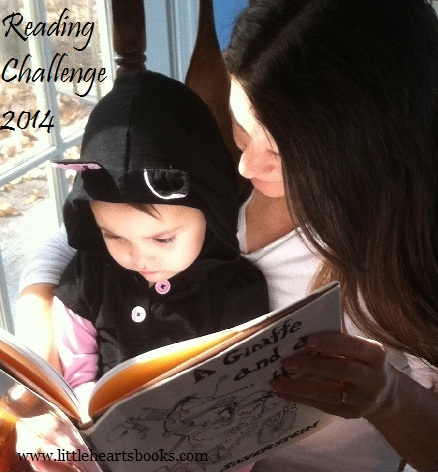 Experts agree that the single best way to turn children on to a life-long love of reading is to simply read to them. Not only is reading to our little ones wonderful for their education, though, but it is also a fun and easy way to build and maintain a strong parent/child connection. Let’s join together this year and commit to reading to our children (or with them if they’re older!) every day of 2014.
Old books, new books, read books, glued books (a nod to my favorite children’s author, Dr. Seuss!), it doesn’t matter what you read. Just read! Read old familiar books your children ask for over and over and over. Read new books you check out from the library or buy from your local independent bookstore. Read books from your own childhood that are passed down through your family. Read books you write together with your children and glue into construction paper pages tied together with yarn. Just read, read, read! (And stop back by and leave a comment with an update now and then to share how you’re doing and which books are your children’s favorites!)
Here are a few links to some book lists to get you started:
Bookworm weighs in on must-have books for your children in Little Hearts’ How to Build a Home Library for Bookworms from Tots to Teens series. Check out…
25 Must-Have Books for Baby Bookworms
25 Must-Have Books for Toddler Bookworms
25 Must-Have Books for Preschool Bookworms
For more ideas about sharing a love of learning with your children, here is my virtual reading room, its bookshelves filled with literacy tips, book recommendations, literary quotes, learning through play ideas, and more. Pour yourself a cup of coffee, grab a cozy chair, and join me on the journey of a lifetime…
- When it comes to reading, do you want your children to become readers or just learn the mechanics of reading? Do you want them to love to read or just to know how? If a love of reading is your goal for your children, here are some ideas to get you started… 8 Tips for Raising Bookworms
- Fairy tales in childhood are stepping-stones throughout life, leading the way through trouble and trial. The value of fairy tales lies not in a brief literary escape from reality, but in the gift of hope that goodness truly is more powerful than evil and that even the darkest reality can lead to a Happily Ever After. Do not take that gift of hope lightly. It has the power to conquer despair in the midst of sorrow, to light the darkness in the valleys of life, to whisper “One more time” in the face of failure. Hope is what gives life to dreams, making the fairy tale the reality. Fairy Tales~The Lost Value of ‘Once upon a time…’
- Imagination is the language of childhood, so speaking their language when introducing our language only makes sense. Let’s ditch the flashcards, turn off the educational dvd’s, and throw out the worksheets…because learning is child’s play! Alphabet Fun~Imagination From A to Z!
- Successful reading means far more than possessing the ability to read. Engaging the hearts of students moves reading success beyond a life skill and turns it into a life style. And graphic novels are too powerful of a tool in our arsenal to be disregarded because of pride or prejudice… Raising Super Readers~The MARVELous Power of Comic Books!
- There is such a rush these days to get children sleeping through the night, weaned off the breast, eating solid foods, potty trained, reading independently, and on and on, that we seem to have lost the ability to simply enjoy life as it happens and let our children do the same. A Return to Childhood
- In the world of a child wonders are as simple as sticks and sheets, leaves and books, boxes and giggles, and the promise in a rainy day. The Seven Wonders of the World of Childhood
- Albert Einstein said, “Everybody is a genius. But if you judge a fish on its ability to climb a tree, it will live its whole life believing that it is stupid.” Unique learners have beautiful minds just waiting to find their genius. We just need to look outside of the box to help them find it. Helping Unique Learners Find Their Genius
- Think homeschooled children are unsocialized, over-controlled, locked-away-from-the-world misfits? Think again! My Renaissance Girl
- My SPD/SLD/ADD (Sensory Processing Disorder, Specific Learning Disability-Dyslexia, Visual and Auditory Processing Disorders, Attention Deficit Disorder, etc) sweetie, aka Renaissance Girl, has raised the bar on my homeschooling skills more times than I can count. Her beautiful mind sees the world through a unique lens similar to those of historical icons such as Thomas Edison, Leonardo Da Vinci, Benjamin Franklin, and Albert Einstein…Beautiful Minds
- Books + Time + Imagination = Endless possibilities! 25 Reasons NOT to Keep Your Children Busy
- I’ve been scouring the web, the bookshelves, and my scattered brain for all the Seussical fun I could find for my little people and yours. Here are a few of my finds… Seuss-ified~Craft-astic~Snack-errific~Education-cool~Fun!
- Parenting choices strongly impact the level and type of attachment a child develops and, by extension, the development of a love of learning. A love of learning grows when it isn’t stifled by fear or stress or regimented by over-structuring or a focus on achievement or competition. Parents fostering a healthy attachment are thus also fostering a life-long love of learning in their children. Love, Play, Learn!
- Truly, what is our goal for our children? Knowledge memorized in lists and tables and regurgitated on bubble-in tests? Or knowledge coupled with experience that leads to understanding and, ultimately, wisdom? Benjamin Franklin said it best when he said, “Tell me and I forget. Teach me and I remember. Involve me and I learn.” The Many Adventures of My Little Pooh Bear
- If you give a toddler a book | He’ll climb into your lap | While he’s in your lap | He might lay his head on your chest | When he lays his head on your chest | He’ll hear your heartbeat | When he hears your heartbeat | He’ll probably ask if you can hear his… If You Give A Toddler A Book…
 Award-winnning author, L.R.Knost, is the founder and director of the children's rights advocacy and family consulting group, Little Hearts/Gentle Parenting Resources, and Editor-in-Chief of Holistic Parenting Magazine. Books by L.R.Knost include Whispers Through Time: Communication Through the Ages and Stages of Childhood ; Two Thousand Kisses a Day: Gentle Parenting Through the Ages and Stages ; The Gentle Parent: Positive, Practical, Effective Discipline ; and Jesus, the Gentle Parent: Gentle Christian Parenting the first four books in the Little Hearts Handbook gentle parenting series, and children’s picture books Petey’s Listening Ears and the soon-to-be-released Grumpykins series.

Helping Unique Learners Find Their Genius ♥

[From Raising Bookworms: Life, Learning, and Literacy by L.R.Knost available 2014; Two Thousand Kisses a Day: Gentle Parenting Through the Ages and Stages, Whispers Through Time: Communication Through the Ages and Stages of Childhood, and The Gentle Parent: Positive, Practical, Effective Discipline now available on Amazon]
~~~~~~~~~~~~~~~~~~~~~
 Homeschooling a unique learner can be challenging simply because they don’t get the benefit of access to testing and professional support without a lot of initiative, research, phone calls, and door-knocking on your part. But the trade-off is the freedom to tailor your teaching and learning environment to your child’s needs, and that is of incredible value when educating a unique learner.
Albert Einstein said, “Everybody is a genius. But if you judge a fish on its ability to climb a tree, it will live its whole life believing that it is stupid.” Unique learners have beautiful minds just waiting to find their genius. We just need to look outside of the box to help them find it!
Here are some of the tips, tools, and techniques I’ve learned through years of homeschooling my unique learners to help them work through the challenges they face on a daily basis:
1.) Lighten up…Everything in life is easier if you take it with a grain of salt and learn to laugh. Our unique learners will have more struggles and challenges than the average person throughout life, not just during their school years. That is an unavoidable fact. But who wants to be ‘average’ anyway? Help them to celebrate their uniqueness and embrace the future with grace and humor by sharing your own struggles, modeling coping techniques, and being able to laugh at your own mistakes. Make ‘even missteps are valuable steps on the road to success’ your homeschool motto!
2.) Play…Children learn best through play, and that applies to therapy, as well. Experience is the only true path to learning, so let their imaginations soar as they do the hard work of learning to cope with their unique challenges. (See some play-based, brain-enriching, and eye-tracking activities below)
3.) Jazz it up…Music truly is medicine for the soul. Buy a good set of headphones (not earbuds) and play classic instrumentals softly while your unique learner is trying to concentrate, whether it be on reading or writing or drawing, etc. Filtering out the cacophony of life and soothing their stress levels with the gentle strains of Mozart are only some of the benefits of music. Another benefit is that the rhythms, cadence, and timing of music actually have an organizing effect on the brain!
4.) Exercise…Invest in an exercise bicycle (We got ours for $15 from a yard sale!) that lets your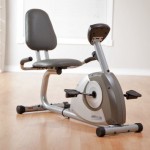 unique learner sit in a comfortable seat while pedaling. The cross-over action of pedaling also has an organizing effect on the brain, and, if used while reading or playing video games (Video games can be great exercises for eye-tracking if you choose the right ones!) can actually increase the speed and effectiveness of learning.
5.) Get crunchy…Believe it or not, another ‘brain organizing’ activity is chewing, particularly crunchy foods, while reading, etc. Some good choices are pretzels, carrot sticks, celery, granola, and nuts. (If you’ve got a sensory sweetie like I do, be careful to let them choose something that won’t send their senses into overdrive.) Sugarless chewing gum can be substituted when you go places where foods aren’t appropriate, but still would like to offer your child a calming, organizing aid.
6.) Listen, listen, listen…Your unique learner will have more than their share of stress and possibly a harder time articulating it than others might. Slow down and really focus on what they are communicating. Listen ‘between the lines’ to their heart, their hurts, their fears, their needs. Be their safe place, their source of comfort and renewal.
7.) Hug it out…Physical closeness is healing, and so make sure that along with the extra struggles and challenges your unique learner faces, they get lots of extra cuddles, snuggles, and hugs. When they get older, a gentle touch on their shoulder or a light hand on their arm will be instantly calming and comforting because it will tap into those feelings of comfort and closeness from earlier childhood.
8.) Watch and learn…Just as every child is different, every child with challenges is unique in how they manifest those challenges and how they handle them. Paying careful attention to your own unique learner’s personality, struggles, aversions, triggers, etc. will give you clues as to how to help them learn to cope. With SPD (Sensory Processing Disorder), for example, avoiding unpleasant stimulus and providing needed stimulus is the name of the game. Typically, you’ll want to provide a quiet learning area at home, lots of freedom to move, permission to step away and de-stress when they feel overwhelmed, etc. and, when going out, avoid buffet-style restaurants and loud, crowded shopping and entertainment venues.
9.) Guide them gently…Discipline (guiding, modeling, teaching, etc.) invites communication and strengthens your parent/child connection. Punishment stifles communication and strains parent/child connections. Keep those vital lines of communication open and your parent/child connection healthy by providing consistent boundaries and gentle guidance, being open to discussion, and modeling the desired behavior.
10.) Read, read, read…Successful readers are not simply those who understand the mechanics of reading any more than successful biking is understanding the mechanics of a bicycle. Readers are born when a love for reading is fostered. Let them see you reading often. Cuddle up and read to them when they are young. Co-read (you read a sentence, they read a sentence, etc) when they are new readers or when they are tired or struggling. Let them read comics (The relation of pictures to words is a huge aid in reading comprehension.). For more reading tips, see Raising Bookworms.
Here are some exercises and activities that have helped my Renaissance Girl with her challenges with SPD, dyslexia, ADD, visual/auditory processing disorders, dyscalculia, etc:
Gross motor and fine motor cross-over exercises to get the two sides of the brain communicating more efficiently…
~Bouncing a brightly colored ball back and forth between us using alternate hands (left, right, left, right, etc.)
~Skipping, marching, swinging while singing 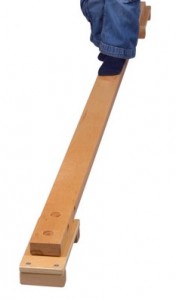
~Climbing
~Balance beam
~Bicycling
~Piano
~Sorting 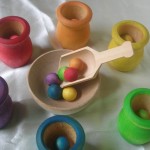
Brain-organizing activities…
~Memory matching
~Tonal music
~Free-style building with blocks, Tinker Toys, Legos, etc.
~Design-matching building
~Sensory bins
Eye-tracking activities…
~Laser pointer games-following a laser pointer light in a darkened room, pointing to moving targets (i.e. bubbles), etc.
~Ceiling tracing-following the seam of the wall and ceiling from corner to corner moving only the eyes
~Video games-Flash Focus and Brain Age are good choices for the Gameboy. Wii Fit, Carnival Games, and Sports Games are good for the Wii. There are also great games for improving eye-tracking for the X-box, Playstation, and online. If you do the research to find what best fits your child’s interests, you’ll have much better participation!
Visual-motor learning…
~Clay letters-tactile learning by forming letters and words on a template with clay or dough 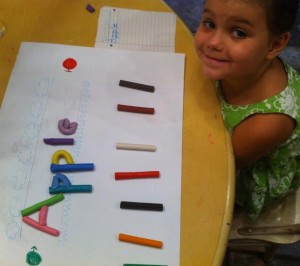
~Contextual learning-Children with dyslexia tend to learn better in context than by breaking things down to their parts, so phonics-based learning is often mind-boggling for them. Flashcards are a no-go because speed and movement impede their attempts to focus rather than help them. Writing-based learning such as copying and illustrating short poems, copying a short sentence from a wall-mounted chalkboard or large paper taped to the wall and illustrating it, writing and illustrating their own stories, and writing stories on the computer are great ways to help them learn to read.
~Once they are beginning to read, graphic novels, large-print chapter books on topics that interest them, and continued creative writing are excellent practice.
~Online reading games can be helpful, but only if they are untimed (Timed anything is a huge stressor and sets them up for frustration and failure.) and your child feels comfortable with the level of activity and brightness on the screen as otherwise these can cause headaches and their eyes to tire quickly.
These tips are not, of course, exhaustive or a replacement for professional therapies. But as you work your way through what can often be a labyrinth of paperwork, meetings, appointments, etc. on your way to finding the services your child needs, these may help to ease the wait a bit. 🙂
Related posts:
Children who love to read…READ! Engaging children’s hearts in the wonder of reading instead of just training their minds in its mechanics. Raising Bookworms
It’s time for a return to childhood, to simplicity, to running and climbing and laughing in the sunshine, to experiencing happiness instead of being trained for a lifetime of pursuing happiness…it’s time to let children be children again. A Return to Childhood
Think homeschooled children are unsocialized, over-controlled, locked-away-from-the-world misfits? Think again! My Renaissance Girl
Successful reading means far more than possessing the ability to read. Engaging the hearts of students moves reading success beyond a life skill and turns it into a life style. And graphic novels are too powerful of a tool in our arsenal to be disregarded because of pride or prejudice. Raising Super Readers~The MARVELous Power of Comic Books!
In the world of a child wonders are as simple as sticks and sheets, leaves and books, boxes and giggles, and the promise in a rainy day. The Seven Wonders of the World of Childhood
Parenting choices strongly impact the level and type of attachment a child develops and, by extension, the development of a love of learning. A love of learning grows when it isn’t stifled by fear or stress or regimented by over-structuring or a focus on achievement or competition. Parents fostering a healthy attachment are thus also fostering a life-long love of learning in their children. Live to Play~Play to Learn~Learn to Live!
If you give a toddler a book
He’ll climb into your lap
While he’s in your lap
He might lay his head on your chest
When he lays his head on your chest
He’ll hear your heartbeat
When he hears your heartbeat
He’ll probably ask if you can hear… If You Give A Toddler A Book…
Einstein recognized his unique lens and often commented about it and about how organized education systems didn’t accommodate individuality and creativity. Here is a look into this ‘unique learner’s’ mind in his own words…Beautiful Minds
Award-winnning author, L.R.Knost, is the founder and director of the children's rights advocacy and family consulting group, Little Hearts/Gentle Parenting Resources, and Editor-in-Chief of Holistic Parenting Magazine. Books by L.R.Knost include Whispers Through Time: Communication Through the Ages and Stages of Childhood ; Two Thousand Kisses a Day: Gentle Parenting Through the Ages and Stages ; The Gentle Parent: Positive, Practical, Effective Discipline ; and Jesus, the Gentle Parent: Gentle Christian Parenting the first four books in the Little Hearts Handbook gentle parenting series, and children’s picture books Petey’s Listening Ears and the soon-to-be-released Grumpykins series.
The Bookshelf: Tips, Tools & Techniques for Sharing a Love of Reading with Children
[Portions reprinted with permission from Raising Bookworms: Life, Learning, and Literacy by L.R.Knost available November 2014; Two Thousand Kisses a Day: Gentle Parenting Through the Ages and Stages, Whispers Through Time: Communication Through the Ages and Stages of Childhood, and The Gentle Parent: Positive, Practical, Effective Discipline by L.R.Knost available on Amazon and through other major retailers.]
~~~~~~~~~~~~~~~~~~~~~
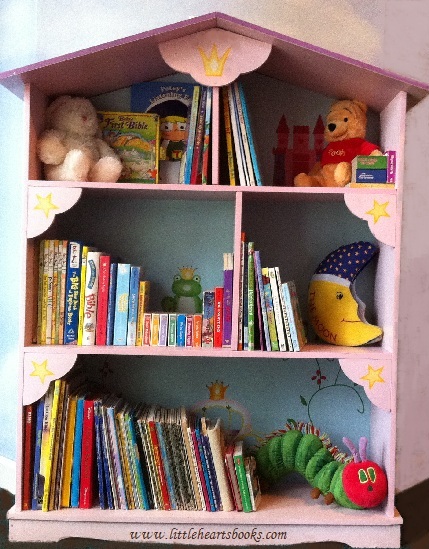 “I would be most content if my children grew up to be the kind of people who think decorating consists mostly of building enough bookshelves.” ~Anna Quindlen
There’s no denying that reading is a vital part of successfully navigating our information-driven world, but literacy, true literacy, is so much more than simply acquiring information. Literacy is a love of and appreciation for the wisdom of the ages. It is a quest for the knowledge of those who have gone before us and shared their thoughts, discoveries, and experiences in dusty old tomes and modern paperbacks.
Sharing that love, that appreciation, that quest with our children is the gift of a lifetime of exploration, imagination, and revelation. It is the gift of curiosity, wonder, and discovery. Truly, to paraphrase George R.R. Martin, it is the gift of a thousand lifetimes lived in just one.
To that end, here is my virtual reading room, its bookshelves filled with literacy tips, book recommendations, literary quotes, learning through play ideas, and more. Pour yourself a cup of coffee, grab a cozy chair, and join me on the journey of a lifetime…
- When it comes to reading, do you want your children to become readers or just learn the mechanics of reading? Do you want them to love to read or just to know how? If a love of reading is your goal for your children, here are some ideas to get you started… 8 Tips for Raising Bookworms
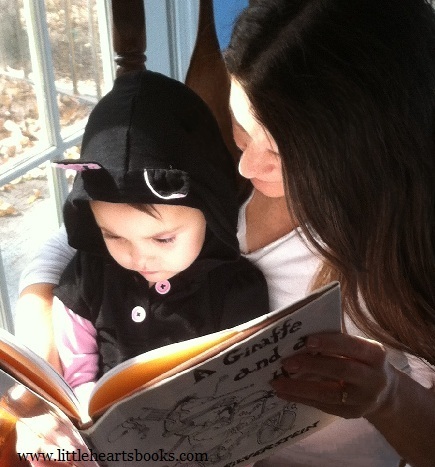 Fairy tales in childhood are stepping-stones throughout life, leading the way through trouble and trial. The value of fairy tales lies not in a brief literary escape from reality, but in the gift of hope that goodness truly is more powerful than evil and that even the darkest reality can lead to a Happily Ever After. Do not take that gift of hope lightly. It has the power to conquer despair in the midst of sorrow, to light the darkness in the valleys of life, to whisper “One more time” in the face of failure. Hope is what gives life to dreams, making the fairy tale the reality. Fairy Tales~The Lost Value of ‘Once upon a time…’
- Bookworm weighs in on must-have books for your children in Little Hearts’ How to Build a Home Library for Bookworms from Tots to Teens series. Check out 25 Must-Have Books for Baby Bookworms, 25 Must-Have Books for Toddler Bookworms, 25 Must-Have Books for Preschool Bookworms, and watch for 25 Must-Have Books for Early Elementary Bookworms, 25 Must-Have Books for Tween Bookworms, 25 Must-Have Books for Teen Bookworms, and 25 Must-Have Books for Young Adult Bookworms in the coming weeks as well as literacy tips, book activities, and book nook ideas
- Imagination is the language of childhood, so speaking their language when introducing our language only makes sense. Let’s ditch the flashcards, turn off the educational dvd’s, and throw out the worksheets…because learning is child’s play! Alphabet Fun~Imagination From A to Z!
- Successful reading means far more than possessing the ability to read. Engaging the hearts of students moves reading success beyond a life skill and turns it into a life style. And graphic novels are too powerful of a tool in our arsenal to be disregarded because of pride or prejudice… Raising Super Readers~The MARVELous Power of Comic Books!
- There is such a rush these days to get children sleeping through the night, weaned off the breast, eating solid foods, potty trained, reading independently, and on and on, that we seem to have lost the ability to simply enjoy life as it happens and let our children do the same. A Return to Childhood
- In the world of a child wonders are as simple as sticks and sheets, leaves and books, boxes and giggles, and the promise in a rainy day. The Seven Wonders of the World of Childhood
- Albert Einstein said, “Everybody is a genius. But if you judge a fish on its ability to climb a tree, it will live its whole life believing that it is stupid.” Unique learners have beautiful minds just waiting to find their genius. We just need to look outside of the box to help them find it. Helping Unique Learners Find Their Genius
- Think homeschooled children are unsocialized, over-controlled, locked-away-from-the-world misfits? Think again! My Renaissance Girl
- My SPD/SLD/ADD (Sensory Processing Disorder, Specific Learning Disability-Dyslexia, Visual and Auditory Processing Disorders, Attention Deficit Disorder, etc) sweetie, aka Renaissance Girl, has raised the bar on my homeschooling skills more times than I can count. Her beautiful mind sees the world through a unique lens similar to those of historical icons such as Thomas Edison, Leonardo Da Vinci, Benjamin Franklin, and Albert Einstein…Beautiful Minds
- 1.) Books + Time + Imagination = Endless possibilities! 25 Reasons NOT to Keep Your Children Busy
- March 1st is World Book Day, and March 2nd is Dr. Seuss’ Birthday Extravaganza which includes the release of the much-anticipated new movie, The Lorax! If you’re a book-obsessed, homeschooling, movie-loving, Seussiac like I am, it’s practically a national holiday! And when you add my excitement over my newest little home-grown reader, it’s definitely time for a Seusserrific Celebration! In honor of all of this wonderfulness and to help launch my new little reader into the wonderful world of books, I’ve been scouring the web, the bookshelves, and my scattered brain for all the Seussical fun I could find for my little people and yours. Here are a few of my finds… Seuss-ified~Craft-astic~Snack-errific~Education-cool~Fun!
- Parenting choices strongly impact the level and type of attachment a child develops and, by extension, the development of a love of learning. A love of learning grows when it isn’t stifled by fear or stress or regimented by over-structuring or a focus on achievement or competition. Parents fostering a healthy attachment are thus also fostering a life-long love of learning in their children. Love, Play, Learn!
- Truly, what is our goal for our children? Knowledge memorized in lists and tables and regurgitated on bubble-in tests? Or knowledge coupled with experience that leads to understanding and, ultimately, wisdom? Benjamin Franklin said it best when he said, “Tell me and I forget. Teach me and I remember. Involve me and I learn.” The Many Adventures of My Little Pooh Bear
- 188.) Make them a cozy reading nook; 189.) Squeeze yourself into their reading nook and cuddle up for storytime; 190.) Read them fairy tales; 191.) Buy them comic books; 192.) Make paperchains for the Christmas tree; 193.) Have a birthday party for Jesus before opening presents on Christmas morning; 194.) Make blessing bags and mail them to our troops; 195.) Build bookshelves and start a home library for them… 200 Ways to Bless Your Children with a Happy Childhood
- If you give a toddler a book
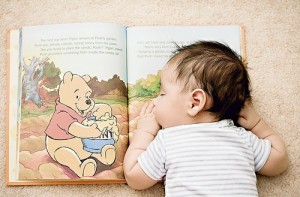
It’s never too early to share a good book
He’ll climb into your lap
While he’s in your lap
He might lay his head on your chest
When he lays his head on your chest
He’ll hear your heartbeat
When he hears your heartbeat
He’ll probably ask if you can hear his…
If You Give A Toddler A Book…
Award-winnning author, L.R.Knost, is the founder and director of the children's rights advocacy and family consulting group, Little Hearts/Gentle Parenting Resources, and Editor-in-Chief of Holistic Parenting Magazine. Books by L.R.Knost include Whispers Through Time: Communication Through the Ages and Stages of Childhood ; Two Thousand Kisses a Day: Gentle Parenting Through the Ages and Stages ; The Gentle Parent: Positive, Practical, Effective Discipline ; and Jesus, the Gentle Parent: Gentle Christian Parenting the first four books in the Little Hearts Handbook gentle parenting series, and children’s picture books Petey’s Listening Ears and the soon-to-be-released Grumpykins series.
Helping Unique Learners Find Their Genius
[From Raising Bookworms: Life, Learning, and Literacy by L.R.Knost available 2014; Two Thousand Kisses a Day: Gentle Parenting Through the Ages and Stages, Whispers Through Time: Communication Through the Ages and Stages of Childhood, and The Gentle Parent: Positive, Practical, Effective Discipline now available on Amazon and through other major retailers.]
Homeschooling a unique learner can be challenging simply because they don’t get the benefit of access to testing and professional support without a lot of initiative, research, phone calls, and door-knocking on your part. But the trade-off is the freedom to tailor your teaching and learning environment to your child’s needs, and that is of incredible value when educating a unique learner.
Albert Einstein said, “Everybody is a genius. But if you judge a fish on its ability to climb a tree, it will live its whole life believing that it is stupid.” Unique learners have beautiful minds just waiting to find their genius. We just need to look outside of the box to help them find it!
Here are some of the tips, tools, and techniques I’ve learned through years of homeschooling my unique learners to help them work through the challenges they face on a daily basis:
1.) Lighten up…Everything in life is easier if you take it with a grain of salt and learn to laugh. Our unique learners will have more struggles and challenges than the average person throughout life, not just during their school years. That is an unavoidable fact. But who wants to be ‘average’ anyway? Help them to celebrate their uniqueness and embrace the future with grace and humor by sharing your own struggles, modeling coping techniques, and being able to laugh at your own mistakes. Make ‘even missteps are valuable steps on the road to success’ your homeschool motto!
2.) Play…Children learn best through play, and that applies to therapy, as well. Experience is the only true path to learning, so let their imaginations soar as they do the hard work of learning to cope with their unique challenges. (See some play-based, brain-enriching, and eye-tracking activities below)
3.) Jazz it up…Music truly is medicine for the soul. Buy a good set of headphones (not earbuds) and play classic instrumentals softly while your unique learner is trying to concentrate, whether it be on reading or writing or drawing, etc. Filtering out the cacophony of life and soothing their stress levels with the gentle strains of Mozart are only some of the benefits of music. Another benefit is that the rhythms, cadence, and timing of music actually have an organizing effect on the brain!
4.) Exercise…Invest in an exercise bicycle (We got ours for $15 from a yard sale!) that lets your unique learner sit in a comfortable seat while pedaling. The cross-over action of pedaling also has an organizing effect on the brain, and, if used while reading or playing video games (Video games can be great exercises for eye-tracking if you choose the right ones!) can actually increase the speed and effectiveness of learning.
5.) Get crunchy…Believe it or not, another ‘brain organizing’ activity is chewing, particularly crunchy foods, while reading, etc. Some good choices are pretzels, carrot sticks, celery, granola, and nuts. (If you’ve got a sensory sweetie like I do, be careful to let them choose something that won’t send their senses into overdrive.) Sugarless chewing gum can be substituted when you go places where foods aren’t appropriate, but still would like to offer your child a calming, organizing aid.
6.) Listen, listen, listen…Your unique learner will have more than their share of stress and possibly a harder time articulating it than others might. Slow down and really focus on what they are communicating. Listen ‘between the lines’ to their heart, their hurts, their fears, their needs. Be their safe place, their source of comfort and renewal.
7.) Hug it out…Physical closeness is healing, and so make sure that along with the extra struggles and challenges your unique learner faces, they get lots of extra cuddles, snuggles, and hugs. When they get older, a gentle touch on their shoulder or a light hand on their arm will be instantly calming and comforting because it will tap into those feelings of comfort and closeness from earlier childhood.
8.) Watch and learn…Just as every child is different, every child with challenges is unique in how they manifest those challenges and how they handle them. Paying careful attention to your own unique learner’s personality, struggles, aversions, triggers, etc. will give you clues as to how to help them learn to cope. With SPD (Sensory Processing Disorder), for example, avoiding unpleasant stimulus and providing needed stimulus is the name of the game. Typically, you’ll want to provide a quiet learning area at home, lots of freedom to move, permission to step away and de-stress when they feel overwhelmed, etc. and, when going out, avoid buffet-style restaurants and loud, crowded shopping and entertainment venues.
9.) Guide them gently…Discipline (guiding, modeling, teaching, etc.) invites communication and strengthens your parent/child connection. Punishment stifles communication and strains parent/child connections. Keep those vital lines of communication open and your parent/child connection healthy by providing consistent boundaries and gentle guidance, being open to discussion, and modeling the desired behavior.
10.) Read, read, read…Successful readers are not simply those who understand the mechanics of reading any more than successful biking is understanding the mechanics of a bicycle. Readers are born when a love for reading is fostered. Let them see you reading often. Cuddle up and read to them when they are young. Co-read (you read a sentence, they read a sentence, etc) when they are new readers or when they are tired or struggling. Let them read comics (The relation of pictures to words is a huge aid in reading comprehension.). For more reading tips, see Raising Bookworms.
Here are some exercises and activities that have helped my Renaissance Girl with her challenges with SPD, dyslexia, ADD, visual/auditory processing disorders, dyscalculia, etc:
Gross motor and fine motor cross-over exercises to get the two sides of the brain communicating more efficiently…
~Bouncing a brightly colored ball back and forth between us using alternate hands (left, right, left, right, etc.)
~Skipping, marching, swinging while singing
~Climbing
~Balance beam
~Bicycling
~Piano
~Sorting
Brain-organizing activities…
~Memory matching
~Tonal music
~Free-style building with blocks, tinkertoys, legos, etc.
~Design-matching building
~Sensory bins
Eye-tracking activities…
~Laser pointer games-following a laser pointer light in a darkened room, pointing to moving targets (i.e. bubbles), etc.
~Ceiling tracing-following the seam of the wall and ceiling from corner to corner moving only the eyes
~Video games-Flash Focus and Brain Age are good choices for the Gameboy. Wii Fit, Carnival Games, and Sports Games are good for the Wii. There are also great games for improving eye-tracking for the X-box, Playstation, and online. If you do the research to find what best fits your child’s interests, you’ll have much better participation!
Visual-motor learning…
~Clay letters-tactile learning by forming letters and words on a template with clay or dough
~Contextual learning-Children with dyslexia tend to learn better in context than by breaking things down to their parts, so phonics-based learning is often mind-boggling for them. Flashcards are a no-go because speed and movement impede their attempts to focus rather than help them. Writing-based learning such as copying and illustrating short poems, copying a short sentence from a wall-mounted chalkboard or large paper taped to the wall and illustrating it, writing and illustrating their own stories, and writing stories on the computer are great ways to help them learn to read.
~Once they are beginning to read, graphic novels, large-print chapter books on topics that interest them, and continued creative writing are excellent practice.
~Online reading games can be helpful, but only if they are untimed (Timed anything is a huge stressor and sets them up for frustration and failure.) and your child feels comfortable with the level of activity and brightness on the screen as otherwise these can cause headaches and their eyes to tire quickly.
These tips are not, of course, exhaustive or a replacement for professional therapies. But as you work your way through what can often be a labyrinth of paperwork, meetings, appointments, etc. on your way to finding the services your child needs, these may help to ease the wait a bit. 🙂
Related posts:
Children who love to read…READ! Engaging children’s hearts in the wonder of reading instead of just training their minds in its mechanics. Raising Bookworms
It’s time for a return to childhood, to simplicity, to running and climbing and laughing in the sunshine, to experiencing happiness instead of being trained for a lifetime of pursuing happiness…it’s time to let children be children again. A Return to Childhood
Think homeschooled children are unsocialized, over-controlled, locked-away-from-the-world misfits? Think again! My Renaissance Girl
Successful reading means far more than possessing the ability to read. Engaging the hearts of students moves reading success beyond a life skill and turns it into a life style. And graphic novels are too powerful of a tool in our arsenal to be disregarded because of pride or prejudice. Raising Super Readers~The MARVELous Power of Comic Books!
In the world of a child wonders are as simple as sticks and sheets, leaves and books, boxes and giggles, and the promise in a rainy day. The Seven Wonders of the World of Childhood
Parenting choices strongly impact the level and type of attachment a child develops and, by extension, the development of a love of learning. A love of learning grows when it isn’t stifled by fear or stress or regimented by over-structuring or a focus on achievement or competition. Parents fostering a healthy attachment are thus also fostering a life-long love of learning in their children. Live to Play~Play to Learn~Learn to Live!
If you give a toddler a book
He’ll climb into your lap
While he’s in your lap
He might lay his head on your chest
When he lays his head on your chest
He’ll hear your heartbeat
When he hears your heartbeat
He’ll probably ask if you can hear… If You Give A Toddler A Book…
Einstein recognized his unique lens and often commented about it and about how organized education systems didn’t accommodate individuality and creativity. Here is a look into this ‘unique learner’s’ mind in his own words…Beautiful Minds
Award-winnning author, L.R.Knost, is the founder and director of the children's rights advocacy and family consulting group, Little Hearts/Gentle Parenting Resources, and Editor-in-Chief of Holistic Parenting Magazine. Books by L.R.Knost include Whispers Through Time: Communication Through the Ages and Stages of Childhood ; Two Thousand Kisses a Day: Gentle Parenting Through the Ages and Stages ; The Gentle Parent: Positive, Practical, Effective Discipline ; and Jesus, the Gentle Parent: Gentle Christian Parenting the first four books in the Little Hearts Handbook gentle parenting series, and children’s picture books Petey’s Listening Ears and the soon-to-be-released Grumpykins series.
Painting the World
Homeschooling is so fun 🙂 My children have been asking questions lately about where different countries are, so I let their interest inspire us to take a trip ‘around the world.’ Of course, I can’t afford a vacation even as far as the beach right now, and it’s only forty-five minutes away! So our trip must, of necessity, be a virtual one. But that doesn’t mean it has to be a boring one!
First, we took a look at our globe and found Florida (where we live) as a point of reference. Then we searched together for the places my children wanted to ‘visit’ and talked about how they’d get there. My Renaissance Girl was all about taking cruise ships and planes, but my Little Caboose suggested submarines, hot air balloons, and flying saucers, among other things. (All clear contenders for ocean crossing, clearly! She did specify that we couldn’t take a train or swim across, though.)
 Then, we got a big blue bouncy ball, some shaving cream, green food coloring, bowls, some painting sponges, and went to work. A great big dollop of shaving cream and a few drops of green food coloring was all it took to make washable ‘paint’ for our super-sized globes. (Everybody was dyed green wherever the shaving cream touched, lol, but it all washed off with soap easily when we were finished.) The girls took turns making their own globes. With the younger ones, I named the continents they were creating and pointed out where we lived in relation. With my older one, I asked where certain
 continents/countries were, and she pointed them out. Then she got all ‘topographical’ and wanted to add in mountains and volcanoes, which was fun and made for her own unique spin on the globe (pun intended!).
 We wanted to use a great big blue exercise ball, but ‘somehow’ mine got popped the last time my children were playing with it, and I didn’t want to spend $20 on a new one, so I bought a big bouncy ball from Walmart for $2.50 instead. I’ll probably spring (Sorry, I can’t help myself, lol) for the big ball when we do latitude and longitude, though, because it’s already got the lines of latitude on it!
Next, we’re going to hang a twin-sized white sheet on the wall and project a world map on it so we can trace it. Then we’ll use fabric paints and markers to color it and label the oceans, continents, countries, and major cities. It’ll be an ongoing project with my children creating art that reflects the regions, drawing in landmarks such as The Great Wall of China, The Sphinx, Mt. Rushmore, and whatever else fires their imaginations. And when we’re done, it’ll be our special occasion tablecloth (with a clear tablecloth over it for protection) and the clear tablecloth will function as a dry erase board when we pull out our map mural for other geography projects. So fun! (I’ll post updates as we progress. 🙂 )
Here are some other sites that have great ideas we’ll be checking out, too!
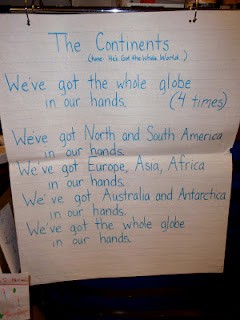 This site seems to have disappeared, but this was a cute idea for learning the continents…sing them to ‘He’s Got the Whole World in His Hands.’
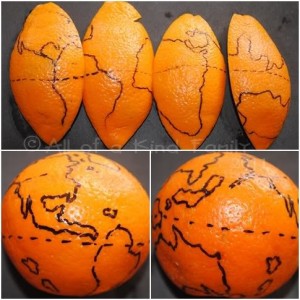 Love this idea from All of a Kind Family!
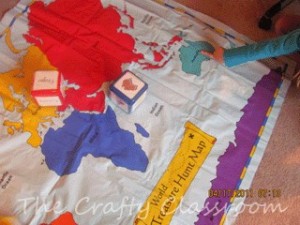 This looks like so much fun from The Crafty Classroom!
More to come!
Related posts:
In the world of a child wonders are as simple as sticks and sheets, leaves and books, boxes and giggles, and the promise in a rainy day. The Seven Wonders of the World of Childhood
Children who love to read…READ! Engaging children’s hearts in the wonder of reading instead of just training their minds in its mechanics. Raising Bookworms
Think homeschooled children are unsocialized, over-controlled, locked-away-from-the-world misfits? Think again! My Renaissance Girl
On a Winnie the Pooh style ‘long explore’ my little Pooh Bear discovered the world in ways only a toddler can do in…The Many Adventures of My Little Pooh Bear
Raising Super Readers~The MARVELous Power of Comic Books!
Playground Confessions~Look Who’s Talking!
Alphabet Fun~Imagination From A to Z!
Making Money Matters Make Cents
Award-winnning author, L.R.Knost, is the founder and director of the children's rights advocacy and family consulting group, Little Hearts/Gentle Parenting Resources, and Editor-in-Chief of Holistic Parenting Magazine. Books by L.R.Knost include Whispers Through Time: Communication Through the Ages and Stages of Childhood ; Two Thousand Kisses a Day: Gentle Parenting Through the Ages and Stages ; The Gentle Parent: Positive, Practical, Effective Discipline ; and Jesus, the Gentle Parent: Gentle Christian Parenting the first four books in the Little Hearts Handbook gentle parenting series, and children’s picture books Petey’s Listening Ears and the soon-to-be-released Grumpykins series.
Bubble-Wrapped Kids? You bet!
[By L.R.Knost, author of Two Thousand Kisses a Day: Gentle Parenting Through the Ages and Stages now available on Amazon and through other major retailers.]
There is a lot of debate in the blogosphere about Helicopter Parenting and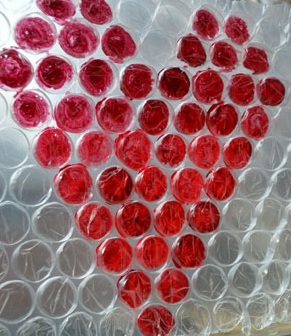 Bubble-Wrapped or Cotton-Wool Kids. I make no apologies for protecting my children. They say crime is down. Maybe per capita it is overall down. Maybe there are less arrests or convictions or whatever. Or maybe there is less shoplifting and littering and other non-violent crimes. Or maybe ‘they’ are wrong. I don’t know, and I don’t care.
Walk into a Wal-Mart and look at the wall of missing children, and you’ll see new faces nearly every day. Turn on the news, and you’re almost guaranteed to hear about a new heinous crime against a child. Misspell something on Google, and the sites that will appear in your search results will sicken you.
But if none of that were true, I’d still be the protective parent that I am. I’d still be that parent because of one sweet little local girl who was lost forever to a fiend. When I hear the name Jessica Lunsford, my heart shivers to a blood-curdling stop for a brief moment, and I have to catch my breath.
I remember the days after she went missing. I remember praying for her safety, praying for her family, praying for the rescuers and volunteers who were searching day and night for her. I remember checking for news updates multiple times a day, a silent prayer in my heart, begging, “Please, God, please.”
And the whole time I was praying, the whole time rescuers, family, friends, volunteers were searching, she was mere yards from her home being kept in a closet by a depraved monster who abused her and then buried her alive.
So, yes, I do guard my children closely. Outside play is free, muddy, messy, regular…and supervised. Bike riding is a family activity. Public bathroom trips are on the buddy-system. Sleepovers are almost exclusively at our house.
My children are homeschooled, but the oldest two started out in public school. For those few years, I drove them to and from school. I chaperoned field trips. I volunteered as a teacher’s aid.
There is more history to my journey, of course. There are happenings in my childhood I won’t share. There are people in my past who did what they should not.
 And there are other things that led me here, to this place of mama lioness guarding her young fiercely, to this 5’1” person who could and would take on the most ferocious of threats to protect her children, to this gentle mother who will face the vileness of the world fearlessly and boldly to guard her little ones’ hearts, minds, and bodies. There is more, so much more I have seen and heard and experienced, but that will remain unsaid.
I will not apologize for protecting my children, no matter what the newest label or theory or study shows. My children are free to climb trees, hang from monkey bars, and play king-of-the-mountain on huge dirt mounds. But they aren’t free to hang out at the mall alone. They can scavenge their daddy’s workshop for scrap wood and other ‘treasures’ and use his tools to build…well, whatever their incredible imaginations come up with! But they can’t walk to the store by themselves. They can troll the beach for shells and explore the rocky inlet for sand dollars and sea urchin. But they aren’t allowed to surf the internet without supervision.
Freedom to explore. Freedom to grow. Freedom to discover. Freedom to become who they are meant to be. All within the boundaries of parental guidance and protection. That is how it is in our home. And our home is truly a happy and safe place to be.
Related posts:
The Measure of Success~Chinese Parents and French Parents Can’t BOTH Be Superior!
Tots to Teens~Communication Through the Ages and Stages
Babes and Boundaries~A Gentle Parenting Perspective
Into the Looking Glass~Teens and Self-Esteem
Award-winnning author, L.R.Knost, is the founder and director of the children's rights advocacy and family consulting group, Little Hearts/Gentle Parenting Resources, and Editor-in-Chief of Holistic Parenting Magazine. Books by L.R.Knost include Whispers Through Time: Communication Through the Ages and Stages of Childhood ; Two Thousand Kisses a Day: Gentle Parenting Through the Ages and Stages ; The Gentle Parent: Positive, Practical, Effective Discipline ; and Jesus, the Gentle Parent: Gentle Christian Parenting the first four books in the Little Hearts Handbook gentle parenting series, and children’s picture books Petey’s Listening Ears and the soon-to-be-released Grumpykins series.
Play~Bubbles and Babies and Butterflies
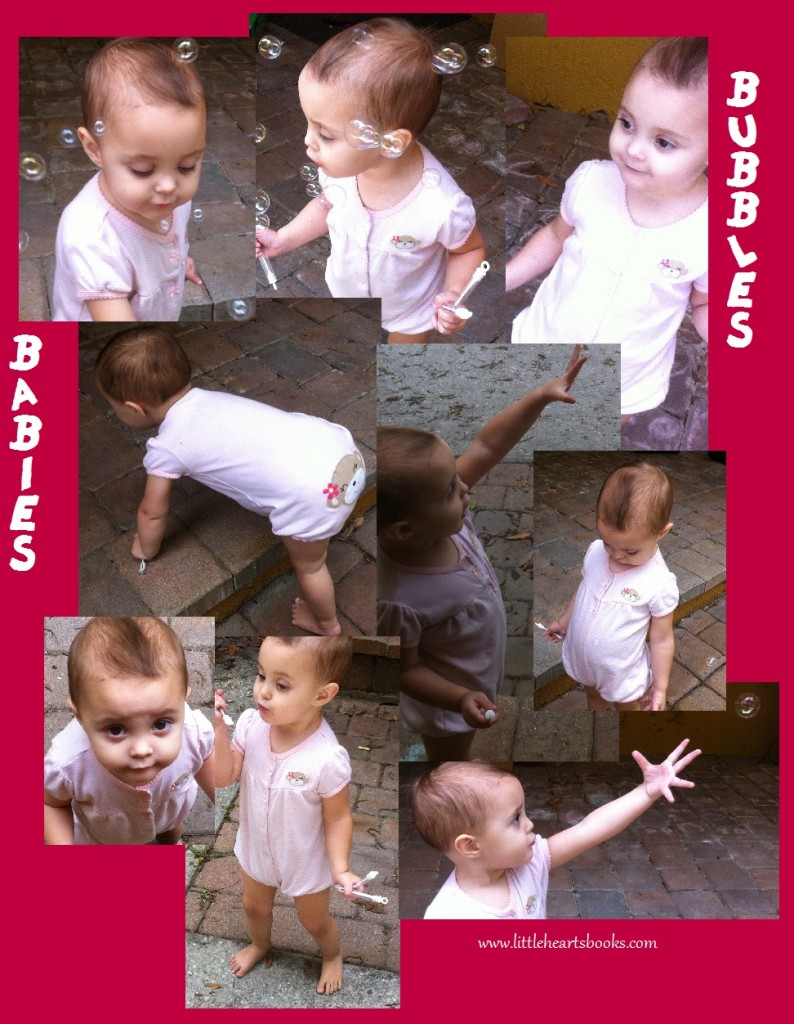 Sunshiny days fly on butterfly wings
Filled with wading pools, sidewalk chalk, springy-time things
Bubbles and babies and bear-bottomed rompers
Mudpies and magpies and jump-rope trick jumpers
Swinging and sliding and climbing and running
Learning, discovering, growing, becoming
No time to waste they are seizing the day
The work of a child is simply to play
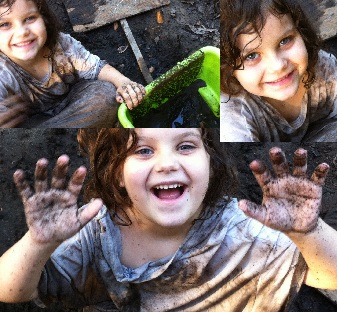
Best. Schoolday. Ever!
Related posts:
On a Winnie the Pooh style ‘long explore’ my little Pooh Bear discovered the world in The Many Adventures of My Little Pooh Bear
Children who love to read…READ! Engaging children’s hearts in the wonder of reading instead of just training their minds in its mechanics. Raising Bookworms
Think homeschooled children are unsocialized, over-controlled, locked-away-from-the-world misfits? Think again! My Renaissance Girl
In the world of a child wonders are as simple as sticks and sheets, leaves and books, boxes and giggles, and the promise in a rainy day. The Seven Wonders of the World of Childhood
There is such a rush these days to get children sleeping through the night, weaned off the breast, eating solid foods, potty trained, reading independently, and on and on, that we seem to have lost the ability to simply enjoy life as it happens and let our children do the same. A Return to Childhood
Parenting choices strongly impact the level and type of attachment a child develops and, by extension, the development of a love of learning. A love of learning grows when it isn’t stifled by fear or stress or regimented by over-structuring or a focus on achievement or competition. Parents fostering a healthy attachment are thus also fostering a life-long love of learning in their children. Live to Play~Play to Learn~Learn to Live!
Successful reading means far more than possessing the ability to read. Engaging the hearts of students moves reading success beyond a life skill and turns it into a life style. And graphic novels are too powerful of a tool in our arsenal to be disregarded because of pride or prejudice. Raising Super Readers~The MARVELous Power of Comic Books!
If you give a toddler a book
He’ll climb into your lap
While he’s in your lap
He might lay his head on your chest
When he lays his head on your chest
He’ll hear your heartbeat
When he hears your heartbeat
He’ll probably ask if you can hear…
Award-winnning author, L.R.Knost, is the founder and director of the children's rights advocacy and family consulting group, Little Hearts/Gentle Parenting Resources, and Editor-in-Chief of Holistic Parenting Magazine. Books by L.R.Knost include Whispers Through Time: Communication Through the Ages and Stages of Childhood ; Two Thousand Kisses a Day: Gentle Parenting Through the Ages and Stages ; The Gentle Parent: Positive, Practical, Effective Discipline ; and Jesus, the Gentle Parent: Gentle Christian Parenting the first four books in the Little Hearts Handbook gentle parenting series, and children’s picture books Petey’s Listening Ears and the soon-to-be-released Grumpykins series.
Shared Journeys~Attachment Parenting

Parenting is far more a journey than a destination. As parents we are always learning, always researching, always growing, always adjusting. Sharing our journeys is one way we can support and encourage each other along the way! Here are some really unique ways mamas are sharing their attachment/natural/gentle parenting experiences you might enjoy:
The first is a video by The Single Crunch. Such a beautiful testimony of the love of a mother!
I am a single mom…I breastfeed and practice child-led weaning, babywear, co-sleep, cloth diaper, homebirth, and do whatever else my natural instincts move me to do, regardless of what others may think. I DO NOT “train” my children (using the cry-it-out method to get babies to sleep). I do not spank. I do not vaccinate. I try not to run to modern medicine for every problem I or my children have, opting instead for natural (homeopathic) solutions when possible…I LISTEN to my children. I try to pause before I react and think about life from their point of view. I HAVE NOT ALWAYS LIVED THIS WAY…I’ve had a hard time with many of the ideals of being crunchy, especially as a single mom. It takes time and patience and time. Lots of time. Sometimes I’m not all that patient. I used to spank…I yell…But mainstream parenting never felt right to me. I wanted to meet moms who didn’t think my attachment (and the level of attachment I desired to have) with my children was weird. I found AP because most of the women in my life felt my ideas were silly, unintelligent, impractical, and unnecessary, especially for a mom with no husband. I didn’t care. I knew my children needed more of me. I’ve always felt a strong connection to my children, and I’ve always wanted to parent the way THEY showed me they needed me to, not a way that was convenient for me. I am now working to apply all that I have learned from my other mom friends and the many groups I subscribe to, to make my girls’ lives as safe, healthy, and happy as possible. I want to raise compassionate, secure, intelligent young women who know, understand, and believe that beauty starts within. (Read more at The Single Crunch)
~~~~~~~~~~~~~~
The next is a lovely and honest post from The Mule about the blessings and challenges of breastfeeding on demand:
While I nurse you to sleep…
I...rest. For the first time today, I am still. I am not lifting, carrying, holding, bending, reaching, stretching, scrubbing, wiping, hauling, or lugging. Here in this dark room I lie beside you and allow my body and mind to come to stillness after the chaos of our day. You suck, and tug, you fiddle, and fuss…and slowly come to stillness too, until we both are still, and both are resting…I wait, momentarily, and then, I slowly slide away and leave you sleeping.
While I nurse you to sleep…
I…take stock. I turn over in my mind, the contents of the fridge, the washing on the floor, the money in the bank. I count up the years I’ve had so far and the years I might have left. I work out how old I will be when you are the age I am now – thirty seven – seventy two. I hope I make it. I count the eggs you already have in your body and those I have in mine and I wonder at the people they may become. I think about the person I was before I met you, the life I led, the things I’ve gained and the things I’ve lost, I count them all. I plan the contents of my other daughter’s lunchbox
(Read the rest of this lovely post at While I Nurse You to Sleep…)
~~~~~~~~~~~~~~
This is an excellent and entertaining look at child-led, interest-led learning from Real Child Development.
Trust the child to direct his own learning. For it seems to me a fact that, in our struggle to make sense out of life, the things we most need to learn are the things we most want to learn. To put this another way, curiosity is hardly ever idle. What we want to know, we want to know for a reason. The reason is that there is a hole, a gap, an empty space in our understanding of things, our mental model of the world. We feel that gap like a hole in a tooth and want to fill it up. It makes us ask How? When? Why? While the gap is there, we are in tension, in suspense. Listen to the anxiety in a person’s voice when he says, “This doesn’t make sense!” When the gap in our understanding is filled, we feel pleasure, satisfaction, relief. Things make sense again – or at any rate, they make more sense than they did. When we learn this way, for these reasons, we learn both rapidly and permanently. The person who really needs to know something does not need to be told many times, drilled, tested. Once is enough. The new piece of knowledge fits into the gap ready for it, like a missing piece in a jigsaw puzzle. Once in place, it is held in, it can’t fall out. We don’t forget things that make the world a more reasonable or interesting place for us. (Read the rest of this informative post at Real Child Development)
~~~~~~~~~~~~~~
The next post is from Dulce De Leche‘s ‘Gentle Discipline Toolbox’ series which has an excellent array of topics, ideas, and links!
Redirection and Mutual Solutions
My 19 month old began to love hitting. He wasn’t even angry most of the time. He just got a kick out of the sensation, the noise and the reactions. We tried softly stroking our cheeks with his hands and telling him “Gentle touches”. He giggled and slapped again. My temper and frustration were building, until I recalled something I had read by Dr. Sears. We began teaching him to give us high fives. His face lit up with delight, and he began to repeat it. He still got what he was craving–the game, noise, sensation and excitement–but now it was in a socially acceptable way that didn’t hurt anyone. I would like to say that at least we got a little advance warning as he gleefully squealed, “High fibe!” before striking, but he usually didn’t say it till he was already mid-strike. Still, it was progress… (Read more of this enlightening post at Dulce De Leche)
~~~~~~~~~~~~~~
This last honest and informative article from Positive Parenting: Toddlers and Beyond is a great introduction to positive parenting:
Skeptical About Positive Parenting?
Positive parenting, at the very core of it, isn’t about what you can and can’t do in terms of disciplining, teaching, and guiding your kids. It isn’t even about having the perfect relationship (as there will always be breaks and repairs; such is life). It’s not about techniques or tools, whether or not to use time outs or time ins, consequences or problem-solving. All of those things stem from the practice of what is at the very core of this philosophy, but they are not THE philosophy itself. What it’s really about is the way we view children, their emotions, their needs, their motives. It’s about seeing them as human beings, worthy of respect and unconditional love, delicate, impressionable, who have as much to teach us as we have to teach them… (Read more from Positive Parenting: Toddlers and Beyond)
~~~~~~~~~~~~~~
Related posts:
And Baby Makes Three~Surviving the First Three Months with a Newborn
Bizarre Anti-Cosleeping Ads in Milwaukee a Red Herring?
A Boy, A Girl, and A Baby~Journey to Gentle Parenting
The Measure of Success~Chinese Parents and French Parents Can’t BOTH Be Superior!
Tots to Teens~Communication Through the Ages and Stages
Award-winnning author, L.R.Knost, is the founder and director of the children's rights advocacy and family consulting group, Little Hearts/Gentle Parenting Resources, and Editor-in-Chief of Holistic Parenting Magazine. Books by L.R.Knost include Whispers Through Time: Communication Through the Ages and Stages of Childhood ; Two Thousand Kisses a Day: Gentle Parenting Through the Ages and Stages ; The Gentle Parent: Positive, Practical, Effective Discipline ; and Jesus, the Gentle Parent: Gentle Christian Parenting the first four books in the Little Hearts Handbook gentle parenting series, and children’s picture books Petey’s Listening Ears and the soon-to-be-released Grumpykins series.
The Seven Wonders of the World of Childhood
[By L.R.Knost, author of Two Thousand Kisses a Day: Gentle Parenting Through the Ages and Stages, Whispers Through Time: Communication Through the Ages and Stages of Childhood, The Gentle Parent: Positive, Practical, Effective Discipline, and Jesus, the Gentle Parent: Gentle Christian Parenting available on Amazon and through other major retailers.]
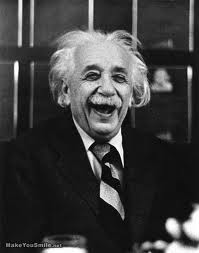
According to the man whose name is synonymous with genius, “The true sign of intelligence is not knowledge but imagination.” ~Albert Einstein
And when it came to his genius, he said, “I have no special talent. I am only passionately curious.” ~Albert Einstein
Preserving the passionate curiosity that is a natural part of childhood, then, seems to be the most logical and effective mode of early childhood education. And it is as simple as encouraging the wonder of imagination…
In the world of a child wonders are as simple as sticks and sheets, leaves and books, boxes and giggles, and the promise in a rainy day.
- In the hands of a child a stick is a king’s scepter, an adventurer’s staff, a knight’s sword.
- In the eyes of a child a sheet is a fort waiting to be built, a sea waiting to be sailed, a cape waiting to be worn.
- In the fingers of a child a leaf is a tiny ship to blow across a puddle, a mini parasol for a snail, a triumphant flag atop a mud-castle.
- In the heart of a child a book is a map to a fairy forest, a flight on an alien spaceship, a ride on the back of a dragon.
- In the mind of a child a cardboard box is a boat sailing rough seas for China, a bridge over a raging river, a cave full of lost treasure.
- In the mouth of a child a giggle is an invitation to play, a mini song of happiness, a tiny voice of comfort.
- In the footsteps of a child the rain is a puddle to be splashed in new shoes, mud to be squished between little toes, a rainbow to be chased to the golden end.
In the wonderful, beautiful world of childhood, the morning wakes with trees that need to be climbed, 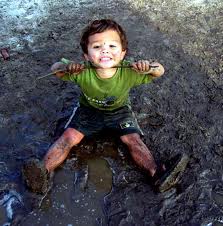 holes that need to be dug, and mudpies that need to be made. The world’s classroom teaches them that problems can be solved and obstacles can be conquered. When imaginations soar, everything becomes possible.
It is in the small moments of discovery that big dreams are born. When little fingers are buried in the earth, an archeologist has made his first dig. When curious eyes peer at stars through a paper-towel roll, an astronaut has made her first spacewalk. When small hands wrap a washcloth cast around a puppy’s paw, a doctor has healed his first patient.
Just as letters of the alphabet on their own have no meaning, but used in concert with each other can create poetry, literature, and song, so learning the mechanics of words and numbers alone has no purpose, but placed in the context of life being lived can create wonders as yet unseen.
‘Let the children play’ has become a clarion call in some parenting circles in recent years, and with good reason. With childhood obesity, illnesses, and depression rates all on the rise, examining the way we raise and educate our children is vital for the health of our children, our nation, and our future.
We need to find a place in our busy lives for children to be children, to enjoy the simple pleasures we enjoyed as children, to dream and imagine and create and become. Life is for living, and children are experts at living life to the fullest. We would do well to learn from them.
~~~~~~~~~~
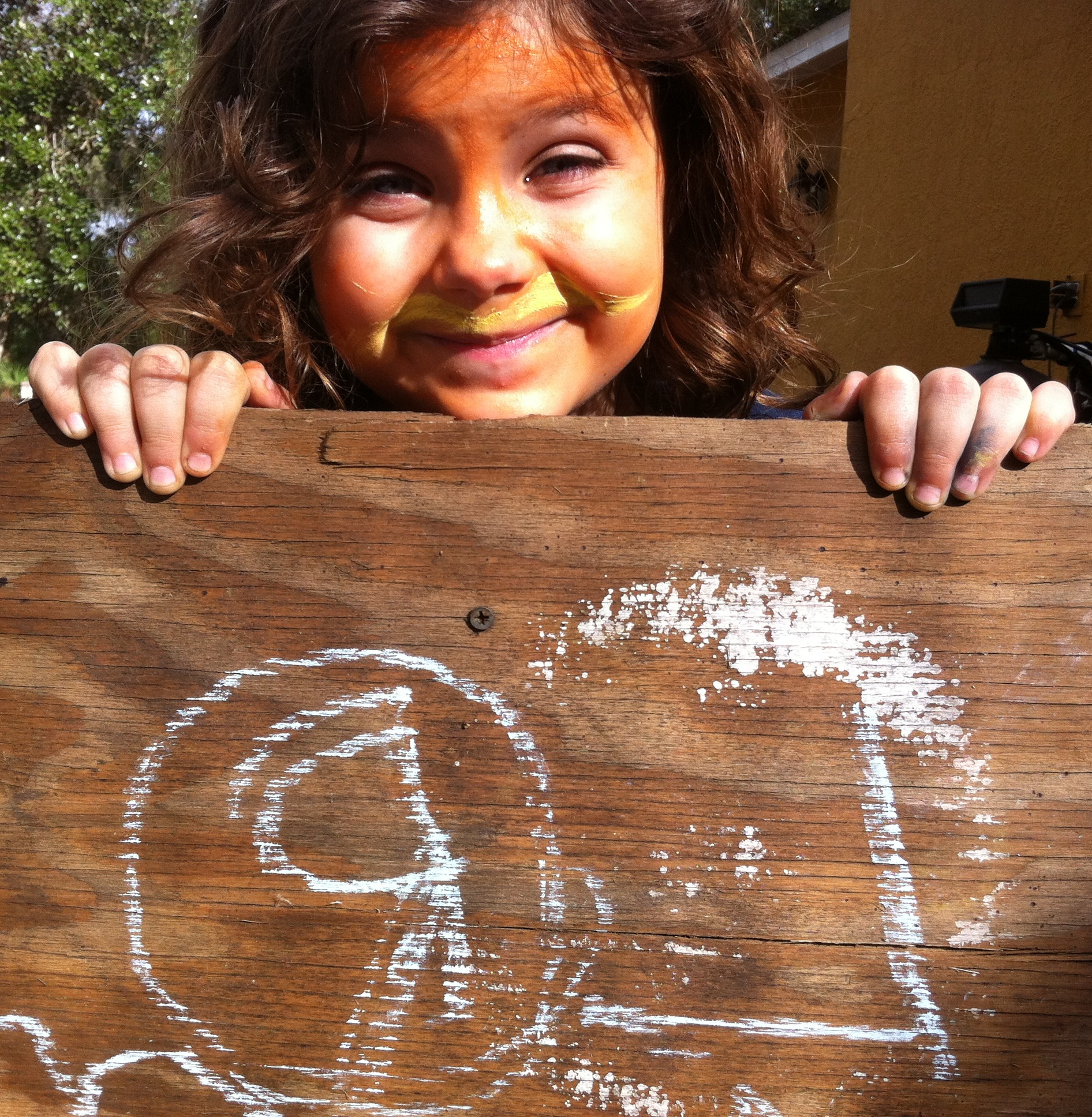
My little funnyface enjoyed the movie version of The Lorax when we saw it last week, but then forgot all about it. But when we read the book together a few days later, it captured her imagination! She painted her face orange with face paints this morning, drew on a yellow Lorax mustache, and spent the entire day outside building a Lorax forest out of odds and ends she gathered from around the yard.
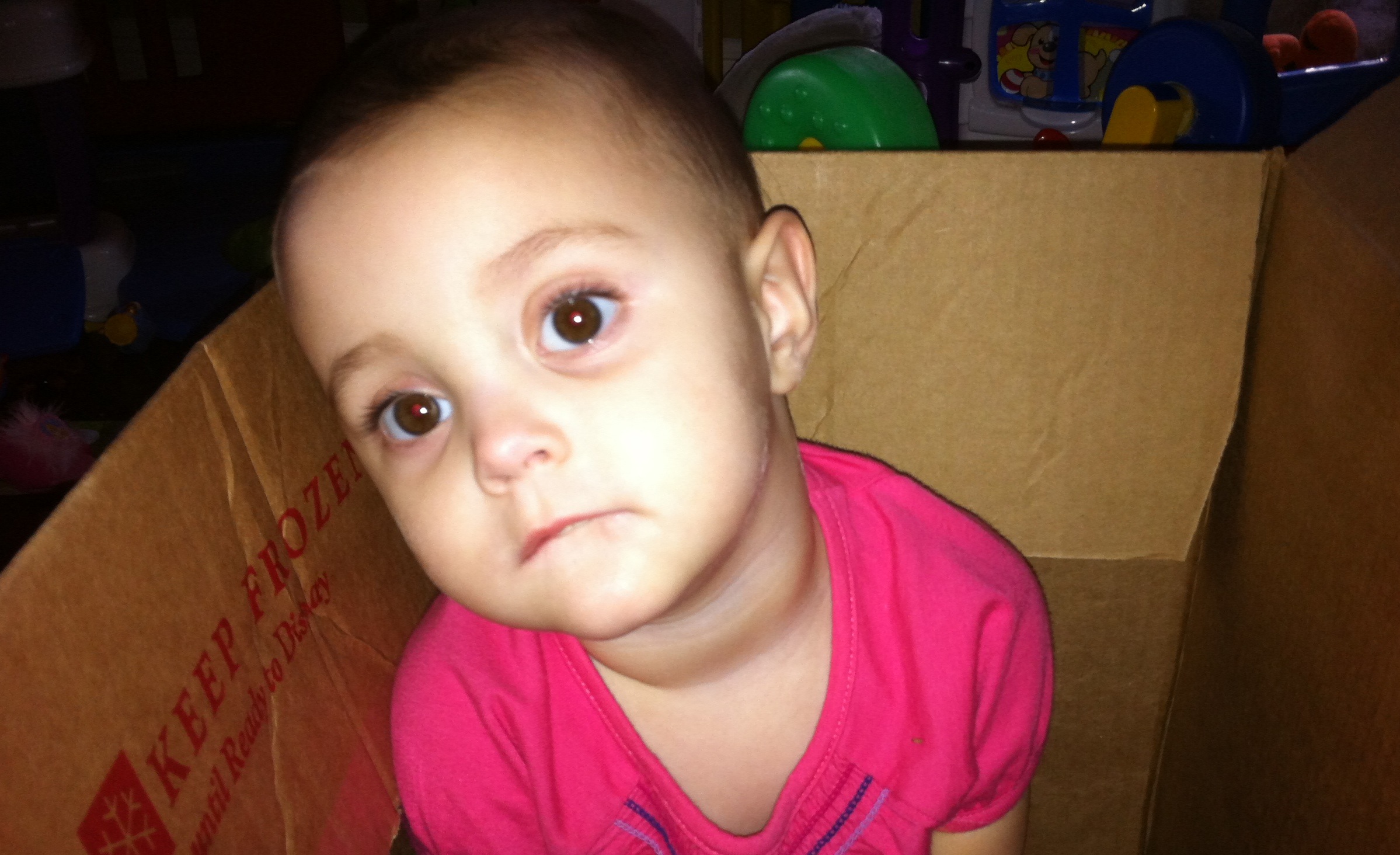
My sick baby has pneumonia and has been spiking a fever of up to 104 degrees the last few days. She’s been laminated to me, too sick to even hold up her little head, poor thing. But today when she saw a cardboard box she immediately climbed down off my lap and into the box where she played happily for a few minutes for the first time in days. Mommy’s heart was happy to see a little spark of my playful girl again, for sure. The power of a cardboard box knows no bounds!
Don’t believe in the wondrous power of play? Check out the next Steve Jobs in the making! Here’s the story of a nine year old boy, an old parts shop, and a cardboard box arcade:
Related posts:
Children who love to read…READ! Engaging children’s hearts in the wonder of reading instead of just training their minds in its mechanics. Raising Bookworms
Think homeschooled children are unsocialized, over-controlled, locked-away-from-the-world misfits? Think again! My Renaissance Girl
The Many Adventures of My Little Pooh Bear
On a Winnie the Pooh style ‘long explore’ my little Pooh Bear discovered the world in ways only a toddler can do in…
Raising Super Readers~The MARVELous Power of Comic Books!
Playground Confessions~Look Who’s Talking!
Alphabet Fun~Imagination From A to Z!
Live to Play~Play to Learn~Learn to Live!
Award-winnning author, L.R.Knost, is the founder and director of the children's rights advocacy and family consulting group, Little Hearts/Gentle Parenting Resources, and Editor-in-Chief of Holistic Parenting Magazine. Books by L.R.Knost include Whispers Through Time: Communication Through the Ages and Stages of Childhood ; Two Thousand Kisses a Day: Gentle Parenting Through the Ages and Stages ; The Gentle Parent: Positive, Practical, Effective Discipline ; and Jesus, the Gentle Parent: Gentle Christian Parenting the first four books in the Little Hearts Handbook gentle parenting series, and children’s picture books Petey’s Listening Ears and the soon-to-be-released Grumpykins series.
Raising Super Readers~The MARVELous Power of Comic Books!
 Captain America made his comic book debut on this day in 1941. He embodied the American Dream, a nobody who became a somebody, an everyday, struggling, working class American who became a hero.
For Captain America, the dream became a reality because of a diabolical villain trying to take over the world and a risky scientific experiment to create a hero who could stop him. (Seriously, though, who would really let strangers stick them in a radiation chamber and inject green slime into their body?!?)
For children who feel like nobodies, though, who struggle everyday, who have to work harder in class than their peers, Captain America might just be the key to unlocking the power to read.
Children like My Renaissance Girl who struggle with severe dyslexia and/or other learning disabilities as well as children who don’t have learning disabilities but are reluctant readers [ImaginationSoup.net] often rely heavily upon illustrations to help them keep track of the storyline. This provides them with the motivation to continue to read, which in turn increases their ability to read, thus increasing their motivation to read…success leading to success…a virtuous circle!
However a problem arises because, while high quality, beautifully illustrated children’s picture books abound, books appropriate for and of interest to older children often are either sparsely illustrated or not illustrated at all.
Enter the comic book!
Comic books, now generally known as graphic novels, have increasingly been finding their way into classrooms and school libraries as teachers search for tools to not only help their students learn how to read, but to tap into the vivid imagination that is the hallmark of childhood and turn their students onto a lifelong love of reading.
The Graphic Classroom founder, Chris Wilson, has made it his mission to seek out excellent graphic novels covering a wide range of subjects and styles and get them into the public education system here in the U.S.
From Da Vinci: The Renaissance Man to The Action Bible, the graphic novel industry has come a long way from the days of Archie and Jughead. The venerable Stan Lee, himself a rags to riches story on the order of his Marvel character, Captain America, is credited with a large portion of the popularity of the ever more sophisticated world of the graphic novel. His relatable characters, real-world storylines, conversational style, and stunning graphic art have contributed immeasurably to the emergence of graphic novels from the dark ages of the dime store shelves to a powerhouse industry with much to offer the literary world.
When it comes to literacy, Stan Lee brought his own superpowers into play with the formation of the Stan Lee Foundation “to do whatever I could to fight illiteracy in children. Any child who grows up illiterate, unable to read and write — or even semi-literate — can be considered handicapped. Competition throughout the world has grown so keen that every young person needs every possible advantage to even the competitive playing field. The ability to read well, to study, comprehend, and process information is absolutely vital for success as an adult.”
Utilizing graphics in teaching reading is certainly not a foreign concept. Picture books for younger children have been used for centuries to interest children in the written word. (Check out this incredibly cool Superhero ABC graphic art novel for early childhood education!) But incorporating art in the form of illustrations and graphics into curriculum for older students seems to be a relatively new and somewhat controversial concept as evidenced by the Common Core State Standards [Education Week] being adopted in all but three states so far which states “the text should be central, and surrounding materials should be included only when necessary, so as not to distract from the text itself.”
Clearly, the object of the Common Core State Standards is to focus on the mechanics of reading, in effect producing students able to read manuals and textbooks, but with no engagement of the heart, no delighting of the soul, no enrichment of the imagination. In short, the purpose seems to be to produce a generation of automatons who can pass a test on Da Vinci, but can’t think or create or imagine or invent like Da Vinci.
When you consider that “Reading correlates with almost every measurement of positive personal and social behavior surveyed, from scholarship and job success to voting and playing sports.” [BookReporter.com], it makes more sense to raise bookworms than to program robots.
Successful reading means far more than possessing the ability to read. Engaging the hearts of students moves reading success beyond a life skill and turns it into a life style. Children who love to read…READ. Adults who love to read…READ. And graphic novels are too powerful of a tool in our arsenal to be disregarded because of pride or prejudice.
~Excelsior
Related posts:
Children who love to read…READ! Engaging children’s hearts in the wonder of reading instead of just training their minds in its mechanics. Raising Bookworms
8 Reasons to Let Your Kids Read Comics. Imagination Soup
It’s time for a return to childhood, to simplicity, to running and climbing and laughing in the sunshine, to experiencing happiness instead of being trained for a lifetime of pursuing happiness…it’s time to let children be children again. A Return to Childhood
Think homeschooled children are unsocialized, over-controlled, locked-away-from-the-world misfits? Think again! My Renaissance Girl
Playground Confessions~Look Who’s Talking!
Alphabet Fun~Imagination From A to Z!
Live to Play~Play to Learn~Learn to Live!
Award-winnning author, L.R.Knost, is the founder and director of the children's rights advocacy and family consulting group, Little Hearts/Gentle Parenting Resources, and Editor-in-Chief of Holistic Parenting Magazine. Books by L.R.Knost include Whispers Through Time: Communication Through the Ages and Stages of Childhood ; Two Thousand Kisses a Day: Gentle Parenting Through the Ages and Stages ; The Gentle Parent: Positive, Practical, Effective Discipline ; and Jesus, the Gentle Parent: Gentle Christian Parenting the first four books in the Little Hearts Handbook gentle parenting series, and children’s picture books Petey’s Listening Ears and the soon-to-be-released Grumpykins series.
Seuss-ified~Craft-astic~Snack-errific~Education-cool~Fun!
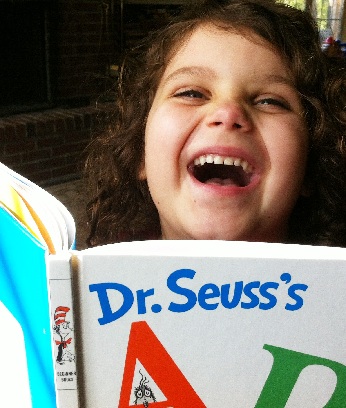
“You’re never too old, too wacky, too wild, to pick up a book and read to a child!”
Seussville~Read Across America
March 1st is World Book Day, and March 2nd is Dr. Seuss’ Birthday Extravaganza which includes the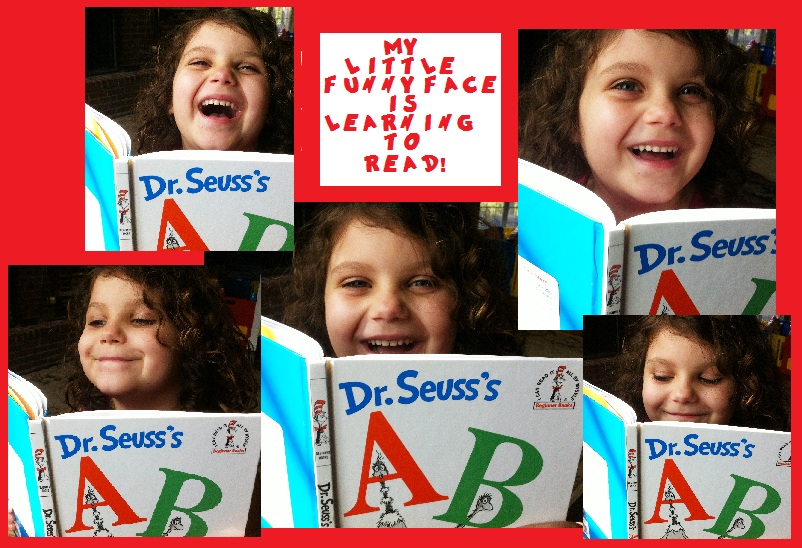 release of the much-anticipated new movie, The Lorax! If you’re a book-obsessed, homeschooling, movie-loving, Seussiac like I am, it’s practically a national holiday! And when you add my excitement over my newest little home-grown reader, it’s definitely time for a Seusserrific Celebration!
In honor of all of this wonderfulness and to help launch my new little reader into the wonderful world of books, I’ve been scouring the web, the bookshelves, and my scattered brain for all the Seussical fun I could find for my little people and yours. Here are a few of my finds!
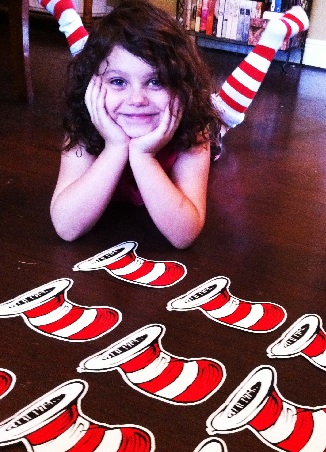 Staples has these awesome Cat in the Hat cutouts intended for use on a bulletin board, but we repurposed them for several games such as BIG LETTER~little letter Match-up and Seusstastic Scavenger Hunt. For BIG LETTER~little letter Match-up I drew capital letters and their counterparts on the backs of the cutouts and laid them out in a 3 x 3 grid. For Seusstastic Scavenger Hunt I wrote clues on the cutouts to help my little people find Dr. Seuss books I’d hidden throughout the house and tucked the clues in each book so that when they found one book and we read it, they’d find the next clue hidden in the pages of the book they’d just found…a two-fer! So fun!
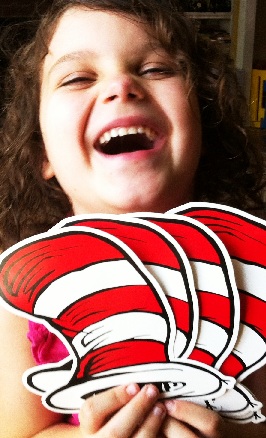
We also made up a Go Fish in the Bowl game matching upper and lower case letters. It’s just your basic Go Fish, but somehow on Cat in the Hat cut-outs it became magical!
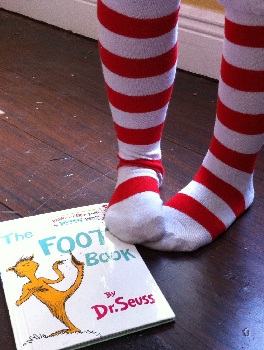 The simple addition of some stripey ‘Seuss Socks’ (Dollar Tree!) was enough to make The Foot Book even more engaging than it already is on its own!
Some leftover pieces of an old game yielded a plastic Green Eggs and Ham to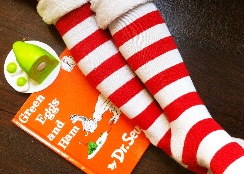 play a Would You~Could You spin on the old Mother May I game. We placed the Green Eggs and Ham game piece at one end of the room and took turns asking questions like ‘Would you, could you let me take three steps forward?’ and giving directions like ‘Could you, would you jump up and down and take one step back?’
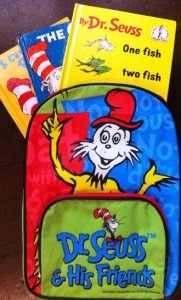
We’re putting together a Seuss Quiet Bag which we’ll be adding to over time, and I’m working on making a Cat in the Hat Calm-Me-Jar for our bag. I’ll post a picture here as soon as it’s done! Right now we’ve got favorite books and our Go Fish in the Bowl cards in this cute, little Seuss backpack I found at a thrift store.

The Cat in the Hat Can Help You with That!
Here it is! Meet the The Cat in the Hat Can Help You with That Calm-Me-Jar!
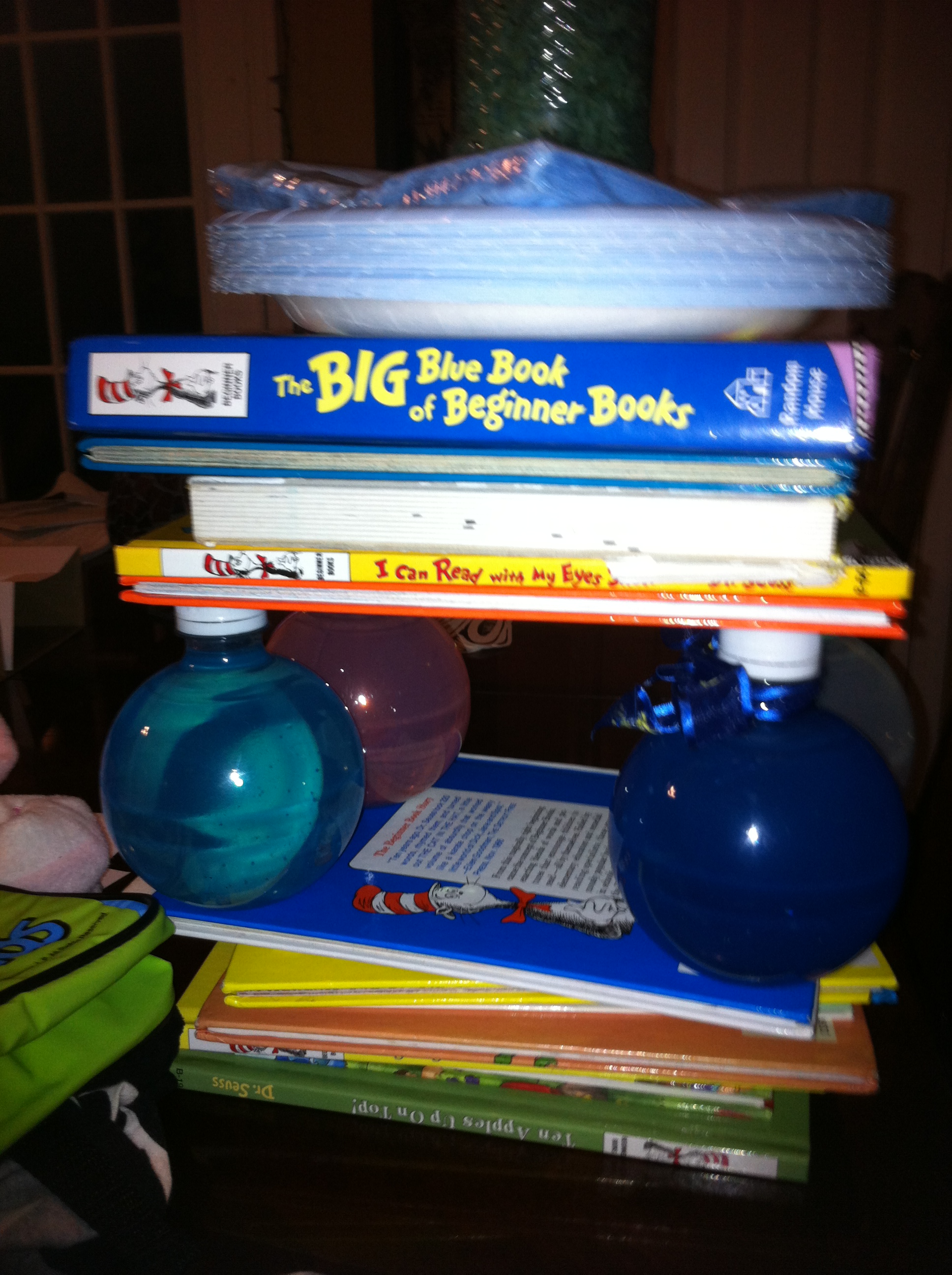
And here is my six year old’s contribution to the Seuss Birthday celebration~Seuss Tower! Watch out Donald, my little funny-face is out to trump you, lol!
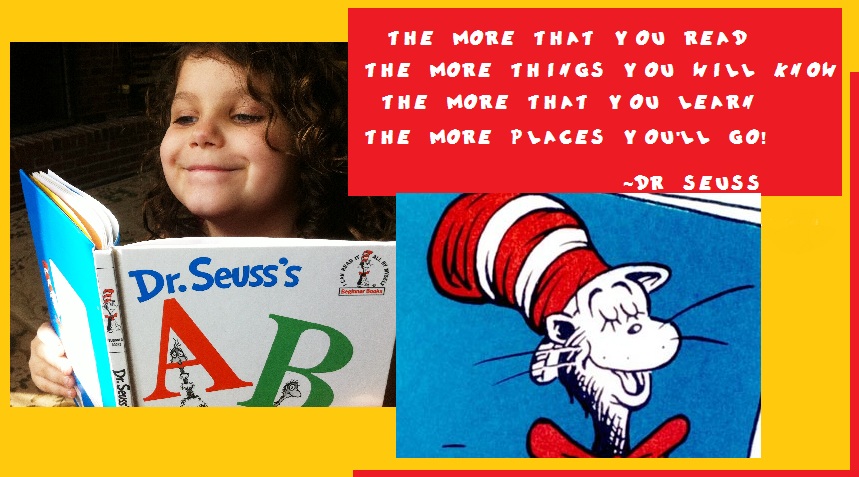
Check out these 7 Tips for Raising Bookworms!
Here are some awesomely Seusstastic links to crafts and games and yummy Seuss treats you and your little ones will love!

Source: zakkalife.blogspot.com via Linda on Pinterest
Make Seusstastic Lorax trees from pencils!

Source: meetthedubiens.com via Linda on Pinterest
Oreos, white and red chocolate, and marshmallows equal Seussalicious Cat in the Hat cookies!

Source: madtownmacs.blogspot.com via Linda on Pinterest
A Seussville craft for little Seusslets to create!

And check out this abSeusslutely ObSeussed site for literally hundreds and hundreds of Seusstastic crafts, books, games, recipies, ideas, and links!
Related posts:
Children who love to read…READ! Engaging children’s hearts in the wonder of reading instead of just training their minds in its mechanics. Raising Bookworms
It’s time for a return to childhood, to simplicity, to running and climbing and laughing in the sunshine, to experiencing happiness instead of being trained for a lifetime of pursuing happiness…it’s time to let children be children again. A Return to Childhood
Think homeschooled children are unsocialized, over-controlled, locked-away-from-the-world misfits? Think again! My Renaissance Girl
A Seussical List of Parenting Tips!
Alphabet Fun~Imagination From A to Z!
Live to Play~Play to Learn~Learn to Live!
Making Money Matters Make Cents
One Slippery Sock & Other Silly Tools for your Parenting Toolbox!
Award-winnning author, L.R.Knost, is the founder and director of the children's rights advocacy and family consulting group, Little Hearts/Gentle Parenting Resources, and Editor-in-Chief of Holistic Parenting Magazine. Books by L.R.Knost include Whispers Through Time: Communication Through the Ages and Stages of Childhood ; Two Thousand Kisses a Day: Gentle Parenting Through the Ages and Stages ; The Gentle Parent: Positive, Practical, Effective Discipline ; and Jesus, the Gentle Parent: Gentle Christian Parenting the first four books in the Little Hearts Handbook gentle parenting series, and children’s picture books Petey’s Listening Ears and the soon-to-be-released Grumpykins series.
The Elves and the Homemaker
You’ve all heard the story of the industrious, magical little elves who went behind the poor, but good-hearted, shoemaker and finished his work for him, saving his shop and rewarding him for his hard work. This is not that story…
 Once upon a time there was a kind, hard-working homemaker named Elvimama. She had five children, Elvin, Elvira, Elvish, Elvis, and Baby Elvie. Elvimama worked hard every day to feed her five children Elftritious foods, teach them their Elfessons, make sure they practiced on their Elviolins, take them to their Elfootball and Elfallet practices while she grabbed an hour at Elfercize (wearing Baby Elvie, of course!), and then rushed back home to put a healthy, home-cooked Elfalicious meal on the table for dinner. Life was busy, but good…except for one thing.
Their Elfhouse was a mess! No matter how hard Elvimama worked, no matter how carefully she organized her day, or how little sleep she got, her Elfhousekeeping ended up looking rather…well, unkept.
She’d start with the bedrooms each morning, straightening and sweeping and organizing, then move on to the kitchen and work her way through the morning dishes and then sweep and mop and take out the trash, before heading to the Elfamily room to polish and vacuum. But she was plagued by a strange phenomenon every single day…as soon as she was finished with one room and had moved on to another, the first room mysteriously returned to it’s former state of disarray! And when she finished the second room and moved on to the third, the second room was also suddenly back to a disheveled mess!
This pattern when on throughout her day, with each bedroom cleaned, then miraculously uncleaned, the kitchen spotless, then instantly a sticky stack of unwashed dishes appearing when she headed for the Elfamily room. And, even there, when she’d polished and vacuumed and straightened, the second she walked out, piles of toys walked right back in!
Day after day, week after week, month after month, year after year, this phenomenon continued, with Elvimama starting every day with a messy house, spending every day cleaning and cleaning and cleaning, only to end every day with a still-messy house!
It was frustrating and exhausting, and sometimes Elvimama would head to the bathroom for a long soak in the tub and a good cry. But, inevitably, little elf-hands would come knocking on the door and little elf-voices would be calling out for Elvimama’s attention. Her long soak always turned into a quick wash, and she’d mop up her tears and emerge with a smile and arms ready to gather her little elf-loves close.
Time passed, and Elvin and Elvira went off to college. Elvish joined the Elf-Corp, and Elvis made the big-time in Nashville. Baby Elvie grew up and opened a little bookstore called The Elf Shelf.
One morning, Elvimama got up and started with the bedrooms, straightening and sweeping and organizing, then moved on to the kitchen and worked her way through the morning dishes and then swept and mopped and took out the trash, before heading to the Elfamily room to polish and vacuum and straighten. When she was finished, she stopped and stared in shocked silence. Everything was…spotless…pristine.
No jumbled piles of clothes had unfolded themselves in the bedrooms. No sticky stack of dishes had reappeared in the kitchen. No toys had marched back into the Elfamily room.
Her house was finally clean, but her heart longed for jelly fingerprints and funny little dirt-smudged elf-faces, muddy footprints and sticky little giggle-grin kisses. Elvimama sighed and headed to the bathroom for a long soak in the tub. Now, no little elf-hands came knocking on the door and no little elf-voices called out for Elvimama’s attention.
And Elvimama had a good cry.
~~~~~~~~~~
A mother’s love is strong enough to hold her children close when they’re young and she longs for rest, and to let them go when they grow up and she longs for the past.
L.R.Knost
Related posts:
Mommies are Mountain Climbers and Sisyphus was a Sissy
The Story of Us~25 Years and Counting!
Award-winnning author, L.R.Knost, is the founder and director of the children's rights advocacy and family consulting group, Little Hearts/Gentle Parenting Resources, and Editor-in-Chief of Holistic Parenting Magazine. Books by L.R.Knost include Whispers Through Time: Communication Through the Ages and Stages of Childhood ; Two Thousand Kisses a Day: Gentle Parenting Through the Ages and Stages ; The Gentle Parent: Positive, Practical, Effective Discipline ; and Jesus, the Gentle Parent: Gentle Christian Parenting the first four books in the Little Hearts Handbook gentle parenting series, and children’s picture books Petey’s Listening Ears and the soon-to-be-released Grumpykins series.
My Renaissance Girl
 There’s another teenager in our house! My Renaissance Girl turned thirteen this week. It’s hard to believe my little preemie who started her days in the NICU, came home at 3 lbs 13 oz on an apnea/heart monitor, has struggled with severe dyslexia, sensory and auditory processing disorders, vestibular issues, attention deficit disorder, and more, is now a poised and confident young lady who is frequently absorbed in classic literature, enthralled with the art of Masters such as Van Gogh and Degas, and who’s musical tastes run from Mozart to The Beatles.
My children are homeschooled and are quite used to interacting in a mutually respectful manner with adults in banks, doctor’s offices, libraries, etc, so it’s always a bit of a culture shock when we run into society’s negative view of adolescents as we did on Renaissance Girl’s birthday. Literally, every time we mentioned that it was her thirteenth birthday as we shopped for gifts and took her for a birthday lunch, the reaction was rolled eyes and either expressions of condolences or warnings to my husband and I. Well, except for the one waiter who leered at her until my hubs caught his eye and shut him down!
What a world we live in, seriously. Is it any wonder that teenagers seem to have anti-social tendencies when, based on chronology alone, they’re either pigeon-holed as miscreants without anyone taking the time to actually talk to them (or, more importantly, listen to them!) or immediately become the object of sexual attention?
My Renaissance Girl
For those of you willing to look beyond the number of years a person has lived on this earth and see the person themselves, let me introduce you to a young lady who has some amazing gifts to offer this world…my Renaissance Girl!
Renaissance Girl has a heart for the elderly, the poor, the hurting, for anyone who is suffering. From her earliest years she would toddle up to an elderly person sitting alone at church or the park and climb up beside them to ‘chat’ or sing them a song or show them a flower she’d picked. Her heart breaks when she hears of children being abused or neglected, and she plans to adopt as many as her future husband will agree to (and with her sweet, strong spirit, I imagine she’ll follow through on that!)
 The paintings of The Masters ignite Renaissance Girl’s imagination. For her birthday we ordered a Van Gogh’s ‘Starry Night’ inspired ice cream cake from our little town’s best kept secret…Donna C, the decorator at our local Dairy Queen!
As part of our interest-led homeschooling, we’ll be working our way through unit studies on Michelangelo, Renoir, Van Gogh, Picasso, and more with materials from here.

Source: artmuralsforkids.blogspot.com via Linda on Pinterest
Renaissance Girl has decorated her room like a small artist’s loft with a drafting desk, a custom mural of a Parisian street scene (by your’s truly!), a romantic little reading nook with twinkle lights, and a stainless steel cable (Ikea!) stretched across the wall for her to hang her art, along with an art wall waiting to be filled.
Renaissance Girl studies with Mozart filling the silence (an SPD and ADD coping technique), and then rocks out to the Beatles on her brother’s Xbox Rock Band. She picks out tunes on the piano, trying to teach herself to play by ear, and is working on teaching herself to play the guitar.
Her beautiful mind sees the world through a unique lens similar to those of historical icons such as Thomas Edison, Leonardo Da Vinci, Benjamin Franklin, and Albert Einstein. While academics have been a huge challenge for her, the artistic and musical gifts she’s been given are incredible, and her gentle, sensitive soul is a rare and precious treasure. Many years of therapy have yielded the ability to read, and she’s like a butterfly newly emerged from her cocoon. Jane Eyre, Little Women, Anne of Green Gables, all have sent her beautiful mind soaring to different times and places, and all have become intimate, lifelong friends with my sweet Renaissance Girl. (From Beautiful Minds)
From her own artistic ability to her fascination with The Masters, her beautiful voice to her eclectic taste in music, and her humorous storytelling to her love of literature, my Renaissance Girl is much, much more than ‘just’ a teenager or ‘just’ a girl or ‘just’ anything. She is an incredible gift to the world, and our family is blessed beyond measure to have her!
Think homeschooled children are unsocialized, over-controlled, locked-away-from-the-world misfits? Think again!
From goofing around in Goofy hats at Downtown Disney to playing Just Dance 3 on the Xbox Kinect, from gales of giggles pushing each other on the tire swing to gathering around to check out the awesome cello mastery of ThePianoGuys, from chowing down on mexican food at Tijuana Flats to burning waffles for breakfast, and from trying on jewelry to decorating cupcakes, these homeschooled girls are as All-American as apple pie!
Check out Renaissance Girl’s favorite YouTube version of ThePianoGuy’s dueling cellos!
Happy 13th Birthday, My Renaissance Girl!
Related posts:
Helping Unique Learners Find Their Genius
200 Ways to Bless your Children with a Happy Childhood
Playground Confessions~Look Who’s Talking!
Into the Looking Glass~Teens and Self-Esteem
Tots to Teens~Communication Through the Ages and Stages
Gentle Parenting~The Teen Years…Tips for Talking to Teens
Award-winnning author, L.R.Knost, is the founder and director of the children's rights advocacy and family consulting group, Little Hearts/Gentle Parenting Resources, and Editor-in-Chief of Holistic Parenting Magazine. Books by L.R.Knost include Whispers Through Time: Communication Through the Ages and Stages of Childhood ; Two Thousand Kisses a Day: Gentle Parenting Through the Ages and Stages ; The Gentle Parent: Positive, Practical, Effective Discipline ; and Jesus, the Gentle Parent: Gentle Christian Parenting the first four books in the Little Hearts Handbook gentle parenting series, and children’s picture books Petey’s Listening Ears and the soon-to-be-released Grumpykins series.
8 Tips for Raising Bookworms
A young girl is curled up in an old, over-stuffed armchair, totally absorbed in the pages of a book.  A television sits nearby, silent and black with jealousy. In a corner, a computer gathers dust in concert with an abandoned gaming system. No one would guess that this girl lost in the world of Regency England crafted by literary great, Jane Austen, couldn’t read at all until fifth grade and fights against the headaches and blurred vision brought on by severe dyslexia. No one would believe that this beautiful twelve year old preteen who has devoured Little Women, Jane Eyre, and is nearly finished with the entire Anne of Green Gables series was still unable to recognize all the letters of the alphabet in the third grade.
So, with all the barriers to reading this young girl faced and all the preconceived notions of the demise of the book and the rise of the electronic age, why does this child choose a book, an ink and paper relic to some, over the hypnotic allure of technology?
Simple…
Children who love to read…READ! It’s just a simple fact of human nature that we are more inclined to do the things that interest and excite us rather than the things we are forced or obligated to do. So how do we engage our children’s hearts in the wonder of reading instead of just training their minds in its mechanics?
 Think of learning to ride a bicycle.
Your dad props you up on a shiny red bicycle, gives you a few pointers and an encouraging smile, then runs alongside you with his hand securely on the back of the bike seat, steadying and supporting you as you fly down the sidewalk with the wind in your hair and a thrilled and slightly terrified grin on your face.
Or.
Your dad sits you down with a diagram of a bicycle and drills you on its parts, making you list them over and over and recite them back to him in alphabetical order.
Which teaching style would result in a bicycle rider rather than just a memorization of bicycle parts? Which scenario would encourage a love of bicycle riding?
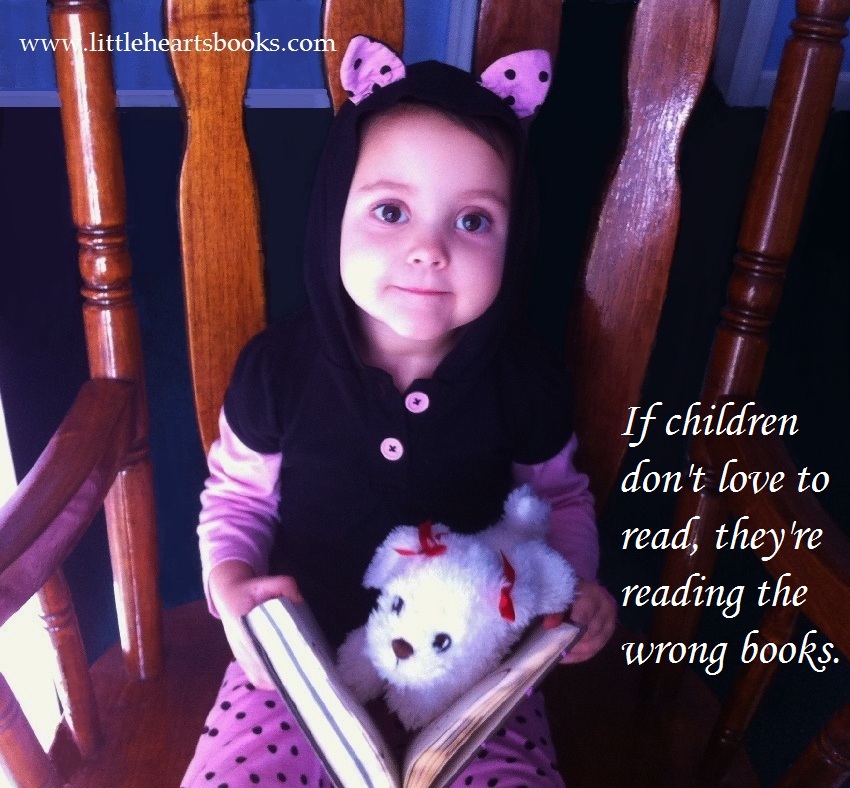 When it comes to reading, do you want your children to become readers or just learn the mechanics of reading? Do you want them to love to read or just know how? If a love of reading is your goal for your children, here are some ideas to get you started:
1.) Let them see you reading! Children learn more by watching what we do than by listening to what we say. Seeing your books laying around the house, trying to get your attention while you’re absorbed in an intense scene, giggling when you ‘sneak’ away to the bathroom with a favorite tome, all of these things will have a huge impact on their perception of reading as a desirable activity.
2.) Read to them from infancy on, and let them in on it! Don’t make reading a one-sided exercise with you doing all the talking. Make reading interactive by letting your little one turn pages (yes, even if they want to go backwards!) and point at the pictures and talk about the binding and maybe even chew on the book a bit (bookworms actually do eat books, after all!)
3.) Play, play, play! Seriously, stop being so serious! Children learn best through play, so grab some sidewalk chalk and head outside to the best classroom ever invented. Make up your own games or check out Pinterest and just have a blast! If your children associate learning to read with mommy playing abc hopscotch with them or daddy hiding abc eggs in the bushes, you’ve turned what could be a battle into a playground!
4.) If a child doesn’t love to read, they’re reading the wrong books! Surround them with books of every kind. Fill your home with paperback thrillers and dime-store novels and comic books (yes, comic books!) and nonfiction books on horses and whales and art and music. Creating an atmosphere ripe with knowledge and adventure at your children’s fingertips will go a long way towards making reading an active part of their lives. (And don’t forget the power of the fort! Creating a cozy nook that invites settling in for a reading adventure is really…well, inviting!)
5.) Oh, the places you’ll go! (A la Dr. Seuss!) Make monthly library ‘dates’ to return books and explore new and exciting genres at no cost to you. While you’re there, check out the library’s calendar of events for author visits and book readings and craft activities and mom’s groups. You’ll be amazed at how much the too often forgotten library system has to offer in most areas!
6.) Indie bookstores are the bomb-diggity, no joke! Most cities have one or more independent bookstores struggling to make it through the downturned economy and the advance of the electronic age. These small stores are little niches of wonder just waiting to be discovered, and by supporting them you will not only help keep a local business afloat, but you will also introduce your children to the warmth and beauty of walls lined with books, shopkeepers who can converse about every title like an old friend, and possibly even some local authors that you never even knew existed!
7.) A lifestyle of reading puts the vast knowledge of the ages into the hands of our children. Exchanging the life-long riches of a love of reading for the temporary value of facts gleaned from required reading lists is a paltry deal, indeed. Encourage reading, yes, but let their hearts, their interests, their imaginations choose their reading material. Whatever momentary facts they need for the next test or quiz can be found just as easily on Google. A passion for reading can only be found in the heart of the child.
8.) Parenting matters! Parenting choices strongly impact a child’s level of trust and security. A love of learning grows when it isn’t stifled by fear or stress. Parents fostering a healthy attachment are also fostering a love of learning in their children which translates directly into a love of reading!
 I love that my older children have already met and fallen in love with my old friends such as Sense & Sensibility, The Great Gatsby, Moby Dick, Of Mice and Men, The Red Badge of Courage, War and Peace, The Hound of the Baskervilles, and so many, many more. And I love that my younger children still have new friends waiting to be discovered between the covers of wonderful, beautiful, ageless books. Happy reading!
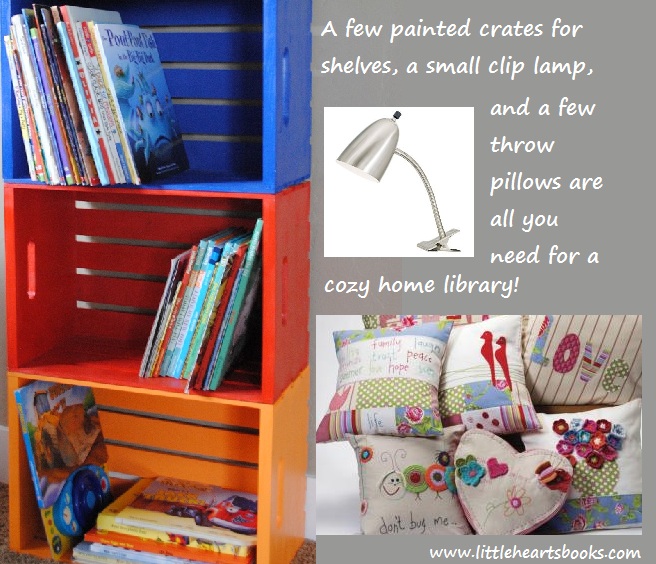
Related posts:
25 Must-Have Books for Baby Bookworms
25 Must-Have Books for Toddler Bookworms
25 Must-Have Books for Preschool Bookworms
There is such a rush these days to get children sleeping through the night, weaned off the breast, eating solid foods, potty trained, reading independently, and on and on, that we seem to have lost the ability to simply enjoy life as it happens and let our children do the same. A Return to Childhood
Successful reading means far more than possessing the ability to read. Engaging the hearts of students moves reading success beyond a life skill and turns it into a life style. And graphic novels are too powerful of a tool in our arsenal to be disregarded because of pride or prejudice. Raising Super Readers~The MARVELous Power of Comic Books!
In the world of a child wonders are as simple as sticks and sheets, leaves and books, boxes and giggles, and the promise in a rainy day. The Seven Wonders of the World of Childhood
Think homeschooled children are unsocialized, over-controlled, locked-away-from-the-world misfits? Think again! My Renaissance Girl
Parenting choices strongly impact the level and type of attachment a child develops and, by extension, the development of a love of learning. A love of learning grows when it isn’t stifled by fear or stress or regimented by over-structuring or a focus on achievement or competition. Parents fostering a healthy attachment are thus also fostering a life-long love of learning in their children. Love, Play, Learn!
On a Winnie the Pooh style ‘long explore’ my little Pooh Bear discovered the world in The Many Adventures of My Little Pooh Bear
If you give a toddler a book
It’s never too early!
He’ll climb into your lap
While he’s in your lap
He might lay his head on your chest
When he lays his head on your chest
He’ll hear your heartbeat
When he hears your heartbeat
He’ll probably ask if you can hear… If You Give A Toddler A Book…
My SPD/SLD/ADD (Sensory Processing Disorder, Specific Learning Disability-Dyslexia, Visual and Auditory Processing Disorders, Attention Deficit Disorder, etc) sweetie, aka Renaissance Girl, has raised the bar on my homeschooling skills more times than I can count. Her beautiful mind sees the world through a unique lens similar to those of historical icons such as Thomas Edison, Leonardo Da Vinci, Benjamin Franklin, and Albert Einstein…Beautiful Minds
Award-winnning author, L.R.Knost, is the founder and director of the children's rights advocacy and family consulting group, Little Hearts/Gentle Parenting Resources, and Editor-in-Chief of Holistic Parenting Magazine. Books by L.R.Knost include Whispers Through Time: Communication Through the Ages and Stages of Childhood ; Two Thousand Kisses a Day: Gentle Parenting Through the Ages and Stages ; The Gentle Parent: Positive, Practical, Effective Discipline ; and Jesus, the Gentle Parent: Gentle Christian Parenting the first four books in the Little Hearts Handbook gentle parenting series, and children’s picture books Petey’s Listening Ears and the soon-to-be-released Grumpykins series.
Alphabet Fun~Imagination from A to Z!
Logic will get you from A to B. Imagination will take you everywhere.
~Albert Einstein
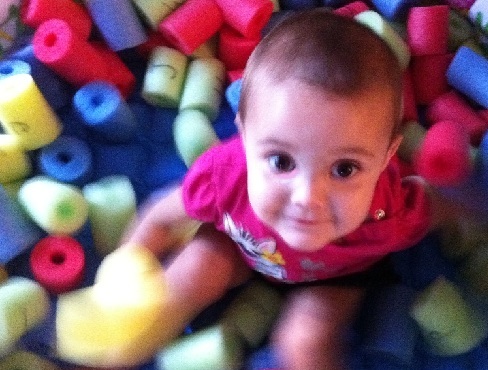 Imagination is the language of childhood, so speaking their language when introducing our language only makes sense. Let’s ditch the flashcards, turn off the educational dvd’s, and throw out the worksheets because learning is child’s play!
In Fun with Funoodles we cut up a bunch of foam pool noodles and wrote letters on them for all sorts of funoodley fun!
Alphabet Fishing is a fun game that can be used to introduce letters, match upper and lower cases, work on beginning sounds, build words, and more!
Fill a bathtub or a bucket with a few inches of water (Supervise, supervise, supervise! Never leave a young child alone with even an inch of standing water, not even for a minute!), tie a string to a small plastic rod, and attach a piece of metal to the other end of the string, and then you can play games like:
Catch the Letters
For letter introduction, choose the letters in your child’s name or 3 to 5 random letters and toss them in the tub, then let them ‘catch’ whatever their pole lands on and name it for them. An alternative is to name a letter for them to catch and play ‘hot-n-cold’ until they get it, or show them a letter on a card and have them catch the matching letter.
Catch and Match
For upper and lowercase matching, put a few capital or lowercase letters in the tub and line up their matches beside the tub and let them ‘catch and match’ them. (We call the uppercase letters the ‘Mommy’ letters and the lowercase letters the ‘Baby’ letters, and when the Baby letters fall in the water, my little ones love to come to the rescue and reunite them with their Mommy letters!)
Sounders
Find pictures of things with the first letters you are working on (like a picture of a dog for D and a cat for C, etc) and either cut them out yourself or let your little one do it if they like to cut (it doesn’t have to be perfect and it’s great practice!), then put the letters under the picture except for the first letters (or vowels if they’re beyond beginning sounds) and toss the missing letters in the tub. Help your child make the sound that completes the word and identify which letter makes that sound, them let them catch it and put it in place.
 For sunshiny days, head outside with some sidewalk chalk and a few other odds-n-ends because a ton of learning fun can be had in the sun!
Alpha-Toss
Write out a few of the letters you’re working on or just the letters in your little one’s name. Get a small rock or beanbag and let your child have fun throwing it onto the letters you call out or get a toy truck and let your child try to roll it just hard enough to get it to come to a stop on the right letter.
 Alphabet Hop-Scotch
Have your little one hop, skip, and jump their way through a maze of alphabet letters drawn in sidewalk chalk, calling out each letter as they land on it. Or write the letters you’re working on mixed in with other letters or just random shapes and have them jump over and around the wrong boxes to get to the right ones.
Wordfind
Draw a big wordfind box on the sidewalk with words ‘hidden in plain sight’ (i.e. all of the words hidden horizontally). For earlier learners use no more than a four letter by four letter box, and for slightly older learners use a six by six letter box. Write the words they’re looking for right beneath the box for easy reference.
 Scavenger Hunter
Wooden blocks with just one letter on them are ideal, but magnetic or foam letters will work, too. Take the letters of your child’s name or another small group of letters and hide them in your yard (or inside your house if the weather is bad). Play ‘hot-n-cold’ to help your child find the letters and have them call out the letter names as they find them.
Build-A-Word
Write a word on the sidewalk and hide the letters to the word around the yard. As your child finds each letter, they run back and put the letter on top of the chalk letter until they’ve built the word.
I-Spy-Alphabet
Hide letters around the yard and give your child clues in I-Spy form (i.e. “I spy with my little eye a letter hidden under something blue!”)
Circle of Words
Use sidewalk chalk to write action words like ‘spin’ and ‘sing’ and ‘clap’ in a big circle, then either read them to your child or help them sound them out, depending on their reading level. Grab a camera and click away as they spin and sing and clap their way to reading! 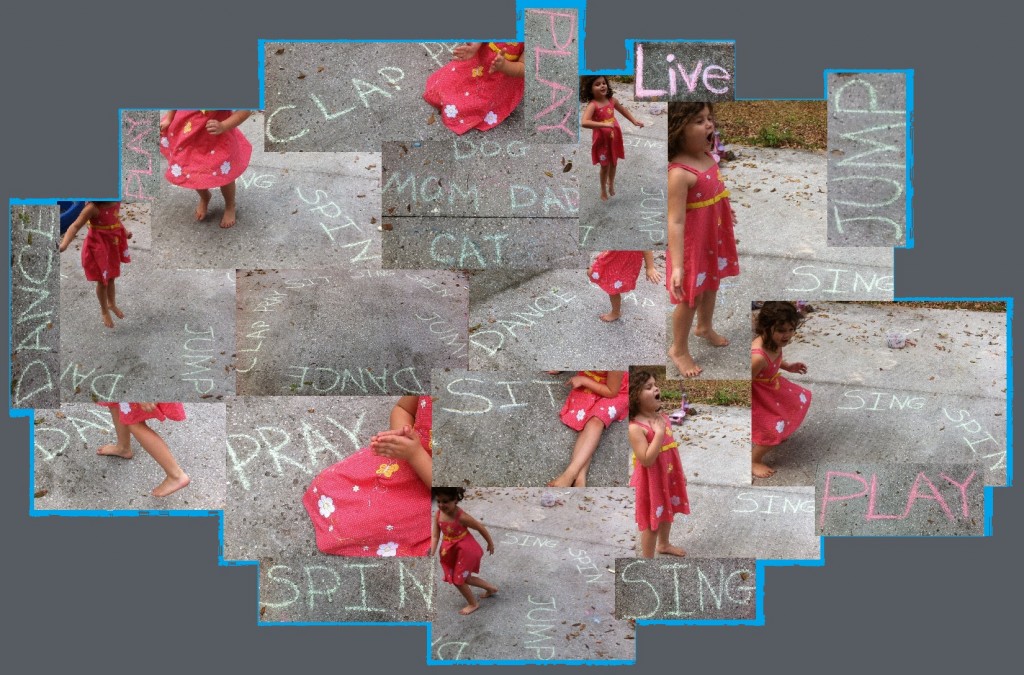
For days when going outdoors just isn’t an option, here are a few ideas to keep the learning fun and fresh:
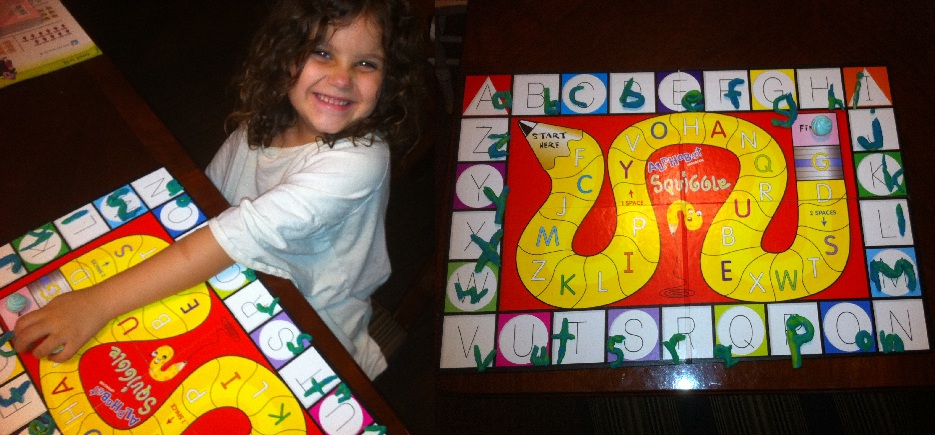 ABC Playdoh Matching
I found an old board game with no game pieces at a yard sale for 10 cents. It had the letters of the alphabet in all capitals, though, so I knew it would make a good DIY game of some sort. We used it as a fun review of the ‘mommy’ letters and the ‘baby’ letters by grabbing some playdoh and making it a matching game! The tactile use of playdoh to make the baby letters is a wonderful reinforcement of their shape, helping little learners to remember them far better than simply looking at them or writing them.
And when your little learner is ready to read, here are some word family activities that they may enjoy:
Fashion Friends Word Family
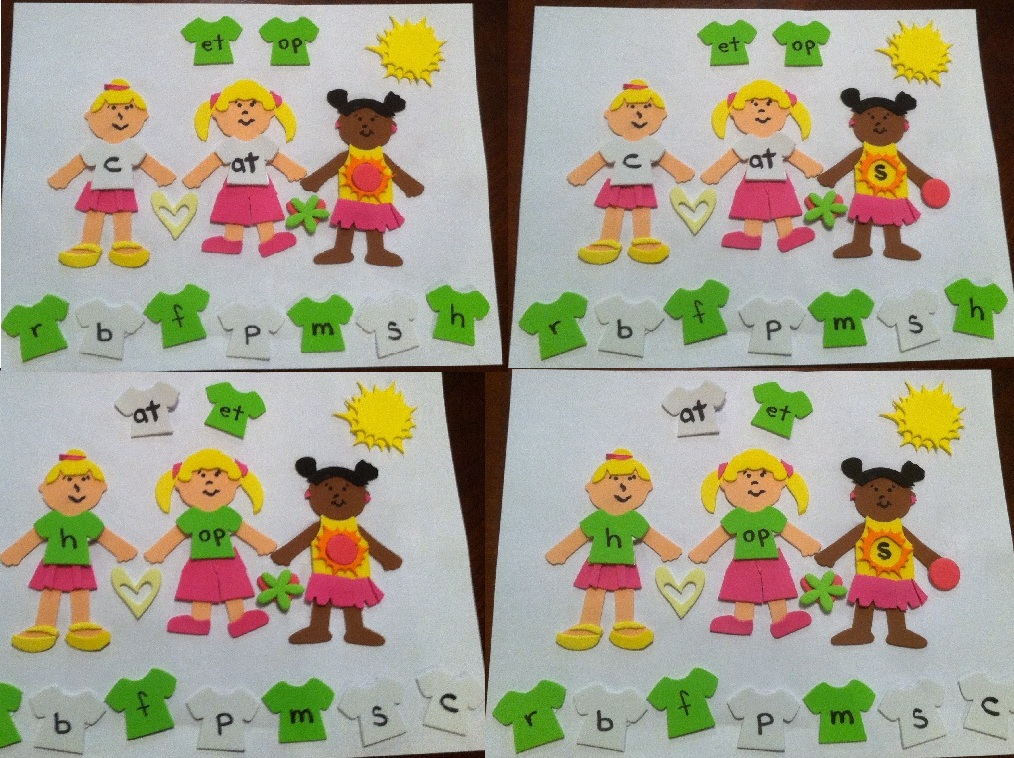 These little bff’s are mini fashionistas who love to coordinate their clothes so they make a statement everywhere they go! Little Miss Middle chooses which word family shirt to wear, then Little Miss Left chooses a shirt with a letter that makes a word, and, when there are more than one of anything, Little Miss Right reveals her ‘S’uperpower…she gets ‘S’o ‘S’uper excited she becomes ‘S’upergirl and makes the word plural with her ‘S’uper ‘S’! (These are just foam sticker people from Michael’s I cut up and made into the Fashion Friends. Check back next week for the Superhero Friends C, S, T, W, P, and H as they conquer the alphabet universe and use their superpowers to create new sounds that are out of this world!)
Note: As long as your child is having fun, meaningful learning is taking place. But when frustration begins to surface (whining, refusing to cooperate, complaining, etc.) take that as your cue to take a break or make some silly new game rules or let your child take the lead and make up some new games. You never know what you might learn!
Related posts:
25 Must-Have Books for Baby Bookworms
25 Must-Have Books for Toddler Bookworms
Making Money Matters Make Cents
Award-winnning author, L.R.Knost, is the founder and director of the children's rights advocacy and family consulting group, Little Hearts/Gentle Parenting Resources, and Editor-in-Chief of Holistic Parenting Magazine. Books by L.R.Knost include Whispers Through Time: Communication Through the Ages and Stages of Childhood ; Two Thousand Kisses a Day: Gentle Parenting Through the Ages and Stages ; The Gentle Parent: Positive, Practical, Effective Discipline ; and Jesus, the Gentle Parent: Gentle Christian Parenting the first four books in the Little Hearts Handbook gentle parenting series, and children’s picture books Petey’s Listening Ears and the soon-to-be-released Grumpykins series.
Beautiful Minds
I’m thankful for unique learners!
 My SPD/SLD/ADD (Sensory Processing Disorder, Specific Learning Disability-Dyslexia, Visual and Auditory Processing Disorders, Attention Deficit Disorder, etc) sweetie, aka Renaissance Girl, has raised the bar on my homeschooling skills more times than I can count. Her beautiful mind sees the world through a unique lens similar to those of historical icons such as Thomas Edison, Leonardo Da Vinci, Benjamin Franklin, and Albert Einstein. While academics have been a huge challenge for
 her, the artistic and musical gifts she’s been given are incredible, and her gentle, sensitive soul is a rare and precious treasure. Many years of therapy have yielded the ability to read, and she’s like a butterfly newly emerged from her cocoon. Jane Eyre, Little Women, Anne of Green Gables, all have sent her beautiful mind soaring to different times and places, and all have become intimate, lifelong friends with my sweet girl. I am so blessed to be entrusted with such a unique child to guide and grow and love!
One of my girl’s drawings!

Einstein recognized his unique lens and often commented about it and about how organized education systems didn’t accommodate individuality and creativity. Here is a look into this ‘unique learner’s’ mind in his own words:
Education is what remains after one has forgotten what one has learned in school. Albert Einstein
A man should look for what is, and not for what he thinks should be.
Albert Einstein
It is a miracle that curiosity survives formal education.
Albert Einstein
A person who never made a mistake never tried anything new.
Albert Einstein
A question that sometimes drives me hazy: am I or are the others crazy?
Albert Einstein
The only thing that interferes with my learning is my education.
Albert Einstein
All that is valuable in human society depends upon the opportunity for development accorded the individual.
Albert Einstein
Any intelligent fool can make things bigger and more complex… It takes a touch of genius – and a lot of courage to move in the opposite direction.
Albert Einstein

Any man who can drive safely while kissing a pretty girl is simply not giving the kiss the attention it deserves. (One of my favorite Einstein quotes, lol!)
Albert Einstein
Any man who reads too much and uses his own brain too little falls into lazy habits of thinking.
Albert Einstein
Do not worry about your difficulties in Mathematics. I can assure you mine are still greater.
Albert Einstein
Everything should be as simple as it is, but not simpler.
Albert Einstein
Everything that can be counted does not necessarily count; everything that counts cannot necessarily be counted.
Albert Einstein
Few are those who see with their own eyes and feel with their own hearts.
Albert Einstein
God always takes the simplest way.
Albert Einstein
He who can no longer pause to wonder and stand rapt in awe, is as good as dead; his eyes are closed.
Albert Einstein
He who joyfully marches to music in rank and file has already earned my contempt. He has been given a large brain by mistake, since for him the spinal cord would suffice.
Albert Einstein
I am enough of an artist to draw freely upon my imagination.
Albert Einstein
I have no special talent. I am only passionately curious.
Albert Einstein
I think and think for months and years. Ninety-nine times, the conclusion is false. The hundredth time I am right.
Albert Einstein
I used to go away for weeks in a state of confusion.
Albert Einstein
I want to know all Gods thoughts; all the rest are just details.
Albert Einstein
If people are good only because they fear punishment, and hope for reward, then we are a sorry lot indeed.
Albert Einstein
If we knew what it was we were doing, it would not be called research, would it?
Albert Einstein
If you are out to describe the truth, leave elegance to the tailor.
Albert Einstein
If you can’t explain it simply, you don’t understand it well enough.
Albert Einstein
Imagination is everything. It is the preview of life’s coming attractions.
Albert Einstein
Imagination is more important than knowledge.
Albert Einstein
In matters of truth and justice, there is no difference between large and small problems, for issues concerning the treatment of people are all the same.
Albert Einstein
Information is not knowledge.
Albert Einstein
Intellectuals solve problems, geniuses prevent them.
Albert Einstein
It is the supreme art of the teacher to awaken joy in creative expression and knowledge.
Albert Einstein

It’s not that I’m so smart, it’s just that I stay with problems longer.
Albert Einstein
Once we accept our limits, we go beyond them.
Albert Einstein
Only a life lived for others is a life worthwhile.
Albert Einstein
Only two things are infinite, the universe and human stupidity, and I’m not sure about the former.
Albert Einstein
Perfection of means and confusion of ends seem to characterize our age.
Albert Einstein
Pure mathematics is, in its way, the poetry of logical ideas.
Albert Einstein
Science without religion is lame, religion without science is blind.
Albert Einstein
Strive not to be a success, but rather to be of value.
Albert Einstein
The gift of fantasy has meant more to me than my talent for absorbing positive knowledge.
Albert Einstein
The high destiny of the individual is to serve rather than to rule.
Albert Einstein
The important thing is not to stop questioning. Curiosity has its own reason for existing.
Albert Einstein
The most beautiful thing we can experience is the mysterious. It is the source of all true art and science.
Albert Einstein
The only real valuable thing is intuition.
Albert Einstein
The only source of knowledge is experience.
Albert Einstein
The process of scientific discovery is, in effect, a continual flight from wonder.
Albert Einstein

The pursuit of truth and beauty is a sphere of activity in which we are permitted to remain children all our lives.
Albert Einstein
The true sign of intelligence is not knowledge but imagination.
Albert Einstein
The value of a man should be seen in what he gives and not in what he is able to receive.
Albert Einstein
The whole of science is nothing more than a refinement of everyday thinking.
Albert Einstein
The world is a dangerous place to live; not because of the people who are evil, but because of the people who don’t do anything about it.
Albert Einstein
There are two ways to live: you can live as if nothing is a miracle; you can live as if everything is a miracle.
Albert Einstein
There is no logical way to the discovery of these elemental laws. There is only the way of intuition, which is helped by a feeling for the order lying behind the appearance.
Albert Einstein
To raise new questions, new possibilities, to regard old problems from a new angle, requires creative imagination and marks real advance in science.
Albert Einstein
Try not to become a man of success, but rather try to become a man of value.
Albert Einstein
We cannot despair of humanity, since we ourselves are human beings.
Albert Einstein
We cannot solve our problems with the same thinking we used when we created them.
Albert Einstein
We shall require a substantially new manner of thinking if mankind is to survive.
Albert Einstein
We should take care not to make the intellect our god; it has, of course, powerful muscles, but no personality.
Albert Einstein
Weakness of attitude becomes weakness of character.
Albert Einstein
When I examine myself and my methods of thought, I come to the conclusion that the gift of fantasy has meant more to me than any talent for abstract, positive thinking.
Albert Einstein
When the solution is simple, God is answering.
Albert Einstein
Joy in looking and comprehending is nature’s most beautiful gift.
Albert Einstein
Learn from yesterday, live for today, hope for tomorrow. The important thing is not to stop questioning.
Albert Einstein
Logic will get you from A to B. Imagination will take you everywhere.
Albert Einstein
Look deep into nature, and then you will understand everything better.
Albert Einstein
Love is a better teacher than duty.
Albert Einstein
Most people say that is it is the intellect which makes a great scientist. They are wrong: it is character.
Albert Einstein
My religion consists of a humble admiration of the illimitable superior spirit who reveals himself in the slight details we are able to perceive with our frail and feeble mind.
Albert Einstein
Never lose a holy curiosity.
Albert Einstein
Award-winnning author, L.R.Knost, is the founder and director of the children's rights advocacy and family consulting group, Little Hearts/Gentle Parenting Resources, and Editor-in-Chief of Holistic Parenting Magazine. Books by L.R.Knost include Whispers Through Time: Communication Through the Ages and Stages of Childhood ; Two Thousand Kisses a Day: Gentle Parenting Through the Ages and Stages ; The Gentle Parent: Positive, Practical, Effective Discipline ; and Jesus, the Gentle Parent: Gentle Christian Parenting the first four books in the Little Hearts Handbook gentle parenting series, and children’s picture books Petey’s Listening Ears and the soon-to-be-released Grumpykins series.
College for Struggling Learners
by Lee Binz
The HomeScholar
 Learning to Compensate
Dealing with learning challenges is difficult, but in high school, it can become seriously concerning. You don’t have to be afraid! With the great student to teacher ratio of homeschooling, and the love for your child, you have what it takes!
Debbie was at her lowest point when she realized her 12 year old son, Dan, could not read or write in his Sunday school classes. She had to carefully shield him from the judgment of others. Her homeschool friends were very understanding, but she worked hard to keep him away from situations where he would have to read aloud. She was distraught. Again and again they changed curriculum, hoping each time that a new curriculum would change everything. It seemed like nothing would ever work. He struggled with learning all the way through high school. She never had him officially tested, because she didn’t want him to be labeled as an adult. Dan has achieved wonderful things since graduating homeschool!
When Dan turned 18, he started working at Starbucks. An excellent worker, he received nothing but positive feedback which motivated him to continue his education. He decided to attend college. He didn’t score well on the SAT, so they did not report his scores to colleges. He entered college “through the back door” his mother said, by attending community college first. His excellent work ethic and love of learning helped him thrive where others felt adrift. Dan transferred from community college to the university with a 3.89 grade point average. There were 300 applicants to the business school this year, and Dan was one of only 100 admitted. Debbie says “He finally realizes he can do it!”
 Debbie has some great advice for parents. Don’t push them before they are ready. She was glad she kept him home, so that he could avoid the negative feedback from a public school setting. She read aloud to Dan constantly – even his high school textbooks, when necessary. She used verbal assessments in all his classes, and didn’t introduce essay writing until much later.
She recommends books by Dr. Raymond Moore, including Better Late Than Early: A New Approach to Your Child’s Education and Grace Llewellyn, The Teenage Liberation Handbook: How to Quit School and Get a Real Life and Education and Cynthia Tobias, The Way They Learn. She says, “You feel like you’re failing – like you didn’t do something right.” Don’t be deterred, though. It takes a lot of one-on-one time, but that’s the benefit of homeschooling. Read to them their textbooks, and the classics. Even in college they can be allowed help with reading.
 In her lowest moments, Debbie would remember her grandfather. He also could not read. His wife would read blueprints to him each night so he would be prepared for work the next day. Still, he grandfather was a successful businessman. He was able to compensate. Her son Dan is able to compensate now.
Her biggest surprise was realizing that Dan wanted a college degree. She had never thought he would go to college, and only vaguely considered a technical school. But when he worked at Starbucks, he identified his gift in business. So her additional advice is the same as mine. She says, “Even if you think they won’t go to college, they may – so always be prepared!”
Dan is so thankful he was homeschooled. He has said he would never put his own children in public school. He knows that if he had been in public school, he wouldn’t be where he is today. Nurturing is critical, and homeschooling can provide that best. Debbie says, “I remember the hopelessness. They CAN succeed and excel – just give them the tools.”
Learning to Teach
 JoAnn homeschooled her two daughters, feeling extremely unsure of her abilities – until her girls were officially diagnosed with learning disabilities. Once she had the diagnosis, she realized that homeschooling was the best option. She didn’t want her girls ostracized and placed in a “special” group that would have a negative effect on their socialization skills. Even her mother became increasingly supportive of homeschooling after the diagnosis was made.
Her two girls could not read until half-way through 5th grade. They struggled in reading, writing, and spelling. Joann took her children to The Slingerland Institute. She recommends two pamphlets that really helped her cope. One is Why Wait for a Criterion of Failure. The other is An Adaptation of the Orton-Gillingham Approach for Classroom Teaching of Reading, both by Beth Slingerland.
JoAnn’s advice is “Never despair! The timing of brain growth is on your CHILD’S timetable, not yours. Accept it, because you certainly can’t change it!” She wishes she would have dropped more academic subjects when they were in elementary school. Still, she is so glad she homeschooled. “Homeschooling is better for dyslexic kids for the positive encouragement and socialization.”
 She taught with multi-sensory input and multi-sensory output. In every subject she worked to provide lessons with audio, visual, AND tactile input. She would supplement courses with drama, hands on projects, and verbal assessments all the way through school. Her daughters were especially helped by the use of color. Her daughter still color codes her college lecture notes to improve her retention.
JoAnn’s older daughter went directly into the University and majored in biology with a minor in chemistry. She has recently graduated with an advanced degree as a Veterinarian Technician. Her younger daughter also went directly into the University. She will graduate with a degree in interior design, and has already done some design work for Bill Gates as a college intern. Both girls were very successful in college.
Learning to Cope
Jill is hesitant about labeling her daughter in any way, but knew she faced some unique challenges even though she wasn’t formally diagnosed. Her daughter recently became a National Merit Scholarship Semi-Finalist. Here is what Jill says about her daughter’s struggles: “She worked hard and I’m very proud of her. She is the daughter that would fit into the statement ‘I could never homeschool my child because….’ She is very active, intense, dramatic and a joy to be around. I am convinced that if she were in the public school we would have been ‘encouraged’ to put her on medications (the standard line around here, when she is getting jumpy is to ‘run up to the mailbox and get the mail’ which is a mile round trip). She has forced me to think outside of the box and, well, it is an adventure I’m sorry to see come to a close.”
 Like the other mothers, Jill was able to find a way to harness strengths and weaknesses, and teach her child to compensate for difficulties. With a parent’s close attention, unique coping mechanisms can develop. A homeschooling parent can see small successes, and learn to shape and mold new ways of coping with each challenge.
Joelle is right in the thick of things, with her young child. I asked her for some advice for others, and she emphasizes that coping comes from faith. This is Joelle’s experienced advice.
“A learning ‘disability’ (a word I hesitate to use for anyone who doesn’t have a severe condition) isn’t something you can just make go away if you have a clinic and a handful of web links. A learning challenge is best addressed with being sensitive to learning style and interests, which, as you know, vary from child to child.
A learning challenge is also a mindset, a lifestyle, and sore knees from prayer. A learning challenge means you’ll come face to face with your pessimism and lack of faith through tears of mourning for the child you don’t have. But lest anyone abandon hope, a learning challenge also means seeing God answer those tears by turning them to tears of what is, hands down, absolutely the most incredible joy when you see the triumphs. You will see those victories sooner or later on Earth or in Heaven.
A learning challenge leads to personal growth in the siblings of the challenged child. A learning challenge is a worldview, a lens, a perspective. It’s the fierce mother-bear love you have when you whisper to your child, ‘Don’t listen to the naysayers. I love you no matter what, and I’m still your teacher.’ I can’t put this in a box. I can offer a short list, but there’s only one resource on here that I can guarantee hands down will help everyone. The rest can be labeled ‘of interest.’
1) The Bible. Children are people – in fact, they are the most human of people. There are lots of passages on how we are to deal with our fellow humans. This is the only resource on this list that I can guarantee *will* help.
2) Last Child in the Woods: Saving Our Children From Nature-Deficit Disorder by Richard Louv – read this concurrently with #3
3) Smart Moves: Why Learning Is Not All in Your Head by Carla Hannaford – which will probably lead to curiosity about #4
4) Brain Gym or similar therapies offered by #5 and #6
5) The National Association for Child Development ( )
6) The Developmental Movement Center, Seattle (206) 525-8038″
Learning to Grow
Jay Smith of Linfield College says this, “The advice that I’d give to your students, is to simply be proactive in their college search process. The students shouldn’t be afraid to ask colleges if they offer support for students with learning disabilities, and what that support entails. We have high expectations of our students, but we also understand that we all learn in different ways.”
 Some colleges have an extremely supportive environment for children with learning disabilities. Redeemer Pacific College is a small Catholic college in Langley, BC, affiliated with Canada’s premier Christian liberal arts university, Trinity Western University. Admissions Coordinator Jennifer Friesen says, “All RPC students are able to use the services for students with disabilities offered through TWU, including access to the Learning Resource Centre and starting off their university career at TWU’s Freshman Academy.” The Learning Resource Centre offers services such as note taking, accommodated examinations and providing material in alternate formats.
Freshman Academy is a program for students who have not met the requirements for admission into university due to a low grade point average or missing academic courses. Friesen says, “Freshman Academy allows students to go through their classes in a small cohort with the support of their professors, a faculty Learning Coach, and their classmates. Once students have completed Freshman Academy they are able to directly enter their second year of university at Redeemer Pacific and Trinity Western.”
When I go to college fairs, I notice how many colleges truly specialize in students with learning struggles. They WANT your students, and they are ready, willing, and able to teach them.
Learning to Succeed
 You can request accommodation for the SAT and ACT if necessary, which does require a doctor’s diagnosis. If you don’t want accommodation for the college admission tests, a diagnosis may not be necessary. You may feel comfortable with your homeschooling methods, and don’t need additional help or direction. Perhaps a specialist will not impact what you’re doing, and a diagnosis may not change anything or be worth your while. On the other hand, if you are completely baffled about how to teach your student in a way that makes sense, and the input of a specialist will help you and change what you are doing, then evaluation may be useful.
If you think a diagnosis will help YOU, then I think it will help your child. In that situation, testing would be worthwhile, even if it’s inconvenient. If testing will not help you, then it may not be necessary.
Keep in mind your long-terms goals. You want your child to grow up and have their own home. You want them to succeed and thrive in anything they choose. There are colleges that specialize in learning disabilities. There IS a great college out there for him, and they will understand and accept any learning issues without hesitation. Search and you will find just the right college.
Lee Binz, The HomeScholar, specializes in helping parents homeschool high school. Get Lee’s 5-part mini-course, “The 5 Biggest Mistakes Parents Make Homeschooling High School.” You can find her at http://www.TheHomeScholar.com. Sign up for our newsletter, The HomeScholar Record: http://www.thehomescholar.com/homeschool-newsletter.php
Award-winnning author, L.R.Knost, is the founder and director of the children's rights advocacy and family consulting group, Little Hearts/Gentle Parenting Resources, and Editor-in-Chief of Holistic Parenting Magazine. Books by L.R.Knost include Whispers Through Time: Communication Through the Ages and Stages of Childhood ; Two Thousand Kisses a Day: Gentle Parenting Through the Ages and Stages ; The Gentle Parent: Positive, Practical, Effective Discipline ; and Jesus, the Gentle Parent: Gentle Christian Parenting the first four books in the Little Hearts Handbook gentle parenting series, and children’s picture books Petey’s Listening Ears and the soon-to-be-released Grumpykins series.
A September to Remember~Unschooling and Unparenting: What’s In a Label
Jen from The Path Less Taken is our next ~September to Remember~ guest!

A few years ago, there was a piece on one of those nightly new programs (20/20, Dateline, or something similar) entitled, “The Dark Side of Homeschooling.” Against my better judgment, I watched it. The story was about a family that claimed to homeschool – because they wanted to keep the authorities away from their house – while they abused and neglected their children. The kids were living in squalor, existing amidst rotting food and feces. It was a horrific, heartbreaking story.
Now, a logical, thinking person would watch something like this and know that despite its gratuitous title, it is not about homeschooling. It has nothing to do with homeschooling, and everything to do with abuse and neglect, things that sadly can (and do) take place among ALL educational paths, ALL different socioeconomic and religious backgrounds. It’s not about homeschooling. The problem arises from the fact that not everyone is a logical, thinking person. There are people who watch things like this, people who may already have a bias or a poor understanding of homeschooling, and unfairly use it as further fuel… justification to continue to mistrust, misunderstand, or hold animosity towards alternative means of education.
This is why I’m never really thrilled by the idea of homeschooling or unschooling being in the media, and why I think it’s so important that we’re mindful of our wording when we talk about them. Words DO matter, especially when a poorly chosen word gives the wrong impression.
Earlier this week, I read a blog post about homeschooling “extremes” that used words that I just couldn’t reconcile in my mind with unschooling. I have since read it over and over, and I believe the author’s intentions were good … but that she ended up missing the mark.
The first thing that caught my attention was the phrase, “hands off.” If you look at a school-at-home style of homeschooling, one in which the mother assigns work, gives tests, and prescribes a set of a “must-do’s” as “hands on”, then I suppose the opposite of that would be hands off. Unschoolers don’t assign work, they don’t give tests, they don’t prescribe a set of “must-do’s” They do not direct their children’s learning at all. The problem with the description of “hands off” though, is that unschoolers are quite the opposite of hands-off! Unschooling parents are there on the floor playing with their kids. They’re in the backyard looking at worms and mud puddles and butterflies. They’re in the kitchen, making cookies. They’re in the library, helping to find books on photosynthesis or engineering or stingrays or whatever the newest passion may be. They’re in the car, driving to scouts or baseball or gymnastics. They’re answering questions, providing supplies, and playing games. They’re fetching scissors, they’re holding tape measures steady, and they’re making life-size chalk drawings in the driveway.
They’re present. They’re involved. They’re hands-on. Regardless of the original intention of the words, hearing a phrase like “hands off” doesn’t help anyone understand unschooling.
But what has really stayed with me – and quite honestly, confused me – was her assertion that “unparenting” was a common term used within unschooling circles. And by all means, my unschooling circle is not very large. I went to my first unschooling conference three years ago, and began reaching out on the internet even more recently. But I’ve talked to hundreds of unschoolers, and not once have I ever heard anyone claim to be an “unparent.” In fact the only time I’ve heard the term referred to by an unschooler has been in the context of:
Unschoolers do NOT unparent.
By its very nature, the word itself is a negative word. The prefix “UN-” means “NOT.” And the word “parent” (per my standby, dictionary.com) means “to be or act as a mother, father, protector, guardian” *English lesson over* So I’m left wondering, why would an unschooler – or anyone for that matter – embrace a label that literally means to NOT act as a protector? As a guardian?
Make no mistake… radical unschoolers do parent differently than the traditional, authoritative model of parenting that many people are used to seeing. They believe in giving their children freedom, and they allow their children to be autonomous when it comes to decisions about things like bedtimes, meals, and media usage (three big ones that are frequently mentioned) But within that framework of freedom there is loving support. There is guidance. There is protection. There is parenting. Yes, it may look different from “because I’m the parent and I said so” parenting, but it is parenting. Based on the word alone, unparenting, or “not parenting” isn’t a style of parenting. It’s neglect.
Take my bedtime example up above….
A) In a more traditional household, a good and loving parent would probably have set a specific bedtime based on their family’s needs. They may follow a schedule when it comes to things like getting ready for bed. They may do a snack. They may do a bath, read books, say prayers, and say goodnight with a hug and a kiss.
B) In an unschooling household, a good and loving parent would probably allow their child the freedom to follow their own internal clock when it comes to sleep (which works for most unschooling families) As the evening winds down, they may watch TV together or play together. Parents and children go to bed when they are individually ready. They may do a bath, read books, say prayers, and say goodnight with a hug and a kiss.
C) In a non-parenting household, the ‘parent’ may ignore the signs of a tired child altogether. There are no goodnights, no hugs and kisses, no winding down together. There is no protection. There is no guidance. There is no parenting.
Parent A and Parent B do things differently, but the end result is the same…. a child who goes to bed feeling loved, safe, and protected.
Parent C, the unparent, is neglecting their child.
Now I have to be honest and share that during the couple of days that I was working on this post, a friend pointed me a website that showed me that there is indeed an entire positive movement calling itself “unparenting.” Some of its tenants are unconditional acceptance, engaged listening, authentic responses, getting to know your child inside and out, lightening up and finding humor, being a friend, and excavating joy…. which are absolutely beautiful and SO MUCH a part of how I parent!
Oh but that label…
I don’t want to parent according to someone else’s set of rules and guidelines. I don’t want to be bound by a label – ANY label – that can only serve to further misconceptions and prejudices, to box me in in someone’s mind, to lump me in a category with anyone else. Unschooling itself is so misunderstood – so misunderstood! – and I can’t believe that there’s any good to be had in using labels that literally mean “not parenting” when talking about it to others. It will not help people understand it, and it will only make it harder for those just trying to live their lives under the watchful eye of skeptical outsiders.
I have many friends who parent differently than I do. Friends who I respect, and friends who I admire. And while I may not always agree with all the decisions that they make – and vice-versa – I do know, without a doubt, that they love their children as fiercely as I do. I know that they would take a bullet for their kids, gladly. I know that they are good parents.
And I would hope that when they talk about me, and my own parental choices, that it’s not within the limits of a confusing and negative-sounding label like “unparenting.” I would hope that they too know, without a doubt, how fiercely I love my children. That I would take a bullet for my kids, gladly. That I am a good parent, with no labels, and no qualifiers.
Don’t forget to check out Jen over at~
And check back all month long for some of the personal favorites from some of your favorite writers!
Award-winnning author, L.R.Knost, is the founder and director of the children's rights advocacy and family consulting group, Little Hearts/Gentle Parenting Resources, and Editor-in-Chief of Holistic Parenting Magazine. Books by L.R.Knost include Whispers Through Time: Communication Through the Ages and Stages of Childhood ; Two Thousand Kisses a Day: Gentle Parenting Through the Ages and Stages ; The Gentle Parent: Positive, Practical, Effective Discipline ; and Jesus, the Gentle Parent: Gentle Christian Parenting the first four books in the Little Hearts Handbook gentle parenting series, and children’s picture books Petey’s Listening Ears and the soon-to-be-released Grumpykins series.
A September to Remember: Flexibility Mints
Our next ‘vintage post’ for ~A September to Remember~ is Mandy from A Bona Fide Life .
Mandy ~ Unschooling mom of a leukemia survivor, a tree climbing rock star, and a dog loving toddler. Wife of a pirate. Self-proclaimed weirdo. Learning to not take myself too seriously and to have a heart of gratitude, no matter what life may throw my way. These days I mostly blog about unschooling, leukemia, art, food, books, television, God, and gardening.
Months ago… and I do mean MONTHS (before Hunter got sick), Ronin found a cook book for kids at Goodwill. She brought it home and immediately picked out these (God forbidden) GREEN mints made with (gasp) powdered sugar. She decided that she wanted to make them.
She’s gotten the book out at least ten times and asked to make the mints each time since then.
Fast forward ten or so months… and I finally remember to buy the powdered sugar at the store (what? we never shop the middle aisles at regular super markets and when we are at places like Whole Foods, it never occurs to us to look at things like sugar).
So today was the day that we were going to make the mints. I had just assumed that we’d skip the green food coloring. I have food coloring in the house… but it’s for art projects. Not food. Right?
But the green food coloring was really important to her. And the recipe only called for two drops. At first I said no. I said we could just leave them white and brown. But she got this really sad look on her face and I realized that I was being a real killjoy. So I apologized and we added the two stinkin’ drops of food coloring. And it felt amazing.
The whole thing felt like the opposite of a parenting fail. Would that be a parenting pass?
She looks beyond blissful, doesn’t she?

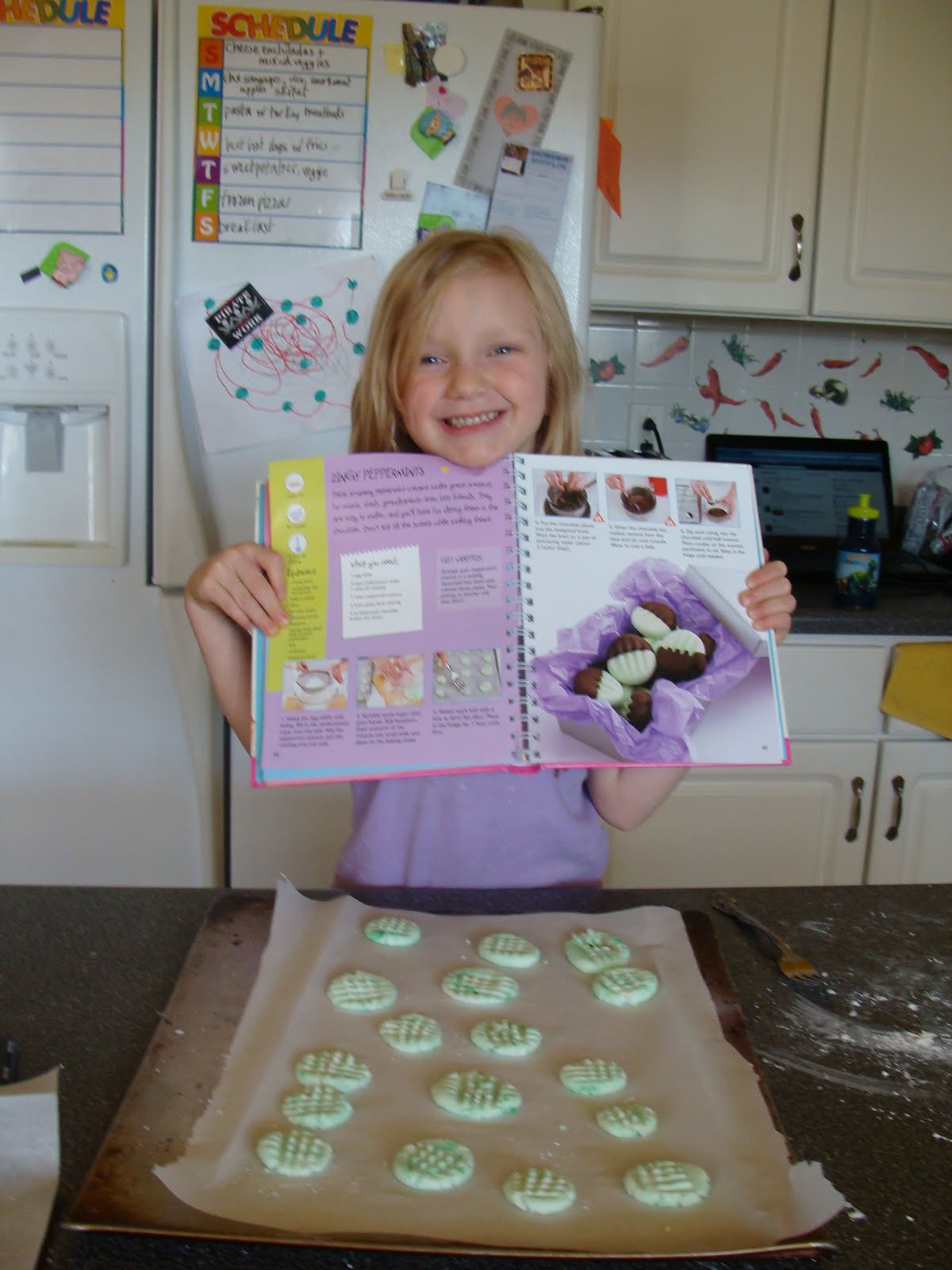

Don’t forget to check out Mandy’s other awesome posts at A Bona Fide Life !
Award-winnning author, L.R.Knost, is the founder and director of the children's rights advocacy and family consulting group, Little Hearts/Gentle Parenting Resources, and Editor-in-Chief of Holistic Parenting Magazine. Books by L.R.Knost include Whispers Through Time: Communication Through the Ages and Stages of Childhood ; Two Thousand Kisses a Day: Gentle Parenting Through the Ages and Stages ; The Gentle Parent: Positive, Practical, Effective Discipline ; and Jesus, the Gentle Parent: Gentle Christian Parenting the first four books in the Little Hearts Handbook gentle parenting series, and children’s picture books Petey’s Listening Ears and the soon-to-be-released Grumpykins series.
A September to Remember: Don’t Miss Out on this Incredible Opportunity!
How many missed opportunities are there in your day? This question has been beating in my chest the last few weeks. Let me back up a little and explain what I mean.
I keep getting a sense that the greatest skill I can develop in my life is the ability to listen. People, including my children, don’t need or want my advice or opinions, they just want to be heard. It is our heart’s cry to be truly heard and understood – and this is a powerful thing. It’s one of the greatest gifts we can give to another human being.
Why is Listening so Powerful?
Life brings all of us different challenges and experiences; some full of heartache and pain. We all have emotions surrounding the different events and scenarios in our life. When someone listens to us, it creates a safe place to share and release those emotions. By listening, you are providing that person an opportunity to process and work through how they’re feeling. Listening helps those difficult feelings to surface and be released. This is healing. The more you feel, the more you heal.
Award-winnning author, L.R.Knost, is the founder and director of the children's rights advocacy and family consulting group, Little Hearts/Gentle Parenting Resources, and Editor-in-Chief of Holistic Parenting Magazine. Books by L.R.Knost include Whispers Through Time: Communication Through the Ages and Stages of Childhood ; Two Thousand Kisses a Day: Gentle Parenting Through the Ages and Stages ; The Gentle Parent: Positive, Practical, Effective Discipline ; and Jesus, the Gentle Parent: Gentle Christian Parenting the first four books in the Little Hearts Handbook gentle parenting series, and children’s picture books Petey’s Listening Ears and the soon-to-be-released Grumpykins series.
Beautiful Childhood
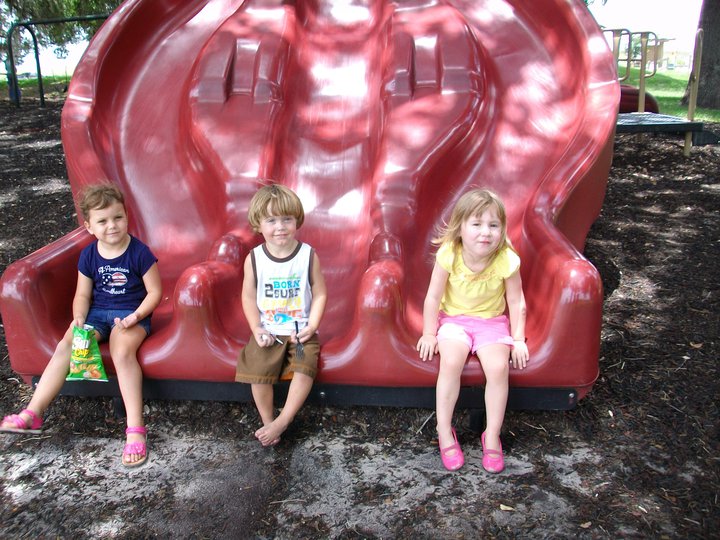
Ready, Set…

GO!
Award-winnning author, L.R.Knost, is the founder and director of the children's rights advocacy and family consulting group, Little Hearts/Gentle Parenting Resources, and Editor-in-Chief of Holistic Parenting Magazine. Books by L.R.Knost include Whispers Through Time: Communication Through the Ages and Stages of Childhood ; Two Thousand Kisses a Day: Gentle Parenting Through the Ages and Stages ; The Gentle Parent: Positive, Practical, Effective Discipline ; and Jesus, the Gentle Parent: Gentle Christian Parenting the first four books in the Little Hearts Handbook gentle parenting series, and children’s picture books Petey’s Listening Ears and the soon-to-be-released Grumpykins series.
A Boy, A Girl, and A Baby~The Journey to Gentle Parenting

My sweet, quirky daughter-in-law!
Many, many years ago (more that I will admit to!) a small, scared, pregnant, teenaged girl walked down the aisle to her tall, scared, clueless, young man and they said their “I do’s.” But what were they going to do? No earthly idea! They didn’t have the internet to surf for blogs about parenting and marriage, couldn’t afford the few paltry magazines available on those subjects at the time, and weren’t convinced the way their parents had raised them was exactly what they wanted for their unexpected little blessing. So, they just joined hands and hearts and figured it out the old-fashioned way~through trial and error.
The young girl gave birth prematurely and, after a terrifying NICU stay, brought home her barely 5 lb baby boy. Since the young couple were living on one income and barely able to feed themselves, it made sense to them to breastfeed their little one. Neither one had ever even heard of a lactation consultant and no one at the hospital had mentioned breastfeeding at all, so the two young people just kept working through the cracked, bleeding nipples, engorgement, over-supply, and other issues until they got it figured out~and then they were breastfeeders!
The young girl discovered their first night home how much easier it was to simply take her baby boy into bed with her and breastfeed him when he was hungry~and then they were cosleepers!
Neither one of the young couple had ever read a parenting book and had never even heard the words ‘cry-it-out,’ so the two of them just did what came naturally and picked up their baby when he fussed or grunted or just looked cute and finally found it easier to just pop their little preemie into a baby carrier and tote him around with them wherever they went~and then they were babywearers!
As their precious little guy got bigger and began to explore his new world, the young couple delighted in everything he did and simply moved him and distracted him with songs and toys if he got into things. They couldn’t bear the thought of hurting their son, so just pulled him into their laps for a ‘time-in’ cuddle and chat if he got upset or needed to settle or be redirected~and then they were gentle discipliners!
As time went by and more children entered the family (six, to be exact!) other issues such as education and socialization had to be made, and, while at first the young couple followed the norm and the first two of their children started out in public school, it just didn’t sit well with the parenting style they’d developed. Neither one of them had ever known anyone who homeschooled, so that was a truly scary idea, but public education wasn’t for them and they were just too ‘economically challenged’ to afford any kind of private school. So, they did what they’d always done and withdrew their children from school and figured it out as they went along~and then they were homeschoolers!
Now, this journey might sound like an easy one when summed up this way, but I can assure you it wasn’t! The young couple, my amazing husband and I, encountered strong criticism of our parenting choices over and over through the years from many, and a refusal to accept or accommodate those choices from some. We were warned that our marriage would suffer at the very least, and our babies would suffocate at the worst, if we slept with them in our bed instead of putting them in isolation to sleep. We were informed that my breasts would look like deflated balloons and reach my knees by my thirties if I breastfed beyond a couple of months. We were admonished that our children would grow into spoiled brats if we responded to their needs instead of teaching them to ‘deal with it’ on their own, and would end up criminals if we encouraged and guided them instead of spanking them. We were advised that our children would be uneducated social outcasts (i.e. homeless or still living at home at forty!) if we homeschooled them instead of putting them into the institutional public education system. These challenges to our parenting style were difficult at the time, and they sometimes even resulted in people choosing to de-friend us (not facebook de-friending, silly, in real life!), but they had the powerful positive effect of making us really examine what our beliefs were and, as a result, strengthening and solidifying our beliefs and our family.
As for the dire warnings listed above: Our beautiful, strong, loving marriage is in it’s 25th year; our children all survived cosleeping (our littlest, 14 months, is still safely and contentedly sleeping in our bed); my breasts are, well, normal except for being a couple of cup sizes larger at the moment since I’m breastfeeding, lol; our children are, in order, a 24 yr old pastor (our firstborn son mentioned in the story above who is expecting his first son!), a 22 yr old family therapist, a 17 yr old entering his third year of pre-med, 12 and 5 yr old beautiful and well-behaved homeschooled girls with lots of friends (soooo not social outcasts!), and a sweet and happy 14 month old baby girl.
Our journey to gentle parenting has had another, somewhat unexpected, effect. While we may not agree with others’ parenting choices, we have been on the receiving end of criticism far too long to not have learned this lesson: Gentle parenting is for parents, too! We have learned to respond gently to our friends who don’t agree with us, even when they don’t respond gently to us. Responding with harshness and criticism doesn’t work with adults any better than it does with children! Responding gently to those who disagree with us may or may not affect their parenting choices, but what it does do is model respectful behavior and conflict resolution to our children and, most of the time, preserve dear friendships.
So there you have it~our journey to a breastfeeding, cosleeping, babywearing,

My funny, handsome ‘unexpected blessing’ on his wedding day!
gentle disciplining, homeschooling, happy family of eight! Well, including our awesome son-in-law, daughter-in-law, granddaughter, and grandson-on-the-way, I guess I should say family of 11 2/3! One boy, one girl, and one baby have come a long way, Baby!
Award-winnning author, L.R.Knost, is the founder and director of the children's rights advocacy and family consulting group, Little Hearts/Gentle Parenting Resources, and Editor-in-Chief of Holistic Parenting Magazine. Books by L.R.Knost include Whispers Through Time: Communication Through the Ages and Stages of Childhood ; Two Thousand Kisses a Day: Gentle Parenting Through the Ages and Stages ; The Gentle Parent: Positive, Practical, Effective Discipline ; and Jesus, the Gentle Parent: Gentle Christian Parenting the first four books in the Little Hearts Handbook gentle parenting series, and children’s picture books Petey’s Listening Ears and the soon-to-be-released Grumpykins series.
Sweet Drifting by Rosemary (via Rosemarinus Officinalis)

Six inches of arm flop over my breast as you
press your face in close to nurse.
Each night you scoot and wriggle,
telling me with your body
no space is allowed
between us.
An ache rises up and my fierce love for you chokes until it
hurts to breathe.
The little baby body that won’t roll over yet
somehow manages to curl from her back to her side
craving closeness
stretching chubby legs to kick at me as you did in the womb.
Your daddy marvels at your instincts
your hunger for connection
and says
“She needs you”
with awe and tenderness
I wrap around you and graze your wispy hair with my lips.
Your face close to mine
your heavy eyes gaze at me and blink long and slow.
Noses touching, I breathe in your
sweet milky breath and we
sink
into
sleep
together
Award-winnning author, L.R.Knost, is the founder and director of the children's rights advocacy and family consulting group, Little Hearts/Gentle Parenting Resources, and Editor-in-Chief of Holistic Parenting Magazine. Books by L.R.Knost include Whispers Through Time: Communication Through the Ages and Stages of Childhood ; Two Thousand Kisses a Day: Gentle Parenting Through the Ages and Stages ; The Gentle Parent: Positive, Practical, Effective Discipline ; and Jesus, the Gentle Parent: Gentle Christian Parenting the first four books in the Little Hearts Handbook gentle parenting series, and children’s picture books Petey’s Listening Ears and the soon-to-be-released Grumpykins series.
“There he is!” (via The Path Less Taken)

Guest post author Jennifer McGrail and kids from The Path Less Taken
The words were my husband’s, and the day was February 19th, 1997. We’d just gotten our first-ever look at our new son, the son that would transform us at once from simply a couple, to a couple of parents. I remember looking at him, his tiny body buried beneath the full head of black hair and the skin he’d yet to grow into. I remember staring at his face, memorizing its features, almost made breathless by a sudden realization: He was a whole, unique, brand-new person. And he was my son.
We would go on to have three more children after that day, and each time I welcomed them with that same sense of awe. What would they look like? Who would they be? Not just extensions of my husband and myself, they were their own little individuals. They had their own personalities, their own indomitable spirits, and their own beautiful souls.
So much of what mainstream parenting advice has to offer is based on the supposition that children need to be controlled, manipulated, and otherwise forced into behaving a certain way. In effect it tells us that they are somehow lesser citizens who wouldn’t possibly do the right thing unless they were prodded, punished, or cajoled into doing so. Gentle parenting believes very much the opposite. At its core, it is simply a call to return to treating children like people. To move away from a top-down system of rewards and punishments to one of love and partnership. It’s not about trying to be a perfect parent, but about striving to be a connected parent. It’s about placing your relationship with your children first, and about giving them the respect and the consideration that they both desire and deserve.
Every parenting decision I’ve made since that first day 14 years ago has been sent through the same filter: Is this manner of treating someone the same way I’d treat anyone whom I dearly loved? Am I showing them gentleness, kindness and respect? Am I treating them the way that I myself would want to be treated? Will this action or these words bring us closer together or will they pull us further apart?
I have made mistakes as a parent to be sure. But as I look back at the last fourteen years, the moments I’ve wished I could take back have always been the moments when I’ve been too reactive. Too quick to speak, and too slow to listen. Too quick to focus on a behavior, and too slow to focus on the child. Too quick to judge, and too slow to understand.
Not once have I regretted being gentle, or thoughtful, or kind. Not once have I ever thought, “What I really needed was to be more tough with them.” No, time and again, the answer was the same: What was needed was more compassion. More kindness. More understanding.
My relationship with my kids is one based on love, trust, and respect. It is a living, breathing organism that only thrives when it is made a priority. It only grows when it is tended to. And just like any other relationship, I get back whatever it is I put in. The best part about a good relationship with your kids though, is that you get it back ten times over.
Award-winnning author, L.R.Knost, is the founder and director of the children's rights advocacy and family consulting group, Little Hearts/Gentle Parenting Resources, and Editor-in-Chief of Holistic Parenting Magazine. Books by L.R.Knost include Whispers Through Time: Communication Through the Ages and Stages of Childhood ; Two Thousand Kisses a Day: Gentle Parenting Through the Ages and Stages ; The Gentle Parent: Positive, Practical, Effective Discipline ; and Jesus, the Gentle Parent: Gentle Christian Parenting the first four books in the Little Hearts Handbook gentle parenting series, and children’s picture books Petey’s Listening Ears and the soon-to-be-released Grumpykins series.