
A Sea Change: Obedience is Not the Goal
[Excerpt reprinted from Jesus, the Gentle Parent: Gentle Christian Parenting by L.R.Knost. Two Thousand Kisses a Day: Gentle Parenting Through the Ages and Stages; Whispers Through Time: Communication Through the Ages and Stages of Childhood; and The Gentle Parent: Positive, Practical, Effective Discipline by L.R.Knost also available on Amazon and through other major retailers.]
“Look also at ships: although they are so large and are driven by fierce winds, they are turned by a very small rudder wherever the pilot desires.”
James 3:4
 Oh, the toddler years, those delightful days when little ones begin to discover that they are, indeed, separate individuals from their parents and begin to test the waters to see how far out to sea their little boats can take them when they’ve got a full head of steam. This is the age when parents begin to wonder how in the world to tether their little steamboats to the docks or scuttle them in shallow waters to slow them down.
Obedience becomes a hot topic at moms’ groups and men’s breakfasts, at playdates and on park benches as parents wrestle with this new developmental stage that often shows up, unwelcome and unannounced, and the desperate, bewildered question being debated is always the same:
“How can I get my child to obey?”
Take a moment and examine what that question really means, though. Does it mean, “How can I control my child?” or does it mean, “How can I help my child learn self-control?” It’s an important distinction because the first meaning is external and temporary (i.e. only effective as long as the controlling factors are ever-present and escalate as the child grows) and the second meaning is internal and intrinsic. In the first, the rudder of a child’s ship is firmly removed from the child’s hands again and again as the parent and child struggle for control of the ship. In the second, the rudder remains in the child’s hands as the parent guides, instructs, and leads the way with their little steamboat sheltered alee of the parent ship.
Parents often feel lost at sea, themselves, when it comes to the best course for guiding and growing their children in the storm-tossed waves and murky waters of childhood behaviors, and many churches try to meet parent’s needs by offering parenting books and classes. A vast number of those resources are, unfortunately, based on a punitive, authoritarian model. These books, and the classes based on the books, claim to be Biblical, but miss the heart of the Father entirely and mislead and even intimidate parents into believing that they must train their children into instant, unquestioning obedience in order to raise their children ‘God’s way.’
Consider, though, that Jesus said, “You will know them by their fruit.” (Matthew 7:16) referring to how we will recognize his children. And what is the fruit of the Spirit? Love. Joy. Peace. Patience. Kindness. Goodness. Gentleness. Faithfulness. Self-control. What’s missing? Nothing. God’s Word is perfect. And yet obedience is not included as a fruit of the Spirit. It is not mentioned as a measure of love for God or evidence of a relationship with God. That certainly doesn’t mean that God doesn’t want us to listen to his wise counsel and remain within the safe boundaries he’s shared with us. What it does mean is that it’s a heart issue, not an obedience issue, and he wants our trust and thoughtful, considered cooperation, not our fear-driven, mindless obedience.
Did you know, in fact, that the word obey doesn’t even appear in the original texts of the Bible? When the English translators of the King James version of the Bible encountered the Hebrew words hupakouo/hupakoe and shema/lishmoa they discovered that there wasn’t an exact English equivalent, so they chose the word hearken in their translations which subsequently became an archaic term and was later changed to obey.24 So, what exactly do the original words in the Bible mean?
Hupakouo/hupakoe – to hear from above; to listen for; to lend an ear to1,2,3
Shema/lishmoa – to understand, to internalize, to ponder, to reflect upon1,2,3
And, in the negative form, rather than the word disobedience in the original texts, there is…
Parakouo – to close one’s ears to; to ignore1,2,3
The same mistranslation also occurs from the original Greek texts of the New Testament where peitho and peitharcheo are translated into, respectively, obey and disobey but actually mean…
Peitho – to be persuaded; to be moved; to respond25
Peitharcheo – to remain unpersuaded; to be unmoved by; to be unresponsive to25
Also translated into obey in English are the Greek words phulasso and teron and their various conjugations, all of which mean to watch, to observe carefully, to give consideration to25.
Taken together, the meaning of what is now translated obey in the original text of the Bible is more accurately read ‘listen to, thoughtfully consider, and respond to.’ That is a far, far different meaning than the ‘instant obedience’ often held up as the epitome of Christian faith and evidence of love for God and, by extension, the goal of so-called ‘Biblical parenting.’
Before we address the parenting conundrum of instant obedience versus thoughtful consideration, let’s look at several verses in the Bible with the original meanings restored:
He replied, “Blessed rather are those who hear the Word of God and obey listen to, thoughtfully consider, and respond to it.” (Luke 11:28)
Jesus replied, “Anyone who loves me will obey listen to, thoughtfully consider, and respond to my teaching. My Father will love them, and we will come to them and make our home with them. (John 14:23)
Children, obey listen to, thoughtfully consider, and respond to your parents in the Lord, for this is right. (Ephesians 6:1)
One other interesting note is that the word translated punish in the English versions of the Bible is from the Hebrew word avon and from the Greek kolasis/kolazo. Look at the contrast in meanings:
Punish (English) – to inflict a penalty upon; to exact retribution; to make suffer26
Avon (Hebrew) – to carry guilt; to bear one’s own iniquity1,2,3
Kolasis/kolazo (Greek) – removed; separated25
The word used in English translations of the Bible, punish, conveys an external infliction of negative consequences, while the original words, avon (Hebrew) and kolasis/kolazo (Greek) convey internal, self-imposed consequences (i.e. carrying the weight of guilt/shame) and natural consequences (i.e. being estranged).
There is no fear in love. But perfect love drives out fear, because fear has to do with punishment bearing one’s own iniquity, carrying guilt, feeling shame, being estranged. (1 John 4:18)
Jesus came to take our place, to bear our iniquities, to carry our guilt, to free us from shame, and to reunite us with our Father, and the literal translation conveys that truth perfectly.
The thing is, instant obedience and thoughtless compliance based on fear of punishment will always be an external and temporary ‘fix’ for behavior issues, as evidenced by the increasingly defiant and disconnected Israelite nation in the Old Testament, while thoughtful consideration and cooperation are internal, a heart-deep and soul-to-soul connection inspired by compassion, respect, and communication. Consider this passage from The Gentle Parent: Positive, Practical, Effective Discipline:
Someone once wrote, “Obedience is doing what you’re told, no matter what’s right. Morality is doing what’s right, no matter what you’re told.” History preserved the quote, but not the source with any credibility, but it’s a wise statement nonetheless.
Growing children with an inner compass that guides their steps toward kindness and compassion and generosity of spirit is far, far and away superior to training children to operate on automatic pilot. Parents often focus so much time and energy on trying to make their children obey in the small moments of life that they forget to step back and take a panoramic view of how their parenting choices may affect their children’s life course.
‘Instant obedience’ is the new catch-phrase in many popular parenting articles and books, but the reality is that, while instant obedience may be convenient for parents in the moment, it can have powerful negative impacts on the adults their children will become.
Training children into instant obedience is the equivalent of disabling their inner guidance system and strapping on a remote-controlled rocket. The end result may be adults who are easily controlled by others or adults who are deeply divided, constantly fighting the external controls, but hampered by an erratic, immature inner compass that never had the chance to develop properly.
Equipping children with a healthy, well-functioning internal guidance system, an inner compass, takes time, patience, and self-control on the part of the parents. Certainly not a convenient alternative! While it may not be convenient to slow down our hectic life pace and really connect with our children, it’s that connection that enables their internal guidance system to come online. While taking the time to really communicate may be a sacrifice, it’s in that communication that the directions on their inner guidance system are set. And, while working cooperatively with our children may take more time and effort, the fact is that inviting cooperation rather than forcing compliance raises leaders instead of reaping followers.
Clearly, teaching our children to control themselves is far more effective in the long-term than trying to control our children, but how, specifically, can we go about equipping them with those all-important internal controls?
- Model instead of manipulate.
- Invite instead of intimidate.
- Support instead of shame.
- Encourage instead of enrage.
- Teach instead of threaten.
- Listen instead of lecture.
- Help instead of hurt.
- Parent instead of punish.
Instant obedience and mindless compliance are poor goals, indeed, when raising children. A thoughtfully questioning, passionately curious, and humorously resourceful child who delights in inventing ‘compromises’ and who endlessly pushes the boundaries tends to become a thoughtful, passionate, resourceful adult who will change the world rather than being changed by the world.These are simple truths, and yet their effects are profound when we embrace them and incorporate them into our parenting. Connection, Communication, and Cooperation, the Three C’s of gentle parenting, are powerful and effective tools in guiding our children toward self-control to help them learn to steer their own ships, and, if we are to be fishers of men, then isn’t a ship headed out to sea exactly what each of us should be, anyway? Instead of mooring our children to the shore, let’s sail alongside them in the sometimes calm, sometimes stormy, but always glorious sea of life, keeping them sheltered on our leeward side until they are ready to sail alone.
“For I am the Lord your God who takes hold of your right hand and says to you, Do not fear; I will help you.”
Isaiah 41:13
Related posts:
Stealing God’s Gift: Free Will is a Gift to be Nurtured, Not a Curse to be Broken
Spare the Rod: The Heart of the Matter
Did Jesus Have a Temper Tantrum?
Jesus, the Gentle Parent: Gentle Christian Parenting
Tattered Tapestries: Weaving Trust Through the Chaos
Fear Doesn’t Lead to Faith: Becoming Your Child’s Safe Place
Where Did You Learn Love, Child?
Practical, Gentle, Effective Discipline
 Award-winnning author, L.R.Knost, is the founder and director of the children's rights advocacy and family consulting group, Little Hearts/Gentle Parenting Resources, and Editor-in-Chief of Holistic Parenting Magazine. Books by L.R.Knost include Whispers Through Time: Communication Through the Ages and Stages of Childhood ; Two Thousand Kisses a Day: Gentle Parenting Through the Ages and Stages ; The Gentle Parent: Positive, Practical, Effective Discipline ; and Jesus, the Gentle Parent: Gentle Christian Parenting the first four books in the Little Hearts Handbook gentle parenting series, and children’s picture books Petey’s Listening Ears and the soon-to-be-released Grumpykins series.

Stealing God’s Gift: Free Will is a Gift to be Nurtured, Not a Curse to be Broken
[Excerpt reprinted from Jesus, the Gentle Parent: Gentle Christian Parenting by L.R.Knost. Two Thousand Kisses a Day: Gentle Parenting Through the Ages and Stages; Whispers Through Time: Communication Through the Ages and Stages of Childhood; and The Gentle Parent: Positive, Practical, Effective Discipline by L.R.Knost also available on Amazon and through other major retailers.]
~~~~~~~~~~~~~~~~~~~~~
“Let us then approach God’s throne of grace with confidence, so that we may receive mercy and find grace to help us in our time of need.”
Hebrews 4:16
“Many parents in using the rod of correction on their child do so with an obvious lack of vigor and often stop short of the child’s will being completely broken … Both my wife and I have often remarked that it is good that one of our children was not our firstborn. This particular child who came along later in our family was extremely willful and rebellious toward our authority and would often require sessions of correction lasting from one to two hours in length before the will would finally be broken … Even though you may think these methods of correction that God has ordered parents to carry out are bestial, abusive, and unloving, you are the one who is bestial, abusive, and unloving if you don’t obey God in this matter. Moreover, if you do not obey God your child likely will not be saved unless the Lord supernaturally in His mercy does so despite your disobedience.” (Ronald E. Williams, The Correction and Salvation of Children)
“She then administers about ten slow, patient licks on his bare legs. He cries in pain. If he continues to show defiance by jerking around and defending himself, or by expressing anger, then she will wait a moment and again lecture him and again spank him. When it is obvious he is totally broken, she will hand him the rag and very calmly say, “Johnny, clean up your mess.” He should very contritely wipe up the water [about spanking a 3-year-old]” (Pearl, p. 62) …“Never reward delayed obedience by reversing the sentence. And, unless all else fails, don’t drag him to the place of cleansing. Part of his training is to come submissively. However, if you are just beginning to institute training on an already rebellious child, who runs from discipline and is too incoherent to listen, then use whatever force is necessary to bring him to bay. If you have to sit on him to spank him then do not hesitate. And hold him there until he is surrendered. Prove that you are bigger, tougher, more patiently enduring and are unmoved by his wailing. Defeat him totally. Accept no conditions for surrender. No compromise. You are to rule over him as a benevolent sovereign. Your word is final (p. 49)” (Michael Pearl, To Train Up a Child)
Where, exactly, did the pseudo-Biblical idea that a parent must break a child’s will originate? How did a person’s God-given will, their freedom of choice, their strength and individuality, come to be seen as the root of all sin  that must be purged? At what point did “defeating” a child so that they are “totally broken” become the goal of Christian parenting?
Let’s go back to the model of servant leadership set by Jesus who said, “I stand at the door and knock…” (Revelations 3:20) Knock what? Knock humans on their backsides and pin them down while pummelling them until they are utterly defeated? Knock small children around until they are totally broken?
No, of course not. Jesus says, “I stand at the door and knock. If anyone hears my voice and opens the door, I will come in and eat with that person, and they with me.” Jesus doesn’t barge in making demands to prove how big and tough he is. Jesus invites us to open the door of our lives and to invite him in as an honored guest, in return.
Look also at Deuteronomy 30:19 where God shares that it is from him that our ability to choose originates, “I have set before you life and death, blessing and curse; therefore choose life, that you and your descendants may live.” Note that God doesn’t demand that we submit our free, God-given will, our ability to choose, to him. He simply invites us to align our will with his.
And look at James 4:8, “Draw near to God and He will draw near to you.” God doesn’t chase us down, “sit on” us, or “use whatever force is necessary” (see Pearl quote above) to strong-arm us into submission. He reaches out to us and inspires us and opens his arms to us, inviting us into the safety and comfort and wholeness of a relationship with Love Himself.
Our will is a gift, an opportunity to choose right from wrong, and the vehicle through which God calls us to choose his Son. Without this amazing and wonderful gift, without the freedom to use our free will, Jesus’ suffering and death on the Cross would be pointless.
Sin is a moot point in light of the grace we’ve been given. Grace is the point. The whole point. Everything leading up to the Cross pointed to the Cross, everything was settled on the Cross, and on the Cross in the outstretched  arms of Jesus grace was born. Sin only matters in the sense that when we voluntarily choose to stay within the boundaries God has given us, we are closer to him, more in-tune with him, and more aligned with his will. He does not stray from us, not ever. But we do stray from him. We are human, and as humans we learn by doing, by experiencing, by exercising our free will as we stretch and grow and discover and make mistakes and overcome life and are overcome by life, each trial and failure and success a learning experience. God doesn’t chase us down and crash through the walls we’ve put up and drag us back to repentance. He waits for us, always available, always forgiving, always loving us unconditionally, but never giving up as he calls out to us, inviting us gently to himself.
When it comes to parenting, we all know that some of God’s children are created with a remarkable strength of will, a powerful drive to explore and discover, an insatiable thirst for knowledge, an incredible need to know and be known, and with more energy than can be contained in a small body. Their frequent challenges to ‘the way things are’ can feel overwhelming to the most patient of parents, and their sometimes epic meltdowns when all of that extreme energy explodes out of their small frames can act like a tidal wave of emotion that gets everyone swept up in the maelstrom. These children who are given the gift of an indomitable spirit have all of the amazing characteristics of future world leaders, but their gifts need to be grown and nurtured and developed, not contained, stunted, and crushed.
A popular child-training book by Dr. James Dobson, The New Strong-Willed Child, has a markedly different approach to parenting strong-willed children, however: “Some strong-willed children absolutely demand to be spanked, and their wishes should be granted. . . two or three stinging strokes on the legs or buttocks with a switch are usually sufficient to emphasize the point, ‘You must obey me.’” In addition to the disputable Biblical interpretations of the ‘rod’ verses and the misuse of the word ‘obey’ in translating from the original language of the Bible, there is a fundamental difference in philosophies revealed here. In the positive parenting approach, children are born perfect and need only to be guided through the normal stages and behaviors of childhood. In the punitive parenting approach, children are born sinful and must be forced to submit to superior authority.
On a purely logical level, why would we fight a child for control when what we really want is for them to be in control of themselves? Why not, instead, help them to process those big emotions and learn how to direct their own energy and develop their own ability to control themselves? Why not follow Jesus’ example and invite our strong little future leaders to walk alongside us in tandem to learn and grow and discover together for the oh-so-brief season of their childhood?
On a practical level, though, the question is, “How can we partner with our children in positive and peaceful ways to guide them gently and effectively?”
Here is a chapter from The Gentle Parent: Positive, Practical, Effective Discipline to get you started on your gentle journey with your own little future leaders:
‘The Gift of a Strong-Willed Child’
There are some children who are born into the world with the incredible life-gift of a strong will and an indomitable spirit. These children are often deeply misunderstood, and there are rows of books lining bookstore shelves with instructions about how to break their will, how to subdue their spirit, how to force their obedience. What an incredible loss of leadership, passion, and insight this world suffers when parents follow these punitive parenting practices. Not only can we parent these gifted children with gentleness and respect, but the gifts we get in return are priceless!
Take a look at some of the common descriptions used when referring to the characteristics of a strong-willed child:
Demanding, Insistent, Stubborn, Bossy, Cocky, Difficult, Challenging, Fixated, Contrary, Rebellious, Defiant
Now look at some of the common characteristics of adults who are world leaders, CEO’s, entrepreneurs, innovators, world-class athletes, and the like:
Decisive, Determined, Persistent, Authoritative, Confident, Valiant, Gutsy, Committed, Resourceful, Nonconforming,Bold
Note that the characteristics are the same, but the characterizations are negative when applied to a child and positive when applied to an adult.
Other characteristics of strong-willed children that coincide with the characteristics of adult leaders in their fields are:
- They are typically highly creative and intelligent.
- They are usually passionate and intense in their interests and beliefs.
- They often have an insatiable need to know ‘why.’
- They typically learn by doing.
- They tend to have an intense need to test the status quo.
- They are typically highly perfection-oriented, but often that is focused on their expectations of themselves instead of others.
- They tend to need high levels of validation.
- They usually have an intense need to be heard.
- They often have a strong need for emotional safety.
- They tend to be resistant to change unless they feel like they have some control over the change.
- They are often highly sensitive.
- They are typically intensely focused on their latest project or interest.
- They tend to be conscientious and highly committed.
- They are usually intensely independent.
While there’s no doubt that it’s a challenge having a child who seems to challenge everything, there are ways to work with them rather than against them to preserve and nurture their unique gifts. Maintaining a healthy parent/child relationship is vital as you work to find a balance between setting limits with your richly spirited child while not limiting their freedom to stretch and grow and develop into the person they were created to be.
The key to preserving your trust relationship with your child is remaining calm and present and supportive, even while setting and maintaining reasonable boundaries. It is helpful to remember that the most strong-willed children tend to be the ones who identify the most strongly with their parents. So instead of viewing their seemingly constant challenges as defiance or attempts to thwart authority, work to parent from a place of understanding that your strong-willed child is actually on a discovery mission and is doing endless ‘research’ on you by testing and retesting and digging and chiseling to discover all of your quirks and foibles and ups and downs and strengths and weaknesses. This kind of testing isn’t negative unless you make it into a battle of wills instead of responding with gentle, respectful guidance. Taking this stance will help you to keep from seeing the challenges as personal insults and, instead, see the challenges as attempts to learn and grow and understand.
There is no doubt, though, that parenting a child with the gift of a strong will is a constant exercise in patience and self-regulation. The personal growth you will experience is invaluable as you seek to parent with empathy and wisdom and compassion, but it can be draining and will often stretch you far, far out of your comfort zone. Knowing that and being prepared for it will help you cope with the inevitable stresses, and being ready ahead of time with some specific strategies for handling the challenges will help you to respond calmly and effectively.
This is a good place to revisit the Three C’s of gentle discipline—Connection, Communication, and Cooperation.
Connection ~ Maintaining a secure connection with your spirited child is vital. It is the springboard from which all of your interactions with your child will originate, and it is the touchstone to which you will both return, again and again and again, when your relationship gets strained and stained and stretched.
- Play word games, board games, rough-and-tumble outdoor games, silly face in the mirror games. Play is the language of childhood, so make sure to speak your child’s language every day.
- Laugh together. Humor is an undervalued parenting tool. But it lowers defenses, inspires smiles, brings people together, and reconnects hearts.
- Read storybooks, chapter books, travel brochures, encyclopedias, anything that will inspire you to dream together, talk, plan, get excited, share interests.
- Focus more on who your child is than on what your child does. Remember, you’re growing a person, not fixing a problem. So make sure to spend time getting to know the person, not just the child. It doesn’t have to cost anything. Just walk together, talk together, share ice cream cones, spot shapes in the clouds, and enjoy each other.
Communication ~ Children have their own ‘inner world’ of thoughts and plans and problems and worries and hopes and dreams that are occupying their time and attention, so a lack of cooperation is often simply the result of having a different agenda than we do. Getting some insight into that ‘inner world’ is key in guiding and growing them respectfully.
- Listen with your heart. Listen ‘between the lines’ to what your child is communicating through their behavior. Listen and listen and listen some more. That is always, always the first step in communicating with your child.
- Reflect, connect, and redirect. Reflect what you hear, whether it’s communicated by your child’s behavior or their words. This not only validates their emotions and lets them know that you hear and understand them, but it also helps them to understand their own emotions. For instance, if your child is upset that he can’t have a cookie after brushing his teeth for bedtime, try saying, “I hear you. You’re upset because you want a cookie.” Then reestablish your connection, “I like cookies, too!” and offer a solution, “How about we go pick out the two best cookies and put them in a special container that we can take to the park in the morning?”
- Don’t take non-compliance as a personal insult. A strong-willed child is very much their own person with their own agenda. Focus on inviting cooperation instead of demanding obedience. Whether it’s staying in bed or cleaning up or whatever the issue, make it a team effort and come up with a game plan ahead of time. For example, you could say, “You seem to be having trouble staying in bed at night. What do you think would help you to be more ready to go to sleep when it’s time for bed?” or “It’s important to pick up our things so they don’t get broken, let’s put on the timer and work together for ten minutes and see who gets the most picked up.”
- Make a firm commitment not to resort to punishments to control behavior. The resentment that comes from being punished absolves children in their own minds of responsibility. It doesn’t teach them responsibility, and resentment can actually cause a lot of the behaviors you are trying to avoid.
- Communicate daily, outwardly to your child and inwardly to yourself, the positive aspects of your child’s personality. When the focus is on ‘fixing’ a child, they get the message that they are somehow broken, and that is not a healthy self-image to take into adulthood.
- ‘No’ is not a complete thought. It is an imperative, a command. It doesn’t teach. It tells. If you want your child to learn to think like an adult, take the time to explain your adult thinking.
- Remember that children, especially when they are upset, open ‘conversations’ through their behavior, and it’s up to us, the only adults in the relationship, to gently guide them toward continuing those conversations verbally as well as equipping them with the resources to be able to do so.
- Also keep in mind that the social mores of rudeness simply aren’t inborn and don’t apply to early interactions with our children. They are learned by imitating how we as parents behave. Politeness is a heart issue that cannot be imposed by the will of another unless we want it to only be an external façade instead of a heartfelt courtesy. Helping your strong-willed child learn to speak kindly means speaking kindly to your child as well as offering guidance when they’ve been rude such as saying, “That is not a nice tone of voice” or “That isn’t a kind thing to say” and then offering a do-over “Can you try saying that to me again more nicely? I’ll always try my best to be nice to you, and I would like you to try to do the same for me.”
Cooperation ~ Always keep at the forefront of your parenting goals that you are seeking thoughtful cooperation, not mindless compliance. That way you will remember to treat your child as a thoughtful individual with ideas and needs and feelings of their own instead of a mindless drone there to do your bidding.
- Set clear limits and explain them in age-appropriate terms. Remember, if you want to invite cooperation, you have to actually issue the invitation to cooperate!
- Limit the number of limits. Spirited children are often stressed children simply because of their own intense emotions and reactions to things, so set them up for success by keeping your limits few and clear and by maintaining them consistently.
- Make sure to let your child have a voice in determining the limits so they feel like they have some control over their lives and so they feel some ownership over the limits.
- Brainstorm together ways of helping everyone to work together. Some ideas are to come up with hand signals or words that remain your little secret codes to indicate when it’s time to leave the park or to do homework or to dial the activity level or noise volume down a few notches.
- Invite cooperation by creating daily routines together. Don’t be surprised if your child ends up being the one who is a stickler for following the routine, even to the point of nagging you to follow it. These gifted children tend to be all-in, fully focused and committed, and they’ll expect you to be the same!
- Cooperate with your child’s needs and personality by working with them rather than against them. For instance, if you know that your child has a hard time leaving a project, give them plenty of time to find a good stopping point when you need them to leave it for a while. Or if you know that your child has a hard time following directions at bedtime, try writing or drawing the tasks that need to be done (i.e. toothbrushing, pajamas, etc.) on ping-pong balls and put them in a small ‘bedtime jar’ so your child can feel some control over their routine as they independently pick out the balls one by one for a ‘surprise’ nighttime order of tasks or take them all out and decide what order to do them in themselves.
- If you are already locked in a head-to-head power struggle, put away your boxing gloves so your child will (eventually!) feel safe putting away theirs. When you battle with your child, you may win a skirmish or two, but you will lose the treasure…your trust relationship. Putting away the gloves means slowing down, breathing through your own emotions, and finding a way to work through the issue together. Remember, you’re the adult in the relationship, but that doesn’t give you the right to overpower your child; it gives you the responsibility to empower your child. That involves modeling the tools of diplomacy—communication, cooperation, compromise—that you want your child to stock in their own emotional toolkit.
Remember, the children who come into the world with their ‘boxing gloves on’ so to speak are often the ones who become the biggest world changers. It’s not easy raising these little world-changers, I know (Believe me, I know. Two of my six are world-changers-in-the-making!), but the rewards are phenomenal!
“The Lord’s loving-kindnesses indeed never cease, for his compassions never fail.”
Lamentations 3:22
Related posts:
Spare the Rod: The Heart of the Matter
Jesus, the Gentle Parent: Gentle Christian Parenting
Tattered Tapestries: Weaving Trust Through the Chaos
Fear Doesn’t Lead to Faith: Becoming Your Child’s Safe Place
Where Did You Learn Love, Child?
Gentle Journeys: A Book Club for a New Generation
Practical, Gentle, Effective Discipline
Award-winnning author, L.R.Knost, is the founder and director of the children's rights advocacy and family consulting group, Little Hearts/Gentle Parenting Resources, and Editor-in-Chief of Holistic Parenting Magazine. Books by L.R.Knost include Whispers Through Time: Communication Through the Ages and Stages of Childhood ; Two Thousand Kisses a Day: Gentle Parenting Through the Ages and Stages ; The Gentle Parent: Positive, Practical, Effective Discipline ; and Jesus, the Gentle Parent: Gentle Christian Parenting the first four books in the Little Hearts Handbook gentle parenting series, and children’s picture books Petey’s Listening Ears and the soon-to-be-released Grumpykins series.
Breastfeeding: Manna from God
[Excerpt reprinted from Jesus, the Gentle Parent: Gentle Christian Parenting by L.R.Knost. Two Thousand Kisses a Day: Gentle Parenting Through the Ages and Stages; Whispers Through Time: Communication Through the Ages and Stages of Childhood; and The Gentle Parent: Positive, Practical, Effective Discipline by L.R.Knost also available on Amazon and through other major retailers.]
~~~~~~~~~~~~~~
“But we proved to be gentle among you, as a nursing mother tenderly cares for her own children.”
1 Thessalonians 2:7
 Jesus’ mother, Mary, didn’t practice attachment parenting when raising little Jesus. The Bible does tell us that she breastfed Jesus, “Blessed is the mother who gave you birth and nursed you.” (Luke 11:27). The culture of the time tells us that she likely coslept with him in the small, one or two room house typical of that period and that she wore him close to her heart in the daylight hours in a wrap to keep him safe from the snakes and scorpions and other dangers that populated the region. So it is certain that she was a breastfeeding mama and almost certain that she was a cosleeping and babywearing mama.
But Mary didn’t practice attachment parenting as she was growing a tiny Savior. She simply parented Jesus in the naturally instinctive way that mothers have mothered their little ones since time began. Attachment parenting is merely a term coined much later to tie these natural parenting choices and others in with the modern research of psychologists like John Bowlby who found that the healthiest emotional and relational adults tended to have strong early attachments with a parent or primary caregiver.
The Bible reinforces those research findings by not just referring to breastfeeding as providing life-sustaining nutrition, but also as a source of comfort and connection, “For you will nurse and be satisfied at her comforting breasts.” (Isaiah 66:11)
God’s biological design for breastfeeding weaves a developing infant’s needs with a mother’s needs into a delicately synchronized dance, and even daddies get in on the dance! There is an inbuilt, biochemical response to the birth of a baby that affects both sexes in similar, though somewhat different ways. As the birth of a new baby nears, a mother’s oxytocin level, known as the ‘love hormone’ because of its ability to create warm feelings of safety and attachment, increases as part of the preparation for bringing a new life into the world and sustaining that life at her breast. Daddies also experience a rise in oxytocin, as well as an increase in estrogen, which results in their brains being pre-wired to love and protect their mate and offspring. Then, after birth and throughout the breastfeeding relationship, oxytocin levels in mamas and daddies remain elevated, rising and falling in rhythmic peaks and valleys in response to a baby’s ever-changing needs. This is no accident of nature. This is a beautiful biological design.
This lovely and perfect design also reveals itself in the balance of nutrients present in breastmilk. Breastmilk has the perfect composition of calories, nutrients, fats, and other components to ensure the optimal development of a growing infant. The composition of breastmilk shifts to accommodate growth spurts, sicknesses, and other needs throughout a mother and child’s nursing relationship. Interestingly, the ratios of each of the components change throughout the day to offer the most energy during the daylight hours and the highest concentrations of sleep-inducing nucleotides during nighttime feeding, so if a mama is pumping and storing breastmilk, it’s important to label the time of day the milk was pumped to avoid giving the more stimulating daytime milk at night!
Beyond the nutritional and bonding benefits of breastfeeding, there are also amazing health benefits to both mama and baby:
A reduction in the risk of SIDS, asthma, childhood leukemia, diabetes, gastroenteritis, otitis media (ear infections), LRTIs (pneumonia, bronchitis, etc), necrotizing enterocolitis, and obesity are just some of the protective benefits for babies. For mothers, breastfeeding has been correlated with a significant decrease in the risk of diseases such as breast cancer, ovarian cancer, diabetes, and heart disease to name just a few.
Additionally, the Journal of the American Academy of Pediatrics released a study in April of 2010 that concluded, “The United States incurs $13 billion in excess costs annually and suffers 911 preventable deaths per year because our breastfeeding rates fall far below medical recommendations.” Those numbers are only based on breastfeeding benefits for the first six months of life. The World Health Organization, American Academy of Pediatrics, Centers for Disease Control, and others recommend breastfeeding for the first two years of a child’s life. Imagine the tally if the researchers had looked at the lives lost and billions of dollars spent unnecessarily in a two year breastfeeding scenario instead of a six month scenario. (Two Thousand Kisses a Day: Gentle Parenting Through the Ages and Stages)
Some stumbling blocks in the breastfeeding relationship that mamas may encounter include the modern societal view of breasts as solely sexual objects which often leads those in public places, including many churches, to shame mothers into hiding in restrooms or vehicles or at the very least using covers that make breastfeeding far more difficult and clumsy than it needs to be. Biblically speaking, breasts are referred to half as often in reference to sexual relationships as they are in reference to the God-designed breastfeeding relationship between mothers and their little ones. Again, that is no accident!
Breastfeeding is not shameful and should not be hidden. As one of our current world leaders, Pope Francis, said during a 2014 baptism ceremony at the historic Sistine Chapel,
“Today the choir will sing, but the most beautiful choir of all is the choir of the infants who will make a noise. Some will cry because they are not comfortable or because they are hungry,” Francis said, according to Reuters. “If they are hungry, mothers, feed them, without thinking twice. Because they are the most important people here.”
He didn’t tell them to leave or to cover up or to make their babies wait. He tenderly told the young mothers to feed their babies when they’re hungry. End of story.
Another stumbling block to a healthy, full-term breastfeeding relationship is the increasingly prevalent diagnosis of low milk supply:
Even though mothers’ bodies are capable of miraculously growing a human being for nine months and bringing that precious new life into the world, those same life-giving bodies seem to be failing in ever-increasing numbers to provide life-giving nutrition to those precious babies because of issues with low milk supply.
Why is this happening? For some, it is certainly just pediatricians using formula-fed babies’ growth charts instead of breastfed babies’ charts or family and friends who believe that all babies should be chubby and content that lead new mothers to believe they have low supply, but there does appear to be an increasing number of babies legitimately labeled as failure-to-thrive with low milk supply determined to be the cause. (Two Thousand Kisses a Day: Gentle Parenting Through the Ages and Stages)
Often the low milk supply is caused by forcing babies to sleep alone and training them to sleep through the night. The fact is that babies aren’t biologically designed to sleep through the night. They are, though, biologically programmed to crave closeness with their mothers, and their proximity to and access to the breast throughout the night stimulates ongoing production of breastmilk, keeping up the mother’s supply naturally.As a simple matter of survival, it makes biological sense that God would build into babies a need to be near their primary source of safety, nutrition, and comfort:
Babies biologically should not sleep through the night. Not only is the deep sleep required to sleep through the night actually a recognized factor in SIDS (Sudden Infant Death Syndrome), but babies who sleep through the night are also not nursing to stimulate breastmilk production, thus their mother’s milk may begin to dry up. Clearly, that’s not a healthy biological design. (Two Thousand Kisses a Day: Gentle Parenting Through the Ages and Stages)
The bottom line is that breastfeeding is a biological norm created by God to meet a baby’s needs in the healthiest and most convenient way. That said, there are certainly times when a mother can’t breastfeed due to a medical condition, life circumstances, adoption, or other factors. In those cases mamas can still achieve a healthy attachment and strong, loving relationship and even boost their oxytocin ‘love hormone’ levels by holding their little ones close to their hearts during feeding, making eye contact and exchanging smiles and coos and giggles, kissing and nuzzling their babies’ fuzzy little heads, keeping their little ones close during the day in a baby wrap or sling, taking time out for a few periods of ‘kangaroo care’ each day, and meeting nighttime needs quickly, gently, and consistently. (end excerpt)
Related posts:
Ten Steps to Surviving the First Three Months with a Newborn
Love in the Time of Cosleeping
300+ Nicknames for Your Babykins…Doodlebug…Snugglebunny…
Babywearing Basics Resource Guide
Breastfeeding, Babywearing, and Bouncing Back into Shape after Baby
Jesus, the Gentle Parent: Gentle Christian Parenting
Tattered Tapestries: Weaving Trust Through the Chaos
Fear Doesn’t Lead to Faith: Becoming Your Child’s Safe Place
Where Did You Learn Love, Child?
Spare the Rod: The Heart of the Matter
Gentle Journeys: A Book Club for a New Generation
Award-winnning author, L.R.Knost, is the founder and director of the children's rights advocacy and family consulting group, Little Hearts/Gentle Parenting Resources, and Editor-in-Chief of Holistic Parenting Magazine. Books by L.R.Knost include Whispers Through Time: Communication Through the Ages and Stages of Childhood ; Two Thousand Kisses a Day: Gentle Parenting Through the Ages and Stages ; The Gentle Parent: Positive, Practical, Effective Discipline ; and Jesus, the Gentle Parent: Gentle Christian Parenting the first four books in the Little Hearts Handbook gentle parenting series, and children’s picture books Petey’s Listening Ears and the soon-to-be-released Grumpykins series.
Spare the Rod: The Heart of the Matter
[Excerpt reprinted from Jesus, the Gentle Parent: Gentle Christian Parenting by L.R.Knost. Two Thousand Kisses a Day: Gentle Parenting Through the Ages and Stages; Whispers Through Time: Communication Through the Ages and Stages of Childhood; and The Gentle Parent: Positive, Practical, Effective Discipline by L.R.Knost also available on Amazon and through other major retailers.]
~~~~~~~~~~~~~~
“Your rod and your staff, they comfort me…”
Psalm 23:4
 One of the hot-button issues when it comes to discipline and children is, of course, spanking, and the more Christian and conservative the audience, the more hot the debate becomes. And yet there are no verses in the New Testament that support spanking, smacking, whipping, or otherwise hitting children.
In the Old Testament there are a total of five verses that have been interpreted to encourage, or even command, the use of physical punishment on children. All five of those verses are in the book of Proverbs. The word ‘proverb’ in the original Hebrew text is mashal and defined as a parable, prophetic and figurative discourse, symbolic poem, pithy maxim (i.e.a collection of wise metaphors and adages).
Of interest is that ancient Hebrew had many words for children, each denoting a specific stage of childhood and many a specific gender:
yeled or yaldah – newborn boy or girl
yonek or yanak – nursling baby
olel – nursling baby who also eats food (translated ‘young child’ in Lamentations 4:4 KJV)
gamal – weaned child (around 3-4 years old)
taph – young child, one who still clings to their mother
elem or almah – firm and strong, older child
na’ar (masc.) or na’arah (fem.) – independent child, young adult child (includes older adolescents and young adults)*
The word translated ‘child’ and ‘children’ in those Old Testament rod verses is na’ar, which when literally translated, means ‘young man.’
Let’s look, also, at the words translated ‘discipline’ and ‘punish’ and ‘rod’ and others:
The word muwcar is translated ‘discipline’ and means, literally, ‘verbal instruction and teaching.’ In Hebrew culture muwcar was vernacular for ‘let us reason with one another’ implying a mutual discussion for learning purposes. And towkechah is translated ‘reprove’ or ‘rebuke’ but also means ‘reason with, convince, prove, persuade.’ Neither of these words means to physically punish in any way, shape, or form.
The word nakah is translated ‘punish’ in most English translations of the Bible, though its literal translation is ‘beat’ as in “The sun beat down on his head,” implying a constant presence; or ‘hit’ as when beating back an enemy or punishing a slave or criminal; or ‘smite or smitten’ which can mean ‘hit or trigger the conscience’ or ‘be favorably impressed, enticed, or entranced’ as in, “He was smitten with the idea of a new bicycle.”
The word shebet is translated ‘rod’ and means, literally, ‘shepherd’s crook’ and, in Hebrew culture, was a means not only of guiding and protecting sheep, but also a symbol of leadership. The markings on the head of the shebet often identified the head of a family or tribe, letting everyone know who to go to for guidance and protection. The shebet, then, denotes wisdom, leadership, and protection.
The word muwth is translated ‘die’ and has several meanings related to death including ‘to follow a path of destruction.’
The word ‘ivveleth is translated ‘foolishness’ but also means ‘inexperience, naivety, silliness.’
And, finally, the Hebrew word sane is translated ‘hate’ and yet means ‘does not love’ or ‘does not choose or show a preference for.’
When we read the five ‘rod’ verses with the literal translations of the words above, the meanings become more clear.
So Proverbs 13:24 reads:
“He who spares his rod wisdom, leadership, protection hates does not love, does not choose or show a preference for his son, but he who loves him disciplines offers verbal instruction and teaching to him promptly.”
Proverbs 22:15 reads:
“Foolishness Naivety, silliness, inexperience is bound up in the heart of a child young man; the rod of correction wisdom, leadership, protection will drive it far from him.”
Proverbs 29:15 reads:
“The rod Wisdom, leadership, protection and rebuke reasoning with, convincing, proving, persuading give wisdom, but a child young man left to himself brings shame to his mother.”
And, the last two ‘rod’ verses, found in Proverbs 23:12-26 read:
“Apply your heart to instruction and your ears to words of knowledge.
Do not withhold discipline verbal instruction and teaching, reasoning together from a child young man; if you punish guide, trigger his conscience, favorably impress, entice/entrance them with the rod wisdom, leadership, protection, they will not die follow a path of destruction.
Punish Guide, trigger his conscience, favorably impress, entice/entrance them with the rod wisdom, leadership, protection and save them from death following a path of destruction.
My son, if your heart is wise, then my heart will be glad indeed; my inmost being will rejoice when your lips speak what is right.
Do not let your heart envy sinners, but always be zealous for the fear of the Lord. There is surely a future hope for you, and your hope will not be cut off.
Listen, my son, and be wise, and set your heart on the right path: Do not join those who drink too much wine or gorge themselves on meat, for drunkards and gluttons become poor, and drowsiness clothes them in rags.
Listen to your father, who gave you life, and do not despise your mother when she is old.
Buy the truth and do not sell it—wisdom, instruction and insight as well. The father of a righteous child young man has great joy; a man who fathers a wise son rejoices in him. May your father and mother rejoice; may she who gave you birth be joyful!
My son, give me your heart and let your eyes delight in my ways.”
Such a beautiful image of a father tenderly and diligently sharing his wisdom with his son, isn’t it? Clearly, applying these scriptures to small children is not in line with a literal interpretation. It actually makes more sense to apply them to the disciples, which is exactly what Jesus does with his twelve ‘sons.’
Beyond translations and interpretations, though, and of far greater import, what seems to get lost in the spanking debate is that Jesus brought grace and mercy as his methods and message for a reason. The purpose of the law in the Old Testament was to highlight the need for a Savior because humans simply cannot live perfectly.
Jesus came to fulfill the outward requirements of the law that highlighted man’s sins and replace them with an inner heart change. He demonstrated in many ways that the law (outer governance and control through fear of punishment) was no longer to be a rigid yoke with its heavy burden of cleansing and rituals and sacrifices and punishments, but instead was to be a kingdom of the heart, of mercy not sacrifice, because the sacrifice was Himself.
Jesus stopped the people from stoning the prostitute (John 8:2-11) which was a requirement in the Old Testament. (Deuteronomy 22:21-22)
Jesus healed people and traveled on the Sabbath (Matthew 12:1-14) which was punishable by death in the Old Testament. (Exodus 31:14-17 and Numbers 15:32-36)
Jesus consorted with ‘sinners’ and ate with them (Luke 15:1-2) despite the admonitions in Proverbs 13:20. (the same book in the Bible with the ‘rod’ scriptures)
Jesus showed again and again that if we accept him as our Savior, we are called to be “ministers of a new covenant—not of the letter but of the Spirit; for the letter kills, but the Spirit gives life.” (2 Corinthians 3:6)
We accept that Jesus brought a new and better way, a way of the heart, “Not on tablets of stone but on tablets of human hearts.” (2 Corinthians 3:3b), but don’t seem to want to acknowledge that better way with our children. We accept God’s grace and forgiveness for ourselves, but often don’t share those gifts with, and model them for, our children. But we are our children’s first taste of God. Is it any wonder people have such a hard time understanding grace and mercy and unconditional love when they may not have been taught those things by their earthly parents and don’t exercise them with their own children?
Through Jesus’ sacrifice, he tore open the veil dividing man from God and brought a new kingdom, a kingdom of inner governance through the Holy Spirit whose fruit is “peace, patience, kindness, goodness, faithfulness, gentleness, and self-control.” Nowhere does Jesus say to follow him except when it comes to our children. He doesn’t say to offer grace and mercy and forgiveness to everyone except our children. The Bible doesn’t tell us to show the fruit of the Spirit to everyone except our children.
If we truly believe that, based on five verses in the Old Testament with disputable translations and debatable interpretations, we are being disobedient to God’s commands if we don’t spank our children, then we must take that belief and walk it out fully.
In other words, if we must obey that supposed command, then we must obey all the other commands such as,,,
- an “eye for an eye” (Exodus 21:24) and stoning adulterers (Leviticus 20:10) …but didn’t Jesus bring forgiveness?
- we shouldn’t feed the homeless because “if a man doesn’t work, neither shall he eat” (2 Thessalonians 3:10) …but aren’t we supposed to be the heart and hands of Jesus?
- we shouldn’t give Christmas shoeboxes to prisoners’ children because “the sins of the father are visited on the children” (Exodus 20:5) …but isn’t the “kingdom of heaven made up of such as these?” (Matthew 19:14)
My point is summed up in this verse:
“For whoever keeps the whole law and yet stumbles at just one point is guilty of breaking all of it.” (James 2:10)
In other words, if you feel bound by those five verses, then you must be bound by all.
If you truly believe that those five verses have been interpreted correctly and that “spare the rod, spoil the child” (Note: There is no verse in the Bible that says ”spare the rod, spoil the child.” That phrase is actually from a satirical poem called Hudibras by Samuel Butler first published in 1662.) refers to an actual physical rod (instead of a symbol of guidance and loving correction…i.e. discipleship) and that the word used for ‘child’ refers to a toddler or small child instead of the actual linguistic translation meaning ‘young man,’ then so be it.
But do you really believe that Jesus’ New Covenant is for everyone except children? That grace, mercy, unconditional love, and forgiveness are for adults only?
The disciples made that mistake, and Jesus said to them,
“Let the little children come to me, and do not hinder them, for the kingdom of God belongs to such as these.” (Luke 18:16)
Five verses with questionable interpretations versus following Jesus’ example…no contest. [end excerpt]
…….
*Note: Hebrew is a very descriptive, picturesque (i.e. visual) language. In describing something that is out of the ordinary, words were often used to convey a deeper meaning using word pictures. That is the case with the word na’ar which means, literally, ‘independent male’ and refers to a young man, but is also used as a word picture in rare circumstances to convey an unnatural independence when referring to an infant or young child who has been ‘ripped away’ or become unnaturally ‘independent’ from the nurturing presence of a parent. This is the case with Moses as he was placed in a basket and sent away from his mother as an infant (yeled in Hebrew throughout the text of the Exodus account except for one word picture, na’ar, indicating the baby’s separation from his mother) and with Samuel who was left at the temple by his mother at a young age. In those unique instances, the word picture of a male made independent by unnatural circumstances is conveyed by the use of the word na’ar. In every other instance, na’ar literally means a male of independent age, a young man.
Related posts:
Jesus, the Gentle Parent: Gentle Christian Parenting
Tattered Tapestries: Weaving Trust Through the Chaos
Fear Doesn’t Lead to Faith: Becoming Your Child’s Safe Place
Where Did You Learn Love, Child?
Gentle Journeys: A Book Club for a New Generation
Award-winnning author, L.R.Knost, is the founder and director of the children's rights advocacy and family consulting group, Little Hearts/Gentle Parenting Resources, and Editor-in-Chief of Holistic Parenting Magazine. Books by L.R.Knost include Whispers Through Time: Communication Through the Ages and Stages of Childhood ; Two Thousand Kisses a Day: Gentle Parenting Through the Ages and Stages ; The Gentle Parent: Positive, Practical, Effective Discipline ; and Jesus, the Gentle Parent: Gentle Christian Parenting the first four books in the Little Hearts Handbook gentle parenting series, and children’s picture books Petey’s Listening Ears and the soon-to-be-released Grumpykins series.
Tattered Tapestries: Weaving Trust Through the Chaos
[Reprinted from Jesus, the Gentle Parent: Gentle Christian Parenting by L.R.Knost. Two Thousand Kisses a Day: Gentle Parenting Through the Ages and Stages; Whispers Through Time: Communication Through the Ages and Stages of Childhood; and The Gentle Parent: Positive, Practical, Effective Discipline by L.R.Knost also available on Amazon and through other major retailers.]
“For I know the plans I have for you,” declares the Lord, “plans to prosper you and not to harm you, plans to give you hope and a future.”
Jeremiah 29:11~~~~~~~
 The old preacher’s slightly shaky voice and once-hearty arthritic hands spoke of life and experience and hard-won wisdom as he held up a dusty tapestry with the back facing us. The tangle of threads that seemed to go nowhere and the snarl of multicolored knots gave no hint of the picture on the other side. “This is what we see,” he said. Then he turned the tapestry around to display the intricate, painstakingly crafted, exquisite picture on the front side. “And this is what God is doing.” He looked around the room, a kind and gentle understanding in his age-dimmed gaze. “Faith is trusting that your Father’s hands are carefully weaving a beautiful life’s story, even when all you can see is chaos.”
I remember this story often when life feels overwhelming, when big things like layoffs and sicknesses hit, and when small things like cranky toddlers, piles of laundry, and broken refrigerators annoy. What feels to me like an endless cycle of dishes and diapers, punctuated by the odd disaster, must look like brilliant threads of golden perseverance, scarlet sacrifice, and soft blue-grey shades of faith, all woven tenderly into my life’s tapestry by my Father’s skillful hands.
I imagine life feels this way to my children, as well. They may not see the picture I am trying to weave as I teach and guide and nourish and encourage them to grow into the beautiful humans they were created to be.
They may not understand why they’re gently redirected when they try to crawl up the stairs or why bugs don’t make a good afternoon snack. They may not be able to fathom why their new dragonfly ‘pet’ can’t live in the house or why they can’t hide in “the best hiding place EVER” in a hot car on a steamy Florida afternoon. They may not be entirely thrilled with the agreement on no laptops in their rooms or no cell phone in their tween years, and they may not fully get why the mall is not a safe hangout spot and why periodic texts to check in when out with friends are part of our family dynamic in their teen years.
As my children grow old enough to participate in the decision making, though, we share our thoughts about these things, discuss them together, and come up with mutually agreed upon boundaries. While these things may seem like meaningless threads or even unnecessary knots and tangles in their lives, the trust that we share helps them to accept and cooperate with what they may not fully understand, knowing that I have a purpose for each of these things even if they can’t see it.
It is that trust, that faith in my motives, my wisdom, my love, that makes gentle parenting possible. I don’t have to ‘lay down the law’ or enforce ‘rules’ with punishments or ‘control’ my children with threats or intimidation because they know that I have their best interests at heart and that I will always, always listen to their concerns, even if I can’t change things or give them what they want.
I start building that trust from the moment my children are born and continue building it throughout their childhood. I respond quickly, consistently, and with empathy to their cries or whines or troubles whether they are eight days, eight years, or eighteen years old. I meet their needs as fully as I am able, whether those needs are a clean diaper, a full belly, a listening ear, or a warm hug. I try to always respond gently and thoughtfully to their behaviors, whether they are having a meltdown, whining, tattling, questioning, or even challenging me.
And, perhaps most importantly, I’m honest about my own imperfections. I’m willing to apologize when I make one of my many human parenting mistakes, and I don’t expect perfection from my equally human children.
Motherhood is very simple to me. It’s a gift to me, but it’s not about me. I’m the one who chose to bring these little people into the world, so the pervading belief in our modern culture that somehow they have the responsibility to fit into my life, and work around my schedule, and not disrupt my pursuits completely mystifies me. They aren’t interlopers; they are guests, invited guests. And how do we treat our guests? Do we ignore their needs or make incomprehensible demands on them or ridicule, name-call, and hit them when they misstep? Of course not. We welcome our guests with special dinners, make accommodations for their needs, and forgive their lack of knowledge of our ways. And our children deserve no less. In fact, they deserve much more.
In our home, when our newest little invited guests arrive, they are welcomed with open arms that are always available, day or night. They are provided nature’s best provision for their nutritional needs. And they are gently guided by example and lovingly encouraged to become a part of a healthy family dynamic. In short, when I invite these little people into my life, it stops being my life, and it becomes our lives.
Parenthood is, very simply, a beautiful sacrifice that mothers and fathers willingly and lovingly live for their children, day after day, night after night, as a reflection of the sacrifice Jesus made for his children on the Cross. Parenthood is a lovely, lively retelling of the Cross played out in the arms of mamas and daddies, again and again and again.
Consider the young mother who gives up night after night of sleep to soothe her little one’s cries, or the middle aged man who still gets up before dawn each day to provide for his family, or the elderly parents who give up the peace of their golden years to welcome the child of their youth back into their home when life hits hard. This laying down of self, this giving up of comforts and rights and dreams, these are losses, sacrifices, even hardships, but they are lovely, beautiful beyond belief. Their loveliness lies in the soft warmth of a sleepy baby with a full belly and a trusting heart. Their beauty lies in the joyful chaos of a messy, noisy, welcoming family to come home to each night. Their beauty lies in the spark of hope in the tear-filled eyes of a weary adult whose life has turned dark, but who finds that home is still a safe refuge.
My children, all six of them, are precious gifts straight from God’s heart to my home. I have had other precious gifts, babies whom God gave for a time to fill my womb, but who weren’t meant to fill my arms, and one He gave to fill my arms for a just a moment in time, but who wasn’t meant to stay. My stillborn son, Sammy’s, birthday is in just a few weeks. While he’s always in my heart, as his birthday approaches my heart tightens in my chest a bit more each day until the ache becomes almost unbearable, and then finally the day comes and goes and I can breathe again.
These times always make me wonder how tragedy must look from Heaven’s side. I wonder about my Sammy, and I wonder about my other lost babies, gone before they even had birthdays. What colors did they add to my story? What eternal beauty did they bring that would have made my tapestry incomplete if they had not come and gone, so heartbreakingly briefly, into my life? While I feel holes in my heart, one for each much-wanted child, and an aching cavern of loss for my Sammy, would my life have been complete without them?
I can’t answer these questions. I won’t even try. But I imagine that is where faith stretches its silken blue-grey threads across my story like the fragile gossamer wings of a butterfly. Each one of them brought with them the unique knowledge of how breathtakingly exquisite every living, breathing child is and how priceless and fragile and brief life itself can be. I do not take this knowledge lightly. I have learned to treasure the moments of life with my children. I’ve learned that it’s not about me; it’s about us. And I’ve learned that sacrifice lights up the dark places in the world, making it a more beautiful place for all of us to live.
Life is messy. No one has all the answers, at least not earth-side. But we can all trust that this sometimes bewildering, sometimes joyful, sometimes flat-out painful chaos called life has meaning and purpose and beauty beyond the scope of human sight. And as we carefully and gently weave the strands of our children’s days into a beautiful childhood, we can trust that our Father is thoughtfully and tenderly doing the same for us.
“Now we see through a glass darkly; then we shall see clearly, face to face. Now I know in part, then I shall know fully, even as I am fully known.” 1 Corinthians 13:12
Related posts:
Fear Doesn’t Lead to Faith: Becoming Your Child’s Safe Place
Spare the Rod: The Heart of the Matter
Practical, Gentle, Effective Discipline
Bridge Over Troubled Waters~Parenting a ‘Problem’ Child
200 Ways to Bless Your Children with a Happy Childhood
Jesus, the Gentle Parent: Gentle Christian Parenting
Award-winnning author, L.R.Knost, is the founder and director of the children's rights advocacy and family consulting group, Little Hearts/Gentle Parenting Resources, and Editor-in-Chief of Holistic Parenting Magazine. Books by L.R.Knost include Whispers Through Time: Communication Through the Ages and Stages of Childhood ; Two Thousand Kisses a Day: Gentle Parenting Through the Ages and Stages ; The Gentle Parent: Positive, Practical, Effective Discipline ; and Jesus, the Gentle Parent: Gentle Christian Parenting the first four books in the Little Hearts Handbook gentle parenting series, and children’s picture books Petey’s Listening Ears and the soon-to-be-released Grumpykins series.
Easter Eggs, an Empty Tomb, and an Exploding Dishwasher

Chocolate? What chocolate?
Life with kids is messy. Just ask God. He’s got a whole planet of them, and the scrapes they get themselves into are the stuff of legends, literally! Luckily for us, He’s the best. parent. ever.
That’s one of the things I like best about Easter, celebrating the Original Gentle Parent, the Author of Intentional Parenting, Unconditional Love in Person, and I love sharing and implementing what I learn from His example.
I had a perfect opportunity to implement some of that gentle, intentional, unconditional parenting last night when I headed into the kitchen to color Easter eggs with a clingy, tired baby on one hip and an over-excited six-year-old dancing around my legs, only to find a tidal wave of sudsy bubbles exploding from every crevice of my dishwasher and covering my newly cleaned floor. My Renaissance Girl had used dishwashING liquid instead of dishwashER liquid…sigh.
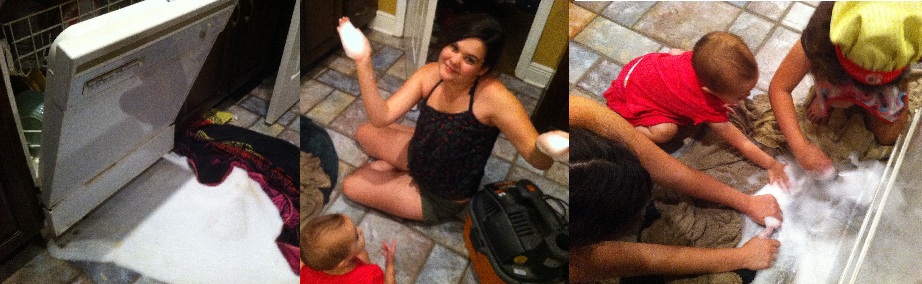
Now, just to set the stage, we have a home church and, in anticipation of the extra family and friends we were expecting for the Easter service, I had spent the entire day cleaning and scrubbing and organizing and still had more cleaning and setting up to do as well as coloring eggs and settling little ones in bed for the night before filling Easter baskets.
So I stood there, staring at the billowing disaster and adding a slew of new tasks to my already too-long list, and winged a quick prayer up to my Role Model. Then I threw down a towel levee, plopped my little people down for a good old bubble romp, and grabbed my camera. Disaster-misaster, what we had was a fun Easter memory in the making!
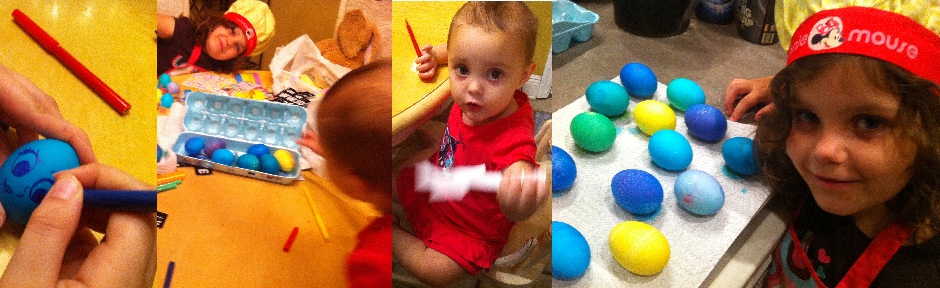
That Old Rugged Cross on a lonely hill is a testimony to triumph…life conquering death, good conquering evil, hope conquering fear…justice served and grace given. And that Empty Tomb we celebrate isn’t about death. It’s about life…messy, muddled, mysterious, mistake-ridden life, the kind we live every day…even Easter!

Happy Easter!
Related posts:
Communication vs. Miscommunication
Playground Confessions~Look Who’s Talking!
The Measure of Success~Chinese Parents and French Parents Can’t BOTH Be Superior!
Award-winnning author, L.R.Knost, is the founder and director of the children's rights advocacy and family consulting group, Little Hearts/Gentle Parenting Resources, and Editor-in-Chief of Holistic Parenting Magazine. Books by L.R.Knost include Whispers Through Time: Communication Through the Ages and Stages of Childhood ; Two Thousand Kisses a Day: Gentle Parenting Through the Ages and Stages ; The Gentle Parent: Positive, Practical, Effective Discipline ; and Jesus, the Gentle Parent: Gentle Christian Parenting the first four books in the Little Hearts Handbook gentle parenting series, and children’s picture books Petey’s Listening Ears and the soon-to-be-released Grumpykins series.
The Great Santa Claus Debate
[Excerpt reprinted from Jesus, the Gentle Parent: Gentle Christian Parenting by L.R.Knost. Two Thousand Kisses a Day: Gentle Parenting Through the Ages and Stages; Whispers Through Time: Communication Through the Ages and Stages of Childhood; and The Gentle Parent: Positive, Practical, Effective Discipline also available on Amazon and through other major retailers.]
~~~~~~~~~~~~~~~~~~~~~
 St.Nicholas was just a man, but he was a man with a mission. Born in the third century, he grew up to be an intensely kind-hearted man who was especially devoted to children’s issues and helping the poor. He was a Greek Bishop who defied the established Church in order to go out among the ‘unwashed masses’ and live his life as the ‘heart and hands of Jesus.’ While many miracles and legends about him evolved through the centuries, his penchant for leaving secret gifts is the one that captured the hearts and imaginations of people world-wide, leading to the present-day legend of Santa Claus.
I, like many new parents, struggled with the idea of perpetuating a ‘false belief’ and thus undermining my children’s trust. But then I turned to the Bible and saw how Jesus, who spoke absolute truth always, often spoke that truth in stories. He knew something about people’s hearts that I needed to learn as a young parent. He knew that the human mind is logic, analysis, reason, and that the human heart is imagination, creativity, love. He knew that sometimes you have to bypass people’s minds and speak straight to their hearts, those well-springs of wonder, for true understanding to occur and that often the deepest truths are the ones that are too big for the human mind to receive and can only be grasped by the heart.
When it comes to the breathtaking gift of the Christ-Child, the Eternal Creator born of a woman, God Himself wrapped in swaddling clothes, the I AM in a manger, what better way to share such an absurd and immense truth than Jesus’ way…with a story? How else would my little ones be able to grasp the concept of such a gift?  How would they embrace the wonder? How could I possibly break down the impossible into a pedantic lecture? Would the improbable make more sense in a dissertation?
And so I chose the way of the parable. I embraced Christmas in all its glory, decorated and baked and showered my little ones with gifts, all while sharing the story of the birth of a Baby. Woven through every event, every tradition, every memorable moment of our family’s Christmas, is the celebration of the wondrous gift of a Savior. We watch Rudolph the Red-Nosed Reindeer, Santa Claus is Coming to Town, and all the other fun Christmas shows together. We read bedtime stories about Christmas elves and magical toys and talking animals. And when my children ask me if Santa really exists, I tell them yes, because it’s true. Every parent who carries on St. Nicholas’ tradition of leaving secret gifts, of being the heart and hands of Jesus, of sharing the wonder, excitement, and glory of the most extraordinary Gift ever given to mankind, every one of us is Santa Claus.
My children never outgrow their belief in Santa. When they’re ready we simply share the beautiful story of St. Nick and invite them to join us in the fun of becoming Santa for their younger siblings and for children in need in our community. They still get presents, of course, but they also get to experience a new facet of the wonder of Christmas through the excitement of secret-keeping and present-wrapping and plan-making and joy-giving. Becoming Santa is an exciting and wonder-filled experience for our children, a step toward adulthood that makes them feel like they’ve been entrusted with a wonderful secret and gives them an opportunity to experience the incredible joy of generosity.
Note: I don’t ever use Santa Claus as a threat (i.e. “I’m calling Santa right now if you don’t…” or “Santa’s watching, and you won’t get any presents for Christmas if…”) first because a parable’s purpose is to teach, not to manipulate or control, and second because what I am teaching is the wonder and miracle of receiving a free gift, one that can’t be earned because it is freely given. Manipulating my children into ‘performing’ might work temporarily, but am I really trying to raise works-driven Christians, or am I trying to teach my little people about the wonderful gift of grace?
Here are some of the ways we focus on Jesus for Christmas:
Children learn best and most happily through play, so letting my little people ‘play Santa’ (i.e. wrapping up their toys and ‘surprising’ each other, making ornaments and delivering them to a nursing home, shopping at the dollar store for Operation Christmas Child, etc.) is a very important part of our Christmas traditions. And the best part is…they’re playing Santa for Jesus!
Leading up to Christmas, we marvel about how Jesus loves us so much He wants us to get presents on His birthday (truly awe-inspiring to children and a lesson in sacrificial giving!) because all He wants for His birthday are smiles and happy hearts.
Then we brainstorm ways to give Jesus as many ‘birthday presents’ as possible (a lesson in generosity). We work together to share Christmas cheer with everyone we meet, but focus our best efforts on the grumpiest people because they don’t smile as often and so their smiles make really special gifts for Jesus (a lesson in unconditional love).
We have a 12 Days of Christmas tradition where everyone gets a small present (chocolate, a special pencil, etc), and we read Christmas picturebooks every evening, building excitement for the Christmas morning celebration of the BEST GIFT EVER!
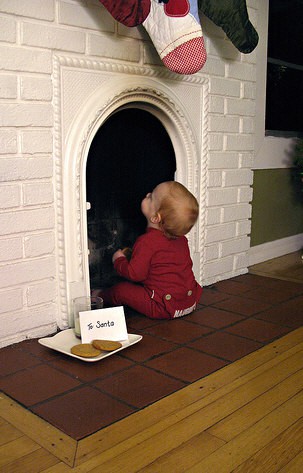
On Christmas Eve, we go to a special church service and then, after celebrating Christmas with family, we go home and make a fire in the fireplace (in Florida weather!) and make s’mores and hot chocolate and read the story of Jesus’ birth from Luke.
Then, on Christmas morning, we have a ‘Happy Birthday, Jesus’ party before opening presents, complete with a birthday cake and candles and singing ‘Happy birthday to Jesus!’
Here are some other resources on making the meaning of Christmas central to your celebrations this year (I’ll be adding more as I find them):
Celebrating Jesus with a Santa Claus Christmas
24 Tips for a Safe, Stress-Free & Jolly Holiday… A Very Toddler Christmas
7 Tips and Traditions to Make Giving a Standard of Living
What traditions does your family have to keep Christ in Christmas? Share them in the comment section!

Award-winnning author, L.R.Knost, is the founder and director of the children's rights advocacy and family consulting group, Little Hearts/Gentle Parenting Resources, and Editor-in-Chief of Holistic Parenting Magazine. Books by L.R.Knost include Whispers Through Time: Communication Through the Ages and Stages of Childhood ; Two Thousand Kisses a Day: Gentle Parenting Through the Ages and Stages ; The Gentle Parent: Positive, Practical, Effective Discipline ; and Jesus, the Gentle Parent: Gentle Christian Parenting the first four books in the Little Hearts Handbook gentle parenting series, and children’s picture books Petey’s Listening Ears and the soon-to-be-released Grumpykins series.
The Gift of Breastfeeding!
[Portions reprinted from Two Thousand Kisses a Day: Gentle Parenting Through the Ages and Stages by L.R.Knost. Whispers Through Time: Communication Through the Ages and Stages of Childhood, and The Gentle Parent: Positive, Practical, Effective Discipline also available on Amazon and through other major retailers.]
A newborn baby has only three demands. They are warmth in the arms of its mother, food from her breasts, and security in the knowledge of her presence. Breastfeeding satisfies all three. ~Grantly Dick-Read

Breastfeeding, like exercise, is one of the most highly preventive and cost-effective ways to protect the health of mothers, babies, the population, and the planet. Yet, the U.S. has one of the lowest rates of breastfeeding among industrialized countries and one of the highest rates of infant mortality. Our rates of breast cancer, diabetes, obesity, and asthma are growing at an alarming pace. It is estimated that normal breastfeeding rates could save the U.S. $13 billion and 911 lives annually on health care & associated costs for just 10 diseases.

Sweet, milky giggles
Baby’s trusting eyes look up
Forging bonds that last. R.H.
Excellent information from Kellymom about how to get a comfortable latch and position for nursing.

The Guggie Daily: God Wants to Breastfeed His People
 The Normal Newborn & Why Breastmilk isn’t Just Food

Breast Milk~The Original Soul Food
We have breasts to feed our young but we also have brains that tell us this is more than nutrition.. this is comfort, bonding, the original Soul food!

“Breastmilk, unlike formula is a living organism. When one looks at breastmilk under a microscope there is plenty of movement. Contrast that with formula, where the petri dish reveals a stagnant state. Formula is dead. It cannot change to meet the needs of a particular infant. It does not change during a feed…”

Lovely thoughts from a breastfeeding mama.
 What Kind of Woman Breastfeeds a Toddler?
An amazing array of women from every walk of life who share their breastfeeding journeys~Compiled and shared by The Mule
Low Milk Supply~Set up for failure
SIDS (Sudden Infant Death Syndrome), Asthma, Childhood Leukemia, Diabetes, Gastroenteritis, Otitis Media (ear infections), LRTIs (pneumonia, bronchitis, etc), Necrotizing Enterocolitis, Obesity, and other potentially life-altering or fatal conditions…
If you knew that there was one medicine or vitamin or herbal supplement that has been proven, PROVEN, beyond a shadow of a doubt in study after study by mainstream, published, respected doctors, researchers, and scientists, to significantly reduce the risk of every single one of those things listed above, would you give it to your baby?
Breast cancer, Ovarian Cancer, Diabetes, Heart Disease, Obesity…
What if that wonder drug could also drastically reduce your risk of each of these health threats?
13 billion…BILLION…dollars lost in the U.S. alone in PREVENTABLE medical costs.
If you knew that there was one thing you could do to save billions of taxpayer dollars that could go to feed the hungry, house the homeless, research cures for other devastating diseases, provide health care to the poor, would you do it?
The Journal of the American Academy of Pediatrics released a study in April of 2010 detailing just what that one medicine/vitamin/herbal supplement is…and the ‘miracle drug’ is  none other than BREASTFEEDING. The study concluded that, “The United States incurs $13 billion in excess costs annually and suffers 911 preventable deaths per year because our breastfeeding rates fall far below medical recommendations.” And those numbers are only based on breastfeeding benefits for the first six months of life! The World Health Organization, American Academy of Pediatrics, Centers for Disease Control, and others recommend breastfeeding for the first two years of a child’s life. Imagine the tally if the researchers had looked at the little lives lost and billions of dollars spent unnecessarily in a two year breastfeeding scenario instead of a six month scenario!
In 2009, the CDC released a Breast Feeding Report Card which showed that, while 74% of women start off breastfeeding, only 33% continue to three months and just 14% are exclusively breastfeeding by six months.
Clearly, then, the majority of women at least begin with the desire to breastfeed!
So why are breastfeeding rates so dismal in the United States? For one thing, U.S.hospitals scored a low D (63%) in their compliance with recommendations to provide breastfeeding  support for women in a 2007 CDC survey. One issue is that hospitals routinely send home ‘failure’ packets of formula with new mommies “just in case,” which sit temptingly in pretty, complementary diaperbags waiting for the inexperienced new mommy to face her first breastfeeding hurdle, her first feeding worry, her first sleep-deprived need to find any reassurance that she’s doing a good job feeding her baby during those first weeks. Another issue is that hospital lactation consultants are typically stretched far too thinly amongst many patients and are only available for a few minutes to get new mommies started, and then most insurance companies don’t cover follow-up lactation support after mommies leave the hospital. Other issues in the hospital include delaying the new mommy’s ability to begin breastfeeding immediately by removing the baby to a warming bed instead of laying the baby on the mommy’s tummy, and too early interventions such as eye ointment, bathing the baby, and taking the baby to the nursery to be evaluated in the absence of medical necessity.
But, even so, 74% of American women triumph over these issues and leave the hospital having established breastfeeding with their newborn. So what happens then? Why does that number fall so dramatically by more than half to 33% by three months and by nearly 80% down to only 14% of women by six months?
Some contributing factors are mothers who must return to workplaces which don’t support breastfeeding with long lunches to return home to breastfeed or flexible schedules which allow for frequent pumping, and insurance companies which don’t cover lactation consultants or breast pumps, and, in a small percentage of cases, health issues with the mother or baby.
All of these issues certainly need to be addressed by hospitals, insurance companies and businesses, and the government can be of service in these areas by providing tax incentives, education, and support.
But there are still more subtle issues that negatively affect breastfeeding rates. Some of these include older mothers relishing in telling horror stories about cracked nipples, thrush, clogged ducts, etc; pediatricians who use weight charts based on formula fed infants and scaring new mothers into thinking their babies aren’t gaining enough weight; and the pervasive, but false, belief that formula is just as good as breastmilk for babies.
One issue, though, that seems to crop up far more than others is low milk supply. Somehow, even though mothers’ bodies are capable of miraculously growing a human being for nine months and bringing that precious new life into the world, those same life-giving bodies are failing to provide life-giving (and saving!) nutrition to those precious babies. Why? For some, it is certainly just fear-mongering by those pediatricians using the formula fed babies’ charts or by grandmothers who believe that all babies should be chubby that lead new mothers to believe they have low supply, but there does seem to be an ever-increasing number of babies legitimately labeled as failure-to-thrive with low milk supply labeled the cause.
One crucial piece of false information can be blamed for the vast majority of low milk supply issues in the absence of a documented medical cause.
That false information? New mothers are told their babies should sleep through the night.
That is one of the most pernicious lies ever foisted on new parents. Babies biologically should NOT sleep through the night. Not only is the deep sleep required to sleep through the night actually a recognized factor in SIDS deaths, but babies who sleep through the night are also not nursing to stimulate breastmilk production, thus their mother’s milk begins to dry up. Clearly, that’s not a healthy biological design!
Here is a picture of what this vicious cycle can look like:
Lydia battles the lack of breastfeeding support at the hospital and triumphantly goes home a breastfeeding mother, formula ‘fail’ packet tucked securely in the chic little complementary diaperbag in the trunk along with stacks of information about how healthy formula is and lots of lovely formula coupons.
 She gets her precious baby home and settles in for her twelve week ‘babymoon’ before she has to return to work because that’s all the time her work allows. She’s already nervous about how she’s going to handle the return to work, leaving her sweet baby in someone else’s care, and trying to pump to maintain her milk supply and provide milk for her baby while she’s gone, but she pushes those thoughts aside and suppresses the anxiety as much as she can. The first few nights are pretty easy because her baby sleeps most of the time, so Lydia is able to get a little rest in between feedings. She reads up on some parenting advice in a couple of popular magazines and discovers that she should be working to schedule her baby’s feedings at 3-4 hour intervals. That makes her feel a bit worried because she’s just been feeding her baby whenever he seemed hungry, so she gets a notebook out and writes down a schedule.
Over the next couple of weeks, things get a bit more difficult as she walks and bounces and rocks her baby, anxiously watching the clock until she can satisfy her baby’s cries and nurse him. Her baby seems to be crying more and more often. As her stress level increases, she pours over parenting books and magazines, trying to find solutions to her baby’s distress. Over and over again, she reads that babies need to be on a strict schedule and be trained to self-soothe and sleep through the night.
Lydia desperately wants to be a good mother, so she braces herself and begins to stop nursing before her baby falls asleep and laying him down on his own to fall asleep alone. She cries listening to his screams, but confines herself to occasionally stepping into the room to pat him gently for a moment, tears streaming down her cheeks as she leaves him to cry himself to sleep.
A few weeks later, her pediatrician expresses some concern about her baby’s slowing weight gain, but cheerfully assures her that she has just become a ‘midnight snack’ for her little one and needs to begin cutting out night feeds so her baby can learn to sleep through the night.Lydia feels sick to her stomach as she leaves the doctor’s office, but is determined to put her feelings aside and be a good mother.
Lydia experiences some engorgement issues for the first few nights, but the discomfort is nothing compared her heartbreak at listening to her baby cry. Over the next few weeks, she notices a perceptible decrease in the volume of her breasts and her let down reflex feels weak. Her fears are confirmed when she takes her baby back to the pediatrician who is alarmed to find that Lydia’s baby has actually lost weight. Lydia leaves the pediatrician’s office with a diagnosis of failure-to-thrive for her precious baby, low milk supply for her, and a feeling of utter failure as a mother.
At home, Lydia searches for the chic little diaperbag with the formula ‘failure’ packet and mixes up a bottle, tears falling as she becomes just another statistic.
~~~~~~~~~
Feeling forced to ignore her natural mothering instincts because of prevailing mainstream parenting practices, Lydia’s anxiety steadily increased in her baby’s first weeks, negatively affecting her milk supply. Nursing on a schedule prevented her from receiving the stimulation of milk production inherent in the frequent suckling of a baby allowed to nurse on demand. But the breastfeeding coffin was sealed when night nursing ended and with it the loss of hours and hours of milk stimulation resulting in that modern epidemic ~ low milk supply.
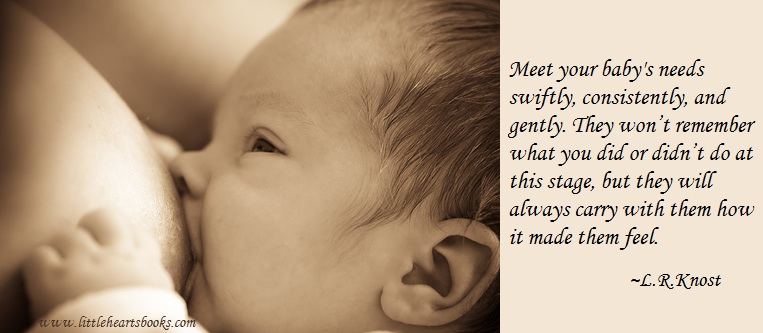 Related links:
Love in the Time of Cosleeping
And Baby Makes Three~Surviving the first three months with a newborn!
Breastfeeding, Babywearing, and Bouncing Back into Shape after Baby
A Boy, A Girl, and A Baby~Journey to Gentle Parenting
Babywearing Basics Resource Guide
Practical Gentle Discipline Guide
Award-winnning author, L.R.Knost, is the founder and director of the children's rights advocacy and family consulting group, Little Hearts/Gentle Parenting Resources, and Editor-in-Chief of Holistic Parenting Magazine. Books by L.R.Knost include Whispers Through Time: Communication Through the Ages and Stages of Childhood ; Two Thousand Kisses a Day: Gentle Parenting Through the Ages and Stages ; The Gentle Parent: Positive, Practical, Effective Discipline ; and Jesus, the Gentle Parent: Gentle Christian Parenting the first four books in the Little Hearts Handbook gentle parenting series, and children’s picture books Petey’s Listening Ears and the soon-to-be-released Grumpykins series.
30 Days of Thankfulness~Day 21~Fruit!
I am thankful for fruit!
~By Their Fruit They Will Be Known~
 “The fruit of the Spirit is love, joy, peace, patience, kindness, goodness, faithfulness, gentleness and self-control” (Galatians 5:22-23)
Love ~ Many parents say they make their parenting choices out of love, and I believe that is so very true, but if God is love as He says He is (and He is!), then our love needs to reflect His in every way, including in our parenting. And how does God show His love? Sacrificially, “For God so loved the world that He gave His only Son, that whoever believes in Him will not perish, but have everlasting life.” (John 3:16). Modeling God’s sacrificial love in our parenting is reflected by making parenting choices based on our children’s needs, not our convenience. Responsive parenting is truly a picture of God’s sacrificial, unconditional love in that, as we respond to our children where they are, (“This is how God showed His great love for us, that Christ died for us while we were still sinners [emphasis added]” Romans 5:8) comforting their cries, guiding their choices, providing for their needs, encouraging their individuality, we are, moment by moment, day by day, sacrificing our lives for them.
Joy ~ Parenting can be a challenge (Ask God. He’s got a lot of children, and they don’t behave all that well!) but taking joy in the journey and in our children makes all the difference. “At that time Jesus, full of joy through the Holy Spirit, said, ‘I praise you, Father, Lord of heaven and earth, because you have hidden these things from the wise and learned, and revealed them to little children.’” (Luke 10:21) Take time out each day to enjoy your children, or, better yet, to tell them what joy they bring to your life and specifically what unique things you enjoy about them!
Peace ~ It’s so, so hard making parenting choices, knowing our actions (or inactions!) will have an incredibly profound effect on a precious little life. God knows and sees and cares about every detail of our lives and our children’s lives.  And, in the same way that we want our little ones to trust us with their needs and concerns and desires, God wants us to trust Him and to have peace in Him. “Do not be anxious about anything, but in every situation, by prayer and petition, with thanksgiving, present your requests to God. And the peace of God, which passes understanding, will guard your hearts and your minds in Christ Jesus.” (Philippians 4:6-7)
Patience ~ “Be completely humble and gentle; be patient, bearing with one another in love.” (Ephesians 4:2) Children come into our lives as small bundles with big needs who don’t speak or understand our language and then proceed to grow into little people with their own temperaments, plans, and desires. Having patience as a parent should qualify as an extreme sport! But having and modeling patience with our children not only helps us to guide and grow them gently, but also encourages them to exercise patience with themselves and others throughout life…a rare, but lovely gift we can give the world through our children.
Kindness ~ My grandmother’s favorite verse was “Love is patient, love is kind. It does not envy, it does not boast, it is not proud. It does not dishonor others, it is not self-seeking, it is not easily angered, it keeps no record of wrongs.”  (1Corinthians 13:4-5) This is a beautiful example of how the Bible encourages us to treat others…including our children! Taking time out on occasion to examine our parenting practices and evaluate them in terms of how loving and patient and kind we are to our little ones is a vital part of effective parenting. It’s also important to make sure we aren’t parenting ‘for the neighbors,’ in other words, we aren’t making parenting choices based on a ‘who has the best kid’ competition (envy, boastful) or out of embarrassment over our children’s behavior (pride). Are we easily angered by our children? Do we dredge up their mistakes time and time again? If so, consciously working to break those bad habits and replace them with love and patience and kindness will have a dramatically positive impact on our parenting.
Goodness ~ “Still other seed fell on good soil. It came up, grew and produced a crop, some multiplying thirty, some sixty, some a hundred times.” (Mark 4:8) Of all things, shouldn’t our very first desire in parenting our children be to till the soil of their little hearts so tenderly, so carefully, so intentionally that their hearts are “good soil,” ready, eager, and willing to receive the Good News of Jesus’ birth, death, and resurrection for their sins? Instead of focusing on punishing our children’s mistakes, their ‘sins,’ thus negating the Gospel and undermining the very purpose for Jesus’ suffering, shouldn’t we model the grace and mercy and forgiveness we ourselves have been given? So what, exactly, is “good soil”?  Agriculturally speaking, which is what the parable Jesus told was based on, “good soil” is well-drained (not bogged down by over-watering, i.e. over-indulgent parenting), fresh (not over-used or over-worked, i.e. over-bearing parenting), fertilized (filled with good nutrients, i.e. needs met), composted (mixed with rubbish, i.e. sinful!), and enriched (earthy minerals intact, i.e. connected to their source~their parents).
Faithfulness ~ “The living, the living—they praise you, as I am doing today; parents tell their children about your faithfulness.” (Isaiah 38:19) God is faithful in His promises, faithful in His love, faithful in His parenting. In all things we need to reflect His character to our children so that when we tell them about ‘His faithfulness’ it isn’t only in words, but also in deeds. And what is faithfulness, exactly? It is defined as constancy, dependability, care, trustworthiness, devotion, honor, attachment, commitment. So let us parents, as reflections of God, be faithful to exhibit constancy, dependability, care, trustworthiness, devotion, honor, attachment, and commitment in our parenting choices!
Gentleness ~ “Let your gentleness be evident to all”…except your children. No, of course the Bible doesn’t say that! God actually instructs us to “Let your gentleness be evident to ALL (emphasis added)” in Philippians 4:5. Tender, compassionate, merciful, warmhearted, sensitive, approachable, good-humored…these are all synonyms for gentleness, and gentle parenting reflects all of these qualities. Let’s take a look at the antonyms (opposites) of the word gentle in the thesaurus~harsh, tough, violent, sharp, rigid, severe, unrelenting, unforgiving, punitive, unpleasant, pitiless, stern. “Let your gentleness be evident to all” including (especially!) our littlest, most defenseless, and truly precious gifts from God~our children!
Self-control ~ “Like a city whose walls are broken through is a person who lacks self-control.” (Proverbs 25:28) City walls being broken through was a tragedy of great proportions in the Bible, whereas a city gladly throwing open its gates to welcome its King was a time of rejoicing. The ‘city walls’ were used metaphorically  in the Bible to refer to a person’s will. Many times the words ‘break a child’s will’ are thrown around and spoken as if directly from the mouth of God. But God, as our heavenly Parent, doesn’t seek to break our wills. Instead, He teaches us to trust Him by His own love, joy, peace, patience, kindness, goodness, faithfulness, gentleness and by His self-control in not stomping us out of existence as we deserve by our sinfulness. And, after building that trust-relationship with us, He gently calls us to joyfully and voluntarily lay down our wills out of trust and gratitude and to open our hearts and minds and lives to Him, welcoming in our King. This is the heart of trust-based obedience!
Related links:
Spare the Rod: The Heart of the Matter
Award-winnning author, L.R.Knost, is the founder and director of the children's rights advocacy and family consulting group, Little Hearts/Gentle Parenting Resources, and Editor-in-Chief of Holistic Parenting Magazine. Books by L.R.Knost include Whispers Through Time: Communication Through the Ages and Stages of Childhood ; Two Thousand Kisses a Day: Gentle Parenting Through the Ages and Stages ; The Gentle Parent: Positive, Practical, Effective Discipline ; and Jesus, the Gentle Parent: Gentle Christian Parenting the first four books in the Little Hearts Handbook gentle parenting series, and children’s picture books Petey’s Listening Ears and the soon-to-be-released Grumpykins series.
Gentle Discipline Resource Guide
[Portions reprinted from The Gentle Parent: Positive, Practical, Effective Discipline by L.R.Knost available November 2013; Two Thousand Kisses a Day: Gentle Parenting Through the Ages and Stages and Whispers Through Time: Communication Through the Ages and Stages of Childhood now available on Amazon.]
 Many people believe that gentle parenting is a form of unparenting, but nothing could be further from the truth. Gentle parenting is involved parenting ~interactive, engaged, active parenting. It takes focused attention, planning, participation, research, and so much more to be an empathetic, responsive parent who is in tune with their child’s needs and who is prepared to make whatever sacrifices are necessary to meet those needs. That said, in any home, like in any civilized society, boundaries are necessary for everyone’s safety and comfort. It is in the choosing and enforcing of those boundaries that gentle parenting distinguishes itself. In a gently parented home, boundaries are focused on guiding rather than controlling children and are enforced through empathetic and creative resolutions rather than harsh punitive consequences. If you’d like to transition to a more gentle mode of parenting, but don’t know where to start, below are links to alternatives to punishment, and here is a guide to help you set yourself up for success in your journey to gentle parenting…12 Steps to Gentle Parenting.

When Things Get Physical: Hitting, Throwing, Kicking, and Biting
The concept of using consequences, physical or otherwise, as a deterrent for hitting is based on the misconception that small children have the capacity for forethought (i.e. If I hit, I will get in trouble. Therefore I will not hit.) and that they are choosing to disobey. The fact is that the prefrontal cortex, where reasoning, logic, and forethought take place, is highly immature in toddlers and preschoolers and actually doesn’t develop fully until the mid-twenties! Small children act instinctively and impulsively even when not stressed simply because that is what they are developmentally capable of, but when they are stressed even the small amount of self-control they may have attained flies right out the window, and before they know it (literally!) they’ve reacted physically to their stress. Read more
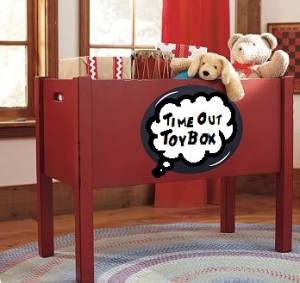 Testing the Boundaries~What’s a Parent to Do?
Typically, I advise parents to use Time-Ins instead of Time-Outs in order to connect-to-correct, but there is one area that I advise the use of Time-Outs…the ‘Time-Out Toy Box!’ When a toy is misused (i.e. thrown, used to hit, drawn on, fought over, etc) and a gentle redirection has been given, the next step for the toy is to be put in the ‘Time-Out Toy Box.’ Little ones generally find the concept of a toy being put in Time-Out rather humorous and go along with the removal without a fuss (the toy can be returned after an exaggeratedly stern warning to the toy letting it know what is expected of it and that it must listen to ‘the boss’ ~the child, lol. They love that!), but remember to communicate, listen, and be flexible. If the removal of a toy brings about a strong negative response, it may be that the inappropriate behavior was more than just…Read more

Few things ignite a parent’s temper like defiance. It feels like a slap in the face, a direct challenge to our authority. Power card…played. Gauntlet…thrown. Challenge…accepted?
Time out! No, not time-out as in punish your child, but time out as in hit the parental pause button, take a step back, assess the situation, and get some adult perspective.
There are three things to consider…Read more

Toddlers, Tantrums, and Time-In’s, Oh My!
Punishing them, yelling at them, sending them to their room, or putting them in time-out disconnects them even further from their source of security and not only delays a resolution of the issue, but misses an opportunity to equip them with the tools they need to handle future problems.
One effective tool for use in helping little ones cope with big emotions is a Calm-Me-Jar…Read more

Parenting a Strong-Willed Child
There are some children who are born into the world with the incredible life-gift of a strong will and an indomitable spirit. These children are often deeply misunderstood, and there are rows of books lining bookstore shelves with instructions about how to break their will, how to subdue their spirit, how to force their obedience. What an incredible loss of leadership, passion, and insight this world suffers when parents follow these punitive parenting practices. Not only can we parent these gifted children with gentleness and respect, but the gifts we get in return are priceless! …Read more
 Easy Peasy DIY Parenting Tools
I-spy Water Jars, Quiet Bags, Calm-Me-Jars, Cozy Corners, Punch Bags, and more…Read more
 To a Toddler Sharing is a 4 Letter Word~MINE!
Almost from the moment a baby is born, parents teach them not to share. “No, no, sweetie. That’s mommy’s” and “That’s daddy’s, not yours” accompanied by the removal of whatever the forbidden item is are daily realities for little ones. This is unavoidable, of course, since bacteria-ridden keys don’t belong in little mouths and iphones don’t work well when soaked in drool.
But the challenge comes when our little ‘reflectors’ are expected to share their toys with anyone and everyone who takes a liking to them…Read more
 Spare the Rod: The Heart of the Matter
One of the hot-button issues when it comes to discipline and children is spanking, and the more Christian and conservative the audience, the more hot the debate becomes! There are no verses in the New Testament that support spanking, flogging, whipping, or otherwise hitting children. In the Old Testament there are…Read more
 Your Baby isn’t Trying to Annoy You; He’s Trying to Communicate! From the moment a child enters the world, they are trying to communicate. Crying, grunting, making eye contact, mirroring expressions, all of these things are the instinctive tools built into infants to reach out into a brand new world and make contact. They can do no more. It is entirely up to the parent to make the connection, to respond, to build those all-important ‘lines of communication’ that will be so vitally important to parents in later childhood. Communication is not something that just happens. It is not something that begins when a child becomes verbal, and it’s not a product of a child’s advancing maturity. Communication is a process, a relational building block, a result of intentional and responsive parenting. Read more
 Tots to Teens~Communication through the Ages and Stages
The evolution of children’s communication proceeds at a steady and relatively predictable pace, though the timing is influenced by factors such as individual personality, cognitive development, home environment, etc. Here’s what to expect through the ages and stages…
 Babes and Boundaries~A Gentle Parenting Perspective Gentle parenting doesn’t mean parenting without boundaries! Believe it or not, the foundation for discipline (guiding, leading, teaching…NOT punishment ) begins in the newborn and infancy stages. When parents respond quickly, consistently, and gently to their baby’s cries, the trust relationship that the parent is establishing becomes the cornerstone for later discipline. Boundaries need to be established for a child’s safety and growth into a successful citizen of our world. A child who is secure in the knowledge that he doesn’t have to fight to be heard or to have his needs met is more open and adaptable to limits. And when the ‘limit-setter’ is a person the child trusts, the enforcement of those boundaries becomes a matter of connection and communication instead of conflict and struggle. So, what might setting and enforcing boundaries using gentle parenting look like in real life? Read more
 Parenting in Public~What’s in Your Quiet Bag? More and more public places are becoming child un-friendly with snarky signs saying they’ll give your child an espresso and a pony if you don’t control him or charge you extra if you dare to enter their establishment and support their business with your hard-earned money or even flat out ban you altogether if you bring ‘the beast’ out in public with you! So what’s a parent to do? Read more
 Discipline & Behavior via Dr. Sears
You probably never thought of attachment tools, such as breastfeeding and babywearing, as being acts of discipline, but they are. Attachment parenting is like immunizing your child against emotional diseases later on. Your knowledge of your child becomes like a sixth sense enabling you to anticipate and control situations to keep your kids out of trouble. Discipline is based on building the right relationship with a child more than using the right techniques.
 Parenting toddlers made simple. via T.E.A.C.H. Through Love
Toddlers can be loud, boisterous, erratic, funny, messy, witty and smart all at the same time. They soak up everything they see and hear and that includes our reactions to their actions.
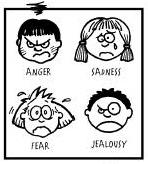
What Children Need Most When They Deserve It The Least via Happy Families
Parents prefer not to have their authority questioned. So rather than considering why a child may be resisting, they up the ante, doing their best puffer-fish impersonation, and make threats.
 Positive Parenting in Action: Exploration/Danger via Positive Parenting
Don’t mistake independence for defiance. Some toddlers are more strong-willed and independent than others. My first son was very mellow and content under my wing, while my second wanted independence early. He doesn’t want to hold my hand in parking lots (we’ll address that one!) because he says “I can walk by myself!”

With a healthy relationship based on open, honest communication, issues can be addressed as they arise and in a respectful and timely manner instead of a teen feeling the need to go ‘underground’ with their behavior or problems. Here are some practical tips for raising teens in a respectful and peaceful manner.
 Gentle Discipline: So what DO you do? via The Path Less Taken
Some people, for any number of reasons, do not know about alternatives. They don’t know that there’s another way. Some people want to do things differently, and want to break their cycle, but they honestly do not know where to start.
 Proactive Discipline and Well-behaved Children via Gentle Christian Mothers
Most people seem to think that physical punishment is the only way to elicit good behavior and assume that children who aren’t given prompt and regular spankings will be out of control “monsters”. Well, my kids are not perfect little robots. They have to be reminded to do things and they fight with each other. But my focus is not so much on obedience (do what I say right now!) as you might have expected. Instead my focus is on raising kids who are generally polite and content and care about how those around them feel. And that’s what I’ve got, kids who are noticeably considerate to adults and other children alike.
 6 Steps to Stop Yelling Dr. Laura Markham/Aha Parenting.com
We all know that our kids respond better if we don’t yell. Instead of escalating a difficult situation, if we can stay calm, it settles everyone else down. Our relationship with our child strengthens. They cooperate more. They start to control their own emotions more. Bottom line: How can you expect your child to control his own emotions if you don’t control yours?
 The One Thing You Can Do That Will Drastically Improve Your Interactions with Children via Real Child Development
If there was one thing you could do differently that would drastically improve your interactions with children would you want to know? Would you like to know the key that would increase cooperation, reduce tantrums, fighting and negative behavior?
 Gems via Mothering by Grace
This is a FAST way of making your child feel loved, valued and secure. GEMs help your kids feel affirmed and noticed, so their need to get your attention in negative ways decreases. Your energy levels will rise as you enjoy your child and remember what it’s all about. By focusing on your child and meeting their emotional needs for connection you are actually taking care of yourself at the same time. It takes only a few minutes to have a GEM, yet the positive effects last for ages.
 Why Spanking is Never Okay via Peaceful Parenting
Scientific research shows that physical punishment does not work in the long run, is associated with an increased risk for many behavioral and psychological problems, and is simply unnecessary given that we have non-violent discipline techniques that are very effective.
 Gentle Discipline Toolbox via Dulce de Leche
Gentle, effect tools for your parenting toolbox!
Related links:
Award-winnning author, L.R.Knost, is the founder and director of the children's rights advocacy and family consulting group, Little Hearts/Gentle Parenting Resources, and Editor-in-Chief of Holistic Parenting Magazine. Books by L.R.Knost include Whispers Through Time: Communication Through the Ages and Stages of Childhood ; Two Thousand Kisses a Day: Gentle Parenting Through the Ages and Stages ; The Gentle Parent: Positive, Practical, Effective Discipline ; and Jesus, the Gentle Parent: Gentle Christian Parenting the first four books in the Little Hearts Handbook gentle parenting series, and children’s picture books Petey’s Listening Ears and the soon-to-be-released Grumpykins series.
Babies Do Not Manipulate-They Communicate
[Portions reprinted from Whispers Through Time: Communication Through the Ages and Stages of Childhood by L.R.Knost. Two Thousand Kisses a Day: Gentle Parenting Through the Ages and Stages and The Gentle Parent: Positive, Practical, Effective Discipline also available on Amazon and through other major retailers.]
~~~~~~~~~~~~~~~~~~~~~
 On a recent trip to the park, I overheard a parent ranting and raving about a little one “being a brat and always pitching fits.” It took me less than two seconds of looking at the child to realize his mother had put him down on hot asphalt without shoes on, and his ‘fit’ was actually cries of pain as he danced around trying to keep his poor little feet off the asphalt while trying to push past his mommy to get back into the car. In a few years this mother will wonder why her ten-year-old is always so sullen and silent.
Later the same day in Wal-mart, a three-year-old asked her mommy what plastic wrap was for. The mother rolled her eyes and snapped, “For wrapping food in plastic, duh.” A few years from now, this mother will confess to a friend that she has no idea why her nine-year-old is so mouthy and rude.
Minutes later, a two-year-old riding past me in a shopping cart pointed at a toy and babbled in her cute baby language, looking at her daddy with a delighted smile. Her father ignored her first few attempts to get his attention, then finally barked, “Shut up!” without ever looking at her. In a few years this father will complain to his co-workers that his teenaged daughter never talks to him.
Communication in my son’s Tae Kwon Do classes is called, “The link between the world and me.” In the parent/child relationship, communication is entirely…hear this…entirely the responsibility of the parent. From the moment a child enters the world, they are trying to communicate. Crying, grunting, making eye contact, mirroring expressions, all of these things are the instinctive tools built into infants to reach out into a brand new world and make contact. They can do no more. It is entirely up to the parent to make the connection, to respond, to build those all-important ‘lines of communication’ that will be so vitally important to parents in later childhood. Communication is not something that just happens. It is not something that begins when a child becomes verbal, and it’s not a product of a child’s advancing maturity. Communication is a process, a relational building block, a result of intentional and responsive parenting.
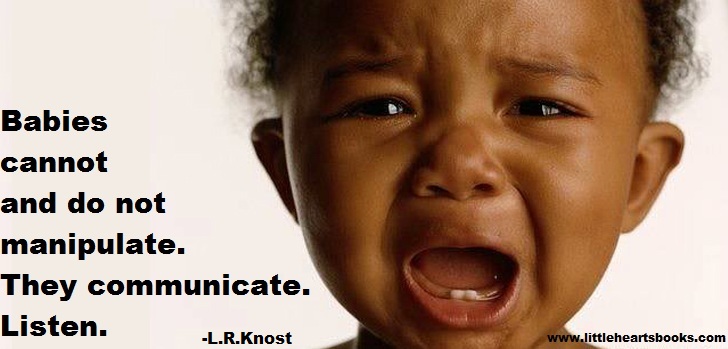 Crying is often mischaracterized as manipulation, and adults are certainly capable of using it that way. But to project such motivations on a baby is to grant them a level of skill and control far, far beyond their capabilities, and that is a potentially disastrous mistake. A parent’s perception of the motivation behind their child’s behavior is often the single most powerful determinant of the parent’s response. And the parental response or lack of response to a nonverbal child’s cries either builds or damages their communication and connection. There is no in between, no neutral.
Babies cannot and do not manipulate. They communicate. Listen. Respond. You aren’t being manipulated. You are being a parent.
And hear this well, parents, your relationship with your teenager is being established now, while your child is still a toddler. Your discipline issues with your nine-year-old are being minimized or intensified right now, while he is reaching out to you in infancy. Preschooler’s tantrums are being moderated or exacerbated at this moment by your response or lack of response to your baby’s cries.
 And the responsibility for building communication and connection with your child doesn’t end when your child becomes verbal. There is a reason children aren’t classified as adults until they are, in fact, adults. They simply do not have the judgment, experience, or maturity of an adult. Parents, you are the center of your child’s world for many years, and they will model themselves after the example you set.
If you listen to them, they will learn to listen. If you are rude to them, they will learn to be rude. If you treat them with respect, they will learn to be respectful. If you are angry, demanding, and harsh with them, they will learn to be angry, demanding, and harsh.
You decide every day by your parenting choices what kind of an adult you are going to raise. So live out how you want your children to turn out. That is the heart and soul of gentle, effective parenting.

Related posts:
The Taming of the Tantrum: A Toddler’s Perspective
When Children Act Out ~ Reflecting Our Emotions
Backtalk is Communication…LISTEN
Testing the Boundaries~What’s a Parent to Do?
Toddlers, Tantrums, and Time-Ins, Oh My!
Spare the Rod: The Heart of the Matter
Award-winnning author, L.R.Knost, is the founder and director of the children's rights advocacy and family consulting group, Little Hearts/Gentle Parenting Resources, and Editor-in-Chief of Holistic Parenting Magazine. Books by L.R.Knost include Whispers Through Time: Communication Through the Ages and Stages of Childhood ; Two Thousand Kisses a Day: Gentle Parenting Through the Ages and Stages ; The Gentle Parent: Positive, Practical, Effective Discipline ; and Jesus, the Gentle Parent: Gentle Christian Parenting the first four books in the Little Hearts Handbook gentle parenting series, and children’s picture books Petey’s Listening Ears and the soon-to-be-released Grumpykins series.
Jesus, The Gentle Parent
[Excerpt reprinted from Jesus, the Gentle Parent: Gentle Christian Parenting by L.R.Knost. Two Thousand Kisses a Day: Gentle Parenting Through the Ages and Stages; Whispers Through Time: Communication Through the Ages and Stages of Childhood; and The Gentle Parent: Positive, Practical, Effective Discipline by L.R.Knost also available on Amazon and through other major retailers.]
~~~~~~~~~~~~~~~~~~~~~
Jesus, the Gentle Parent
“…a great and powerful wind tore the mountains apart and shattered the rocks before the Lord,
but the Lord was not in the wind. After the wind there was an earthquake,
but the Lord was not in the earthquake.
After the earthquake came a fire,
but the Lord was not in the fire.
And after the fire came
a gentle whisper…”
1 Kings 19:11-12
God has gone to great lengths, superhuman lengths even, to reach out to his wandering children and call them home, back into the safe shelter of his arms, into the warm welcome of his presence, into the tender delight of his heart.
Throughout the Old Testament, he spoke through prophets, dreams, angels, and even a bush! He revealed his character in his ‘commandments’ (in the original Hebrew text ‘tsawah’ which literally means ‘directions’ or ‘guides’) and in the names he called himself and in his interactions with that lovely, stubborn, chosen nation, Israel.
And, finally, in the New Testament, he just stuck his feet right in the dirt and somehow stuffed his infinite Being  into the skin of a human.
God with us.
GOD. With. Us!
Why in Heaven’s name would he do that? Well, that’s been the subject of dusty tomes and esoteric debates for centuries, but in truth the answer is very simple: God is a father, a daddy who wants to connect with and build a relationship with his children.
In the Old Testament God revealed himself as a father who is Creator, Provider, and Protector. He showed himself to be an involved father, interested in every detail of his children’s lives, from what they ate to how and where and when they worshiped him. And he revealed his purity, his incomprehensible holiness that kept his beloved children hopelessly separated from him and helpless to change that fact. All the rules for cleansing, all the rituals, and all the formulas, only served to highlight the pitiful fallen state of God’s beloved children.
Then, in the New Testament, God stepped in. He stepped out of Heaven, and he stepped into the muck and mire of life among his precious children.
And that ritualistic, external, temporal cleansing? It became relational, internal, and eternal.
Stones once thrown in righteous judgment were laid down in humble mercy. Punishment was replaced with grace as Righteousness Himself stood between sinful man and his dire fate.
And so we have Jesus, God Himself with us in the flesh, God’s heart in a very literal sense laid bare for all the world to see, the perfect Parent to model ourselves after.
We have the Father…not a father, but THE Father…to look to for guidance about how to parent our children.
So, let’s get practical. What does God’s parenting look like, and how can we model ourselves after him?
Well, Jesus raised twelve children, so let’s take a look at how he did it!
Twelve of God’s children, all with different personalities, backgrounds, and talents, became Jesus’ disciples. The word disciple is the root word in discipline, so in a completely literal sense to discipline our children means to disciple them.
So, what characteristics defined Jesus’ discipleship? How did he treat his disciples? Was he harsh? Did he yell? Did he punish them? Clearly, he had the authority to! But since he came to free us from punishment, it really wouldn’t make sense for him to start meting it out, would it?
Was he distant, unresponsive to their needs? Did he make demands, insist on instant obedience, and toss around kingly commands?
No, no, no, and no! Jesus treated his disciples gently, tenderly. He listened. He responded to their needs, answered their questions, spoke their language. Jesus encouraged and guided and taught his disciples.
He drew them close to himself, lived with them, ate with them, travelled with them. Jesus didn’t just say he loved his disciples. He didn’t simply feel love for his disciples. Jesus lived love for his disciples. And he lived that love daily, mercifully, sacrificially.
So, what are the characteristics that defined Jesus’ discipleship?
Gentle. Tender. Responsive. Available.
Listening. Encouraging. Teaching. Guiding.
God, himself, intimately and empathetically connecting with his children.
That is perfect parenting.
 I, however, am NOT a perfect parent. In the time it’s taken me to write this so far, I’ve failed at pretty much every single one of those perfect parenting qualities. I only say that to point out that we aren’t shooting for perfection here.
If perfection were possible, the Cross wouldn’t have been necessary. (Galatians 2:21)
I have failed and will fail again as a parent. But even my failures have great value because they lead me back to the Cross, time and time again.
My failures remind me to turn to my perfect Parent, God, and trust him with my children. And my failures offer me the opportunity to be transparent with my children, to ask for forgiveness, to show them it’s okay to be human and to make mistakes.
In short, my imperfections are perfect for demonstrating God’s unconditional love.
So, what are some ways we can reflect Christ-like qualities in our never-perfect-but-best-effort parenting?
- Build your relationship. Everything, absolutely everything, in raising children is dependent upon a secure parent/child relationship, and the foundation is trust. We talk all the time in Christian circles about needing to trust God more. Why? What’s so important about trust? Trust is the secure knowledge that we will be cared for, that the person we are dependent on is who they say they are and will do what they say they will do. Without trust, there is no relationship. You build trust in your children starting from day one by responding faithfully and quickly to their needs, day or night, even if their ‘need’ is simply reassurance that you’re there.
- Be there in the moment. This isn’t about quality time or quantity time. This is about actually being with your children when you’re with them. I’m talking about muting the television and making sustained eye contact all the way through the story of how they had the piece of string first and how it was taken by a sibling when they only set it down for a minute and…well, you get the picture. Jesus showed he cared by listening and responding to what was important and relevant to his children. Even when he was sound asleep on the boat, when his children cried out to him in fear, Jesus responded to their needs, soothed his children, and calmed the storm.
- Encourage, don’t discourage. Jesus built up his disciples, giving positive directions, allowing time and opportunity for them to try, helping when they needed it, and forgiving them when they failed. Never, not once, did he lash out at his disciples in anger. He taught them gently and encouragingly, often in stories that related to their daily lives, and he was always available to discuss or clarify or answer questions.
- Practice what you preach. This is foundational, right along with trust. If you don’t live out how you want your children to turn out, you can be pretty much guaranteed they’ll go an entirely different way. Listen to your children if you want them to learn to listen. Respect your children if you want them to learn respect. Model compassion, kindness, honesty, forgiveness, and a grateful spirit if you want your children to grow into adults with those character traits. Jesus certainly lived out every one of those qualities for his children.
- Don’t make excuses. If you fail (and you will) apologize. Nothing penetrates hurt more deeply and with more healing power than an honest, open apology.
- Give grace. The unconditional love of God is beyond human comprehension. Even ‘veteran’ Christians resort to trying to earn God’s grace when they’ve already been given it freely. We all fall into that trap, time and time again, because we just can’t wrap our human brains around something as awesomely simple as unconditional love. We think it MUST be more complicated, and we end up complicating it by trying to pay for something that is free! So, help your children while they’re looking to you, their earthly parent, for an example of how their Heavenly Parent operates. Give them grace. Guide them gently. Forgive them when they fall, and get down on their level to help them back up again.
- Enjoy your blessings. Your children are a reward, a blessing, a gift straight from the heart of your Father to you, his precious child. He wants you to feel what he feels, to experience him in a unique way through parenting your children in the way that he parents you. He wants you to delight in your children so you’ll understand how he delights in you. He wants you to feel the depth of concern he feels when you stray into danger, the heights of joy he feels when you run trustingly into his arms, the pangs of compassion he feels when you are hurting or scared. Take the time to enjoy your children, and you will find yourself closer to the heart of your Father than you can possibly imagine.
“Whoever receives one of these little children in My name receives Me;
and whoever receives Me, receives not Me but Him who sent Me.”
Mark 9:37
Related links:
Stealing God’s Gift: Free Will is a Gift to be Nurtured, Not a Curse to be Broken
Spare the Rod: The Heart of the Matter
Did Jesus Have a Temper Tantrum?
Jesus, the Gentle Parent: Gentle Christian Parenting
Tattered Tapestries: Weaving Trust Through the Chaos
Fear Doesn’t Lead to Faith: Becoming Your Child’s Safe Place
Where Did You Learn Love, Child?
Practical, Gentle, Effective Discipline
Award-winnning author, L.R.Knost, is the founder and director of the children's rights advocacy and family consulting group, Little Hearts/Gentle Parenting Resources, and Editor-in-Chief of Holistic Parenting Magazine. Books by L.R.Knost include Whispers Through Time: Communication Through the Ages and Stages of Childhood ; Two Thousand Kisses a Day: Gentle Parenting Through the Ages and Stages ; The Gentle Parent: Positive, Practical, Effective Discipline ; and Jesus, the Gentle Parent: Gentle Christian Parenting the first four books in the Little Hearts Handbook gentle parenting series, and children’s picture books Petey’s Listening Ears and the soon-to-be-released Grumpykins series.
Positive Parenting Crusaders!
I am part of an amazing online community of writers who tirelessly work to promote positive parenting through sharing information, research, and personal experiences and observations. Here are just a few:
Attachment Parenting International shared this touching story from Astrid Lindgren, author of Pippi Longstocking and children’s rights activist ~

~Never Violence~
When I was about 20 years old, I met an old pastor’s wife who told me that when she was young and had her first child, she didn’t believe in striking children, although spanking kids with a switch pulled from a tree was standard punishment at that time. But one day when her son was four or five, he did something that she felt warranted a spanking, the first of his life. And she told him that he would have to go outside himself and find a switch for her to hit him with.
The boy was gone a long time. And when he came back in, he was crying. He said to her, “Mama, I couldn’t find a switch, but here’s a rock that you can throw at me.”
All of a sudden the mother understood how the situation felt from the child’s point of view: that if my mother wants to hurt me, then it makes no difference what she does it with; she might as well do it with a rock. And the mother took the boy onto her lap and they both cried. Then she laid the rock on a shelf in the kitchen to remind herself forever: never violence.
Astrid Lindgren, author; acceptance speech, Peace Prize, 1978. Reprinted from “Foster Focus,” published by the Olmsted County Foster Care Program, Rochester, Minn.
~~~~~
Dulce de leche, a wonderful Christian mama and stellar writer shared this:
~Spiritual Roots of Discipline~
“When I have wanted to punish, it was not because of love, despite any lofty motives I might claim. It was because I was impatient. (They should know better! They should do what I want right now!) Unkind. (Shaming). Prideful. My pride wounded because they didn’t demonstrate the respect for me that I wanted. Embarrassed by what others might think. Dishonoring them by dismissing their feelings and thoughts. Self-seeking. Trying to bulldoze through with my agenda, without regard for their feelings or developmental levels.” Read entire post
~~~~~
Real Child Development, missionary, child development advisor, Christian mama, and excellent writer shared this:
~Do you want your children to be obedient or have good judgement?~
“I want my child to do what is right, because in his heart he knows it is the right thing to do. I want him to have that inner strength to make those hard choices and go against the grain when it is the right thing to do. That takes strength. That takes courage. That takes knowing deep inside what is right and what is wrong. I don’t think punishment will teach that. But love will.” Read entire post
~~~~~
The Hippie Housewife, a talented writer and sweet Christian mama shared this:
 ~Hana Williams: Another child “disciplined” to death~
“This Saturday will mark six months since the tragic death of thirteen-year-old Hana Grace Rose Williams, born Hana Alemu, who died at the hands of her adoptive parents Larry and Carri Williams.
Hana is the third in a string of deaths linked to the use of training methods outlined in Michael and Debi Pearl’s book, “To Train Up a Child”. The deaths of seven-year-old Lydia Schatz and four-year-old Sean Paddock were also attributed to the use of these teachings. The siblings of all three children were found to have been struck repeatedly with plumbing supply line, the tool recommended by the Pearls for “training” children as young as six months old.” Read entire post
~~~~~
Parenting expert Dr. Laura Markham of Aha! Parenting shares: All of us want to raise children who become self-disciplined — and happy — adults. The only question is how best to do that. Luckily, we know the answer. Research studies have been following children from babyhood to adulthood for decades, so we actually know what works to raise great kids. Here are the five most important things we know… Read more
~~~~~
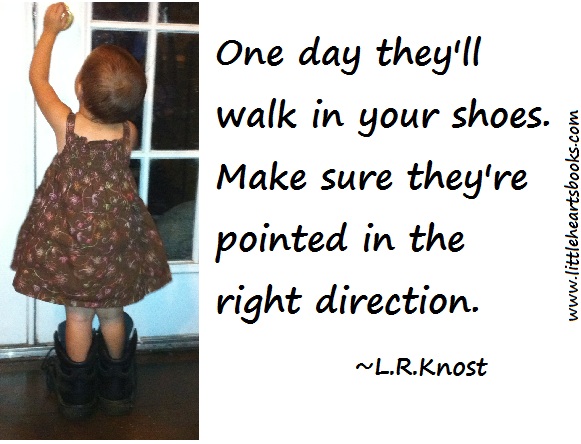 A few other amazing gentle parenting crusaders:
Positive Parenting: Toddlers and Beyond
The Way of the Peaceful Parent
Janet Lansbury – Elevating Childcare™
Click here and look on the right sidebar of my facebook page for a more comprehensive list of positive parenting crusaders!
Award-winnning author, L.R.Knost, is the founder and director of the children's rights advocacy and family consulting group, Little Hearts/Gentle Parenting Resources, and Editor-in-Chief of Holistic Parenting Magazine. Books by L.R.Knost include Whispers Through Time: Communication Through the Ages and Stages of Childhood ; Two Thousand Kisses a Day: Gentle Parenting Through the Ages and Stages ; The Gentle Parent: Positive, Practical, Effective Discipline ; and Jesus, the Gentle Parent: Gentle Christian Parenting the first four books in the Little Hearts Handbook gentle parenting series, and children’s picture books Petey’s Listening Ears and the soon-to-be-released Grumpykins series.
Beautiful Minds
I’m thankful for unique learners!
 My SPD/SLD/ADD (Sensory Processing Disorder, Specific Learning Disability-Dyslexia, Visual and Auditory Processing Disorders, Attention Deficit Disorder, etc) sweetie, aka Renaissance Girl, has raised the bar on my homeschooling skills more times than I can count. Her beautiful mind sees the world through a unique lens similar to those of historical icons such as Thomas Edison, Leonardo Da Vinci, Benjamin Franklin, and Albert Einstein. While academics have been a huge challenge for
 her, the artistic and musical gifts she’s been given are incredible, and her gentle, sensitive soul is a rare and precious treasure. Many years of therapy have yielded the ability to read, and she’s like a butterfly newly emerged from her cocoon. Jane Eyre, Little Women, Anne of Green Gables, all have sent her beautiful mind soaring to different times and places, and all have become intimate, lifelong friends with my sweet girl. I am so blessed to be entrusted with such a unique child to guide and grow and love!
One of my girl’s drawings!

Einstein recognized his unique lens and often commented about it and about how organized education systems didn’t accommodate individuality and creativity. Here is a look into this ‘unique learner’s’ mind in his own words:
Education is what remains after one has forgotten what one has learned in school. Albert Einstein
A man should look for what is, and not for what he thinks should be.
Albert Einstein
It is a miracle that curiosity survives formal education.
Albert Einstein
A person who never made a mistake never tried anything new.
Albert Einstein
A question that sometimes drives me hazy: am I or are the others crazy?
Albert Einstein
The only thing that interferes with my learning is my education.
Albert Einstein
All that is valuable in human society depends upon the opportunity for development accorded the individual.
Albert Einstein
Any intelligent fool can make things bigger and more complex… It takes a touch of genius – and a lot of courage to move in the opposite direction.
Albert Einstein

Any man who can drive safely while kissing a pretty girl is simply not giving the kiss the attention it deserves. (One of my favorite Einstein quotes, lol!)
Albert Einstein
Any man who reads too much and uses his own brain too little falls into lazy habits of thinking.
Albert Einstein
Do not worry about your difficulties in Mathematics. I can assure you mine are still greater.
Albert Einstein
Everything should be as simple as it is, but not simpler.
Albert Einstein
Everything that can be counted does not necessarily count; everything that counts cannot necessarily be counted.
Albert Einstein
Few are those who see with their own eyes and feel with their own hearts.
Albert Einstein
God always takes the simplest way.
Albert Einstein
He who can no longer pause to wonder and stand rapt in awe, is as good as dead; his eyes are closed.
Albert Einstein
He who joyfully marches to music in rank and file has already earned my contempt. He has been given a large brain by mistake, since for him the spinal cord would suffice.
Albert Einstein
I am enough of an artist to draw freely upon my imagination.
Albert Einstein
I have no special talent. I am only passionately curious.
Albert Einstein
I think and think for months and years. Ninety-nine times, the conclusion is false. The hundredth time I am right.
Albert Einstein
I used to go away for weeks in a state of confusion.
Albert Einstein
I want to know all Gods thoughts; all the rest are just details.
Albert Einstein
If people are good only because they fear punishment, and hope for reward, then we are a sorry lot indeed.
Albert Einstein
If we knew what it was we were doing, it would not be called research, would it?
Albert Einstein
If you are out to describe the truth, leave elegance to the tailor.
Albert Einstein
If you can’t explain it simply, you don’t understand it well enough.
Albert Einstein
Imagination is everything. It is the preview of life’s coming attractions.
Albert Einstein
Imagination is more important than knowledge.
Albert Einstein
In matters of truth and justice, there is no difference between large and small problems, for issues concerning the treatment of people are all the same.
Albert Einstein
Information is not knowledge.
Albert Einstein
Intellectuals solve problems, geniuses prevent them.
Albert Einstein
It is the supreme art of the teacher to awaken joy in creative expression and knowledge.
Albert Einstein

It’s not that I’m so smart, it’s just that I stay with problems longer.
Albert Einstein
Once we accept our limits, we go beyond them.
Albert Einstein
Only a life lived for others is a life worthwhile.
Albert Einstein
Only two things are infinite, the universe and human stupidity, and I’m not sure about the former.
Albert Einstein
Perfection of means and confusion of ends seem to characterize our age.
Albert Einstein
Pure mathematics is, in its way, the poetry of logical ideas.
Albert Einstein
Science without religion is lame, religion without science is blind.
Albert Einstein
Strive not to be a success, but rather to be of value.
Albert Einstein
The gift of fantasy has meant more to me than my talent for absorbing positive knowledge.
Albert Einstein
The high destiny of the individual is to serve rather than to rule.
Albert Einstein
The important thing is not to stop questioning. Curiosity has its own reason for existing.
Albert Einstein
The most beautiful thing we can experience is the mysterious. It is the source of all true art and science.
Albert Einstein
The only real valuable thing is intuition.
Albert Einstein
The only source of knowledge is experience.
Albert Einstein
The process of scientific discovery is, in effect, a continual flight from wonder.
Albert Einstein

The pursuit of truth and beauty is a sphere of activity in which we are permitted to remain children all our lives.
Albert Einstein
The true sign of intelligence is not knowledge but imagination.
Albert Einstein
The value of a man should be seen in what he gives and not in what he is able to receive.
Albert Einstein
The whole of science is nothing more than a refinement of everyday thinking.
Albert Einstein
The world is a dangerous place to live; not because of the people who are evil, but because of the people who don’t do anything about it.
Albert Einstein
There are two ways to live: you can live as if nothing is a miracle; you can live as if everything is a miracle.
Albert Einstein
There is no logical way to the discovery of these elemental laws. There is only the way of intuition, which is helped by a feeling for the order lying behind the appearance.
Albert Einstein
To raise new questions, new possibilities, to regard old problems from a new angle, requires creative imagination and marks real advance in science.
Albert Einstein
Try not to become a man of success, but rather try to become a man of value.
Albert Einstein
We cannot despair of humanity, since we ourselves are human beings.
Albert Einstein
We cannot solve our problems with the same thinking we used when we created them.
Albert Einstein
We shall require a substantially new manner of thinking if mankind is to survive.
Albert Einstein
We should take care not to make the intellect our god; it has, of course, powerful muscles, but no personality.
Albert Einstein
Weakness of attitude becomes weakness of character.
Albert Einstein
When I examine myself and my methods of thought, I come to the conclusion that the gift of fantasy has meant more to me than any talent for abstract, positive thinking.
Albert Einstein
When the solution is simple, God is answering.
Albert Einstein
Joy in looking and comprehending is nature’s most beautiful gift.
Albert Einstein
Learn from yesterday, live for today, hope for tomorrow. The important thing is not to stop questioning.
Albert Einstein
Logic will get you from A to B. Imagination will take you everywhere.
Albert Einstein
Look deep into nature, and then you will understand everything better.
Albert Einstein
Love is a better teacher than duty.
Albert Einstein
Most people say that is it is the intellect which makes a great scientist. They are wrong: it is character.
Albert Einstein

My religion consists of a humble admiration of the illimitable superior spirit who reveals himself in the slight details we are able to perceive with our frail and feeble mind.
Albert Einstein
Never lose a holy curiosity.
Albert Einstein
Award-winnning author, L.R.Knost, is the founder and director of the children's rights advocacy and family consulting group, Little Hearts/Gentle Parenting Resources, and Editor-in-Chief of Holistic Parenting Magazine. Books by L.R.Knost include Whispers Through Time: Communication Through the Ages and Stages of Childhood ; Two Thousand Kisses a Day: Gentle Parenting Through the Ages and Stages ; The Gentle Parent: Positive, Practical, Effective Discipline ; and Jesus, the Gentle Parent: Gentle Christian Parenting the first four books in the Little Hearts Handbook gentle parenting series, and children’s picture books Petey’s Listening Ears and the soon-to-be-released Grumpykins series.
Gratitude is an Attitude!
When it comes down to it, gratitude is all about attitude!
~~~~~

I can moan about being overwhelmed with life, or I can be overwhelmed with joy by life’s blessings.
I can complain about all the extra work that comes with a new school year, or I can happily embrace a new beginning.

I can waste time longing for my youth, or I can gasp at the youthful beauty of my most precious gifts.
I can wish for riches, or I can revel in richness.

I can worry about the future, or I can trust Who holds the future.
Gratitude bestows reverence, allowing us to encounter everyday epiphanies, those transcendent moments of awe that change forever how we experience life and the world.
John Milton
Award-winnning author, L.R.Knost, is the founder and director of the children's rights advocacy and family consulting group, Little Hearts/Gentle Parenting Resources, and Editor-in-Chief of Holistic Parenting Magazine. Books by L.R.Knost include Whispers Through Time: Communication Through the Ages and Stages of Childhood ; Two Thousand Kisses a Day: Gentle Parenting Through the Ages and Stages ; The Gentle Parent: Positive, Practical, Effective Discipline ; and Jesus, the Gentle Parent: Gentle Christian Parenting the first four books in the Little Hearts Handbook gentle parenting series, and children’s picture books Petey’s Listening Ears and the soon-to-be-released Grumpykins series.
A September to Remember: Too Beautiful for Earth~Heaven’s Newest Angel Baby
As I wrap up ~A September to Remember~ with such a grateful heart to all my friends who shared their ‘vintage treasures’ with me, I’ve chosen a final few posts to share as a lead in to October’s Pregnancy and Infant Loss Awareness Month. Here is a touching post from Theresa at NurturingtheNaturalMama. Be aware that loss is discussed. Be blessed, mamas.

The Doctor said I had been “struck by lightening twice”- I have now conceived twice while on the pill. And I get it, with so many women who struggle with infertility out there, how is it that someone like me conceives TWICE on the pill? I have no idea. First time I can chalk it up to perhaps imperfect compliance, this time- I have no explanation. Nonetheless, it happened.
So just as anyone who thought they were being “safe” that finds out they’re pregnant would do, I freaked. I had a complete and utter panic attack. I have a nine month old, I’m still on medication for PPD (the label for which says it can cause birth defects), I’ve been taking the pill, and drinking alcohol! EEK! So I go to the Doctor, who draws some blood… assures me I’m probably early enough where it won’t matter… and talks me down of my stress-cliff. I go home more self assured and semi- ready to try and explain this to my husband.
Needless to say, by the next day the thoughts have sunk in and we’re ready to dig in our heels and make our growing family fit into our tiny apartment, and even spent well into the night before chatting about names and the other idle chit chat that goes along with the beginning stages of pregnancy.
That’s when we got the call.
I would need my bloodwork rechecked the following day at my OBGYN’s office. When my OB called, the conversation started with “I am so sorry…”
What?! You’re sorry about what???….
My HCG levels had dropped, and I was told if I hadn’t already, I was having a miscarriage.

“This is not a viable pregnancy.” What does that even mean? Simple translation: Your baby is dead. Now I get it, to some this seems dramatic- especially for someone who was probably only 6- 8 weeks pregnant. But my baby’s heart was beating. My baby was alive, and is now dead.
The few family members we had told have attempted to console us with the ever popular “something just wasn’t right”, or “your body just wasn’t ready”, or “everything happens for a reason”- and while I can appreciate all of that, it still means my baby is gone. And what makes me feel the worst, is that s/he was so tiny at such an early gestation…. I get a lump in my throat even just THINKING about typing this… that s/he probably got…. gulp….. flushed down the toilet.
I, for all intents and purposes, could have flushed my baby down the toilet.
This devastates me most of all.

But the biggest lesson I have learned from all of this, is that miscarriage is such a silent and lonely struggle. You don’t tell anyone because you don’t want people to think you’re just seeking pity, but then everyone around you is going on with their daily lives, talking about the night out with friend A, or their trip to the bar with friend B, and you were just told your baby is dead. And no one ever knew your baby even existed.
How do you get support? Who do you talk to? You’re certainly not going to go around asking ‘hey, have you had a miscarriage? I just did and I’m not sure what to do next’.
I have at least found the following links which have either brought some peace/support to me, or I feel could help others:
My Forever Child: Memorial Jewelry
We Were Gonna Have a Baby, but we Had an Angel Instead
Bethany’s Baby from Bethany’s blog
And I have found much needed solace in my husband, and in our Church. And tonight, as I rocked my baby A to sleep, I held her a little tighter, kissed her forehead a bit longer, drew in a deeper breath of her warm baby smell, waited for her own breathing to even, and then laid her down and watched…. and then did what I haven’t done in … well, I think my whole life… I prayed. I prayed to whoever this God is, that my other babies stay safe. And that I wanted to thank Him SO much for the blessings I DO have in my life. My two existing, healthy, happy babies… my wonderful husband.. my beautiful step daughter… my family…. my friends…
and then I asked Him, pretty please, if He could just take tonight, to rock my baby to sleep…
Thanks for Theresa for sharing, and don’t forget to check out her site at NurturingtheNaturalMama!
Award-winnning author, L.R.Knost, is the founder and director of the children's rights advocacy and family consulting group, Little Hearts/Gentle Parenting Resources, and Editor-in-Chief of Holistic Parenting Magazine. Books by L.R.Knost include Whispers Through Time: Communication Through the Ages and Stages of Childhood ; Two Thousand Kisses a Day: Gentle Parenting Through the Ages and Stages ; The Gentle Parent: Positive, Practical, Effective Discipline ; and Jesus, the Gentle Parent: Gentle Christian Parenting the first four books in the Little Hearts Handbook gentle parenting series, and children’s picture books Petey’s Listening Ears and the soon-to-be-released Grumpykins series.
College for Struggling Learners
by Lee Binz
The HomeScholar
 Learning to Compensate
Dealing with learning challenges is difficult, but in high school, it can become seriously concerning. You don’t have to be afraid! With the great student to teacher ratio of homeschooling, and the love for your child, you have what it takes!
Debbie was at her lowest point when she realized her 12 year old son, Dan, could not read or write in his Sunday school classes. She had to carefully shield him from the judgment of others. Her homeschool friends were very understanding, but she worked hard to keep him away from situations where he would have to read aloud. She was distraught. Again and again they changed curriculum, hoping each time that a new curriculum would change everything. It seemed like nothing would ever work. He struggled with learning all the way through high school. She never had him officially tested, because she didn’t want him to be labeled as an adult. Dan has achieved wonderful things since graduating homeschool!
When Dan turned 18, he started working at Starbucks. An excellent worker, he received nothing but positive feedback which motivated him to continue his education. He decided to attend college. He didn’t score well on the SAT, so they did not report his scores to colleges. He entered college “through the back door” his mother said, by attending community college first. His excellent work ethic and love of learning helped him thrive where others felt adrift. Dan transferred from community college to the university with a 3.89 grade point average. There were 300 applicants to the business school this year, and Dan was one of only 100 admitted. Debbie says “He finally realizes he can do it!”
 Debbie has some great advice for parents. Don’t push them before they are ready. She was glad she kept him home, so that he could avoid the negative feedback from a public school setting. She read aloud to Dan constantly – even his high school textbooks, when necessary. She used verbal assessments in all his classes, and didn’t introduce essay writing until much later.
She recommends books by Dr. Raymond Moore, including Better Late Than Early: A New Approach to Your Child’s Education and Grace Llewellyn, The Teenage Liberation Handbook: How to Quit School and Get a Real Life and Education and Cynthia Tobias, The Way They Learn. She says, “You feel like you’re failing – like you didn’t do something right.” Don’t be deterred, though. It takes a lot of one-on-one time, but that’s the benefit of homeschooling. Read to them their textbooks, and the classics. Even in college they can be allowed help with reading.
 In her lowest moments, Debbie would remember her grandfather. He also could not read. His wife would read blueprints to him each night so he would be prepared for work the next day. Still, he grandfather was a successful businessman. He was able to compensate. Her son Dan is able to compensate now.
Her biggest surprise was realizing that Dan wanted a college degree. She had never thought he would go to college, and only vaguely considered a technical school. But when he worked at Starbucks, he identified his gift in business. So her additional advice is the same as mine. She says, “Even if you think they won’t go to college, they may – so always be prepared!”
Dan is so thankful he was homeschooled. He has said he would never put his own children in public school. He knows that if he had been in public school, he wouldn’t be where he is today. Nurturing is critical, and homeschooling can provide that best. Debbie says, “I remember the hopelessness. They CAN succeed and excel – just give them the tools.”
Learning to Teach
 JoAnn homeschooled her two daughters, feeling extremely unsure of her abilities – until her girls were officially diagnosed with learning disabilities. Once she had the diagnosis, she realized that homeschooling was the best option. She didn’t want her girls ostracized and placed in a “special” group that would have a negative effect on their socialization skills. Even her mother became increasingly supportive of homeschooling after the diagnosis was made.
Her two girls could not read until half-way through 5th grade. They struggled in reading, writing, and spelling. Joann took her children to The Slingerland Institute. She recommends two pamphlets that really helped her cope. One is Why Wait for a Criterion of Failure. The other is An Adaptation of the Orton-Gillingham Approach for Classroom Teaching of Reading, both by Beth Slingerland.
JoAnn’s advice is “Never despair! The timing of brain growth is on your CHILD’S timetable, not yours. Accept it, because you certainly can’t change it!” She wishes she would have dropped more academic subjects when they were in elementary school. Still, she is so glad she homeschooled. “Homeschooling is better for dyslexic kids for the positive encouragement and socialization.”
 She taught with multi-sensory input and multi-sensory output. In every subject she worked to provide lessons with audio, visual, AND tactile input. She would supplement courses with drama, hands on projects, and verbal assessments all the way through school. Her daughters were especially helped by the use of color. Her daughter still color codes her college lecture notes to improve her retention.
JoAnn’s older daughter went directly into the University and majored in biology with a minor in chemistry. She has recently graduated with an advanced degree as a Veterinarian Technician. Her younger daughter also went directly into the University. She will graduate with a degree in interior design, and has already done some design work for Bill Gates as a college intern. Both girls were very successful in college.
Learning to Cope
Jill is hesitant about labeling her daughter in any way, but knew she faced some unique challenges even though she wasn’t formally diagnosed. Her daughter recently became a National Merit Scholarship Semi-Finalist. Here is what Jill says about her daughter’s struggles: “She worked hard and I’m very proud of her. She is the daughter that would fit into the statement ‘I could never homeschool my child because….’ She is very active, intense, dramatic and a joy to be around. I am convinced that if she were in the public school we would have been ‘encouraged’ to put her on medications (the standard line around here, when she is getting jumpy is to ‘run up to the mailbox and get the mail’ which is a mile round trip). She has forced me to think outside of the box and, well, it is an adventure I’m sorry to see come to a close.”
 Like the other mothers, Jill was able to find a way to harness strengths and weaknesses, and teach her child to compensate for difficulties. With a parent’s close attention, unique coping mechanisms can develop. A homeschooling parent can see small successes, and learn to shape and mold new ways of coping with each challenge.
Joelle is right in the thick of things, with her young child. I asked her for some advice for others, and she emphasizes that coping comes from faith. This is Joelle’s experienced advice.
“A learning ‘disability’ (a word I hesitate to use for anyone who doesn’t have a severe condition) isn’t something you can just make go away if you have a clinic and a handful of web links. A learning challenge is best addressed with being sensitive to learning style and interests, which, as you know, vary from child to child.
A learning challenge is also a mindset, a lifestyle, and sore knees from prayer. A learning challenge means you’ll come face to face with your pessimism and lack of faith through tears of mourning for the child you don’t have. But lest anyone abandon hope, a learning challenge also means seeing God answer those tears by turning them to tears of what is, hands down, absolutely the most incredible joy when you see the triumphs. You will see those victories sooner or later on Earth or in Heaven.
A learning challenge leads to personal growth in the siblings of the challenged child. A learning challenge is a worldview, a lens, a perspective. It’s the fierce mother-bear love you have when you whisper to your child, ‘Don’t listen to the naysayers. I love you no matter what, and I’m still your teacher.’ I can’t put this in a box. I can offer a short list, but there’s only one resource on here that I can guarantee hands down will help everyone. The rest can be labeled ‘of interest.’
1) The Bible. Children are people – in fact, they are the most human of people. There are lots of passages on how we are to deal with our fellow humans. This is the only resource on this list that I can guarantee *will* help.
2) Last Child in the Woods: Saving Our Children From Nature-Deficit Disorder by Richard Louv – read this concurrently with #3
3) Smart Moves: Why Learning Is Not All in Your Head by Carla Hannaford – which will probably lead to curiosity about #4
4) Brain Gym or similar therapies offered by #5 and #6
5) The National Association for Child Development ( )
6) The Developmental Movement Center, Seattle (206) 525-8038″
Learning to Grow
Jay Smith of Linfield College says this, “The advice that I’d give to your students, is to simply be proactive in their college search process. The students shouldn’t be afraid to ask colleges if they offer support for students with learning disabilities, and what that support entails. We have high expectations of our students, but we also understand that we all learn in different ways.”
 Some colleges have an extremely supportive environment for children with learning disabilities. Redeemer Pacific College is a small Catholic college in Langley, BC, affiliated with Canada’s premier Christian liberal arts university, Trinity Western University. Admissions Coordinator Jennifer Friesen says, “All RPC students are able to use the services for students with disabilities offered through TWU, including access to the Learning Resource Centre and starting off their university career at TWU’s Freshman Academy.” The Learning Resource Centre offers services such as note taking, accommodated examinations and providing material in alternate formats.
Freshman Academy is a program for students who have not met the requirements for admission into university due to a low grade point average or missing academic courses. Friesen says, “Freshman Academy allows students to go through their classes in a small cohort with the support of their professors, a faculty Learning Coach, and their classmates. Once students have completed Freshman Academy they are able to directly enter their second year of university at Redeemer Pacific and Trinity Western.”
When I go to college fairs, I notice how many colleges truly specialize in students with learning struggles. They WANT your students, and they are ready, willing, and able to teach them.
Learning to Succeed
 You can request accommodation for the SAT and ACT if necessary, which does require a doctor’s diagnosis. If you don’t want accommodation for the college admission tests, a diagnosis may not be necessary. You may feel comfortable with your homeschooling methods, and don’t need additional help or direction. Perhaps a specialist will not impact what you’re doing, and a diagnosis may not change anything or be worth your while. On the other hand, if you are completely baffled about how to teach your student in a way that makes sense, and the input of a specialist will help you and change what you are doing, then evaluation may be useful.
If you think a diagnosis will help YOU, then I think it will help your child. In that situation, testing would be worthwhile, even if it’s inconvenient. If testing will not help you, then it may not be necessary.
Keep in mind your long-terms goals. You want your child to grow up and have their own home. You want them to succeed and thrive in anything they choose. There are colleges that specialize in learning disabilities. There IS a great college out there for him, and they will understand and accept any learning issues without hesitation. Search and you will find just the right college.
Lee Binz, The HomeScholar, specializes in helping parents homeschool high school. Get Lee’s 5-part mini-course, “The 5 Biggest Mistakes Parents Make Homeschooling High School.” You can find her at http://www.TheHomeScholar.com. Sign up for our newsletter, The HomeScholar Record: http://www.thehomescholar.com/homeschool-newsletter.php
Award-winnning author, L.R.Knost, is the founder and director of the children's rights advocacy and family consulting group, Little Hearts/Gentle Parenting Resources, and Editor-in-Chief of Holistic Parenting Magazine. Books by L.R.Knost include Whispers Through Time: Communication Through the Ages and Stages of Childhood ; Two Thousand Kisses a Day: Gentle Parenting Through the Ages and Stages ; The Gentle Parent: Positive, Practical, Effective Discipline ; and Jesus, the Gentle Parent: Gentle Christian Parenting the first four books in the Little Hearts Handbook gentle parenting series, and children’s picture books Petey’s Listening Ears and the soon-to-be-released Grumpykins series.
A September to Remember~Journey to Grace-based Discipline
Up next in ~A September to Remember~ is The Peaceful Housewife with a ‘vintage post’ about modeling grace in our parenting. Lovely!
~~~To the Time Out Corner!~~~
 As I’ve blogged about previously, we are on a new journey into grace based discipline in our house. I am learning so much about Christ from my children and about parenting my children from Christ. I am seeking to model my parenting from how my heavenly Father parents me. He is, after all, the ultimate parental figure.
In grace based parenting, your connection with your child is foremost. As a result of that connection and the relationship you build with your child, true loving obedience is born. This seemed strange to me at first, as one of the suggestions you often see is time-in’s, or loving your child during the undesirable behavior rather than sending them away to sit by themselves as punishment for their behavior. Sending them to time out can send the message that you will not love them or be connected to them if their behavior doesn’t please you.
In reflecting on this, I wonder if that’s part of why so many people are codependent. I also think that’s part of why I struggle with understanding how Christ can love me with my character defects. The manner in which I discipline, or disciple, my children teaches them about Christ and His love. I have a very sobering responsibility to ensure that I model Christ’s actual love and correction rather than a skewed version that is overly heavy on punishment or on grace.
So I asked myself how Christ corrects me when I am sinful. He convicts me and speaks to me gently but firmly, and then He waits for me to ask for forgiveness and make amends. He never breaks His fellowship with me or throws a tantrum. He doesn’t lash out at me in anger. He always has the end result in mind – when I am made perfect and whole in Him when my life here is done. He doesn’t demand that I apologize when I don’t yet fully understand why what I’ve done is wrong or try to make me feel guilt and shame in order to force me to behave. The connection is first. The relationship. I am not capable of being fully and constantly sinless for Christ. Praise God, my relationship with Christ isn’t dependent on my actions or character. He loves me and disciples me even when my character defects are rearing their ugly little heads. He is constantly reaching out to me, drawing near to me, guiding me, filling me with His Holy Spirit.
So how does this translate to my parenting? I need to be constantly drawing close to my children, guiding them, filling them with wisdom and grace. I need to remember that my relationship with my children is foremost and should not suffer because of their character defects. I need to disciple my children gently but firmly and help them to understand Godly character and the fruits of the Spirit. I don’t need to demand superficial apologies that aren’t sincere or try to control my children’s’ behaviors by making them feel guilt and shame. I need to ask the Holy Spirit to convict my children and be there to help them understand that conviction. I need not behave in anger and I must keep the end result in mind – I have been entrusted with the very important job of helping to raise up a servant of Christ.
I am constantly reminded of this in the 12-steps of Celebrate Recovery. In step 12, having had a spiritual experience as a result of these steps, we try to carry this message to others and to practice these principles in all our affairs. The verse that goes with this step is Galatians 6:1, “Brothers, if someone is caught in a sin, you who are spiritual should restore him gently, but watch yourself, or you also may be tempted.” My children are children of God. They are my brother and sister in Christ. If they are caught in a sin, I need to restore them gently, using caution to ensure that I am not sinning against God by abusing the responsibility that He has entrusted me. It is a sobering responsibility. One day, I will be called to account for how I raised my children. Will I have neglected that responsibility by being overly permissive and not enforcing boundaries? Will I have abused that responsibility by attempting to control and change my children into what I believe that they should be? Or will I have done the best that I could with Christ’s help to model the love of Christ and give them a healthy understanding of God’s love, grace and conviction?

Award-winnning author, L.R.Knost, is the founder and director of the children's rights advocacy and family consulting group, Little Hearts/Gentle Parenting Resources, and Editor-in-Chief of Holistic Parenting Magazine. Books by L.R.Knost include Whispers Through Time: Communication Through the Ages and Stages of Childhood ; Two Thousand Kisses a Day: Gentle Parenting Through the Ages and Stages ; The Gentle Parent: Positive, Practical, Effective Discipline ; and Jesus, the Gentle Parent: Gentle Christian Parenting the first four books in the Little Hearts Handbook gentle parenting series, and children’s picture books Petey’s Listening Ears and the soon-to-be-released Grumpykins series.
A September to Remember: Embracing Respect

Click to read more!
Today’s though-provoking ‘vintage post’ is from Jessica Bowman, author of
To read more awesome insights from Jessica, you can find her over at Bohemian Bowmans!
~Embracing Respect~
 Well, the New Year is around the corner, in case you weren’t aware. And now that the Christmas sugar buzz is wearing off, I suppose most people, like me, are starting to reflect on 2010 and peer curiously towards 2011.
There are some a lot of circumstances in our life that I have no control over. This post is about the other things.
The things I can do.
First of all, I’m not a resolution making person.
I never make New Year’s resolutions. I think the “success” rate of them is abysmal, and I don’t want to be disappointed in myself later for not meeting some silly and entirely too specific goal. Instead, I just enter every new year with the obvious plans of growing wiser that year, becoming a better parent, wife, friend, and follower of Jesus.
However.
This year, I can feel myself funneling my regeneratory New Years powers in a certain direction.
No, it’s not a weight goal. Though it probably should be.
I’m not wanting to climb a mountain.
Or learn to make jewelry.
Or visit Disneyworld.
It’s a Family Mission Statement whittled down to one. single. word.
Respect.
I’ve been thinking a lot about respect the last couple of months. In regards to parenting. In regards to learning.
I began to learn about respect in marriage a few years ago when I read a book about it. I had never thought very much about respect before then. I had never realized the importance of it. The magnitude of it.
But, for some reason, though that book did shift my respect paradigm in relation to my husband, it didn’t leave that little box that I put it in. It never occurred to me that the concept could spill over into seemingly unrelated areas of life, like education.
But in the last quarter of 2010 I began to think a lot more deeply about education. About learning. About parenting.
And the theme I kept coming back to is Respect.
I’ve realized anew this year, that in practice, I don’t respect my children very much. I hold my authority over their head and play my “because I said so” card too often.
I often times feel like I am living out Colossians 3:21.
“Parents, don’t come down too hard on your children or you’ll crush their spirits.”
I’ve been crushing the spirits of my children.
With my impatience. With my harshness. With my disrespect.
So with tears and the simple, unrefined prayer of “help” repeated untold times as I lay in bed at night, I began to grasp a hold of the practice of respect in our day to day.
I’ve increasingly stopped talking to them as if they are children, but instead as if they are grown ups. Or, more accurately, as if they are people.
As if they are people created by God with talents and purpose that I have no right to squash with my annoyance.
So much of what children do that exasperate us are not “sins” at all. They are just people with very little experience at life who need to be led by example.
Our example.
Examples in authority are powerful.
It is ever so hard to step outside of the parenting you were parented with.
Or the marital skills that were modeled for you.
And it is ever so illogical to think that if we are harsh and impatient with our children, they will learn to be respectful and loving of their siblings and friends and future families.
So, I’ve been learning to respect my children. To treat them as people. To listen. To explain things they don’t know yet, as if they were another grown up, instead of as if they are inconveniences and ever disdainful children.
And, lo and behold, the more I’ve treated them with respect, the more they have respected me. And each other.
The more patient I’ve been with them, the more patience they’ve shown each other. The calmer I’ve been with them, the calmer they’ve been with each other. The more attention I’ve shown them, the more attention they’ve shown each other.
I realize this isn’t a complicated concept. And is the second greatest commandment at it’s base.
Treat other people the way you want to be treated.
But sometimes that can feel truly hard to practice and own.
So, that is my purposeful word for my family this year.
And it is already changing us.

Click to read more!
Don’t forget to check Jessica out over at Bohemian Bowmans, and take a look at her ebook!
Award-winnning author, L.R.Knost, is the founder and director of the children's rights advocacy and family consulting group, Little Hearts/Gentle Parenting Resources, and Editor-in-Chief of Holistic Parenting Magazine. Books by L.R.Knost include Whispers Through Time: Communication Through the Ages and Stages of Childhood ; Two Thousand Kisses a Day: Gentle Parenting Through the Ages and Stages ; The Gentle Parent: Positive, Practical, Effective Discipline ; and Jesus, the Gentle Parent: Gentle Christian Parenting the first four books in the Little Hearts Handbook gentle parenting series, and children’s picture books Petey’s Listening Ears and the soon-to-be-released Grumpykins series.
A September to Remember: Don’t Miss Out on this Incredible Opportunity!
How many missed opportunities are there in your day? This question has been beating in my chest the last few weeks. Let me back up a little and explain what I mean.
I keep getting a sense that the greatest skill I can develop in my life is the ability to listen. People, including my children, don’t need or want my advice or opinions, they just want to be heard. It is our heart’s cry to be truly heard and understood – and this is a powerful thing. It’s one of the greatest gifts we can give to another human being.
Why is Listening so Powerful?
Life brings all of us different challenges and experiences; some full of heartache and pain. We all have emotions surrounding the different events and scenarios in our life. When someone listens to us, it creates a safe place to share and release those emotions. By listening, you are providing that person an opportunity to process and work through how they’re feeling. Listening helps those difficult feelings to surface and be released. This is healing. The more you feel, the more you heal.
Award-winnning author, L.R.Knost, is the founder and director of the children's rights advocacy and family consulting group, Little Hearts/Gentle Parenting Resources, and Editor-in-Chief of Holistic Parenting Magazine. Books by L.R.Knost include Whispers Through Time: Communication Through the Ages and Stages of Childhood ; Two Thousand Kisses a Day: Gentle Parenting Through the Ages and Stages ; The Gentle Parent: Positive, Practical, Effective Discipline ; and Jesus, the Gentle Parent: Gentle Christian Parenting the first four books in the Little Hearts Handbook gentle parenting series, and children’s picture books Petey’s Listening Ears and the soon-to-be-released Grumpykins series.
A September to Remember: Memories
 This has been such a full year for our family. I find myself wondering often, though, about my little boy. At two and a half, what will he remember of this year? Anything?
Will he remember the wonderful four months we spent with his grandma, grandpa, and four aunties this summer? Will he remember the time he got to spend with his daddy during the day, the fun they had together, the way it strengthened the bond they already shared?
Will he remember any of the first three houses we’ve lived in so far this year? His very first home in Ottawa? The beautiful house in Manitoba, with acres of land to run around on and a bountiful garden that he watched us dig, till, plant, water, weed and harvest? Will he remember the place we’ve called home since our arrival in Vancouver this fall, the place we had hoped to live in for our four years here, the place we will be saying goodbye to in only a couple short weeks?
What of the other people who have been a part of his life? How long will he continue to remember his first friend Luke? Will he recognize those relatives we see rarely – great grandparents, great aunts and uncles, cousins? If only we could all be together, always, instead of so far flung from each other.
Will he remember those experiences that he talks of so often and so fondly right now? Trips to the aquarium, the farm, the theatre. Riding the train at the mall. Dancing with his mom in the snow at the park, his hands buried in her sleeves to keep warm. Visits to the midwife, listening to his baby brother or sister’s heartbeat, endless conversations – “talk more about the baby, Mom!” Will he remember that tiny baby being born?
What will he remember?
What will he forget?
Sometimes I feel sad over the thought of all that will slip from his mind over the years. I’ve long felt that way over my own life. A box full of journals from my teenage years doesn’t seem to be enough. What about the little everyday things, the moments I failed to record, the milestones I didn’t notice at the time, all the things I have already forgotten? I wish I could record all of these happy moments of his own life, both for his sake and for mine. I want him to remember, and I want to remember them myself.
Other times, though, I worry about what he will remember. Will he remember that I sat by his bed every night, singing to him as he drifted off to sleep? Or will he remember instead the times I spoke harshly, wanting him to just go to sleep so I could go do other things (as though washing the supper dishes was more important than being a comforting presence to my son)? Will he remember the trips to the park, the library, the farm – or will he remember instead the times I was overly anxious to get back to the comfort of our home, rushing him along instead of allowing him to linger and explore as long as he liked? Will he remember the times I dealt with him lovingly, patiently, respectfully, discipling him into greater maturity – or will he remember instead my moments of failure as a parent, treating him roughly, speaking to him harshly, failing to hear him, allowing my selfishness to come first, badgering him into submission rather than discipling him into true obedience?
Sad that he will forget, worried that he will remember, I become increasingly conscious of the memories I am creating for this little boy, aware of their significance.
And so we bake gingerbread moose and shortbread trains. He kneads his own small piece of dough as we make our weekly bread together. We avoid daily television and instead snuggle together for a special movie treat. We read endless piles of books together. I warm up a glass of chocolate milk when he wakes one night, allowing him to climb into our bed and join us as we sip our own hot cocoa. I offer comfort in a daily routine and excitement in the occasional deviation from it.
And we talk. Days filled with conversation, recalling the good times that have passed, praising the people we have grown to love, anticipating the good that lies ahead.
This, in hopes that some day down the road, he’ll say, Mom, remember when…, and I will smile, because he remembers, and I remember, and the things we remember are all the best moments of our lives.
__________________
 Cynthia is the mother of two little boys, an inquisitive preschooler and an energetic toddler. She blogs at The Hippie Housewife, where she shares her thoughts on attachment parenting, natural living, life as a Jesus-follower, and more, all tied together through her journey towards a more intentional life.
This article was previously published on The Hippie Housewife.
Award-winnning author, L.R.Knost, is the founder and director of the children's rights advocacy and family consulting group, Little Hearts/Gentle Parenting Resources, and Editor-in-Chief of Holistic Parenting Magazine. Books by L.R.Knost include Whispers Through Time: Communication Through the Ages and Stages of Childhood ; Two Thousand Kisses a Day: Gentle Parenting Through the Ages and Stages ; The Gentle Parent: Positive, Practical, Effective Discipline ; and Jesus, the Gentle Parent: Gentle Christian Parenting the first four books in the Little Hearts Handbook gentle parenting series, and children’s picture books Petey’s Listening Ears and the soon-to-be-released Grumpykins series.
Wishes Week 2011~Wrapping it up & putting a bow on top!

Thank you to all of my awesome guests this week for Wishes Week 2011! You gave me a very special birthday gift I will never forget by sharing your wishes with me. Here’s a ((hug)) for each one of you! And now, the ‘wrap up’~

Glimpses My opening contribution to Wishes Week 2011~Glimpses of hope and healing

Meanderings by Rosemary Jones Gritty urban prose by one of my favorite writers…powerful!

My Parenting Wish: Through A Child’s Eyes A beautifully intimate look at compassionate parenting by The Hippie Housewife. Love this!

Birth Wishes Thank you to Becoming Crunchy for this powerful and heartfelt look at birthing options and empowering women…awesome!!!

I wish that I were the Mother that I play at the grocery store. Here is a quirky look at the realities of mommyhood by Jessica, author of Parenting Wild Things!

“What I Wish Every Mother Knew About Babies and Sleep” This wins the prize for most viewed post of the week from Adventures in Mommyhood over at Instinctual Mamas. This is a passionate, informative, and convicting article on meeting babies’ needs gently. Beautiful!

Mommy Wishes From one Mommy’s heart to yours~Mommy Wishes by The Mom: Informed

When God says ‘No’ ~ Wishes Week 2011
~My closing post for Wishes Week~
Thank you to everyone who joined me for Wishes Week 2011! Your comments and ‘presence’ (lol) were much appreciated!
Award-winnning author, L.R.Knost, is the founder and director of the children's rights advocacy and family consulting group, Little Hearts/Gentle Parenting Resources, and Editor-in-Chief of Holistic Parenting Magazine. Books by L.R.Knost include Whispers Through Time: Communication Through the Ages and Stages of Childhood ; Two Thousand Kisses a Day: Gentle Parenting Through the Ages and Stages ; The Gentle Parent: Positive, Practical, Effective Discipline ; and Jesus, the Gentle Parent: Gentle Christian Parenting the first four books in the Little Hearts Handbook gentle parenting series, and children’s picture books Petey’s Listening Ears and the soon-to-be-released Grumpykins series.
My Parenting Wish: Through A Child’s Eyes
It’s Wishes Week here at Little Hearts Books and we’re wishing your host a happy birthday by sharing our own parenting wishes!
What would I change in the parenting world if I had a fairy “parenting” wand? As I considered that question, every possibility seemed to boil down to one thing: compassionate understanding.
Adulthood brings with it an awareness of the world that lends perspective to situations. Children have much less of this life experience on which to draw. They act as a child, they speak as a child, and they see things through a childish perspective. They usually have the best of intentions even when their actions suggest otherwise.
And yet too often parents will automatically ascribe negative intent to their child’s immature actions. Children are seen as being defiant, deceptive, and manipulative. In talking with others about their childhood and thinking back to my own, there are many recollections of the injustice and indignation felt when negative intent was ascribed to the child’s motives. There are memories of being punished for things not done or not known to be wrong. There are memories of being misunderstood, of having feelings overlooked, and of feeling angry, afraid, ashamed, anxious, insecure, violated, and unloved. There is also the knowledge that communication and understanding would have been far more effective and connective than the yelling, shaming, spanking, or other punishments received.
My parenting wish is that parents would have the ability to view situations through their child’s eyes. When we take the time to consider our child’s perspective or to talk with them through what happened, we find more often than not that their motives were sincere and good at best, and merely ignorant (lacking in experience, understanding, and wisdom) at worst.
Is he “pestering” you, or is he lonely? Is she being “bratty”, or is she hungry and tired? Is he “mean”, or is he confused and overwhelmed by changes in his life? The labels and motives we apply to our children affect the way we view them and act towards them. Looking past the actions to the driving needs behind them often presents a very different view.
With that in mind, we can assign positive intent to our children’s actions, approaching the situation with compassion and understanding. Their intent need not play into our response. When we are parenting with love and grace, using gentle discipline rather than the behaviour modification tools of punishment and praise, we will generally respond in the same manner regardless of their underlying motive. This saves us the guessing game of discerning our children’s hearts, and by assuming the best in them, we set high standards for them to aspire to.
Discipline means “to teach”, and we can teach our children the appropriate action to replace an inappropriate one without needing to first determine whether their intent was good or bad. Repeated issues may call for more focused discipleship in that particular area, but the response to the situation itself should not vary depending on the parent’s view of the child’s motives.
We can’t presume to know our children’s hearts. Assuming the best, taking time to consider their perspective, and responding with compassionate understanding will serve to encourage our children and strengthen our relationship with them. This connection and relationship must remain the focus of our parenting, as it is the foundation and driving force behind all other areas of parenting and discipline.
_____________________
Cynthia is the mother of two little boys, an inquisitive preschooler and an energetic toddler. She blogs at The Hippie Housewife, where she shares her thoughts on attachment parenting, natural living, life as a Jesus-follower, and more, all tied together through her journey towards a more intentional life.
Award-winnning author, L.R.Knost, is the founder and director of the children's rights advocacy and family consulting group, Little Hearts/Gentle Parenting Resources, and Editor-in-Chief of Holistic Parenting Magazine. Books by L.R.Knost include Whispers Through Time: Communication Through the Ages and Stages of Childhood ; Two Thousand Kisses a Day: Gentle Parenting Through the Ages and Stages ; The Gentle Parent: Positive, Practical, Effective Discipline ; and Jesus, the Gentle Parent: Gentle Christian Parenting the first four books in the Little Hearts Handbook gentle parenting series, and children’s picture books Petey’s Listening Ears and the soon-to-be-released Grumpykins series.
Meanderings by Rosemary Jones
I wish there was someplace less than 30 miles away that could make me a good macchiato. But nooooo. Seattle is the only home of decent coffee. Not li’l ole Everett. I wish baristas wouldn’t ask “Like, a caramel macchiato?” when you order your drink.
I wish we could live in Seattle. The pawnshops, the boarded up pay-by-the-hour motels, the dirt of our surroundings wears on me at times. But then I see the dirt of Seattle, and know that there are hurting people and disease of the soul and ugliness everywhere and that the only utopia will be after this life. And then I come home and see the beauty of our culturally diverse neighborhood; projects yes, but a dozen countries represented, children tearing about in the nearby parks hollering at each other in a dozen different languages, and I know our multi-cultural-ministry hearts are planted here for a reason.
I wish Jesus were here in the flesh so I could ask Him a whole load of questions.
I wish my little section of heaven would include my CuteBoy best friend ever, a truly free spirit, texture and color and beauty yet unseen, somehow the perfect blend of a rich, heterogeneous urban dwelling with galleries and street musicians and food hawkers on one half and the other half an endless ocean, the waves crashing, the salty seaweed scent soothing, and the ability to switch between the sounds of the urban and the sounds of the sea at my will. I would wish for the assignment of food, food, food, glorious food. Heavenly food, access to anything and everything, each era, each region, each culture on earth and in heaven represented on my menu; no burnt fingertips, no pots boiled over, no underdone bites. I’d serve a dozen courses to Esther and Vashti and Hagar and Jael and every other fierce woman in Biblical history. I’d serve them to my dear Ruthie, my Ugandan sister I wish to see this side of heaven. I’d serve them to my grandmother and my sister… the older sister I was supposed to have, who was taken to heaven too soon, I’d serve them to my babies I never got to hold. And of course Jesus in the flesh so I can ask Him a whole load of questions. We would eat and drink and talk and never grow full or tired or bored or annoyed because someone said something stupid.
But chances are, He’s laughing at my wishing imaginings of heaven ’cause His unknowable plans are a whole lot better. I wish I had a home big enough for all of these babies.
I wish for the day we take our family to that Great Horn, the source of the Nile, the land that holds the best food in the world to finally meet the rest of our babies I know God has for us.
I wish I saw children spoken to with the respect they deserve more often than I do.
I wish I knew how to say more than “Where’s the post office?” in Russian. That was an expensive class.
I wish Every Single Person would take the time to listen to this man’s story. Really Listen To It.
And while you’re at it, read this book too.
I used to wish for bigger breasts, critically eyeing my 12-year-old body, wishing for justthatmuchmore and now I wish for a flatter stomach, critically eyeing my 32-year-old momma body, wishing for justthatmuchless. Which my husband reminds me is absurd, it’s sexy because it’s an empty pocket where our daughter grew and how much more beautiful is that? I now wish my daughter will not be subjected to our culture’s obsession with physical perfection, and if necessary, has her own husband to remind her of her true beauty.
I wish I always knew what was going on in my BabyGirl’s head and how to translate her sweet babblings and raspberries into words I understand.
I wish I knew how to make a killer hollandaise sauce. And a sexy poached egg. And perfectly crisp hashbrowns. Then I would never have to go to another diner again.
I wish I could bottle the scent in the crook of my daughter’s neck. But it’s so much more than the scent… It’s the sensation of her hair grazing her earlobe and the tip of my nose, it’s her giggles when I kiss her, it’s the peace of breathing her in after she’s asleep. That’s what I wish I could bottle.
I wish Every Single Child was parented with intentionality, with grace, without violence, with the closest thing we can possibly achieve to the perfection of our Heavenly Father.
I wish every heart, including mine, would expand to defend and provide and rescue the orphan. That every heart would break for the things that break His.
Only I don’t have to wish. Because I serve a God who hears my prayers and does as He sees fit.
Which even though I don’t understand it, is usually better than my wishes anyway.
Award-winnning author, L.R.Knost, is the founder and director of the children's rights advocacy and family consulting group, Little Hearts/Gentle Parenting Resources, and Editor-in-Chief of Holistic Parenting Magazine. Books by L.R.Knost include Whispers Through Time: Communication Through the Ages and Stages of Childhood ; Two Thousand Kisses a Day: Gentle Parenting Through the Ages and Stages ; The Gentle Parent: Positive, Practical, Effective Discipline ; and Jesus, the Gentle Parent: Gentle Christian Parenting the first four books in the Little Hearts Handbook gentle parenting series, and children’s picture books Petey’s Listening Ears and the soon-to-be-released Grumpykins series.